Description
1. Product Overview
ProSoft 5302‑MBP‑MCM4MB is a high‑performance multi‑port Modbus Master‑Slave communication module developed by ProSoft Technology (USA). Designed for industrial PLCs and automatic control systems, it is primarily compatible with Allen‑Bradley ControlLogix chassis. Equipped with multiple independent Modbus communication channels, the module can operate as both Modbus Master and Slave simultaneously. It enables large‑scale Modbus data exchange between the PLC and frequency converters, instruments, sensors, RTUs and field intelligent devices. With independent multi‑channel parallel communication, strong anti‑interference capability and broad compatibility, the product effectively resolves Modbus network congestion and communication conflicts caused by numerous field devices. It is widely deployed in oil‑gas, water‑treatment, power, metallurgy, intelligent manufacturing and other industrial sectors, serving as a core component for legacy‑equipment communication retrofits, multi‑station bus expansion and heterogeneous‑device networking.
2. Core Technical Parameters
2.1 Basic Specifications
- Model: 5302‑MBP‑MCM4MB
- Product Type: Multi‑port Modbus RTU / ASCII Master‑Slave Communication Module
- Compatible Chassis: Allen‑Bradley ControlLogix control‑system chassis
- Communication Protocols: Standard Modbus RTU, Modbus ASCII
- Operating Modes: Mixed master‑slave mode with independent configuration for each channel
2.2 Communication Performance Parameters
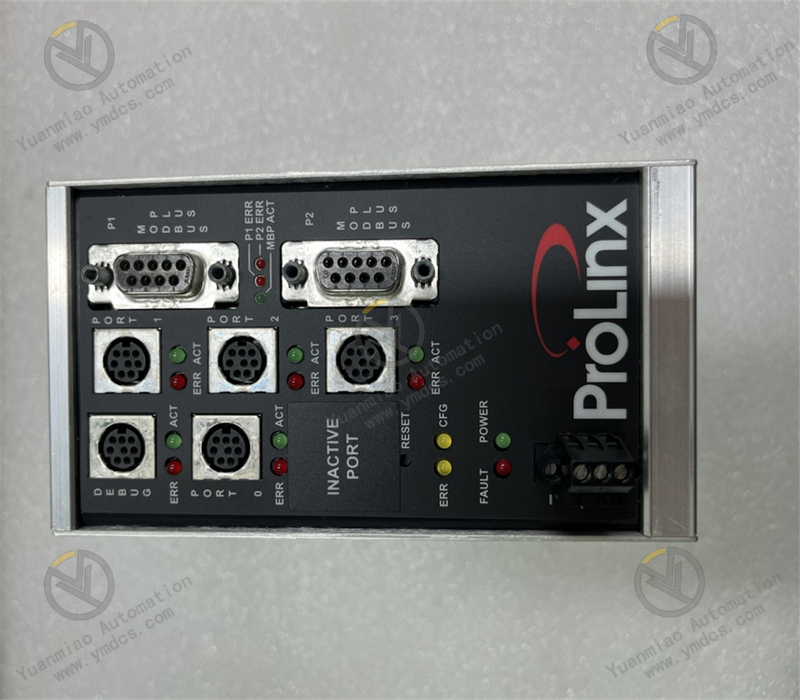
- Communication Ports: 4 independent serial interfaces supporting parallel multi‑bus communication
- Baud‑rate Range: 300 bps‑115200 bps, compatible with communication rates of various field devices
- Data‑processing Capacity: Each channel supports read‑write operations for a large number of registers; multi‑channel parallel processing delivers high throughput and low latency
- Station Capacity: A single module can connect dozens of Modbus slave devices to satisfy large‑scale field‑networking requirements
- Data Format: Configurable data bits, parity bits and stop bits, compatible with all standard Modbus devices on the market
2.3 Electrical and Interface Parameters
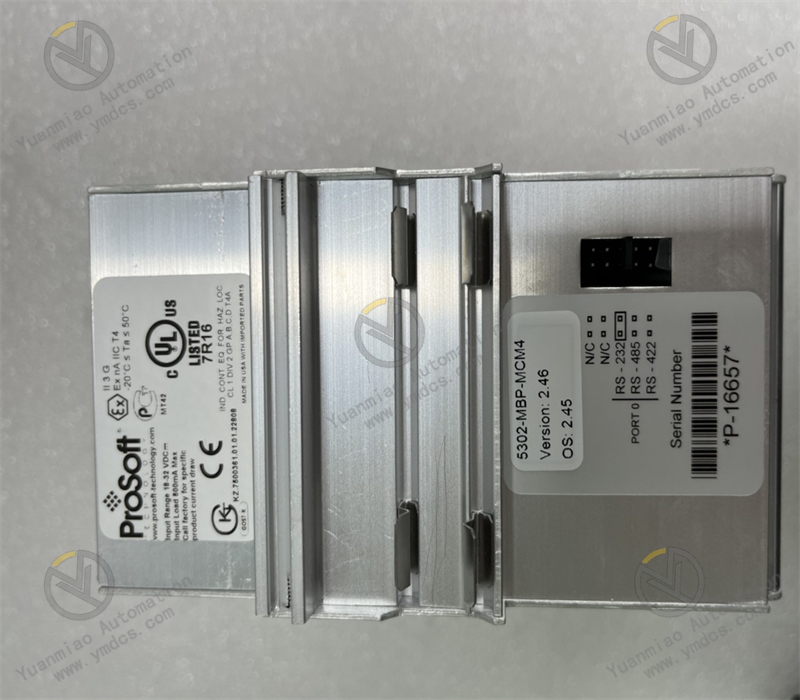
- Interface Type: Standard industrial RS485 / RS232 serial ports, matching mainstream field‑wiring solutions
- Power Supply: Backplane‑powered via chassis; no separate external power supply required, simplifying cabinet wiring
- Isolation Performance: Industrial‑grade electrical isolation protects the main control system against bus surges and voltage spikes
- Status Indication: On‑board independent LED indicators showing module run status, transmit‑receive activity and fault alarms
2.4 Environmental and Structural Parameters
- Operating Temperature: 0 ℃ ~ +60 ℃, suitable for constant‑temperature environments of standard industrial control cabinets
- Storage Temperature: ‑40 ℃ ~ +85 ℃
- Operating Humidity: 5%‑95% RH, non‑condensing
- Anti‑interference Standard: Compliant with industrial EMC specifications, resistant to electromagnetic interference from frequency converters and power equipment on‑site
- Structural Form: Hot‑swappable plug‑in module for standard ControlLogix chassis, featuring easy installation and flexible replacement
3. Product Functions and Core Advantages
3.1 Core Product Functions
- Independent Multi‑channel Parallel Communication: The four communication ports operate completely independently without mutual interference. They can be connected to Modbus field devices of different process sections and types, fundamentally eliminating single‑channel network congestion and long polling delays.
- Adaptive Mixed Master‑Slave Operation: Some channels can be configured as Master while others run as Slave on one single module. It can actively collect data from field instruments and drives, or passively upload data to upper‑level systems, delivering extremely flexible networking options.
- High‑speed Large‑volume Data Exchange: Supports batch register read‑write, continuous‑address scanning, scheduled polling and event‑triggered data acquisition, meeting demands for high‑frequency data collection, real‑time monitoring and closed‑loop process control on production lines.
- Bus Fault Isolation and Self‑recovery: Failures such as short circuits or cable breaks on one channel will not disrupt communication on other channels. Built‑in fault identification, link reset and abnormal‑data filtering improve overall system stability.
- Convenient Configuration and On‑line Diagnosis: Dedicated configuration software enables channel‑parameter setup, polling‑strategy editing, data mapping, real‑time monitoring and fault message reading, facilitating simple commissioning and fast fault‑location.
3.2 Core Product Advantages
- Native Chassis Compatibility: Developed specifically for the Allen‑Bradley ControlLogix platform. It plugs seamlessly into the chassis without adapters or third‑party protocol converters, requiring minimal programming work and delivering stable performance.
- Multi‑channel Integration for Significant Cost Savings: One module replaces multiple single‑port Modbus modules, reducing chassis‑slot occupation, wiring complexity and procurement costs, and offering excellent cost‑effectiveness for high‑density networking.
- Industrial‑grade Stable Anti‑interference Operation: Electrical isolation, surge protection and data‑error‑tolerant design allow reliable long‑term operation in harsh factory environments with strong electromagnetic fields, humidity and dust, without packet loss or communication drop‑outs.
- Flexible Networking for New‑and‑old Retrofit Projects: Fully compatible with standard Modbus RTU/ASCII equipment, legacy meters, domestic drives and third‑party intelligent devices. It represents an optimal solution for production‑line upgrades and system expansions.
- Low‑maintenance and High‑fault‑tolerance Design: Channel‑specific fault isolation prevents plant‑wide shutdowns caused by single‑point failures. Visualized diagnostics speed‑up troubleshooting and greatly reduce maintenance downtime.
- High Real‑time Performance for Precision Processes: The parallel multi‑channel polling mechanism provides fast data refresh and low latency, suitable for high‑real‑time‑demand applications including automated production lines, process control and energy monitoring.
4. Typical Application Scenarios
- Water‑treatment Industry: Modbus networking communication between PLC and water‑quality analyzers, flow meters, chemical‑dosing units and pump‑valve drives
- Oil‑gas & Chemical Industry: Centralized data acquisition for well‑site equipment, plant sensors, temperature and pressure transmitters
- Power‑energy Industry: Data collection and monitoring for switchgear meters, power‑quality monitors, DC power supplies and UPS systems
- Intelligent‑manufacturing Production Lines: Large‑scale bus networking for multi‑station frequency converters, temperature controllers, smart sensors and barcode readers
- Industrial‑retrofit Projects: Modbus communication expansion for legacy Allen‑Bradley control systems, single‑channel‑to‑multi‑channel upgrades and third‑party‑device integration
- Metallurgy & Building‑materials Industry: Data exchange and coordinated control for high‑temperature instruments, transmission equipment and remote field I/O modules
5. Installation, Operation and Maintenance Guidelines
- The module adopts chassis‑mounted hot‑swap installation. Cut off chassis power before installation. Insert the module smoothly into the corresponding slot and lock the latch to avoid loosening and communication interruption caused by operational vibration.
- Wire the four serial‑port buses separately. Cables for different channels shall be routed in separate conduits to prevent signal crosstalk. Use standard shielded twisted‑pair cables to guarantee signal integrity.
- Install termination resistors at both ends of each Modbus bus in accordance with Modbus wiring specifications to eliminate data‑packet loss and unstable communication induced by signal reflection and waveform distortion.
- Distinguish RS485 / RS232 pin definitions strictly. Avoid reversed polarity, loose connections and short‑circuits which could burn out ports and cause channel failure.
- Assign master‑slave roles, baud rates, polling intervals and station addresses rationally during configuration to prevent polling conflicts and optimize data‑refresh efficiency.
- During routine maintenance, observe module LED status. Use configuration software to monitor bus messages and station online status in real‑time, so as to quickly locate cable breaks, address conflicts and device‑response failures.
- Replace faulty units only with original modules of the identical model. Re‑import the matching configuration parameters after replacement to ensure consistent multi‑channel communication logic and station settings, and maintain stable system operation.