Description
GE IC693MDL730
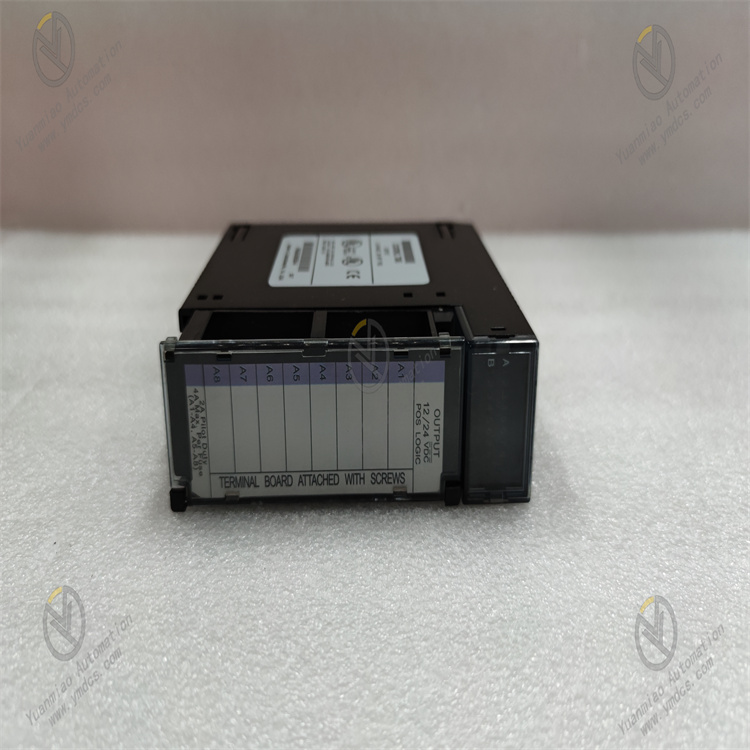
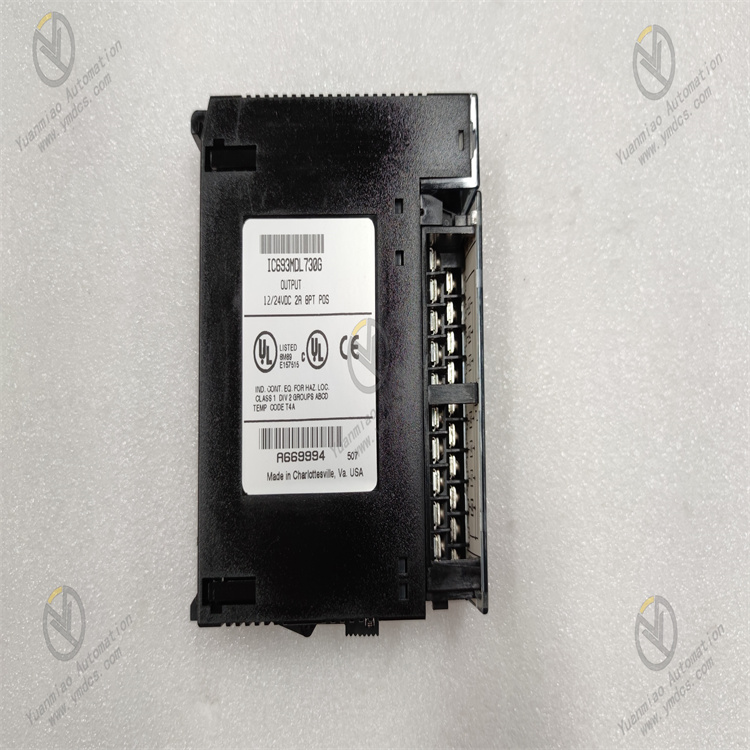
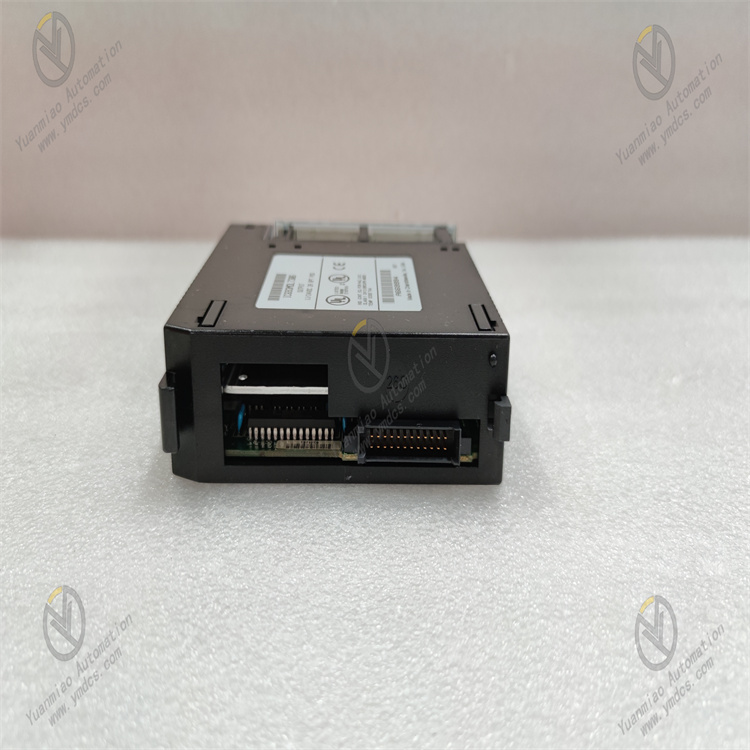
The GE IC693MDL730 is a core 16-channel relay output digital module for the 90-30 PLC system. Specifically designed for driving actuators in industrial field applications, its core function is to convert the digital control signals of the PLC into switching signals capable of driving external equipment. It is widely used in scenarios such as motor start-stop control, solenoid valve operation, and indicator light driving, and plays a key role in fields including automotive welding production lines, chemical valve control, and warehouse logistics conveyor systems. It serves as a crucial hub connecting the control core and the execution layer.
Output Specifications: 16 independent output channels, adopting Single-Pole Double-Throw (SPDT) relay contacts; rated contact voltage: AC 240V/DC 30V, rated current: 2A (per channel), inrush current: 10A (instantaneous); isolation voltage between channels ≥ 250V AC, with excellent anti-interference capability.
Electrical & Compatibility: Powered by the PLC backplane bus (DC 5V), power consumption of a single module ≤ 5W; compatible with all Series 90-30 CPUs, supporting hot swapping (requires PLC firmware version V3.0 or above), no need to shut down the system during replacement.
Environmental & Physical Parameters: Operating temperature: 0℃~60℃, storage temperature: -40℃~85℃; relative humidity: 5%~95% (non-condensing); electromagnetic interference resistance complies with the IEC 61000-4-2 standard; dimensions: 110mm×80mm×30mm, suitable for standard DIN rail mounting and compatible with Series 90-30 racks.
With "high reliability, easy maintenance, and strong adaptability" as its core advantages, the module meets industrial control requirements:
Wide Load Adaptability & Contact Protection: Relay contacts support AC/DC mixed loads and can directly drive equipment such as small motors and solenoid valves; built-in contact arc suppression circuit reduces arc wear during switching operations, extending the contact lifespan to over 1 million times.
Independent Channels & Status Indication: 16 channels with independent control; a single channel failure does not affect the operation of other channels; each channel is equipped with an LED status indicator—lit indicates closed contacts, off indicates open contacts. When used with PLC diagnostic software, it enables quick location of faulty channels.
Hot Swapping & Rapid Integration: Supports hot swapping, no need to interrupt the operation of the entire PLC system when replacing the module; address assignment is automatically completed via the backplane bus, no manual dialing required. Communication with the CPU can be achieved immediately after power-on, significantly shortening commissioning time.
The module follows a closed-loop logic of "signal reception - relay action - status feedback" in its working process:
Signal Reception: The PLC CPU transmits digital control signals (high/low level) to the module via the backplane bus. The drive circuit inside the module receives the signals and performs level conversion and power amplification.
Relay Action: The amplified signal drives the relay coil to be energized; the iron core generates a magnetic field to attract the contacts, realizing the on-off of the external circuit. When the control signal disappears, the coil is de-energized, and the contacts reset under the action of the spring.
Status Feedback: The module continuously monitors the status of the relay contacts and feeds back "closed/open" information to the CPU via the bus, forming a control closed loop and facilitating PLC fault diagnosis.
Fault 1: LED of a certain channel is on, but the load does not operateCauses: Oxidation and adhesion of relay contacts, open circuit in the load circuit, load failure.
Troubleshooting: Measure the voltage across the contacts with a multimeter. If there is voltage but no current, the load is faulty; if there is no voltage, check the wiring; if faults occur frequently, replace the module or clean the contacts.
Fault 2: Multiple channels fail simultaneously, and the PLC reports "module offline"Causes: Module not properly inserted, backplane bus failure, abnormal power supply to the module.
Troubleshooting: Power off and reinsert the module; test by replacing the rack slot; check the output voltage of the PLC power module.
Fault 3: Frequent contact ablation, shortened lifespanCauses: Load current exceeding the rated value, no freewheeling diode installed for inductive loads.
Troubleshooting: Calculate the load current and add an intermediate relay for capacity expansion; connect a freewheeling diode in parallel across inductive loads such as motors and solenoid valves.
![]()