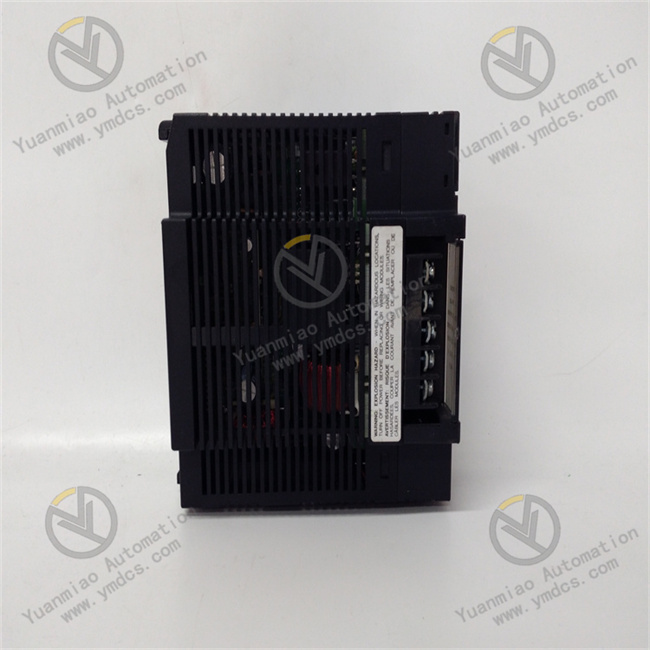
Description
GE IC695PSD140
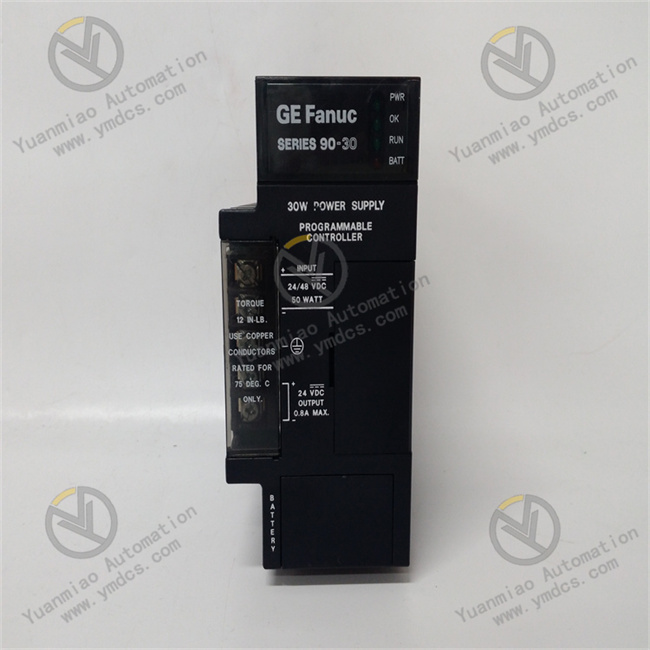
GE IC695PSD140 is a power supply module positioned as an industrial-grade high-stability redundant power unit. With core advantages including 140W high output power, wide-range input adaptation, and dual-channel redundant power supply design, this product is specifically designed to provide continuous and reliable DC power for RX3i series PLC systems. It is compatible with industrial scenarios requiring strict power supply stability and safety, such as petrochemical, power control, intelligent manufacturing, and rail transit. Its core value lies in ensuring stable power supply for PLC controllers, I/O modules, and peripheral equipment through efficient power conversion and redundant backup mechanisms, while featuring comprehensive overcurrent, overvoltage, and overtemperature protection functions, providing key power support for the continuous operation of industrial automation systems.
I. Technical Parameters
1. Input Power Parameters
- Supports wide-range AC input with an input voltage range of 85V AC~264V AC, compatible with single-phase/three-phase input modes (note power matching for single-phase input), and a frequency range of 47Hz~63Hz. It can adapt to power grid voltage standards in different regions worldwide without additional voltage conversion equipment.
- Simultaneously supports DC input mode with an input voltage range of 125V DC~300V DC, meeting the requirements of DC power supply scenarios (such as marine and rail transit on-board power supplies).
- The input terminal is equipped with surge suppression function, capable of withstanding ±2kV (1.2/50μs) lightning surge impact, effectively resisting voltage mutations caused by grid lightning strikes or switching operations.
2. Output Power Parameters
- Provides dual independent DC output channels, each with an output voltage of 24V DC, a maximum output current of 10A per channel, and a total output power of 140W (current can be flexibly distributed when dual channels are paralleled, with a maximum output current of no more than 10A per channel).
- Output voltage accuracy is ±0.5%, and load regulation rate is ≤±0.1%. When the load changes from 10% to 100%, the output voltage fluctuation does not exceed 0.024V, ensuring the stability of module power supply.
- Output ripple and noise are ≤50mVpp (20Hz~20MHz). The low ripple characteristic can effectively avoid interference with sensitive electronic components (such as sensor signal acquisition modules).
3. Redundancy and Parallel Parameters
- Supports multi-module parallel redundant operation, with a maximum of 4 modules in parallel. Load sharing is automatically achieved through the built-in redundant control circuit, with a load sharing accuracy of ≤±5%. When one of the modules fails, the remaining modules can seamlessly take over the full load within 10ms, and the system power supply interruption time is ≤1ms, meeting the redundant power supply requirements of Class I loads (such as power main control systems).
- The module features hot-swappable function, supporting replacement of faulty modules while the system is powered on. During the replacement process, the output voltage fluctuation is ≤±1%, ensuring uninterrupted system operation.
4. Structural and Hardware Parameters
- Adopts a single-slot design, compatible with RX3i series standard backplane installation. Module dimensions: 34mm×145mm×140mm, weight approximately 500g, with a compact structure and easy installation.
- The front panel is equipped with power status LED indicators (AC input, DC output, redundancy status, fault alarm), providing intuitive feedback on the module's operating status and fault information.
- Equipped with a detachable label panel, supporting custom identification of module functions (such as "Main Power Supply" and "Standby Power Supply"), facilitating identification and operation and maintenance in multi-module redundant networking.
- Input and output terminals adopt spring-loaded terminal blocks, supporting 12-22AWG wire connection, which is firm and vibration-resistant, adapting to complex industrial on-site environments.
5. Environmental and Reliability Parameters
- Complies with industrial-grade wide-temperature operation standards: operating temperature range -25℃~+60℃, storage temperature range -40℃~+85℃, suitable for outdoor cabinets in cold regions and high-temperature workshop environments.
- Relative humidity adaptation range: 5%~95% (non-condensing), meeting the requirements of high-humidity coastal areas, humid mine environments, and other scenarios.
- Certified by multiple international standards including CE, UL, and CSA, supporting Class I, Division 2 hazardous area installation. The Mean Time Between Failures (MTBF) is ≥400,000 hours, ensuring extremely high operational reliability.
- The module adopts an efficient heat dissipation design with a built-in temperature-controlled fan (automatically starts when the module temperature exceeds 50℃). The fan life is ≥50,000 hours, ensuring stable operation in high-temperature environments.
6. Protection and Diagnosis Parameters
- Equipped with comprehensive protection functions, including:
- Output overcurrent protection (protection threshold 11A±5%, automatically recoverable);
- Output overvoltage protection (protection threshold 28V DC±2%, latch-up protection, recovery requires module restart);
- Input undervoltage protection (triggered when AC input is below 75V AC, automatically restarts after voltage recovery);
- Overtemperature protection (triggered when module temperature exceeds 75℃, automatically recovers when temperature drops below 60℃);
- Short-circuit protection (immediately cuts off output when output is short-circuited, automatically recovers after short-circuit is eliminated).
- Features comprehensive diagnosis functions, capable of detecting fault types such as abnormal input voltage, output overload, module overtemperature, and fan failure. Fault information is intuitively displayed through LED indicators and uploaded to the controller via the RX3i backplane bus, facilitating remote monitoring and troubleshooting.
II. Key Features
1. Wide-Range Input + Dual-Channel Output, Strong Power Supply Adaptability
- Core highlight: Combined design of wide-range AC/DC input and dual independent outputs. The 85V AC~264V AC AC input can adapt to power grid voltages in different regions worldwide, and the 125V DC~300V DC DC input can meet the needs of special scenarios, eliminating the need for additional transformers or converters and reducing power supply adaptation costs by 30%.
- Dual 24V DC outputs can independently power PLC controllers & I/O modules and peripheral equipment (such as HMI, sensors), realizing load isolation, avoiding the impact of one load failure on the other, and improving power supply reliability by 50%.
- Dual-channel output current can be flexibly distributed (e.g., 6A for the controller and 4A for peripheral equipment) to adapt to different load requirements.
2. Multi-Module Redundancy + Hot-Swapping, Guaranteed Power Supply Continuity
- Supports 4-module parallel redundant operation. Load sharing is achieved through the built-in redundant control circuit. When a single module fails, the remaining modules automatically take over the full load without power interruption. Compared with single power supply, the system power supply reliability is improved to 99.999%, meeting the uninterrupted operation requirements of key industries such as petrochemical and power.
- The hot-swappable function allows replacement of faulty modules while the system is powered on. During the replacement process, the output voltage remains stable without shutdown, reducing production downtime caused by power supply maintenance. The annual maintenance downtime is controlled within 5 minutes, and maintenance efficiency is improved by 90%.
3. High-Precision Output + Low Ripple, Excellent Power Supply Quality
- Adopts switching power supply topology and high-precision feedback regulation circuit. The output voltage accuracy reaches ±0.5%, and the load regulation rate is ≤±0.1%, which is far superior to traditional linear power supplies, ensuring the stable operation of PLC controllers, precision sensors, and other equipment.
- Output ripple and noise are ≤50mVpp. The low ripple characteristic can effectively suppress interference with analog acquisition modules, improving sensor signal acquisition accuracy by 15% and avoiding control errors caused by power supply interference.
- Efficient power conversion design with a conversion efficiency of ≥90% (at full load). Compared with traditional power supplies with a conversion efficiency of 80%, each module can save approximately 200kWh of electricity per year, reducing energy costs.
4. Comprehensive Protection + Intelligent Diagnosis, Dual Guarantee of Operation & Maintenance and Safety
- Integrates multiple protection functions such as overcurrent, overvoltage, undervoltage, overtemperature, and short-circuit, which can cope with common power supply abnormalities in industrial sites (such as grid voltage fluctuations, load short-circuits), protect the module itself and downstream equipment from damage, and reduce equipment failure rate by 60%.
- The intelligent diagnosis function can real-time monitor parameters such as input voltage, output current, module temperature, and fan status. When an abnormality is detected, the fault type (such as overcurrent fault, overtemperature fault) is accurately displayed through LED indicators, and the fault information is uploaded to the controller via the backplane bus. Combined with the HMI interface, the detailed fault information can be intuitively displayed, reducing troubleshooting time to within 5 minutes and improving operation and maintenance efficiency by 70%.
5. Compact Design + Easy Integration, Reduced Deployment Costs
- The single-slot compact design can effectively save cabinet installation space. Compared with traditional external power cabinets, the installation space is reduced by 70%.
- The module is directly inserted into the RX3i backplane and powers other modules through the backplane, eliminating the need for additional power supply cables and reducing wiring costs by 40%.
- Supports plug-and-play. After installation, the module automatically adapts to the input power supply without complex parameter configuration. The installation time for new system deployment or old system upgrade is shortened to within 30 minutes.
- The wide-temperature design and efficient heat dissipation system adapt to various harsh industrial environments, eliminating the need for additional heat dissipation equipment and further reducing deployment costs.
III. Working Principle and Applications
3.1 Working Principle
GE IC695PSD140 realizes industrial-grade stable power supply based on the core logic of "input rectification → power conversion → voltage regulation → redundancy control → protection and diagnosis". The specific process is as follows:① Input Rectification Stage: AC input is converted to DC voltage through a rectifier bridge after suppressing electromagnetic interference by an EMC filter circuit; DC input is directly processed by the EMC filter circuit to avoid interference signals from entering the module.② Power Conversion Stage: Adopts a phase-shifted full-bridge ZVS topology. The DC voltage is converted to high-frequency AC voltage through high-frequency switching transistors, and output after step-down by a high-frequency transformer.③ Voltage Regulation Stage: The high-frequency AC voltage is converted to DC voltage through an output rectifier and filter circuit. The feedback circuit real-time collects output voltage and current signals, adjusts the on-time of the switching transistors, and ensures the output voltage is stabilized at 24V DC±0.5%.④ Redundancy Control Stage: When multiple modules are paralleled, the redundancy control circuit realizes communication between modules through the CAN bus, real-time shares load current information, and achieves load sharing by adjusting the output current of each module. When a module fails, the redundancy control circuit immediately cuts off the output of the faulty module and adjusts the output current of other modules to ensure stable total output current.⑤ Protection and Diagnosis Stage: Real-time monitors parameters such as input voltage, output current, and module temperature. When the parameters exceed the threshold, the corresponding protection function is triggered (such as cutting off the output in case of overcurrent), and the fault information is output through LED indicators and the backplane bus, forming a complete power supply-protection-diagnosis closed loop.
3.2 Application Scenarios
- Power Supply for Petrochemical PLC Control Systems: In the PLC control system of a refinery's catalytic cracking unit, two IC695PSD140 modules are used for parallel redundant power supply. The input is connected to the plant's 380V AC three-phase power supply (stepped down to 220V AC by a transformer), and the dual outputs independently power the RX3i controller & I/O modules and on-site sensors & actuators. When one power module fails, the other module takes over the full load (total load current 8A) within 10ms without power interruption, ensuring the continuous operation of the catalytic cracking unit. The module's overvoltage protection function can resist voltage mutations caused by grid lightning strikes (maximum 2kV surge), the annual power supply interruption time is no more than 5 minutes, and the unit's operational stability is improved by 20%.
- Power Supply for Thermal Power Plant DCS Systems: In the DCS system of a coal-fired power plant's boiler control system, four IC695PSD140 modules are used for parallel redundant power supply. The input is connected to the power plant's 110V DC DC system (compatible with 125V DC~300V DC input), and the output powers equipment such as DCS controllers, analog acquisition modules, and valve control modules with a total load power of 120W. The load sharing accuracy is ≤±5%, and each module outputs a current of approximately 3A. When two modules fail simultaneously, the remaining two modules can take over the full load, meeting the redundant power supply requirements of the DCS system. The module's overtemperature protection function can adapt to the high-temperature environment of 45℃ in the power plant control room. The built-in temperature-controlled fan automatically starts when the temperature exceeds 50℃, ensuring stable module operation. The MTBF is ≥400,000 hours, and the annual failure rate is less than 0.1%.
- Power Supply for Intelligent Manufacturing Factory Automation Production Lines: In an automotive welding automation production line, the IC695PSD140 module serves as the main power supply for the RX3i controller, welding robot control module, and visual inspection system. The input is connected to the factory's 220V AC single-phase power supply, and the dual outputs supply power to the controller (6A) and peripheral equipment (4A) respectively. The module's low ripple characteristic (≤50mVpp) effectively avoids interference with the visual inspection system, improving detection accuracy by 15%. The hot-swappable function allows replacement of the power module without stopping the production line, reducing maintenance downtime to 2 minutes and increasing the annual effective operation time of the production line by 1%. The wide-range input function can adapt to factory grid voltage fluctuations (85V AC~264V AC), avoiding welding quality defects caused by unstable voltage.
- Power Supply for Rail Transit Signal Control Systems: In an urban subway signal control system, the IC695PSD140 module is deployed in the station signal control cabinet. The input is connected to the subway's 150V DC DC traction power supply (compatible with 125V DC~300V DC input), and the output powers equipment such as signal controllers, track circuit modules, and communication modules. A two-module parallel redundant design is adopted. When the main power module fails, the standby module switches seamlessly within 1ms, ensuring the continuous operation of the signal system and avoiding train operation suspension caused by power supply interruption. The module's wide-temperature design can adapt to temperature fluctuations of -25℃~+60℃ in subway tunnels. Its vibration resistance meets rail transit standards, and the MTBF is ≥400,000 hours, ensuring long-term stable operation.
IV. Common Faults and Troubleshooting
1. Fault 1: No Output Voltage (Output Indicator Off)
- Possible Causes: Input power not connected or abnormal voltage, input fuse blown, internal power conversion circuit fault of the module, improper module installation (poor backplane contact).
- Troubleshooting Measures:① Check the input power wiring to ensure the input voltage is within the range of 85V AC~264V AC or 125V DC~300V DC.② Replace the module input fuse (specification: 5A/250V AC) and restart the power supply for testing.③ Use a multimeter to measure the voltage at the module input terminal. If the voltage is normal but there is no output, it indicates an internal module fault; replace with a spare module.④ Reinsert the module to ensure good contact with the backplane and tighten the mounting screws.
2. Fault 2: Unstable Output Voltage (Output Indicator Flashing)
- Possible Causes: Excessively large input voltage fluctuation (beyond 85V AC~264V AC range), excessive output load (exceeding 140W), load short-circuit or intermittent short-circuit, module feedback regulation circuit fault.
- Troubleshooting Measures:① Use a multimeter to monitor the input voltage. If the fluctuation is too large, configure a voltage stabilizer to stabilize the input voltage.② Calculate the output load power, remove unnecessary loads, and ensure the total load ≤140W.③ Disconnect all output loads, connect them one by one for testing, locate the short-circuited load equipment, and repair it.④ If the output voltage is still unstable under no-load condition, it indicates an internal module fault; replace with a spare module.
3. Fault 3: Redundancy Switchover Failure (Redundancy Indicator Off)
- Possible Causes: Communication fault between redundant modules, module redundancy parameters not configured, one of the modules faulty, incorrect parallel wiring.
- Troubleshooting Measures:① Check the CAN communication cables between redundant modules to ensure firm wiring, and reinsert the communication connectors.② Configure module redundancy parameters through GE Proficy Machine Edition software and enable the parallel redundancy function.③ Test each module individually to confirm there are no faulty modules; replace the faulty module.④ Verify the parallel wiring to ensure the input and output terminals of all modules are correctly connected with consistent polarity.
4. Fault 4: Module Overtemperature Alarm (Overtemperature Indicator On)
- Possible Causes: Ambient temperature exceeding 60℃, poor module ventilation (blocked heat dissipation holes), excessive load (long-term full-load operation), built-in fan fault.
- Troubleshooting Measures:① Improve cabinet ventilation conditions, add cooling fans, and control the ambient temperature below 60℃.② Clean dust from the module's heat dissipation holes to ensure smooth ventilation.③ Reduce the output load, avoid long-term full-load operation, and add parallel modules if necessary.④ Check the built-in fan. If the fan does not rotate, replace the fan (specification: 12V DC, 0.1A) or directly replace with a spare module.
5. Fault 5: Overcurrent Protection Triggered (Overcurrent Indicator On)
- Possible Causes: Output load short-circuit, load current exceeding 10A per channel or total load exceeding 140W, abnormal overcurrent protection threshold.
- Troubleshooting Measures:① Disconnect the output load, check if the load line is short-circuited, and repair the short-circuit point.② Calculate the load current to ensure the single-channel load ≤10A and total load ≤140W; add parallel modules if necessary.③ If the overcurrent protection is frequently triggered when the load is normal, it indicates a fault in the module's protection circuit; replace with a spare module.④ The overcurrent protection is automatically recoverable. After eliminating the fault, restart the power supply to restore normal operation.