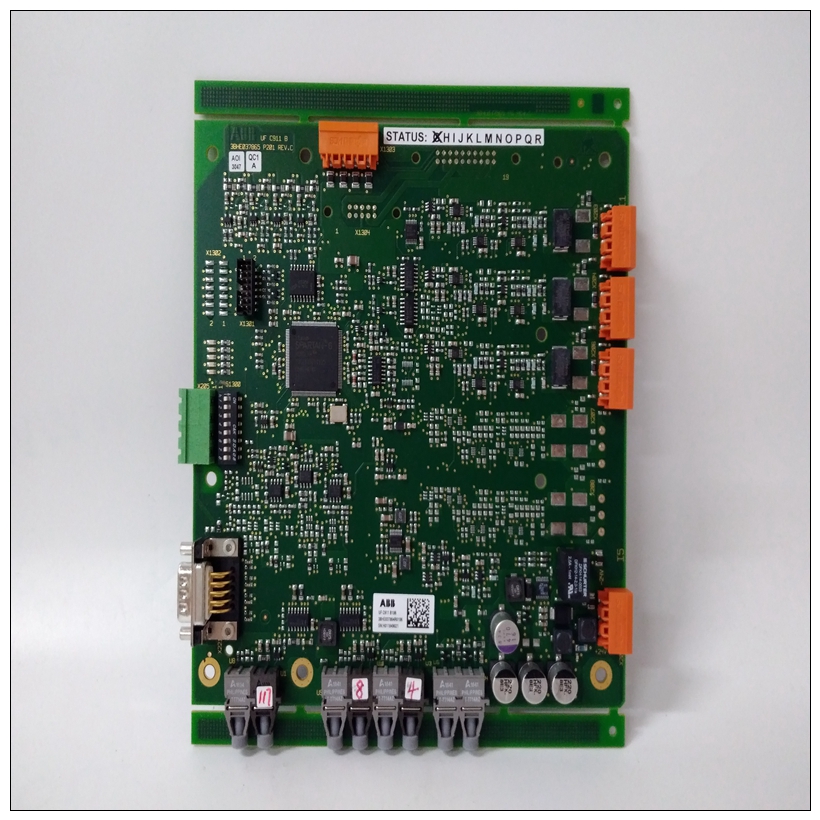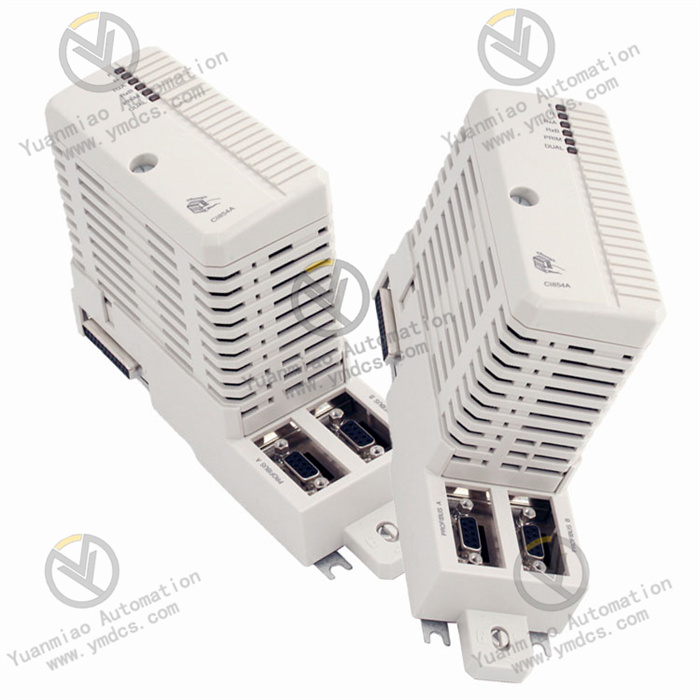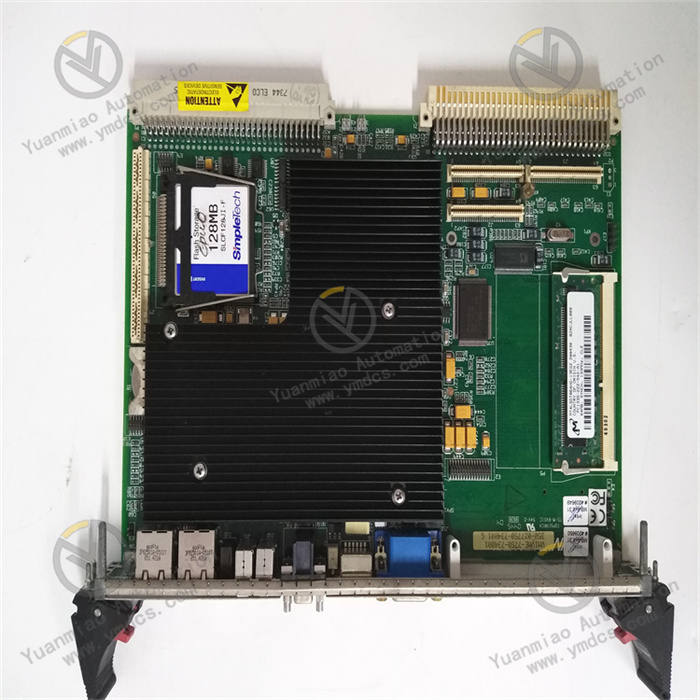
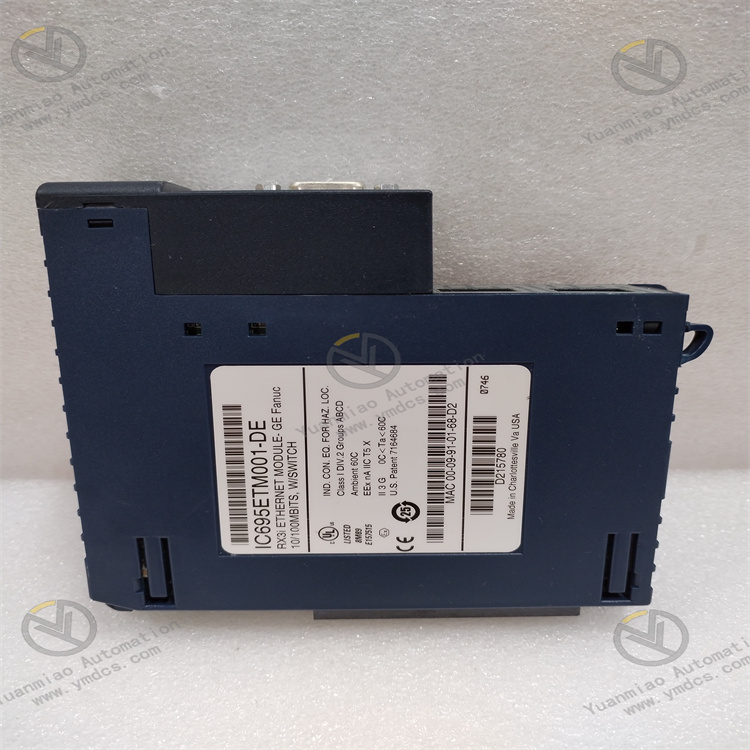
Description
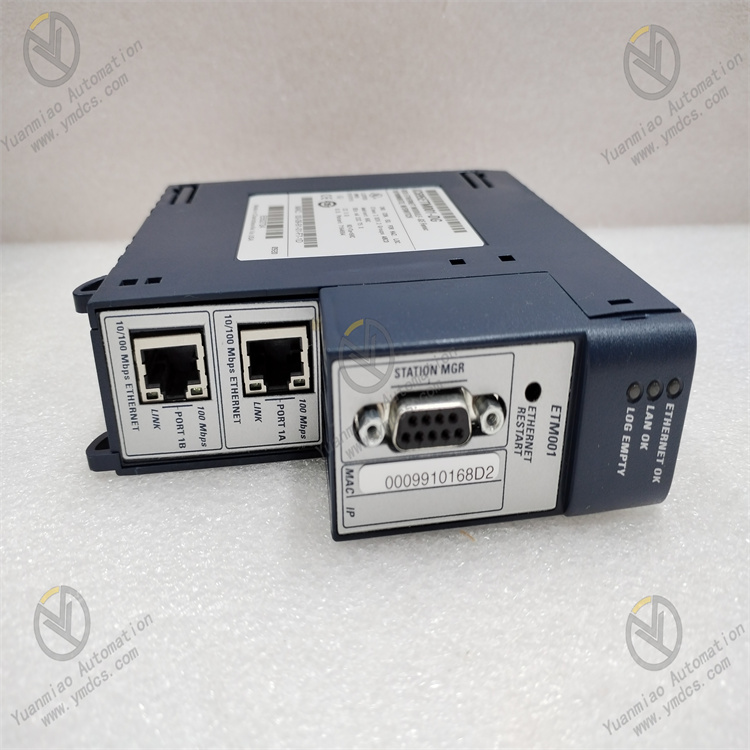
GE IC695ETM001
I. Technical Parameters
1. Communication Interface and Speed Parameters
- Equipped with 2 independent Gigabit Ethernet RJ45 interfaces, supporting 10/100/1000Mbps auto-negotiation speed, which can automatically switch working modes according to the network environment.
- Supports full-duplex/half-duplex communication modes. Full-duplex mode enables simultaneous two-way data transmission, effectively improving communication efficiency.
- Each interface supports Auto-MDI/MDI-X automatic crossover function, eliminating the need to distinguish between straight-through and crossover cables, simplifying on-site wiring operations.
- Complies with IEEE 802.3 standard, with a maximum transmission distance of 100m (using CAT5e or higher grade cables), meeting the short-distance Ethernet access needs of industrial on-site equipment.
2. Protocol Compatibility Parameters
- Supports multiple mainstream industrial Ethernet protocols, including EtherNet/IP (as adapter and scanner), Modbus TCP/IP (client/server mode), and GE SRTP (Secure Real-Time Protocol), enabling seamless compatibility with automation equipment from third-party brands such as Rockwell and Schneider.
- Supports basic network protocols such as TCP/IP and UDP/IP, realizing standardized data exchange with upper-level systems such as HMI, SCADA, and MES.
- Features protocol priority scheduling function, allowing real-time control data (e.g., I/O interaction) to be set as high priority, ensuring minimal transmission delay for critical data.
3. Real-Time Performance and Data Processing Parameters
- Adopts a dedicated communication processor with a data processing speed of 1Gbps, supporting a maximum of 1024 EtherNet/IP explicit message connections and 256 implicit message connections, meeting the communication needs of large-scale equipment networking.
- The cycle time of the SRTP real-time communication protocol can be as low as 1ms, with a data transmission delay of ≤5ms (at Gigabit speed), ensuring fast response to real-time control commands.
- Supports data block transmission function, with a maximum single message transmission length of 1460 bytes, improving the transmission efficiency of batch data (e.g., production reports, fault logs).
4. Structural and Hardware Parameters
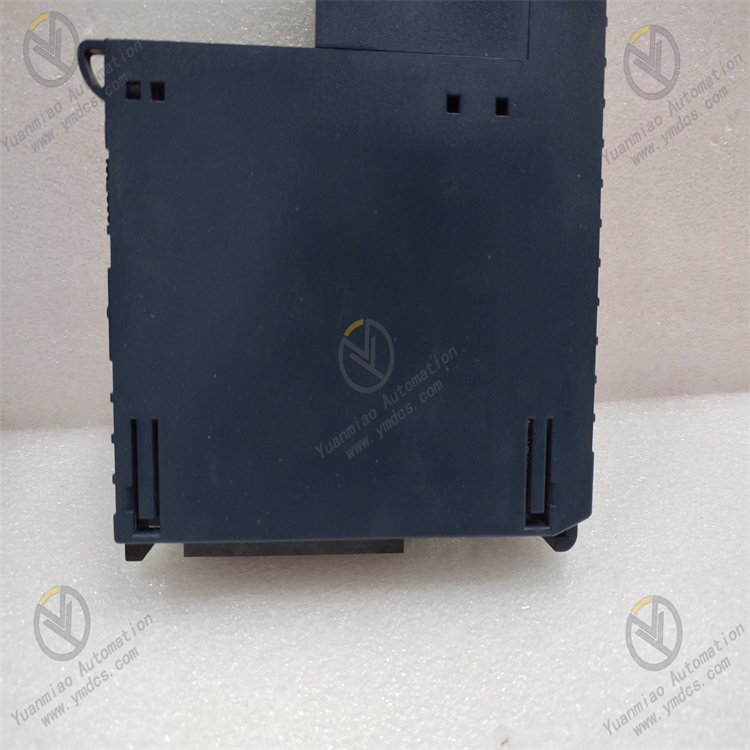
- Features a single-slot design, compatible with RX3i series standard backplane installation. Module dimensions: 34mm×145mm×140mm, weight approximately 450g, with a compact structure and easy installation.
- The front panel is equipped with communication status LED indicators (Link Status, Data Transmit/Receive, Protocol Status, Fault Alarm), providing intuitive feedback on the operating status and fault information of each Ethernet interface.
- Equipped with a detachable label panel supporting custom module function identification, facilitating recognition and operation/maintenance in multi-module networking.
5. Environmental and Reliability Parameters
- Complies with industrial-grade wide-temperature operation standards: operating temperature range -25℃~+60℃, storage temperature range -40℃~+85℃, suitable for outdoor cabinets in cold regions and high-temperature workshop environments.
- Relative humidity adaptation range: 5%~95% (non-condensing), meeting the requirements of high-humidity environments such as coastal areas and humid mines.
- Certified by multiple international standards including CE, UL, and CSA, supporting Class I, Division 2 hazardous area installation. The Mean Time Between Failures (MTBF) is ≥300,000 hours, ensuring extremely high operational reliability.
6. Redundancy and Protection Parameters
- Supports Ethernet link redundancy function, realizing link hot standby through 2 independent interfaces. When the main link fails, the standby link can switch seamlessly within ≤10ms to ensure uninterrupted communication.
- Features network storm suppression function, which can automatically identify and filter abnormal network traffic such as broadcast storms and ARP attacks, protecting the module's communication ports from damage.
- Supports IP address conflict detection and alarm. When a device with the same IP address appears in the network, fault information is fed back through LED indicators and the backplane bus.
II. Key Features
1. Gigabit Speed + Dual-Interface Redundancy, High Communication Reliability and Efficiency
- Core highlight: Combined design of Gigabit Ethernet speed and dual-interface link redundancy. Compared with 100M modules, Gigabit speed improves data transmission efficiency by 10 times, enabling fast transmission of batch production data and high-definition equipment status images.
- Dual interfaces support link hot standby or link aggregation modes:
- Hot standby mode: Fault switching time ≤10ms, avoiding communication interruption caused by single link failure.
- Link aggregation mode: Combines dual-interface bandwidth to 2Gbps, meeting the needs of high-concurrency data transmission scenarios.
- Compared with single-interface communication, the system communication reliability is improved by 99.99%.
2. Multi-Protocol Compatibility + Flexible Configuration, Strong Networking Adaptability
- Supports mainstream industrial protocols such as EtherNet/IP, Modbus TCP/IP, and SRTP, serving as a communication gateway for heterogeneous automation systems. It realizes interconnection between devices of different brands such as GE, Rockwell, and Schneider without additional dedicated gateways, reducing networking costs by 40%.
- Protocol parameters (e.g., IP address, port number, connection quantity) can be flexibly configured through GE Proficy Machine Edition software, supporting online parameter modification without restarting the module, improving configuration efficiency by 60%.
- Supports dynamic protocol switching function, enabling fast switching between different protocols according to the needs of upper-level systems, adapting to multi-system collaborative management and control scenarios.
3. Real-Time Scheduling + Batch Transmission, Balancing Control and Data Requirements
- Adopts a dedicated communication processor and priority scheduling algorithm to classify and process real-time control data (e.g., I/O signal interaction) and non-real-time data (e.g., report upload). The real-time data transmission delay is ≤5ms, meeting the strict real-time requirements of closed-loop control for communication.
- Batch data transmission supports 1460-byte large message frames. Compared with traditional 64-byte small frame transmission, the upload efficiency of batch production data is improved by 20 times. It can quickly upload equipment fault logs and production statistical data to the MES system, providing timely data support for production management.
4. Intelligent Diagnosis + Safety Protection, Dual Guarantee for Operation and Maintenance and Safety
- Integrates full-dimensional diagnostic functions including link status, protocol operation, IP conflict, and network storm. Fault types are intuitively displayed through LED indicators, and detailed fault information (e.g., fault time, location, cause) is uploaded to the controller via the RX3i backplane bus. Combined with the HMI interface, faults can be quickly located, reducing troubleshooting time to within 5 minutes and improving operation and maintenance efficiency by 70% compared with traditional communication modules.
- Equipped with multiple safety mechanisms such as network storm suppression, IP conflict detection, and port overcurrent protection, which can resist common network attacks and abnormal faults in industrial networks, protecting the safety and stability of the module and the entire communication network.
5. Compact Design + Easy Integration, Reducing Deployment Costs
- Single-slot compact design effectively saves cabinet installation space, reducing installation space occupancy by 60% compared with traditional external communication gateways.
- Supports plug-and-play. After the module is inserted into the RX3i backplane, it automatically establishes communication with the controller without additional communication driver configuration. The installation time for new system deployment or old system upgrades is shortened to within 30 minutes.
- Supports remote configuration and maintenance functions. Operation and maintenance personnel can remotely modify module parameters and upgrade firmware via Ethernet, completing maintenance operations without arriving at the site, reducing on-site operation and maintenance costs by 30%.
III. Working Principle and Applications
3.1 Working Principle
- In link hot standby mode: Real-time monitor the main link status. When the main link fails, immediately switch to the standby link for data transmission.
- In link aggregation mode: Fragment data and transmit it in parallel through dual links.⑤ Data Output Stage: Transmit the processed valid data to the controller via the RX3i backplane bus. Meanwhile, encapsulate the feedback data from the controller according to the corresponding protocol and send it to the target device through the Ethernet interface, forming a complete communication closed loop.
3.2 Application Scenarios
Communication for Heterogeneous Systems in Petrochemical Industry: In the automation system of a refinery, IC695ETM001 serves as the communication module of the RX3i controller. It communicates with Rockwell's PLC system via EtherNet/IP protocol to obtain operating data of the catalytic cracking unit; communicates with Schneider's HMI via Modbus TCP/IP protocol to realize real-time display of equipment status; communicates with GE's SCADA system via SRTP protocol to upload production reports and fault logs. The dual interfaces adopt link hot standby mode, connecting to the factory's main Ethernet and backup Ethernet respectively. When the main network is interrupted due to maintenance, the backup network switches within 10ms, ensuring continuous upload of production data with an annual communication interruption time of no more than 5 minutes.
Remote Monitoring of Equipment in Thermal Power Plants: In the steam turbine unit monitoring system of a coal-fired power plant, IC695ETM001 accesses the power plant's industrial Ethernet at Gigabit speed. It communicates with remote I/O modules (e.g., IC695ALG616-EA) via EtherNet/IP protocol to collect real-time parameters such as vibration and temperature of the steam turbine (transmission delay ≤5ms); communicates with the equipment management platform via Modbus TCP/IP protocol to remotely issue control commands and parameter configurations. The link aggregation mode combines dual-interface bandwidth to 2Gbps, meeting the concurrent data transmission needs of more than 100 devices. The network storm suppression function effectively filters abnormal network traffic caused by power grid fluctuations in the power plant, ensuring stable communication.
Industrial Internet Access for Intelligent Manufacturing Factories: In the industrial Internet platform of an automobile welding factory, IC695ETM001 serves as the Ethernet access module of the RX3i controller. It uploads real-time operating data (welding current, pressure, temperature) and fault logs of 10 welding robots to the MES system at Gigabit speed, with a data transmission rate of 100MB/s, ensuring real-time synchronization of production data; communicates with the factory's AGV system via EtherNet/IP protocol to realize collaborative scheduling between welding stations and logistics systems. The remote configuration function allows operation and maintenance personnel to modify module communication parameters in the central control room without entering the welding workshop (high-temperature and high-dust environment), improving operation and maintenance efficiency by 80%.
- Communication for Rail Transit Signal Systems: In the signal control system of an urban subway, IC695ETM001 is deployed in the station signal control cabinet. It communicates with the Automatic Train Control (ATC) system via SRTP real-time protocol to transmit key signals such as train position and speed, with a communication delay of ≤3ms, ensuring the real-time performance of train operation scheduling. The dual interfaces adopt link hot standby to access the subway's dedicated Ethernet and backup communication network. When the main communication network fails due to lightning strikes, the backup network switches within 10ms, avoiding train operation suspension caused by signal communication interruption. The wide-temperature design adapts to the temperature fluctuation of -25℃~+60℃ in the subway tunnel, and MTBF ≥300,000 hours ensures long-term stable operation.
IV. Common Faults and Troubleshooting
1. Fault 1: Abnormal Link Connection (Link Indicator Off)
- Possible Causes: Damaged or loose network cable connections, faulty switch ports, faulty module interfaces, substandard network cable specifications.
- Troubleshooting Measures:① Replace with a spare CAT5e or higher grade network cable, reinsert and fasten the crystal head.② Connect the network cable to another normal switch port for testing to rule out switch faults.③ Use a multimeter to measure the continuity of the module interface pins to confirm no physical damage.④ Check the contact status between the module and the backplane, reinsert the module to ensure good contact.
2. Fault 2: Protocol Communication Failure (Data Transmit/Receive Indicator Not Blinking)
- Possible Causes: Incorrect protocol parameter configuration (IP address, port number, slave address), incompatible communication driver of the upper-level system, firewall blocking communication ports, incorrect protocol type selection.
- Troubleshooting Measures:① Log in to Proficy Machine Edition software and verify that the module's IP address, port number and other parameters are consistent with the upper-level system.② Upgrade the communication driver of the upper-level system to a compatible version (refer to GE's official driver compatibility list).③ Disable the firewall of the upper-level system and switch, or open the module's communication ports.④ Confirm that the correct protocol type is selected (e.g., EtherNet/IP implicit messages need to match the input/output data length).
3. Fault 3: Link Redundancy Switching Failure (Redundancy Indicator Off)
- Possible Causes: Incorrect redundancy parameter configuration, faulty backup link network cable, unenabled switch redundancy function, faulty module redundancy communication.
- Troubleshooting Measures:① Verify the redundancy mode setting (hot standby/aggregation) in the configuration software and ensure the correct IP address configuration of the dual interfaces.② Test the backup link network cable and switch port to ensure the backup link is normal.③ Enable the switch's link redundancy function (e.g., STP/RSTP protocol).④ Test with a spare module to confirm if it is a module redundancy function fault.
4. Fault 4: Excessively Large Data Transmission Delay (Slow Real-Time Control Response)
- Possible Causes: High network load, unconfigured protocol priority, insufficient switch bandwidth, outdated module firmware version.
- Troubleshooting Measures:① Use a network analyzer to detect network traffic and turn off unnecessary devices to reduce load.② Set real-time data as high priority and non-real-time data as low priority in the configuration software.③ Replace with a Gigabit switch to ensure sufficient network bandwidth.④ Upgrade the module firmware to the latest version to optimize communication processing efficiency.
5. Fault 5: IP Address Conflict Alarm (Conflict Indicator On)
- Possible Causes: Devices with the same IP address in the network, IP conflict assigned by the DHCP server, unfixed module IP address.
- Troubleshooting Measures:① Use an IP scanning tool to identify conflicting devices in the network and modify their IP addresses.② Disable the module's DHCP function and configure a fixed IP address.③ Restart the DHCP server to reassign the network IP address pool.④ After verifying that the module's IP address is not duplicated with other devices, restart the module to restore communication.