Description
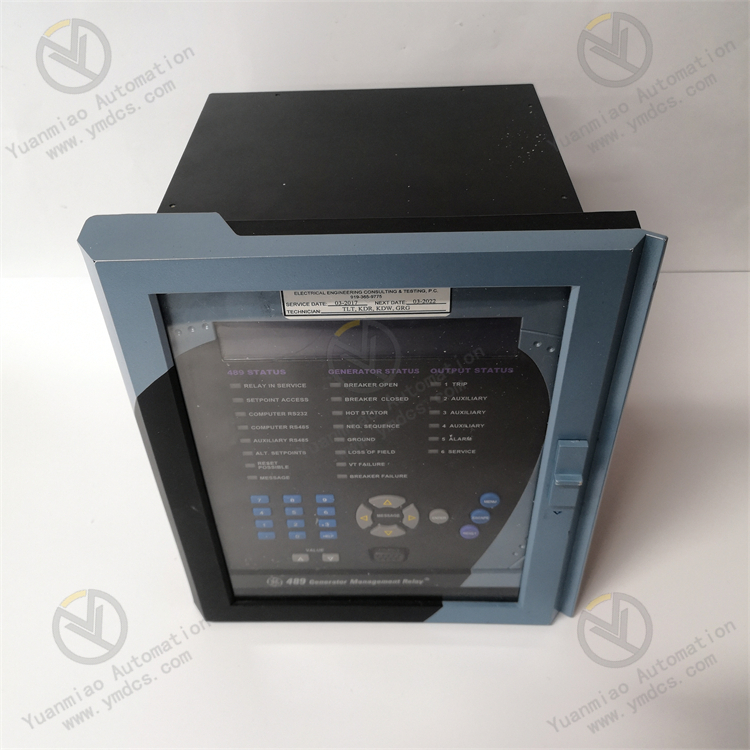
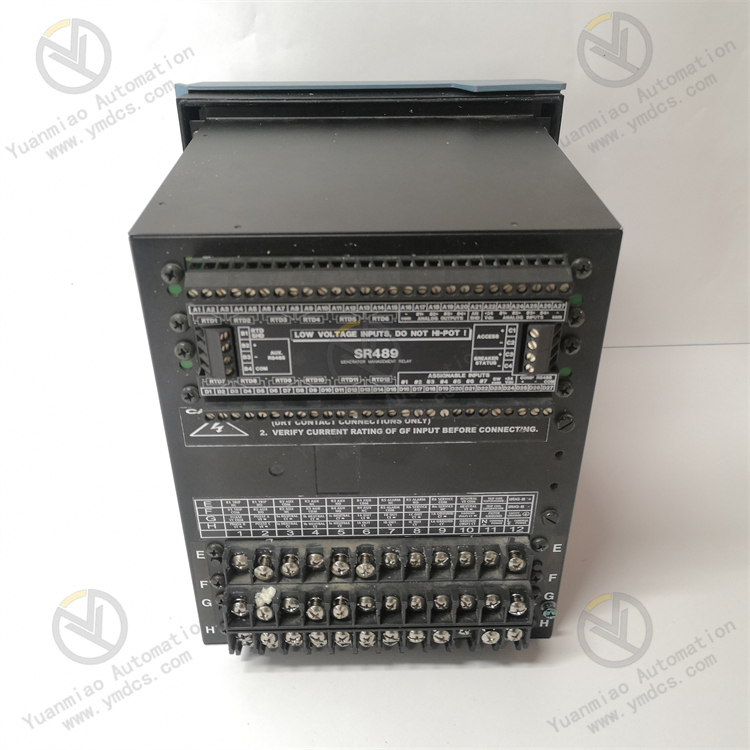
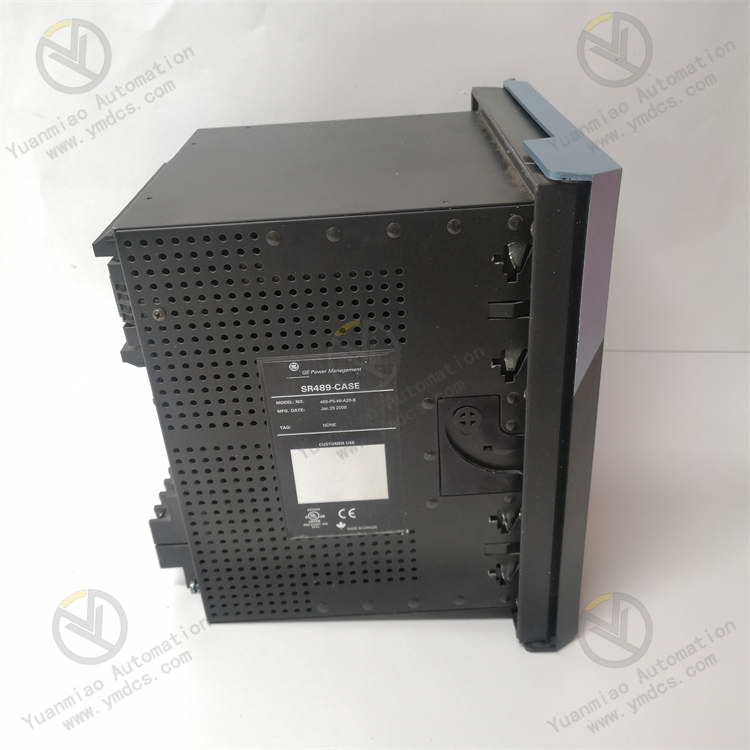
GE Multilin SR489-P5-HI-A20-E
The GE Multilin SR489-P5-HI-A20-E is an integrated protection and control relay for medium-voltage and high-voltage motors. Developed based on GE's new-generation motor protection core platform, it is tailor-made for medium-voltage and high-voltage (rated voltage ≤ 35kV), high-power (rated power ≥ 5MW) asynchronous motors, synchronous motors, and special heavy-duty rotating equipment. Positioned as the "core terminal for full-lifecycle intelligent protection and operation & maintenance of medium-voltage and high-voltage high-power motors", its core value lies in integrating high-precision multi-parameter acquisition, AI-aided fault diagnosis, redundant fault-tolerant control, and industrial internet access capabilities. It enables precise protection, intelligent monitoring, and predictive maintenance throughout the entire stages of motor startup, operation, shutdown, and maintenance. Meanwhile, it integrates advanced functions such as complex logic control, multi-protocol compatible communication, and massive data storage, providing a high-end integrated "protection-control-diagnosis-operation & maintenance" solution for key core equipment in fields like electric power, petrochemicals, metallurgy, mining, and heavy manufacturing—including large fans, high-voltage water pumps, centrifugal compressors, main rolling motors, and mine hoists.
With core advantages of "ultra-precise protection, high-reliability operation, intelligent diagnosis, and strong adaptive integration", this relay is highly aligned with the operational requirements of medium-voltage and high-voltage high-power motors, such as high load, long cycle, strong impact, and complex working conditions. It serves as the core hub for full closed-loop management of "risk early warning-rapid handling-root cause tracing-health management" in industrial motor control systems. It demonstrates outstanding performance in key industry scenarios:
- In the electric power sector: Used for protecting induced draft fans, forced draft fans, and boiler feedwater pump motors in large thermal power plants. Through AI-integrated diagnosis technology, it accurately identifies hidden faults such as rotor bar breakage and uneven air gap, issues early warnings more than 30 days in advance, and reduces the unplanned shutdown rate by 50%.
- In the petrochemical sector: Adapted for circulating hydrogen compressor motors in large refining and chemical units. With enhanced redundant design and harsh environment-resistant packaging, it maintains a protection action accuracy of ≥ 99.9% in high-temperature, high-pressure, and high-corrosion environments.
- In the metallurgical sector: Provides comprehensive protection and control for main drive motors in steel rolling production lines, adapting to heavy-load startup/shutdown conditions (3-6 times per hour) with a protection accuracy error of ≤ ±0.5%.
- In the mining sector: Offers dual-machine redundant protection for main mine ventilators and main hoist motors, ensuring the continuous operation of critical mine systems.
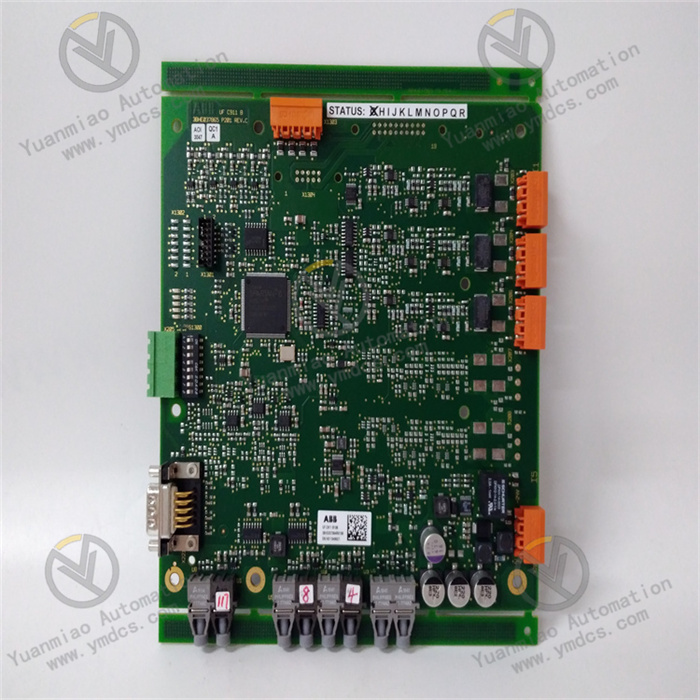
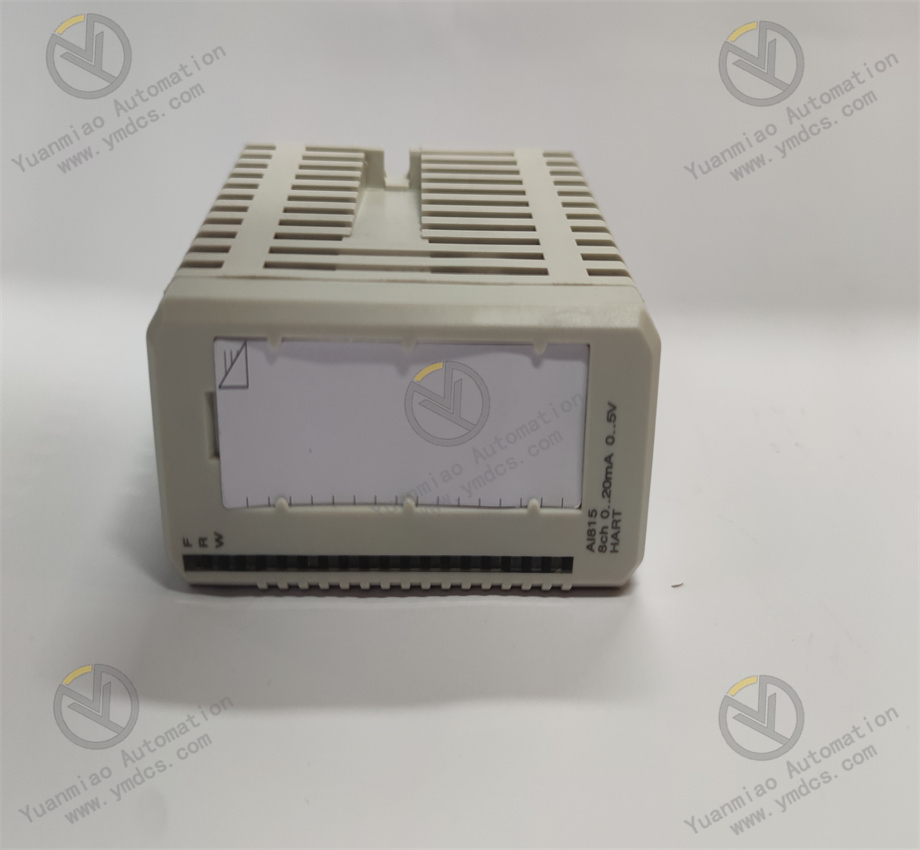
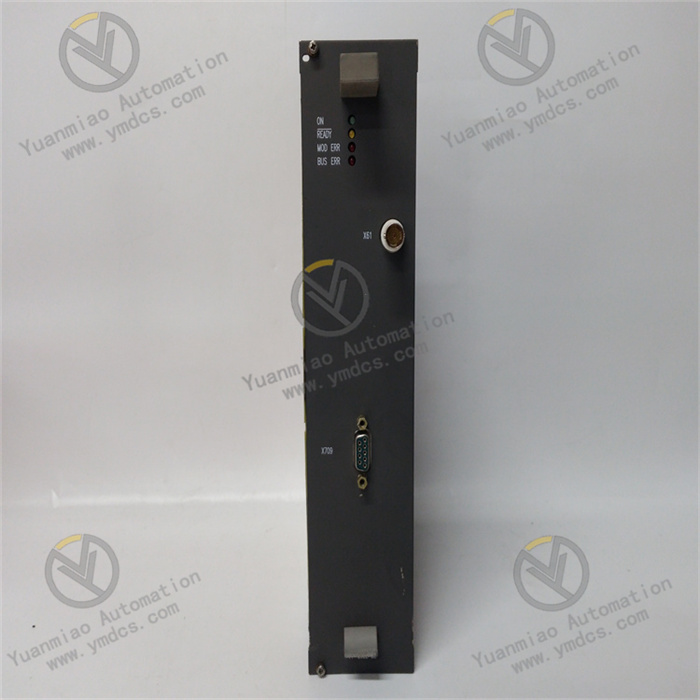
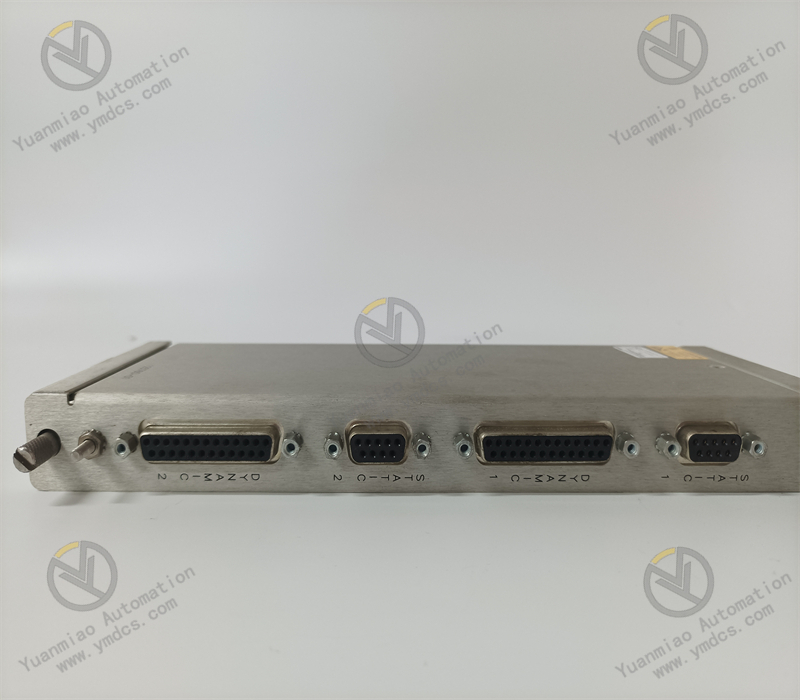
The hardware architecture adopts a flagship-level design of "multi-core processor cluster + ultra-high-precision acquisition + full redundancy design". Its core consists of a 32-bit quad-core industrial-grade processor, a 24-bit ultra-high-precision A/D sampling chip, 12 independent protection and control output interfaces, and a multi-protocol redundant communication module. It is equipped with 6-phase current input channels (compatible with programmable CT ratios from 1:1 to 1:20,000, supporting triple-CT parallel redundant acquisition and open-circuit self-diagnosis), 4 voltage input channels (compatible with multiple voltage levels of 100V/220V/400V/690V, supporting PT open-circuit detection and voltage harmonic analysis), 24 digital input channels (including 8 high-speed DIs with a response time of ≤ 0.5μs), and 12 relay output channels (with a capacity of AC250V/10A and DC24V/15A, supporting custom functions such as tripping, alarming, interlock control, and backup power switching). It has built-in quadruple communication interfaces: RS485, EtherNet/IP, Profinet, and Modbus TCP/IP, enabling seamless integration with mainstream industrial control systems (e.g., GE CIMPLICITY, Siemens WinCC, Schneider EcoStruxure, Rockwell FactoryTalk) and the GE Predix industrial internet platform. Its protection functions cover more than 30 types of motor faults, including overload (optional inverse-time/definite-time/energy accumulation type), short circuit (instantaneous trip/delayed instantaneous trip/time-limited instantaneous trip), grounding (zero-sequence current/residual current/directional grounding/selective grounding), locked rotor, phase loss, under-voltage/over-voltage/voltage unbalance/voltage harmonic exceeding limits, rotor bar breakage, winding temperature, bearing temperature, excessive vibration, oil deterioration, and excessive shaft current. It supports custom complex logic control loops and interlock relationships via GE EnerVista advanced configuration software. The industrial-grade ultra-reinforced design uses wide-temperature industrial-grade components (-40℃~85℃), a three-layer metal shielded enclosure (shielding effectiveness ≥ 95dB), and military-grade anti-electromagnetic interference circuits. Complying with high-end international standards such as IEC 61850-3, IEC 60255-22-4, and IEEE C37.238, it can operate stably in extreme industrial sites with strong electromagnetic interference, high dust, high humidity, high altitude (≤ 5,000m), and strong vibration.
Breaking through the limitations of traditional protection, a four-dimensional integrated protection system of "electrical parameters + temperature + vibration + oil quality" is built to adapt to the complex and harsh operational requirements of medium-voltage and high-voltage high-power motors.
For electrical protection: It adopts 256-point/cycle ultra-high-precision sampling and quad-core processor parallel computing, with a short-circuit protection action time of ≤ 5ms. This enables rapid interruption of short-circuit faults in 35kV systems, minimizing the impact damage of fault energy on motor stator windings and rotors. The overload protection supports an energy accumulation action mode, with built-in heating models for multiple load types (constant torque, variable torque, fans, water pumps, etc.). It dynamically adjusts the action curve based on real-time load characteristics, accurately matching heavy-load and variable-load conditions in steel rolling and mining industries, and completely solving the problems of false tripping under light loads and failure to trip under heavy loads.
- For temperature protection: 12 high-precision temperature input channels can simultaneously monitor the temperatures of key components such as stator windings, rotors, front/rear bearings, and machine casings. It supports a triple-alarm mechanism (temperature set-value alarm, temperature rise rate alarm ≥ 10℃/min, and temperature difference alarm), issuing graded commands of alarm, load reduction, and tripping to effectively slow down insulation aging and extend motor service life.
- As a standard core function, vibration protection is equipped with 4 vibration input channels compatible with industrial vibration sensors. It monitors the radial/axial vibration of the motor in real time, and combines multi-frequency band vibration analysis technology to accurately identify mechanical faults such as bearing wear, rotor imbalance, and uneven air gap. When vibration exceeds the standard, it can link to reduce load or shut down the motor, preventing fault expansion.
- Oil quality protection (expanded): By connecting to an oil quality sensor, it real-time monitors parameters such as moisture content, dielectric loss value, and contamination degree of lubricating oil. It issues timely alarms when oil quality deteriorates, preventing mechanical jamming faults caused by lubrication failure.
Integrating an AI intelligent diagnosis engine, it leverages 10+ motor fault diagnosis models trained on GE's industrial big data, enabling a leap from "fault alarm" to "predictive maintenance". The diagnosis data sources cover electrical parameters (current, voltage, power, harmonics), temperature parameters, vibration parameters, and oil quality parameters (expanded), which are analyzed in real time by the quad-core processor. When motor operating parameters deviate from the normal baseline by ±3%, the AI diagnosis process is automatically initiated. Through algorithms such as feature extraction, pattern recognition, and trend analysis, it accurately identifies more than 15 common faults (e.g., rotor bar breakage, bearing wear, winding insulation aging, uneven air gap) with a diagnosis accuracy of ≥ 95%. Meanwhile, combining data such as motor operation duration, load characteristics, and environmental conditions, it establishes a remaining life prediction model with a prediction error of ≤ 10%, providing operation and maintenance personnel with a full-chain diagnosis report including "fault type - fault location - remaining life - maintenance recommendations". For hidden faults like rotor bar breakage, a triple diagnosis mechanism ("current spectrum analysis + vibration feature verification + AI pattern recognition") is adopted, with a bar breakage detection accuracy of ≥ 0.1%—doubling that of traditional technologies. It can issue early warnings more than 30 days in advance, reserving sufficient processing time for operation and maintenance personnel. Diagnosis data can be uploaded to cloud platforms via the industrial internet, supporting centralized monitoring of multi-equipment health status and big data analysis.
Adopting a full-dimensional redundancy design of "hardware redundancy + software fault tolerance + communication redundancy", it meets the core requirement of long-cycle, high-reliability operation for medium-voltage and high-voltage high-power motors.
- Hardware redundancy: The current input supports triple-CT parallel redundant acquisition. If the main acquisition channel fails, the backup channel automatically takes over within 5ms, with an acquisition accuracy deviation of ≤ 0.05%. The power supply adopts dual AC/DC redundant power supply; if the main power supply fails, the backup power supply switches seamlessly within 1ms to ensure continuous equipment operation. Optional CPU redundancy configuration is available, with dual CPUs operating in hot standby mode and switching time ≤ 10ms, avoiding protection failure caused by single-point faults.
- Software fault tolerance: Technologies such as memory verification, program self-diagnosis, and dual data backup are adopted. When program operation is abnormal or data is incorrect, the redundant backup program is automatically activated to ensure the normal execution of protection logic. Protection parameters support encrypted storage and one-click recovery to prevent parameter loss caused by misoperation or malicious modification.
![]()