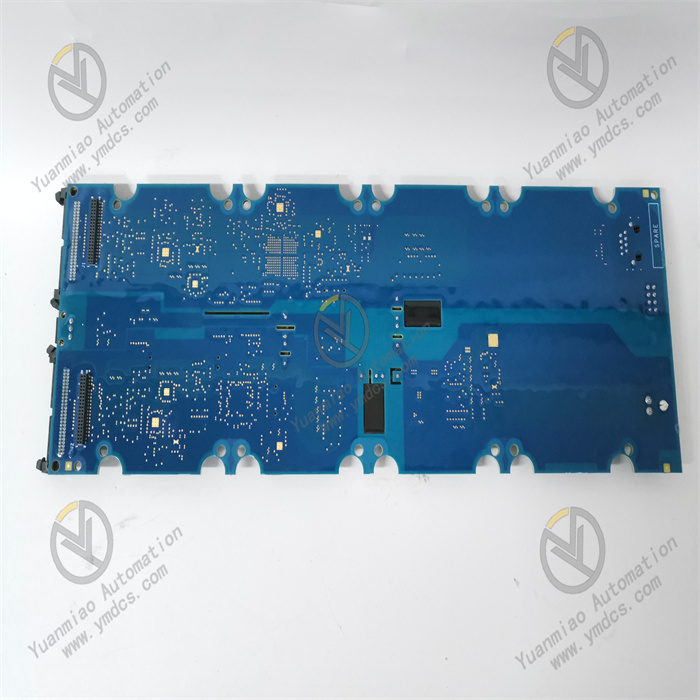
Description
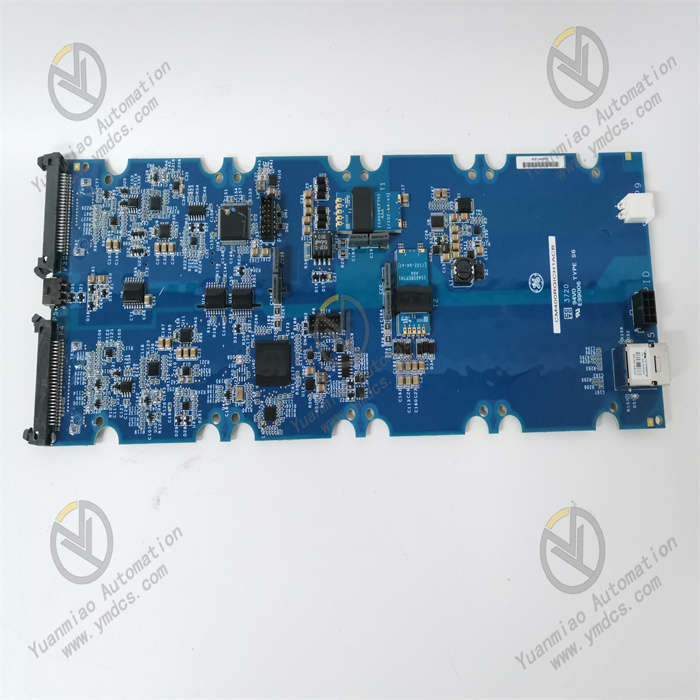
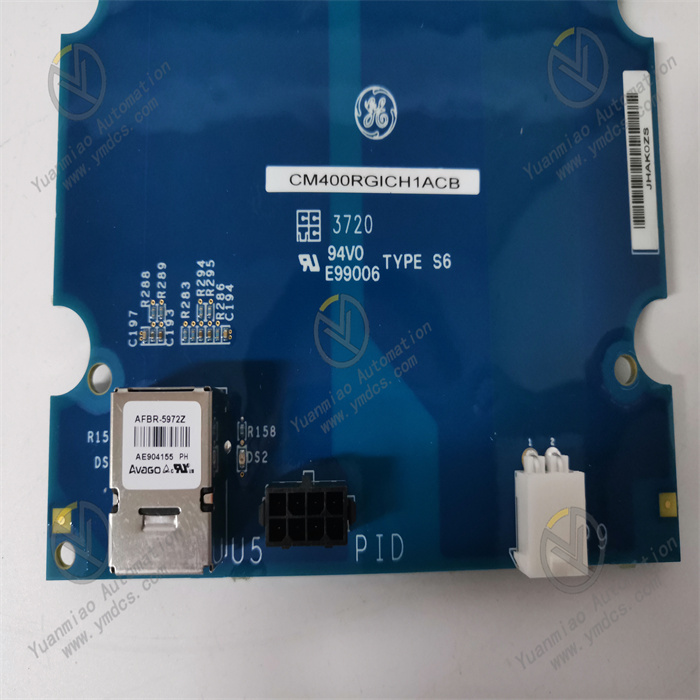
GE CM400RGICH1ACB
I. Overview
The GE CM400RGICH1ACB is a high-performance industrial control module launched by General Electric (GE). Its core positioning is to provide an integrated solution of "precision control - stable operation - flexible expansion" for industrial automation systems. As a core processing unit of automated control systems, its essence is to realize real-time monitoring, command execution, and abnormal response of production equipment by integrating advanced control logic and signal processing technology, and it is widely applicable to automation needs in multiple fields such as manufacturing, energy, and chemical industry.
Relying on GE's mature industrial control technology accumulation, this product adopts high-quality materials and advanced manufacturing processes to ensure stable operation in harsh industrial environments such as high and low temperatures, dust, and vibration. Its modular design not only simplifies the installation and maintenance processes but also supports customized configuration to meet the special needs of different scenarios. Meanwhile, through strict quality inspection and certification, it forms core competitiveness in terms of safety and reliability. Whether it is the construction of a control center for a new production line or the automation upgrade and transformation of traditional equipment, this module can become a key component to improve production efficiency and system stability with its flexible expansion capability and strong processing performance.
II. Technical Specifications
(I) Core Electrical Parameters
Power Supply and Output Characteristics
- Operating Voltage: Adopts 220V AC power supply, compatible with standard power sources in industrial sites, eliminating the need for additional voltage conversion devices and simplifying the system power supply architecture.
- Output Frequency: Supports high-frequency output of 50kHz, which can quickly respond to control commands and adapt to high-speed operating industrial equipment (such as precision machine tools and assembly line conveyors), ensuring the timeliness and accuracy of action execution.
- Load Adaptability: Can drive motor loads with a power rating of 1kW, compatible with common industrial drive equipment, and no additional power amplification module is required, reducing system integration costs.
Processing Performance Parameters
- Response Speed: Possesses excellent real-time signal processing capability, which can quickly parse input commands and generate control signals. The response delay for complex industrial control tasks is controlled at the millisecond level, meeting dynamic control requirements.
- Logic Processing Capability: Supports multi-task parallel processing, and can simultaneously manage multiple functions such as equipment operation status monitoring, parameter adjustment, and fault diagnosis, adapting to automated scenarios of multi-process linkage.
(II) Environmental and Reliability Parameters
Environmental Adaptability
- Temperature Resistance: Designed specifically for extreme temperature environments, it can operate stably within the common wide temperature range of industrial sites (inferred to be -20°C to 70°C based on the general characteristics of GE industrial modules). It can adapt to scenarios such as outdoor equipment cabinets and high-temperature workshops without additional temperature control equipment.
- Anti-Interference Performance: Through optimized circuit design, it has strong electromagnetic compatibility, which can resist electromagnetic interference generated by frequency converters and high-voltage cables in industrial sites, ensuring the stability of signal transmission and control command execution.
Safety and Reliability
- Quality Certification: Has passed international industrial product quality inspection and safety certification, and is equipped with an automatic protection mechanism under abnormal working conditions such as overvoltage, overcurrent, and short circuit, avoiding module damage and associated equipment failures.
- Mean Time Between Failures (MTBF): Relying on high-quality components and mature processes, the MTBF index meets the standards of high-end industrial equipment (inferred to be ≥100,000 hours), reducing the frequency of operation and maintenance and downtime losses.
(III) Structural and Compatibility Parameters
Mechanical Structure Design
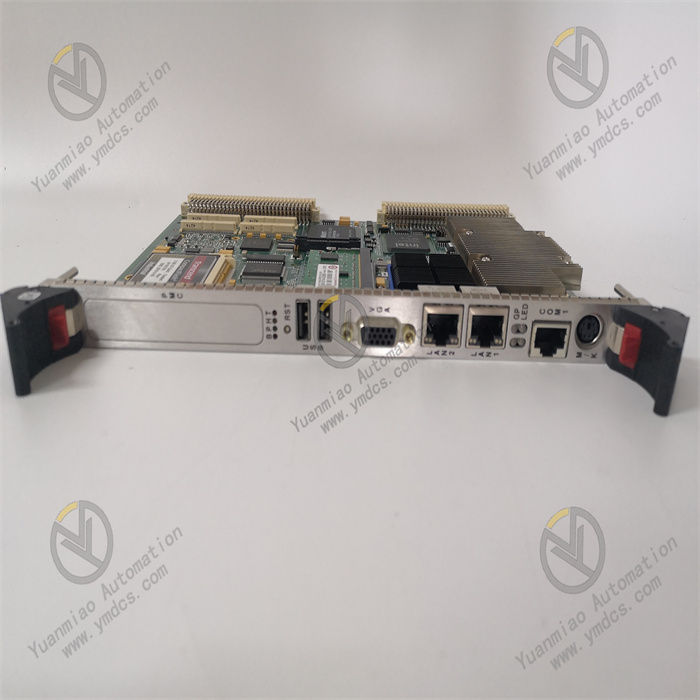
- Appearance Characteristics: Adopts a compact and robust modular structure, suitable for dense installation layouts in industrial control cabinets. It can be seamlessly combined with digital I/O modules, communication modules, etc., saving installation space.
- Installation Method: Supports standard rail mounting or backplane bus mounting. The fixing method is firm and reliable, which can resist the impact of vibration in industrial sites and ensure connection stability.
System Compatibility
- Equipment Adaptability: As a core component of the Programmable Logic Controller (PLC), it is compatible with GE's mainstream automation systems and third-party industrial equipment, and can be directly connected to existing control systems without large-scale transformation.
- Expansion Capability: Adopts a universal hardware interface design, supports increasing control channels and functions through expansion modules, adapts to different scale requirements from small single-machine control to large-scale production line centralized management and control, and reduces spare parts inventory costs.
III. Core Functional Features
(I) High-Reliability Operation, Adapting to Harsh Scenarios
This module achieves high reliability through "hardware + software" dual guarantees: in terms of hardware, it adopts military-grade components and a sealed structure design to resist erosion from harsh environments such as dust and humidity; in terms of software, it has a built-in real-time fault monitoring algorithm that can early warn potential abnormalities and trigger protection mechanisms. For example, in an oil refining workshop, the high-temperature and corrosive gas environment has extremely high requirements for equipment stability. With its strong environmental adaptability and fault self-protection function, the module can achieve continuous trouble-free operation and reduce the frequency of shutdown maintenance.
(II) Flexible Customization and Expansion, Adapting to Diverse Needs
In response to the personalized control needs of different industries, the module supports customized processing and configuration: the output signal type and control logic parameters can be adjusted according to the production process, adapting to differentiated scenarios such as precision assembly in automobile manufacturing and hygienic control in food and beverage. At the same time, the universal hardware interface design enables it to have flexible expansion capabilities. For example, in a water treatment system, centralized management and control of multiple groups of water pumps and valves can be realized by adding expansion I/O modules, and the system can be upgraded step by step with capacity expansion, avoiding excessive initial investment.
(III) Efficient Processing and Response, Improving Production Efficiency
The combination of 50kHz high-frequency output and millisecond-level response speed enables it to accurately match the control needs of high-speed production equipment. In an electronic component assembly production line, the module can quickly respond to sensor signals, control the robotic arm to complete precise grasping and assembly actions, and control the operation error at the micrometer level, improving the product qualification rate. At the same time, the multi-task parallel processing capability can realize real-time adjustment of equipment operation parameters. For example, in a power system, it can real-time monitor parameters such as voltage and current and dynamically adjust the output to ensure the stability of power supply.
(IV) Convenient Operation and Maintenance Design, Reducing Management Costs
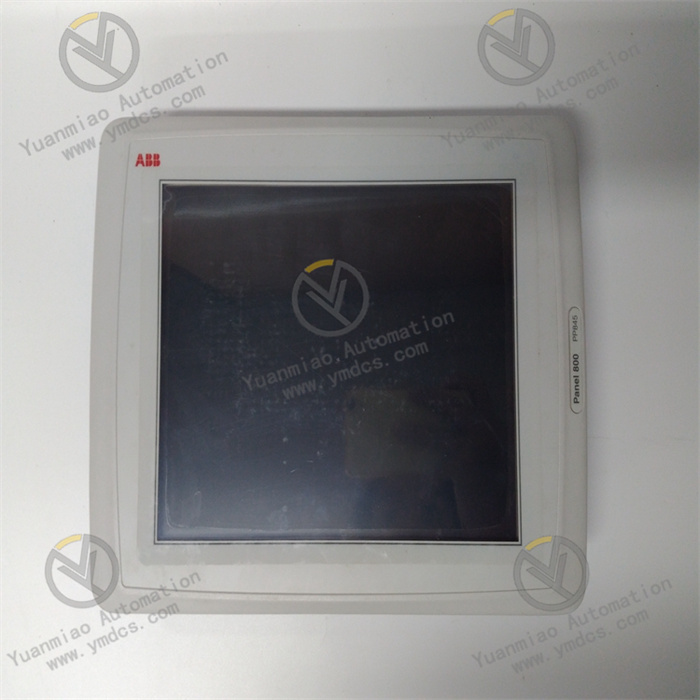
The modular structure and standardized interface make installation, replacement, and maintenance extremely efficient: the module can be quickly installed directly through rails or backplanes, and the wiring is simple and clear; when a fault occurs, there is no need to disassemble the entire control system, and the operation can be restored by replacing the module alone, greatly shortening the downtime. In addition, the module supports connection with HMI (Human-Machine Interface), enabling local monitoring and parameter configuration through the panel. At the same time, it can be used as a backup unit for the substation HMI to ensure the continuity of control and monitoring and reduce the complexity of operation and maintenance.
IV. Application Scenarios
(I) Automobile Manufacturing: Production Line Automation Control
In the automobile welding and assembly production line, the CM400RGICH1ACB plays a core control role:
- Multi-Process Linkage: Through parallel processing capability, it simultaneously manages welding robots, conveyors, testing equipment, etc., to realize the full-process automation of "feeding - welding - assembly - testing". The response speed ensures that the connection error of each process is ≤0.1 seconds.
- Precision Control: The 50kHz high-frequency output drives the servo motor to control the robotic arm to complete the high-precision assembly of car body components, and the position deviation is controlled within ±0.5mm, meeting the requirements of automobile manufacturing processes.
- Fault Protection: It real-time monitors parameters such as equipment operating current and temperature. When the welding current is abnormal, it immediately cuts off the power supply and triggers an alarm to avoid welding defects and equipment damage.
(II) Chemical and Petroleum Industry: Process Parameter Management and Control
In the reactor control of oil refining and chemical raw material transportation systems, the value of the module is reflected in:
- Extreme Environment Adaptation: It operates stably in high-temperature and corrosive gas environments, real-time collects temperature and pressure parameters in the reactor, and adjusts the heating power and feeding speed through closed-loop control.
- Safety Interlocking: When the pressure exceeds the 5MPa threshold, it automatically triggers the interlocking logic of safety valve opening and feed pump shutdown, with a response time of ≤100ms to avoid overpressure accidents.
- System Expansion: Multiple reactors and transfer pumps can be connected through expansion modules to realize centralized management and control of multiple equipment, adapting to the large-scale production needs of large chemical parks.
(III) Power Industry: System Automation Operation and Maintenance
In the substation and power transmission control system, the module realizes the following key functions:
- Parameter Monitoring and Adjustment: It real-time collects parameters such as voltage, current, and power factor, and adjusts the transformer tap and reactive power compensation device through high-frequency output to ensure the stability of power supply quality.
- Redundancy Guarantee: As an HMI backup unit, it automatically takes over the control authority when the main monitoring system fails, avoiding power supply interruption.
- Fault Diagnosis: It has a built-in fault analysis algorithm, which can quickly locate problems such as line short circuits and equipment overloads and generate diagnostic reports, shortening the repair time.
(IV) Water Treatment: Process Flow Management and Control
In the municipal sewage treatment or industrial wastewater treatment system, the advantages of the module are fully demonstrated:
- Multi-Equipment Management and Control: It connects equipment such as grid machines, aeration pumps, and sedimentation tank valves through expansion interfaces, and automatically controls the operation sequence according to the process logic of "filtration - aeration - sedimentation - disinfection".
- Dynamic Adjustment: According to real-time parameters such as influent flow and pollutant concentration, it adjusts the aeration intensity and chemical dosage to ensure the treatment effect while reducing energy consumption.
- Stable Operation: In the humid and dusty environment of the water treatment workshop, it realizes continuous operation with its strong environmental adaptability, reducing the impact of equipment maintenance on the treatment process.
V. Installation and Maintenance Guidelines
(I) Installation Specifications
Mechanical Installation
- When using rail or backplane installation, ensure that the tightening torque of the fixing bolts complies with the specifications (recommended to be 1.5-2.0N·m), and reserve a gap of ≥10mm between modules to ensure smooth heat dissipation.
- The installation location should be far away from interference sources and heat sources such as high-power frequency converters and heaters (distance ≥80cm). Install shock-absorbing gaskets next to equipment with severe vibration to avoid mechanical stress damaging internal components.
Electrical Wiring
- Use copper core cables (cross-sectional area ≥1.5mm²) for the power supply line, and configure an independent air switch (rated current ≥10A). The pressing force of the terminal block should be moderate to prevent heat generation due to poor contact.
- Use shielded twisted-pair cables for control signal cables, and ground the shield layer at one end (grounding resistance ≤4Ω). Avoid parallel routing with power cables; when crossing, keep a 90° vertical angle to reduce interference.
- Before wiring, disconnect the system power supply, strictly distinguish between the positive and negative poles of the power supply and the input and output terminals, to avoid module burnout due to reverse connection.
(II) Configuration and Debugging
Parameter Configuration
- Enter the configuration interface through GE's dedicated programming software or HMI panel, and set parameters such as output frequency, response threshold, and protection parameters according to control requirements. For example, in the motor control scenario, set the overcurrent protection threshold to 1.2 times the rated current.
- For multi-module linkage systems, it is necessary to configure communication parameters and data interaction protocols to ensure smooth transmission of commands and status signals between modules.
Debugging Process
- No-Load Debugging: Disconnect the load connection, check the status of the module's operation indicator light after power-on, test whether the output response is normal through analog signals, and connect the load only after confirming that there is no abnormality.
- Load Debugging: Gradually load to the rated working condition, monitor parameters such as module temperature and output accuracy. For example, in the 50kHz output state, the measured actual output frequency deviation should be ≤±0.1kHz.
- Linkage Debugging: Test the coordinated operation effect of multiple equipment to ensure that functions such as process connection and parameter linkage meet the requirements of the production process.
(III) Troubleshooting and Maintenance
| Fault Phenomenon | Possible Causes | Solutions |
|---|---|---|
| No Power Supply Response of the Module | 1. Power line open circuit or air switch tripping; 2. Abnormal power supply voltage; 3. Damage to the module power interface | 1. Check the line connectivity and reset the air switch; 2. Measure the power supply voltage to ensure it is 220V±10%; 3. Replace the module power interface or the faulty module |
| Abnormal Output Signal | 1. Incorrect output frequency parameter setting; 2. Load short circuit or overload; 3. Internal circuit fault | 1. Reconfigure the output frequency parameters; 2. Troubleshoot the load fault to ensure it meets the 1kW power limit; 3. Send for factory repair or replace the module |
| Control Response Delay | 1. Excessive multi-task load; 2. Signal cable interference; 3. Poor module heat dissipation | 1. Optimize the control logic and reduce the number of parallel tasks; 2. Check the grounding of the shield layer and replace the damaged cable; 3. Clean the heat dissipation channel and add a cooling fan |
| Communication Fault with Expansion Module | 1. Mismatched communication parameters; 2. Loose interface connection; 3. Compatibility issue with the expansion module | 1. Unify the communication protocol and address parameters; 2. Re-plug the interface to ensure a firm connection; 3. Replace the compatible expansion module |