Description
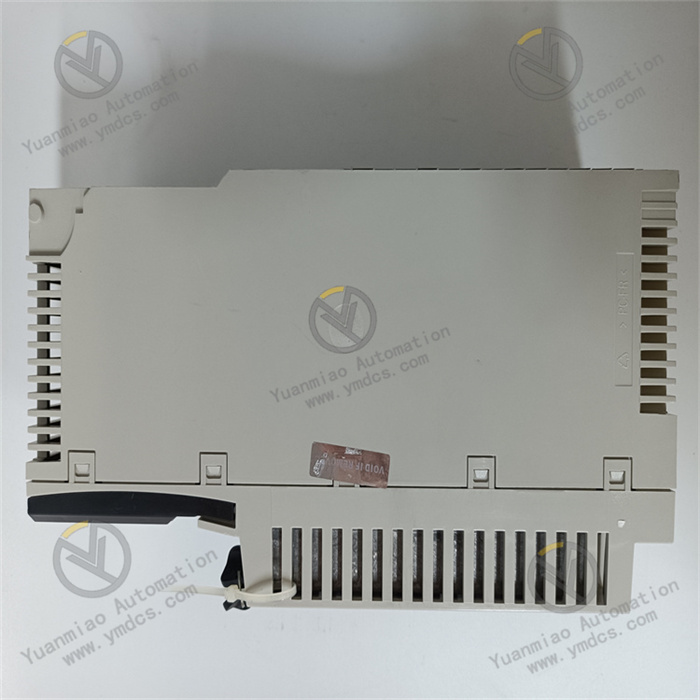
Schneider 140CPU65260
Ⅰ. Overview
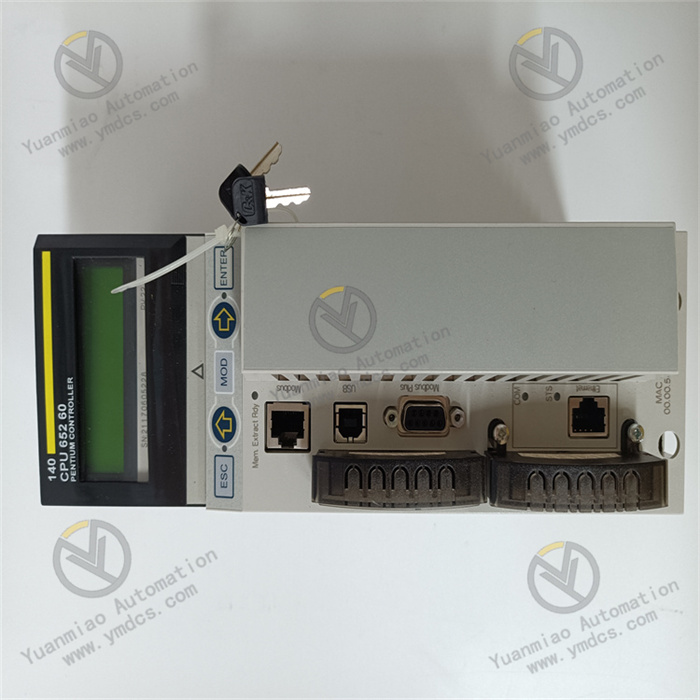
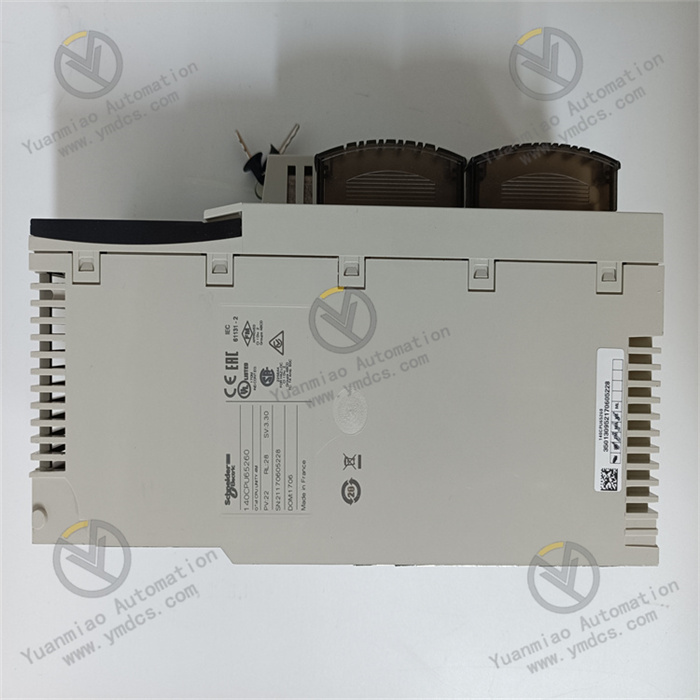
Schneider 140CPU65260 is a high-performance industrial-grade PLC central processing unit module. Serving as the core computing and control unit of industrial automatic control systems, it meets control requirements in large and medium-sized industries such as industrial automation, process control and distributed control. It is an essential component to ensure the efficient, stable and accurate operation of industrial control systems.
Its main functions include control logic execution, high-speed data processing, multi-protocol communication and flexible I/O expansion. Equipped with a 266 MHz high-frequency Unity processor, it rapidly executes complex control algorithms and efficiently processes various input and output signals. With integrated multiple communication interfaces and protocols, it supports local, remote and distributed I/O expansion, enabling seamless linkage with industrial equipment and upper-level control systems.
Ⅱ. Product Parameters
| Parameter Name | Specifications |
|---|---|
| Model | 140CPU65260 |
| Manufacturer | Schneider Electric |
| Product Series | Schneider Modicon Quantum Series CPU Module |
| Product Type | Industrial-grade PLC central processing unit, for core operation, control logic execution and communication linkage of industrial automation systems |
| Compatible Devices | Matches Modicon Quantum series racks and I/O modules; compatible with Unity Pro programming software; connects to SCADA and DCS systems; supports linkage with industrial sensors and actuators |
| Processor | Unity processor, 266 MHz clock frequency;Instruction speed: Boolean: 0.0525–0.075 μs, word/fixed-point: 0.045–0.06 μs, floating-point: 0.4–0.5 μs |
| Memory | Built-in 3072 KB RAM; expandable via PCMCIA card; program memory up to 7168 KB, file storage up to 8 MB |
| I/O Expansion | 10 slots (including 16 discrete I/O, 2 analog I/O and 4 dedicated I/O slots);Unlimited local I/O (max. 26 slots); 31 remote I/O stations; 63 distributed I/O stations |
| I/O Capacity | Discrete I/O: unlimited local, 8000 in/8000 out per distributed network, 31744 in/31744 out remote;Analog I/O: unlimited local, 500 in/500 out per distributed network, 1984 in/1984 out remote |
| Communication | Integrated Ethernet TCP/IP, Modbus, Modbus Plus and USB ports;Supports Ethernet TCP/IP, Modbus, Profibus DP; expandable with 6 optional communication modules |
| Task Configuration | 4 auxiliary tasks, 32 timer interrupt tasks, 128 interrupt tasks, 128 I/O interrupt tasks, 1 fast cycle task, 1 main cycle task;System overhead: main task 1 ms, fast task 0.2 ms |
| Physical Characteristics | Modular design for standard Quantum cabinet mounting; key switch for memory port control;Red LED for Ethernet collision, green LED for Ethernet activity |
| Power & Power Consumption | Bus current: 2760 mA; standard Quantum power supply; with overvoltage and undervoltage protection |
| Protection & EMC Performance | Industrial-grade shielding design; high resistance to electromagnetic interference, vibration and shock; CE certified |
| Core Functions | Control logic execution, high-speed data processing, multi-protocol communication, I/O expansion, high-precision timestamp, high-speed interrupt input, counting function, program storage & expansion, fault monitoring |
Ⅲ. Technical Features
High-Performance Computing: Powered by a 266 MHz Unity processor with fast instruction execution. It delivers rapid response for complex control logic and massive I/O data processing, meeting high real-time requirements for large and medium-sized industrial automation.
Flexible I/O Configuration: Supports combined installation of multiple slot types with powerful local, remote and distributed expansion capability. Sufficient discrete and analog I/O resources allow flexible layout for different project scales and simplify overall system architecture.
Rich Communication Interfaces: Built-in Ethernet, Modbus, Modbus Plus and USB ports, with expandable industrial protocol options including Profibus DP. It realizes fast data interaction between upper monitoring systems, distributed I/O and field equipment, adapting to distributed control and centralized management.
- Expandable Memory Capacity: 3072 KB onboard RAM and PCMCIA expansion support meet the storage demands of large-scale control programs and mass operation data. It facilitates program backup, upgrade and daily system maintenance.
Multi-Task Scheduling: Configurable main cycle tasks, fast tasks and multi-level interrupt tasks. Tasks can be scheduled by priority to optimize resource allocation, ensuring real-time performance and reliability of critical control links for complex process collaboration.
- High Reliability & Easy Maintenance: Rugged industrial structure with CE certification adapts to harsh on-site conditions. LED indicators and key switches facilitate on-site status inspection and fault diagnosis. Compatibility with Unity Pro enables convenient programming, downloading and debugging to reduce long-term maintenance costs.
Ⅳ. Application Scenarios
(1) Large & Medium-Sized Industrial Automation
Commonly used in automated production lines for metallurgy, chemical and manufacturing industries. As the core CPU, it executes control logic, processes on-site I/O signals, and coordinates the operation of motors, valves, robots and other equipment. With high-speed computing and flexible expansion, it guarantees continuous, efficient and precise production operation and supports multi-task collaborative control.
(2) Process Control Industries
Suitable for process control in petrochemical, power, water treatment and other fields. It collects analog and digital process signals and executes complex regulation algorithms to achieve precise control of reactors, pipeline valves, water pumps and process units. Its strong environmental adaptability ensures stable operation under high temperature and strong electromagnetic interference, and meets safety and compliance requirements for process industries.
(3) DCS System Supporting
As the core controller of Modicon Quantum series, it can be seamlessly integrated into distributed control systems. It undertakes control and data interaction of distributed nodes, supports multi-network linkage, and realizes centralized monitoring and decentralized management for large industrial plants and substations, improving overall system flexibility and operational stability.
(4) General Industrial Control