Description
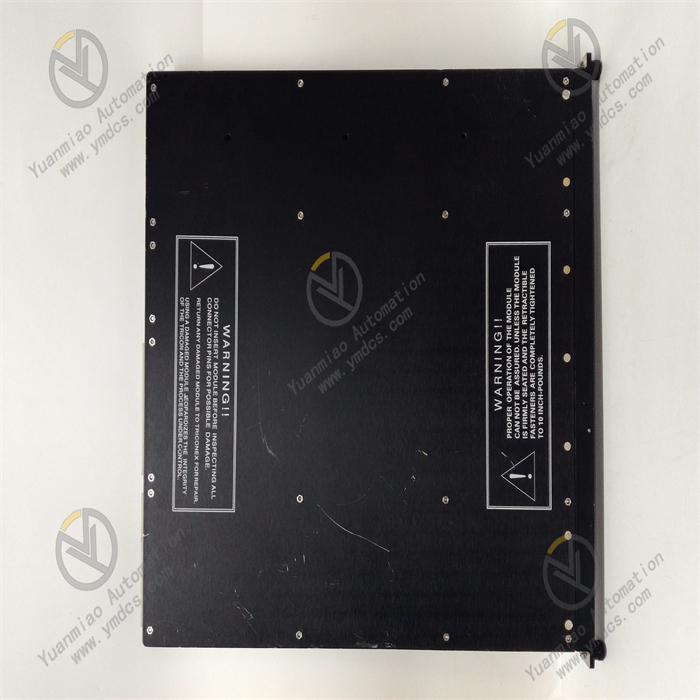
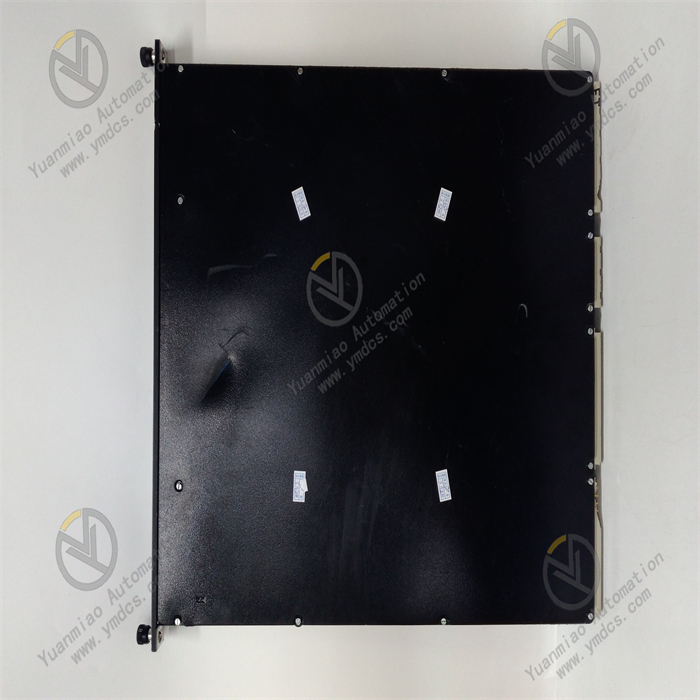
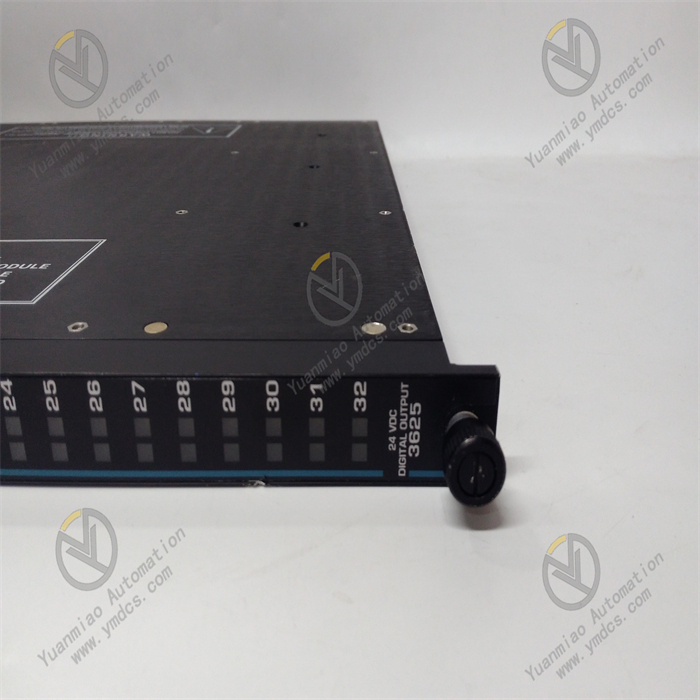
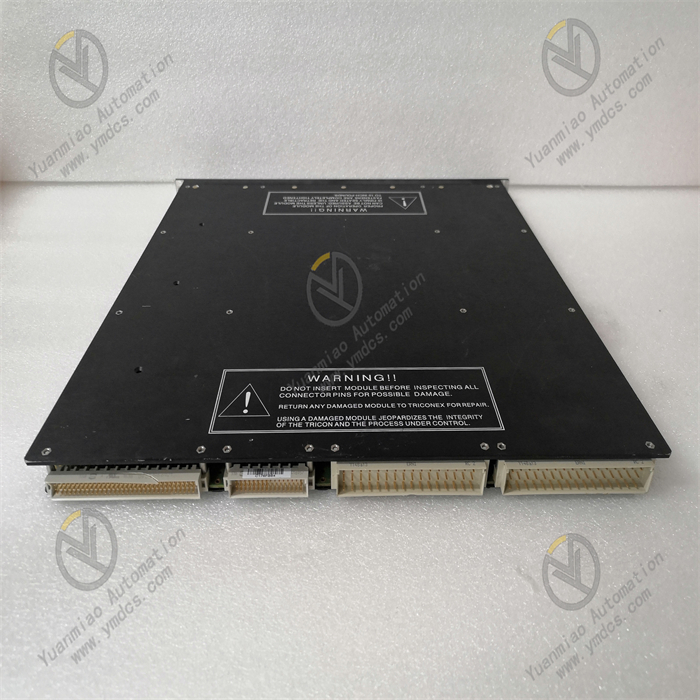
Triconex 3625
Triconex 3625 is a high-integrity Triple Modular Redundancy (TMR) digital input/output (I/O) module developed by Schneider Electric (formerly Invensys) for Tricon/Triconex Safety Instrumented Systems (SIS). It is specifically designed for safety-critical applications such as emergency shutdown (ESD), fire and gas detection (FGDS), and burner management systems, complying with IEC 61508 SIL 3 and IEC 61511 standards. The module integrates multi-channel digital input and output functions, real-time self-diagnosis, and hot-swap capability, serving as a key component connecting the Triconex safety controller and on-site field devices, ensuring fault-tolerant operation and fail-safe action in harsh industrial environments.
I. Product Positioning and Multi-Scenario Adaptability
Core Positioning: TMR Safety-Class Digital I/O Hub
As a core I/O component of the Triconex safety control system, the Triconex 3625 undertakes two core tasks: on the one hand, it collects on-site digital signals (such as status signals from sensors and switches) and transmits them to the main controller for logic judgment; on the other hand, it converts the safety logic instructions from the controller into isolated digital output signals to drive on-site final control elements (solenoid valves, contactors, alarm lights, etc.).
The module adopts a TMR redundant architecture, with three independent channels running in parallel and implementing a 2oo3 voting mechanism, which can automatically isolate faulty channels and ensure continuous system operation without single-point failures. It integrates comprehensive self-diagnostic functions to monitor channel status, signal integrity, and module health in real time, laying a foundation for predictive maintenance and ensuring the integrity of the safety loop.
Full-Scenario System Compatibility
It is fully compatible with the Tricon v10/v11 series racks (such as the 3700 series) and seamlessly integrates with Triconex main processors (such as MP3008/MP3009) through the proprietary Tricon Sync backplane bus, realizing microsecond-level data synchronization. It supports configuration, testing, and online monitoring through TriStation 1131 engineering software, and is compatible with multiple communication protocols such as Ethernet, Modbus, and Profibus, enabling data interaction with mainstream DCS/SCADA systems.
The module supports hot-swap in redundant configurations, allowing online replacement and maintenance without interrupting system operation, minimizing production downtime. It is suitable for both new safety system construction and legacy Triconex system upgrades, and can directly replace old digital I/O modules without major cabinet wiring or control logic modifications.
Extreme Environment Adaptability
Adopting an industrial-grade reinforced design, it is equipped with an industrial-grade reinforced PCB, a fully shielded anti-interference enclosure, and gold-plated terminal connectors, passing IEC 61000 EMC certification, UL 508 standard, and CSA C22.2 No.142 standard. It has excellent anti-vibration and anti-shock performance, effectively suppressing common-mode noise, surges, and high-frequency interference from high-power equipment on industrial sites, ensuring stable operation in complex electromagnetic environments.
The wide operating temperature range covers −40°C to 70°C, and the storage temperature range is −65°C to 85°C, with a relative humidity of 5%–95% (non-condensing). It can adapt to harsh working conditions such as high temperature, high humidity, strong vibration, salt spray, and dust in oil and gas, petrochemical, power generation, and nuclear power fields. The module body meets the IP67 protection level, suitable for installation in both closed industrial control cabinets and harsh on-site environments.
The power interface is equipped with overcurrent, overvoltage, and reverse-polarity protection, supporting 24V DC power supply (compatible with 16–30V DC range), avoiding module damage caused by power supply abnormalities, and further improving stability in harsh environments.
II. Core Functions and Technical Advantages
Core Functions
Dual-Function I/O Design: It integrates digital input and output functions, with up to 32 digital output channels or 12 digital input channels (configurable according to application requirements), supporting multiple voltage levels such as 24 VDC, 48 VDC, and 110 VDC, meeting the signal collection and control needs of different on-site equipment.
TMR Redundancy & Fault Tolerance: Three independent channels run in parallel, implementing a 2oo3 voting mechanism. When a single channel fails, the system automatically shields the faulty channel and maintains normal operation, ensuring no single-point failure and meeting the SIL 3 safety integrity level requirement.
Real-Time Self-Diagnosis: Built-in comprehensive diagnostic functions, continuously monitoring channel status, signal integrity, module power supply, and communication links, automatically detecting open circuits, short circuits, and module faults, uploading fault codes to the main controller in real time, and triggering safety-level alarms/interlocks.
Hot Swap & Easy Maintenance: Supports hot swap in redundant configurations, allowing module replacement and maintenance without shutting down the system; the front-panel LED indicators (PWR, OK, CH Fault) provide intuitive status display, facilitating quick fault location by operation and maintenance personnel.
High Isolation Performance: The isolation voltage between channels and between channels and the backplane is ≥ 1500 VDC, effectively isolating the controller logic circuit from the on-site high-voltage/current circuit, preventing transient voltage from damaging the safety controller.
Technical Advantages
High Safety & Reliability: Adopting a Tricore 32-bit processor, with 4MB RAM and 2MB ROM, ensuring high-speed logic processing and data storage capabilities. Key circuits and communication links adopt redundant design, and the module undergoes strict environmental stress screening, with high long-term operation reliability.
Flexible Configuration & Scalability: The number of input/output channels can be flexibly configured according to application needs, and it can be flexibly combined with other Triconex I/O modules to adapt to changing industrial safety requirements. It supports multiple communication interfaces such as RS-232, RS-485, and Ethernet, facilitating system integration.
Fast Response Speed: The output switching delay is at the millisecond level, and the input signal acquisition response time is short, meeting the high-speed control needs of safety-critical applications such as emergency shutdown.
Wide Compatibility: Fully compatible with the Triconex safety control ecosystem, suitable for various Tricon/Triconex SIS systems, and can be directly used for the upgrade and transformation of legacy systems, reducing transformation costs.
III. Typical Application Scenarios
Oil and Gas Industry
In offshore platforms, wellhead control systems, and oil and gas transmission pipelines, it is used as a core digital I/O module to collect status signals of on-site sensors and execute emergency shutdown commands. It drives explosion-proof solenoid valves and ESD contactors, monitors the operation status of key equipment in real time, and ensures the safety of personnel and equipment in explosive and flammable environments.
In gas detection systems (GDS), it collects signals from gas detectors, triggers alarm and ventilation system actions when harmful gases exceed the standard, and prevents gas leakage accidents.
Petrochemical & Nuclear Power Industries
In petrochemical hydrocracking units, FCC units, and reactor control systems, it is used for safety interlocking and process control, executing emergency shutdown commands when pressure, temperature, and other parameters exceed the limit, and ensuring the safety and continuity of the production process.
In nuclear power auxiliary systems, it is used for the control and protection of reactor cooling pumps, emergency water supply systems, and radioactive area isolation, meeting the strict safety and reliability requirements of nuclear power facilities.
Power Generation & Other Industries
In gas/steam turbine safety interlock loops and generator protection systems, it collects status signals of lubrication systems, cooling systems, and fuel systems, executes turbine trip commands when abnormalities occur, and ensures the stable operation of the unit.
It is also widely used in metallurgy, pharmaceuticals, rail transit, and other fields, providing safe and reliable digital I/O control for safety-critical systems such as blast furnace safety interlocking and pharmaceutical process control.
IV. Technical Specifications
Parameter Name | Parameter Details |
Model | Triconex 3625 (TMR Digital I/O Module) |
Product Type | Triple Modular Redundancy (TMR) digital input/output module, SIL 3 safety-rated |
I/O Channels | Configurable; up to 32 digital output channels or 12 digital input channels |
Voltage Range | 24 VDC, 48 VDC, 110 VDC (supporting multiple voltage levels) |
Output Current | Up to 2 A per channel |
Isolation | ≥ 1500 VDC between channels and between channels & backplane |
Redundancy & Configuration | TMR (Triple Modular Redundancy) architecture, 2oo3 voting mechanism; hot swap (redundant mode) |
Power Requirements | 24 VDC (compatible with 16–30V DC), power consumption ≤ 50 W, overcurrent/overvoltage/reverse-polarity protection |
Operating Temperature | −40°C to 70°C |
Storage Temperature | −65°C to 85°C |
Relative Humidity | 5%–95% (non-condensing) |
Physical Specifications | Standard Tricon rack mounting; approx. 150 mm × 80 mm × 20 mm; weight approx. 0.5 kg |
Protection Level | IP67 |
Supporting Software | TriStation 1131 Engineering Software |
Compatible Systems | Tricon v10/v11 series racks, Triconex MP3008/MP3009 main processors, Triconex SIS |
Special Features | TMR redundancy, real-time self-diagnosis, hot swap, multi-protocol compatibility, high isolation, IP67 protection |