Description
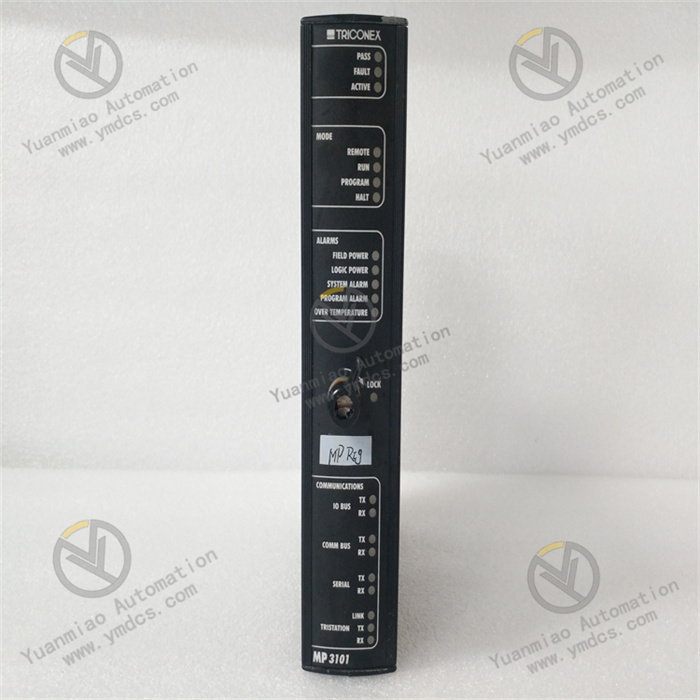
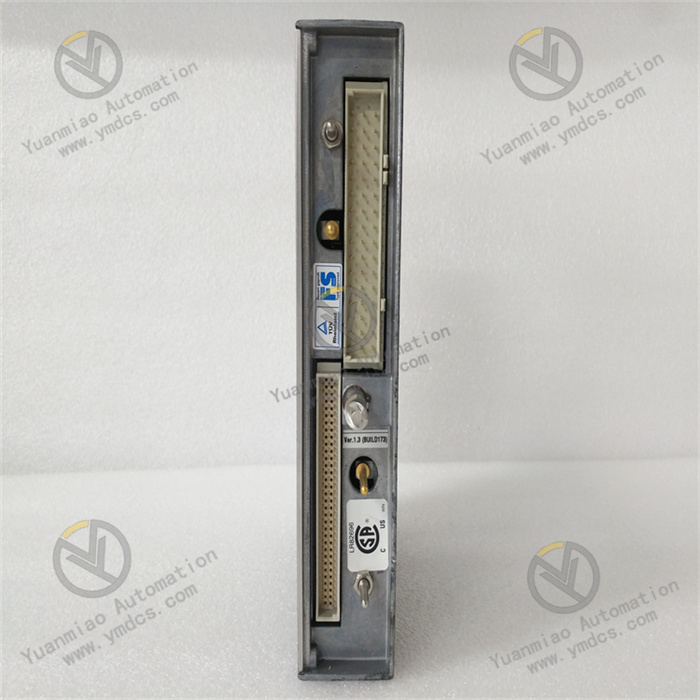
Triconex 3101
I. Product Positioning and Multi-Scenario Adaptability
Core Positioning: Core Processor of SIS Safety Control System
Focusing on the Triconex Tricon series SIS and industrial automation control systems, the Triconex 3101 serves as the "brain" of the system, responsible for executing critical control algorithms, safety interlocking logic, and system-wide diagnosis. It can high-speed and real-time process a large amount of input and output data from on-site I/O modules (such as Triconex 3401, 4211), monitor the status and parameters of industrial processes in real time, and issue control instructions to ensure the reliable implementation of core safety functions such as Emergency Shutdown (ESD), Burner Management System (BMS), and Fire & Gas System (F&GS).
Adopting a TMR redundant architecture, it integrates three completely independent processor units. All key functions of the three units are executed in parallel, and the results are verified through a "2-out-of-3 majority voting" mechanism. Even if one or two processor units fail, the system can still operate seamlessly and without disturbance, eliminating single points of failure at the hardware level, ensuring the highest level of fault tolerance, and making the system availability close to 100%.
Full-Scenario System Compatibility
It is seamlessly compatible with the full range of Triconex 3000 series I/O modules and standard Tricon chassis, realizing high-speed data interaction with I/O modules through the redundant backplane bus. It supports cascading of up to 8 expansion racks, with a maximum expandable I/O point capacity of more than 1000, adapting to the expansion needs of industrial control systems of different scales. It is compatible with mainstream industrial control logic and can be easily integrated into the existing industrial automation ecosystem, realizing efficient data exchange with Distributed Control Systems (DCS), Human-Machine Interface (HMI), and SCADA systems[2].
It supports automatic identification and configuration, and the controller assigns addresses to peripheral modules. Configuration, programming and testing can be completed through Triconex Enhanced Diagnostic Monitor (EDM) software and TÜV-certified TriStation 1131 development environment, supporting logic simulation, fault injection and bypass testing to ensure full verification before the safety logic is put into operation. It is suitable for both the construction of new safety control systems and the upgrading and transformation of old systems, and can directly replace the early main processor modules of Triconex series without modifying cabinet wiring or system control logic.
Extreme Environment Adaptability
Adopting an industrial-grade reinforced PCB and a fully shielded anti-interference structure, it has excellent anti-vibration (5g, 10Hz~2000Hz) and anti-shock (50g, 11ms) performance, and can effectively resist electromagnetic interference generated by high-power equipment on the industrial site through EMC electromagnetic compatibility certification. It also has surge protection and anti-radiation interference functions, ensuring the safe and stable operation of the module in complex industrial environments.
The wide operating temperature range covers -40℃~70℃, and the storage temperature range is -40℃~85℃, with relative humidity of 5%~95% (non-condensing), adapting to harsh working conditions such as high temperature, high humidity, strong vibration and salt spray. It meets the IEC 61508 SIL 3 safety certification, is suitable for Class I Division 2 hazardous areas, and meets the requirements of nuclear power 1E-level applications, which can fully adapt to the harsh environment of high-risk industrial sites such as petrochemical and nuclear power plants.
Built-in power supply redundancy and signal isolation protection, the power interface supports ±2kV transient voltage surge protection, and the communication interface is equipped with anti-interference isolation design, which can avoid module damage caused by power supply abnormalities, signal interference or external environmental impacts, and ensure the continuity of system operation.
II. Core Functions and Technical Advantages
Core Functions
Redundant Logic Processing and Voting Control: Equipped with a high-performance 32-bit RISC or PowerPC processor, it can quickly process complex control algorithms and a large amount of I/O data, with a logic execution cycle of less than 1ms, ensuring real-time response to on-site events. The three independent processor units perform synchronous logic operation and voting verification, and the faulty unit is automatically isolated without affecting the normal operation of the system, ensuring the accuracy and reliability of control instructions.
Comprehensive Online Self-Diagnosis: It has full-module self-diagnosis capabilities, which can real-time monitor the working status of internal processor units, power supply, backplane bus, and communication interface, accurately locate the fault position and generate detailed fault codes. It supports online diagnosis and fault early warning, and can upload fault information to the upper-level management platform in real time, which is convenient for operation and maintenance personnel to quickly troubleshoot and reduce downtime.
Online Hot Swapping: It supports online hot swapping of modules, which can complete installation, replacement and maintenance without interrupting system operation, minimizing production interruption and improving maintenance efficiency. After the module is replaced, the system can automatically identify the new module and resynchronize logic and data, ensuring the seamless connection of system functions.
Rich Communication and Data Interaction: It is equipped with a variety of communication interfaces, including Ethernet, RS-232, Modbus port, USB, and optional CANopen interface, which can realize efficient and safe data exchange with on-site I/O modules, DCS, HMI, SCADA systems and other equipment, ensuring the seamless integration of the module into the wider automation architecture.
Technical Advantages
High Reliability and Long Service Life: Using industrial-grade high-stability components, it has undergone Environmental Stress Screening (ESS) including temperature cycling, vibration, and shock testing. The firmware and program are stored in non-volatile flash memory without battery backup, reducing maintenance costs and achieving an industry-leading Mean Time Between Failures (MTBF), supporting 24/7 uninterrupted operation, which is suitable for long-term stable operation of critical industrial processes.
High Safety and Compliance: It meets the IEC 61508 SIL 3 safety standard and various industry standards (such as API, ISA), and has passed IEC 62443 network security certification (for updated versions), as well as CE, UL, FM certifications. It can fully meet the safety requirements of high-risk industrial scenarios such as petrochemical, nuclear power, and natural gas, and effectively prevent the occurrence of catastrophic accidents.
Strong Anti-Interference and Stable Operation: The reinforced electromagnetic shielding design and anti-interference circuit design can effectively resist electromagnetic interference, radio frequency interference and voltage fluctuations on the industrial site, avoid signal distortion, logic errors or communication interruptions, and ensure stable operation of the module even under harsh working conditions. The optimized power supply design and multiple protection functions further improve the stability and safety of the module.
Rapid Integration and Easy Maintenance: With standard Triconex module size, it can be directly inserted into the standard chassis slot, and no additional adapter components are required. The front panel is equipped with LED indicators to display the operation status of the module and each processor unit, which is convenient for operation and maintenance personnel to quickly judge the working status. Remote configuration, logic modification and fault troubleshooting can be completed through software, reducing the workload of operation and maintenance.
III. Typical Application Scenarios
Petrochemical and Natural Gas Industry
It is used as the core processor module in core SIS and F&GS systems of refineries, chemical plants and offshore platforms. It executes safety interlocking logic, monitors parameters such as temperature, pressure, and combustible gas concentration in real time, and triggers emergency shutdown, valve cut-off and other safety actions when abnormalities occur. The TMR redundant design and comprehensive protection functions are suitable for harsh environments such as salt spray, high humidity and strong vibration, meet the explosion-proof requirements of Class I Division 2, and ensure production safety[2].
Power Industry
Applied in safety control systems of thermal power, nuclear power and gas turbines, it is responsible for processing safety interlocking signals, executing functions such as overspeed protection (ETS) and boiler interlocking, and ensuring the safe and stable operation of power generation equipment. Its excellent anti-radiation interference ability and wide temperature adaptability can adapt to the harsh environment of power plant power distribution rooms and nuclear power auxiliary systems, and its millisecond-level response speed ensures the timely execution of safety instructions[2].
Other Industrial Fields
In the metallurgical industry, it is used as the core processor of the blast furnace safety interlocking system and the steel rolling process control system; in the pharmaceutical manufacturing industry, it is used for the safety control of chemical treatment processes; in the water treatment industry, it is used to process on-site monitoring data and control the operation of pumps, valves and other equipment to ensure the safe and stable operation of water supply and sewage treatment processes. It is also widely used in natural gas extraction and transportation, mine hoisting, intelligent building management and other fields, meeting the diverse control needs of different industries.
Legacy System Upgrades and Retrofits
It can directly replace the early main processor modules of Triconex series or third-party compatible modules without modifying cabinet wiring, power connection or system control logic. Only software configuration, logic programming and function testing need to be completed to enable TMR redundant control, comprehensive self-diagnosis and other functions, quickly improve the safety level and reliability of the safety instrumented system, and reduce transformation costs.