I. Basic Information
Model:PFVL141C-20MN
Brand:ABB (Millmate Series High-Precision Roll Force Load Cell)
Product Positioning
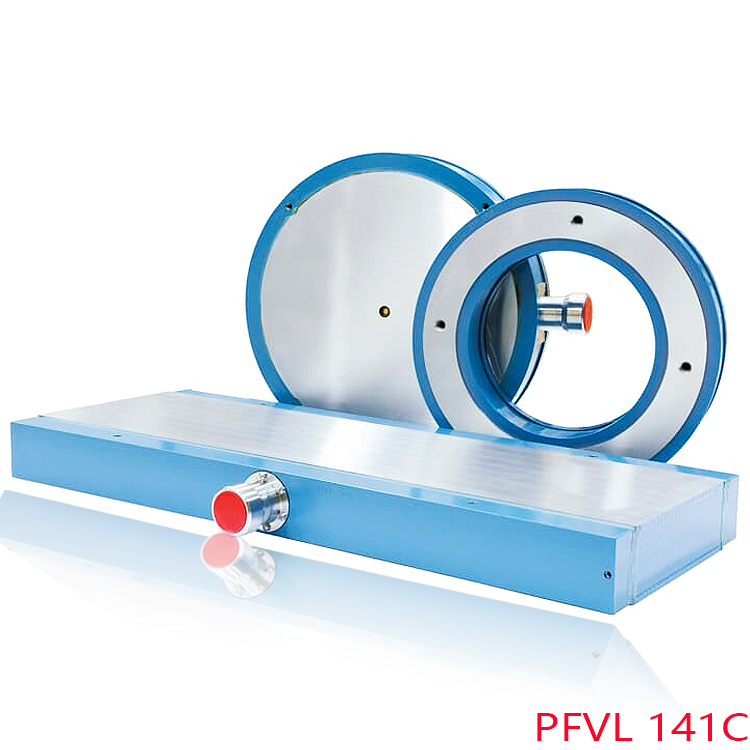
The ABB PFVL141C-20MN is an industrial-grade circular pressductor roll force load cell with a rated range of 20MN. Specially designed for heavy-duty rolling conditions such as steel hot rolling, cold rolling, plate and profile rolling mills, it serves as the core force measuring unit of rolling mill stands. It accurately collects rolling pressure data to support closed-loop sheet thickness correction, roll gap adjustment, equipment overload protection and rolling process optimization. As the key measuring component of the rolling mill Automatic Gauge Control (AGC) system, it is widely used in high-precision manufacturing fields such as steel and non-ferrous metal rolling.
Hardware Architecture
Adopting ABB mature Pressductor® magneto-elastic sensing architecture, the sensor is equipped with a high-stability special iron core, shrink-fitted stainless steel reinforcing ring, fully sealed shielding structure and high-precision signal pickup circuit. The integrated circular solid structure has no fragile strain gauges or elastic films, realizing force-electric conversion through ferromagnetic magneto-elastic effect with high structural rigidity, impact resistance and fatigue resistance. The fully insulated and shielded internal circuit effectively resists strong vibration, electromagnetic interference, oil and dust erosion on rolling mill sites. Its low-impedance design features extremely low sensitivity to insulation defects, maintaining high measurement accuracy even under low insulation conditions.
Mounting Specification
The standard circular pressure head structure fits the standard installation position at the bottom of rolling mill screwdown screws and hydraulic cylinders without modifying the mill frame. It features simple alignment, uniform stress and stable fitting. The planar pressure-bearing mode evenly disperses rolling impact loads, avoiding measurement deviation and device damage caused by local stress concentration. It supports adaptation and replacement of new and old rolling mill equipment, enabling rapid commissioning after installation without complex calibration, suitable for mill technical renovation and precision upgrade scenarios.
Compatible Systems
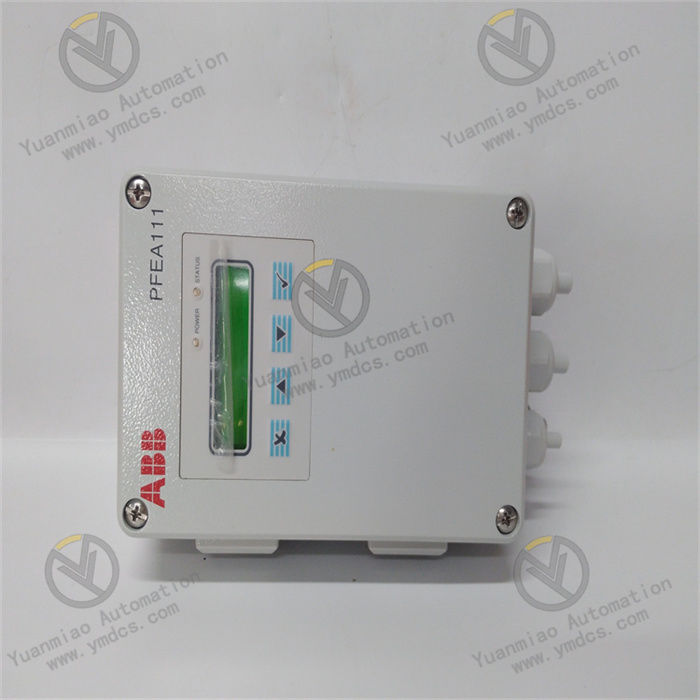
Fully compatible with ABB Millmate full-series roll force measurement systems, PFEA series tension/roll force controllers and AGC automatic thickness control systems. It adapts to mainstream domestic and foreign rolling mill PLCs, industrial control systems, upper monitoring and process optimization platforms, outputting standard industrial measurement signals to match closed-loop rolling speed regulation, thickness correction, overload interlock and pressure trend monitoring logic, seamlessly integrating into the automatic control system of rolling production lines.
Product Characteristics
Based on the magneto-elastic principle, it features ultra-high measurement accuracy, ultra-low hysteresis error and excellent repeatability with no zero drift or precision attenuation during long-term operation. The structure is impact-resistant, heavy-load resistant and thermal fatigue resistant, tolerating high-frequency impact loads and continuous heavy extrusion of rolling mills. It has strong adaptability to low insulation, maintaining stable measurement with slight insulation degradation caused by on-site oil pollution and humidity. Fast response and stable signal output capture dynamic rolling pressure changes in real time, ensuring sheet thickness control accuracy and rolling product quality stability.
II. Technical Specifications
1. Core Force Measurement Parameters
Rated Force Range: 20MN (20000kN), covering the conventional load range of medium and large rolling mills to meet force measurement requirements of full working conditions for plate, profile and strip rolling. It has excellent ultimate overload capacity to withstand instantaneous rolling impact loads and avoid sensor damage and measurement failure caused by sudden overload. Hysteresis error ≤0.2% Fnom, repeatability error ≤±0.1% Fnom, calibration accuracy up to 0.1%, with excellent full-range linearity and minimal measurement error. The compression deformation under rated load is only 0.05mm, featuring ultra-high structural stability without measurement deviation caused by mechanical deformation.
2. Electrical Output Parameters
Signal Output: Supports standard industrial analog signals (0±20mA / 4-20mA), compatible with mainstream rolling mill controller acquisition specifications. The low-impedance signal output design provides strong signal driving capability and anti-interference performance without signal attenuation or waveform distortion during long-distance transmission. With a rated insulation voltage of 50V AC, the internal circuit is completely isolated from the shell, eliminating measurement abnormalities caused by grounding and leakage interference.
3. Mechanical & Structural Parameters
Structural Form: Integrated circular magneto-elastic pressure-bearing structure with heat-shrunk stainless steel reinforcing outer ring, featuring high overall rigidity, uniform pressure bearing and no mechanical gaps or looseness. Force Mode: Axial vertical pressure measurement accurately collects forward rolling force of the mill with strong resistance to lateral and side interference, avoiding measurement deviation caused by eccentric load. High mechanical stiffness and low deformation coefficient ensure no structural deformation or performance aging under long-term heavy-load extrusion.
4. Environmental Operating Parameters
Operating Temperature:-20℃~+70℃, stable measurement accuracy, hysteresis characteristics and output signals in the full temperature range, adapting to mill high-temperature radiation, equipment heat accumulation and workshop temperature fluctuation conditions.
Storage Temperature:-30℃~+80℃, no magnetic performance attenuation, structural deformation or parameter drift during long-term storage.
Working Environment: Tolerates typical harsh rolling mill conditions such as oil pollution, dust, humidity, mechanical vibration and high-frequency impact. It maintains standard measurement accuracy with insulation impedance as low as 10kΩ, featuring excellent environmental adaptability.
Condition Adaptation: Passed industrial heavy-load impact, vibration fatigue and EMC electromagnetic compatibility tests, supporting 7×24-hour continuous stable operation in harsh metallurgical rolling scenarios with strong electromagnetic interference and high vibration.
III. Key Features
1. Ultra-High Precision Force Measurement for Rolling Quality Assurance
PFVL141C-20MN achieves 0.1% high-precision calibration, ≤±0.1% excellent repeatability and ≤0.2% ultra-low hysteresis error for full-range accurate and stable force measurement. It captures tiny rolling pressure fluctuations in real time, providing high-precision feedback signals for AGC automatic thickness control systems to realize precise roll gap fine-tuning and closed-loop sheet thickness correction. It effectively reduces sheet thickness deviation, improves rolling flatness and product qualification rate, meeting the precision requirements of high-end fine sheet rolling processes.
2. Robust Magneto-Elastic Structure with Heavy-Load Impact Resistance
Different from traditional strain sensors, it adopts an integrated iron core structure without vulnerable components and stainless steel reinforced design with ultra-high mechanical strength. It long-term withstands high-frequency rolling impact loads, ultra-large extrusion loads and severe equipment vibration without common failures such as strain gauge fracture, colloid aging and structural damage. The ultra-small compression deformation ensures long-term measurement stability and eliminates precision drift caused by mechanical fatigue, adapting to continuous heavy-duty production of heavy-industry rolling mills.
3. Excellent Harsh Environment Adaptability & Anti-Interference Capability
The exclusive low-impedance signal design is insensitive to insulation degradation caused by on-site oil pollution, humidity and dust accumulation, maintaining standard measurement accuracy under low insulation conditions down to 10kΩ, perfectly adapting to harsh rolling mill environments. The fully shielded isolated circuit effectively resists strong electromagnetic interference from rolling mill inverters, motors and high-power equipment, eliminating signal jitter, measurement mutation and data distortion to ensure real-time stable and reliable force measurement data.
4. High Compatibility for Automatic Closed-Loop Control
Standard industrial analog output signals seamlessly connect with ABB full-series roll force controllers, mainstream rolling mill PLCs, AGC control systems and upper computer configuration platforms. The fast measurement response and high data synchronization match dynamic rolling process adjustment requirements, realizing real-time rolling pressure monitoring, automatic overload protection, dynamic roll gap correction and process parameter traceability, and constructing a complete rolling automatic closed-loop control system.
5. Simple Installation & Low O&M for New/Old Equipment Renovation
The standardized circular pressure head size fits standard mounting positions of conventional rolling mill screwdown screws and hydraulic cylinders without frame modification or auxiliary accessories, featuring convenient disassembly and accurate alignment. With ultra-low failure rate and maintenance-free operation, it directly replaces aging and failed force sensors, greatly reducing rolling mill operation and maintenance costs and downtime, adapting to new mill assembly, old mill precision upgrade and fault replacement scenarios.
IV. Working Principle
The ABB PFVL141C-20MN roll force sensor operates based on the Pressductor® magneto-elastic effect, realizing precise mechanical force-electric signal conversion through permeability changes of ferromagnetic materials under stress to complete real-time accurate rolling force measurement. The overall workflow includes four core stages: stress deformation, magnetic parameter variation, signal conversion and output correction.
During rolling operation, the rolling load vertically acts on the sensor pressure-bearing end face, causing tiny elastic deformation and regular stress distribution changes in the internal ferromagnetic iron core. Based on the magneto-elastic effect, the core permeability changes linearly with stress. The internal excitation and induction coils capture real-time magnetic flux variation signals and convert mechanical pressure physical quantities into corresponding electrical analog signals.
The built-in signal conditioning circuit filters, amplifies and linearly corrects the original induction signals to eliminate electromagnetic and mechanical clutter interference, outputting standardized 4-20mA/0±20mA force measurement signals with excellent linearity. The signals are uploaded to roll force controllers and AGC systems for rolling pressure monitoring, roll gap adjustment, thickness correction and overload protection. With no mechanical contacts or fragile deformation components, it relies on stable magneto-elastic physical characteristics to ensure long-term high-precision measurement under heavy-load conditions.
V. Application Scenarios
1. Core Force Measurement for Metallurgical Rolling Lines: Applied to hot rolling, cold rolling, medium plate, profile and strip rolling mills matching the 20MN range to measure rolling pressure in real time and support precise sheet thickness control.
2. Rolling Mill AGC Automatic Thickness Control System: Serves as the core feedback component of AGC closed-loop control, providing high-precision rolling force data for dynamic roll gap fine-tuning and sheet thickness deviation correction to improve rolling accuracy.
3. Rolling Mill Overload Safety Protection: Monitors rolling load pressure in real time, triggering equipment shutdown and unloading protection in case of steel piling, rolling jamming and overload impact to avoid damage to mill frames and rolls.
4. Rolling Process Data Monitoring & Optimization: Continuously records rolling pressure trend data to support accurate data support for process commissioning, rolling quality traceability, production optimization and equipment condition analysis.
5. Old Rolling Mill Equipment Upgrade & Replacement: Replaces aging circular roll force sensors of old rolling mills at low cost, improving rolling precision and automation level of old production lines.