Description
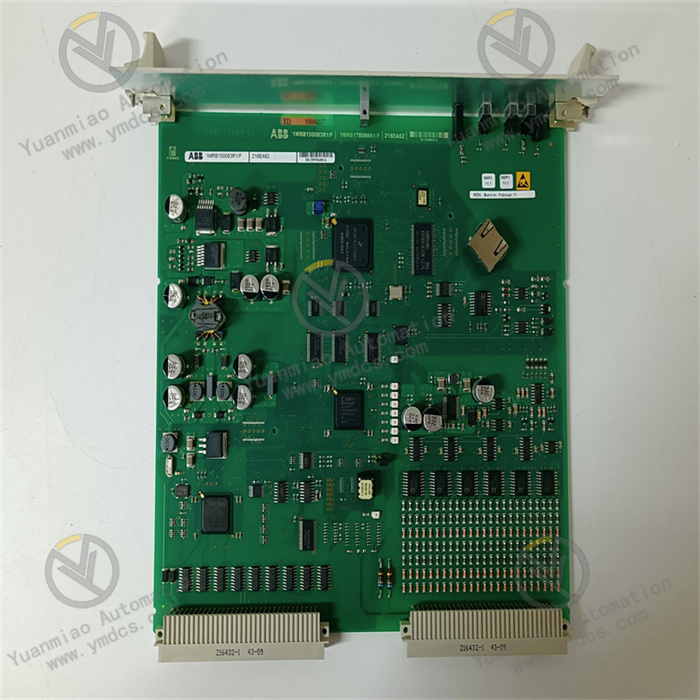
ABB UNS0880a-P,V2 3BHB005922R0002
ABB UNS0880a-P, V2 (Order No.: 3BHB005922R0002) is an industrial control module compatible with the System 800xA control system. Positioned as a Converter Interface, its core function is to receive analog and digital signals from industrial sites, perform isolated conversion and filtering conditioning, and convert them into standard signals recognizable by control systems, enabling seamless data inte
raction between sensors, actuators, and main controllers (such as UNITROL 5000 regulators). It serves as a key core component for signal conversion and transmission in industrial automation systems.
Originating from Switzerland, the product adopts advanced delta-sigma (Δ-Σ) modulation technology and industrial-grade isolated circuit design. It features high precision, strong electromagnetic interference resistance, wide operating condition adaptability, and convenient integration, enabling long-term stable operation in harsh industrial environments such as power plants, chemical plants, and metallurgical facilities. As a standard original spare part from ABB, it is available in new, refurbished, and used conditions with a comprehensive after-sales support system. It is widely used in key industrial fields including electric power, oil and gas, mineral processing, and municipal engineering, making it a preferred component for the upgrade and maintenance of industrial control systems.
1. Specifications and Physical Parameters
1.1 Measurement and Signal Parameters
- Signal conversion type: Supports bidirectional conversion between analog and digital signals; can accept sensor signals such as PT100 and output standard control signals to meet diverse signal interaction requirements in industrial sites.
- Accuracy class: Adopts delta-sigma (Δ-Σ) modulation technology to achieve 16-bit effective resolution (ENOB ≥ 14 bits); control accuracy can reach ±0.5°C (temperature control) and ±0.1 bar (pressure control), satisfying high-precision industrial control requirements.
- Output signal: Standard 4–20 mA isolated current signal and 0–10 V voltage signal, switchable flexibly according to working conditions with matching load impedance (current output ≤ 500 Ω, voltage output ≥ 1 kΩ).
- Response time: Fast-response design ensuring timely signal conversion to meet dynamic regulation requirements in applications such as excitation systems and reaction kettles.
- Power supply: 24 VDC industrial standard power input, allowing ±5% voltage fluctuation, with low power consumption to adapt to unstable power supply environments in industrial sites.
Electrical isolation: Channel-to-channel isolation voltage up to 2500 VAC, reinforced isolation between primary, secondary, and power supply sides, compliant with IEC 61010 standards, effectively blocking common-mode interference and ensuring pure, undistorted signals.
1.2 Physical and Installation Parameters
- Physical dimensions: Approximately 25 cm × 16 cm × 20 cm (some versions: 445 mm × rack-adaptable width × 45 mm); compact structure suitable for internal layout of industrial control cabinets, enabling modular installation and replacement.
- Net weight: Approximately 0.233 kg – 0.62 kg (varies slightly by specification); lightweight to reduce cabinet load.
- Mounting method: Standard rack DIN rail / screw mounting, compatible with UNITROL 5000, 6000 series and System 800xA system racks; easy to install and adaptable to different cabinet layouts.
- Connector: Industrial-grade locking plug to prevent loosening caused by vibration, ensuring stable signal transmission in high-vibration industrial environments.
Appearance marking: The module surface is printed with clear model, order number, and ABB brand logos for on-site identification and model verification.
1.3 Environmental and Protection Parameters
- Operating temperature: -20°C to +70°C; wide-temperature design adaptable to harsh high/low-temperature industrial environments and installation requirements in different regions and scenarios.
- Relative humidity: 0% – 95% (non-condensing); stable operation in high-humidity environments such as chemical plants and municipal water treatment facilities.
- Protection class: IP20 (front panel); recommended for cabinet installation with basic dust resistance to avoid performance degradation from dust accumulation.
- Electromagnetic interference resistance: Compliant with EN 61000-6-2/6-4; withstands strong electromagnetic environments from inverters, large motors, and other equipment, ensuring stable signal conversion and transmission in high-interference sites such as power plants and metallurgical plants.
- Vibration / shock resistance: Meets IEC 60068-2-6 / IEC 60068-2-27 standards; robust structure adaptable to on-site vibration and shock conditions, reducing module damage risk.

2. Functions and Features
2.1 High-Precision Signal Conversion and Conditioning
Based on delta-sigma (Δ-Σ) modulation technology, it shifts quantization noise to high frequencies through oversampling and noise shaping, and achieves high-precision signal conversion with digital filtering algorithms. It accurately captures small changes in process parameters such as temperature, pressure, and flow, providing reliable feedback data for controllers. Built-in slope control limits the output signal change rate (adjustable 0.1–10 V/ms) to prevent actuator damage (e.g., valves) from sudden signal changes, extend equipment service life, and support precise control in reaction kettles, heating furnaces, and similar applications.
2.2 Strong EMC Performance and Isolation Protection
Reinforced isolation circuit design provides effective isolation between channels, signals, and power supplies, suppressing common-mode and surge interference to ensure pure, undistorted signals in high-voltage, high-EMI industrial environments (e.g., generator rooms, metallurgical workshops). It features reverse power protection and output short-circuit protection to prevent module damage from incorrect wiring or external faults, improving system operational safety and meeting industrial safety standards.
2.3 Flexible Integration and Compatibility
Seamlessly compatible with ABB UNITROL 5000, 6000 series excitation systems and System 800xA control systems, connecting directly to the system I/O framework without additional conversion modules. Supports cooperative operation with modules such as UNS0882 (power signal board) and UNS0884 (current sensor) to form a complete detection, conversion, and control chain. Output signals can connect directly to AI channels of DCS/PLC systems. It supports multiple programming languages, allowing users to configure parameters flexibly for various industrial control scenarios, and is widely applied in oil and gas, mineral processing, paper making, printing, and other industries.
2.4 High Reliability and Easy Maintenance
3. Application Scenarios
3.1 Power Generation
Used in generator excitation systems for thermal, hydro, and nuclear power plants as a signal conversion interface module. It converts digital signals from the DCS system into 4–20 mA current signals to drive the excitation regulator (AVR) and adjust generator rotor current, stabilizing output voltage (fluctuation < 0.5%). It also receives temperature sensor signals such as PT100, converts and transmits them to the main controller to realize dual monitoring and closed-loop control of excitation system temperature and current. It adapts to dynamic conditions such as grid connection and load sudden changes of synchronous generators, ensuring stable unit operation and reducing annual unplanned downtime by more than 80 hours per unit.
3.2 Oil, Gas and Chemical Industry
Applied in automation control systems for oil fields, natural gas processing plants, and chemical reaction kettles. It receives on-site temperature and pressure sensor signals, converts and conditions them before transmission to the main controller, achieving precise control of reaction kettle temperature (±0.5°C) and pressure (±0.1 bar) to avoid side reactions. It also outputs control signals to adjust steam heating valve opening and cooling water flow. Through multi-variable coordinated control, it shortens reaction cycles, reduces energy consumption, adapts to harsh field and outdoor environments, and ensures safe and continuous production.
3.3 Metallurgical and General Industry
Used in continuous casters and blast furnace blower systems in metallurgical plants. It receives digital signals from the PLC, converts them into 4–20 mA current signals to drive withdrawal and straightening machine inverters, controlling casting speed with ±0.1% accuracy. It also converts mold level signals, adjusts vibration frequency, stabilizes level fluctuation within ±1 mm, and reduces slab surface defects. In general industry, it is used in automated production lines for mineral processing, paper making, and printing to realize bidirectional signal conversion and transmission, improving production automation and product accuracy. It also supports large synchronous motor excitation systems by monitoring excitation winding current to ensure stable motor operation.
3.4 Municipal and Other Fields
4. Operating Notes
- Pre-installation preparation: Verify module model (UNS0880a-P, V2) and order number (3BHB005922R0002), and confirm compatibility with UNITROL 5000, 6000 series and System 800xA systems. Power off and ensure complete discharge of relevant circuit capacitors (at least 3 minutes). Wear insulated gloves; hot-plugging is strictly prohibited to prevent electric shock or module damage.
Wiring specifications: Strictly distinguish signal input/output terminals and power supply polarity; incorrect or reverse connection is forbidden. Use shielded cables for signals with single-ended grounding and minimize length to reduce electromagnetic interference. Tighten terminal screws after wiring to ensure good contact, lower contact resistance, and avoid signal distortion.
Parameter configuration: Perform module configuration and parameter setup via dedicated programming software. Set signal conversion type, output range, slope control parameters, etc., according to actual working conditions to meet system operation requirements. Back up original system programs before configuration to avoid faults caused by configuration errors. Conduct functional tests after configuration to verify the accuracy and stability of signal conversion.
Environmental control: Install in enclosed, dry, and ventilated industrial cabinets; avoid direct sunlight, dust accumulation, and corrosive gas exposure. Reserve sufficient heat dissipation space inside the cabinet; do not block the module heat dissipation surface. Keep away from strong electromagnetic interference sources such as inverters and high-power motors to prevent signal conversion distortion. Maintain ambient temperature at -20°C to +70°C and humidity at 0% – 95% (non-condensing).
- Routine maintenance and safe operation: Regularly clean dust from the module surface and heat dissipation vents using dry compressed air or a soft brush. Inspect connectors and terminals monthly for looseness or oxidation and address oxidation promptly. Monitor module status and fault records daily via the control system for timely troubleshooting. Disconnect main and backup power supplies before maintenance and wait for internal capacitors to discharge completely. Unauthorized circuit modification or use of non-original components is strictly prohibited, as this will void the warranty and create safety hazards. Store spare modules in a dry, ventilated environment and perform power-on testing every 6 months to ensure normal functionality.