Description
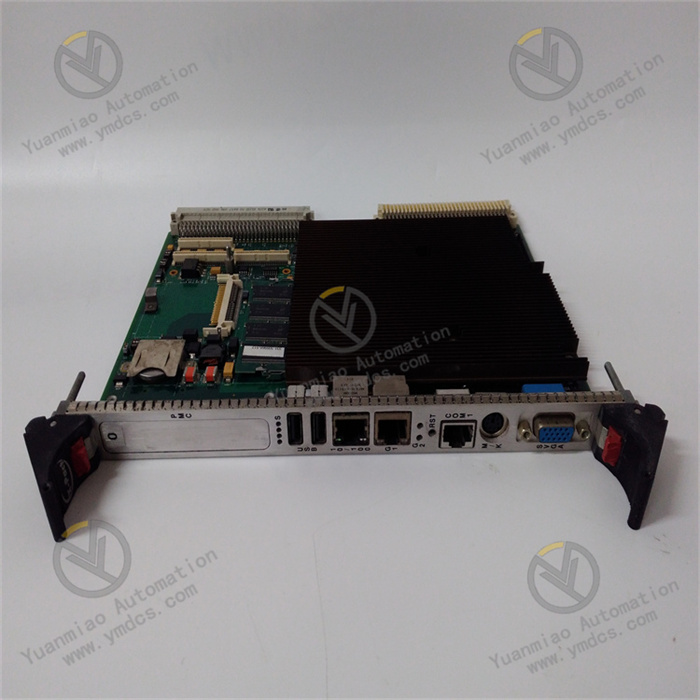
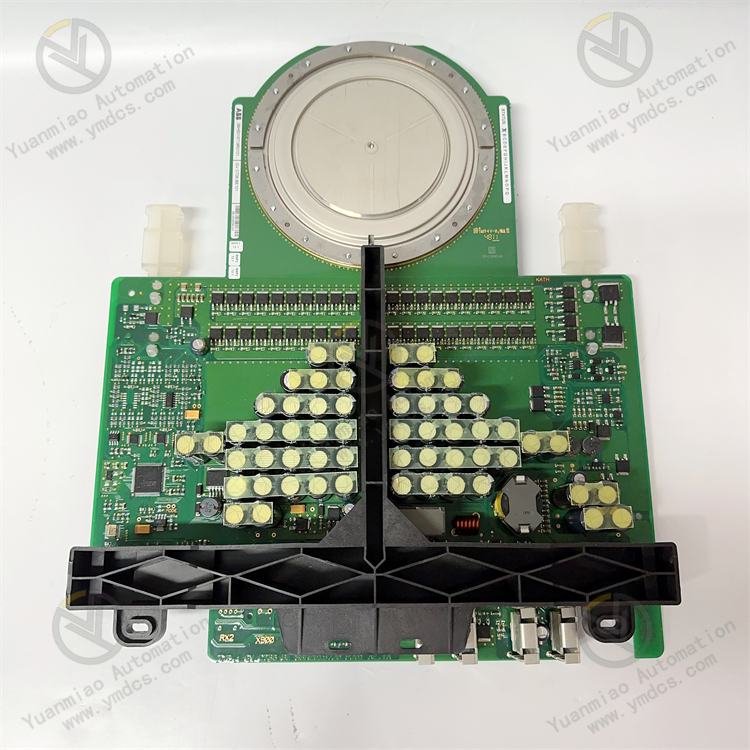
ABB UNS0885A-Z,V2 3BHB006943R0002
Its core functions include acquisition, processing, logical operation of on‑site industrial signals, and output of control commands. Featuring powerful computing capability and flexible communication performance, it can work cooperatively with PLCs, DCS systems, sensors, actuators and other equipment.
As a standard original spare part from ABB, it is available in multiple supply types with comprehensive after‑sales support, serving as a core component for precise control and efficient operation and maintenance of industrial automation systems.
1. Specifications and Physical Parameters
1.1 Operational and Communication Parameters
- Processor Performance: Equipped with an 800MHz high‑performance microprocessor, featuring powerful data processing and logical operation capabilities. It can quickly respond to complex control requirements, efficiently complete signal processing and command execution, and ensure system real‑time performance.
- Memory Capacity: Built‑in 64MB memory, capable of storing a large number of control programs, parameter configurations and fault records, meeting the program storage and data caching demands of complex automation tasks.
- Communication Interface: Supports the EtherCAT industrial Ethernet communication protocol with high transmission rate and low latency, enabling high‑speed data exchange with various industrial equipment. It also offers excellent compatibility for easy integration into existing automation systems to achieve centralized monitoring and unified management.
- Power Supply: 24VDC industrial standard power input, compatible with mainstream power supply systems in the industrial field. Stable power supply effectively avoids impacts from voltage fluctuations on module operation and ensures continuous and stable equipment performance.
- Control Logic: Supports multiple programming languages including ladder diagram (LD), function block diagram (FBD) and structured text (ST). Customized programming can be performed according to different industrial control scenarios to implement complex control functions such as logic control, sequential control and closed‑loop control.
Protection Functions: Built‑in overvoltage, overcurrent, short‑circuit and reverse polarity protection, effectively preventing module damage caused by external faults, wiring errors or abnormal voltages, and improving system operational safety and stability.
1.2 Physical and Installation Parameters
- Dimensions: Compact structure design with dimensions of 100mm × 100mm × 30mm. Small in size and space‑saving, it is suitable for installation and deployment in space‑limited industrial control cabinets and adaptable to various cabinet layouts.
- Net Weight: Approximately 0.2kg. Lightweight for easy installation, disassembly and handling, reducing labor intensity during installation and lowering the cabinet load.
- Mounting Method: Standard rack DIN‑rail mounting, conforming to conventional industrial cabinet installation specifications. Easy to install and flexibly adaptable to different cabinet configurations, facilitating module replacement and expansion.
- Connectors: Industrial‑grade anti‑loosening locking design with excellent anti‑vibration performance, ensuring stable and reliable connections in long‑term vibrating industrial environments and avoiding signal transmission interruptions or poor contact.
Appearance Markings: The module surface is clearly printed with the model (UNS0885A‑Z, V2), order number (3BHB006943R0002) and ABB brand logo, enabling quick identification, model verification and operation and maintenance management by on‑site personnel.
1.3 Environmental and Protection Parameters
- Operating Temperature: -25°C to +70°C. Wide‑temperature adaptive design allows stable operation in extreme high and low temperature industrial environments, whether in cold outdoor sites or high‑temperature production workshops.
- Relative Humidity: 0%–95% (non‑condensing). Excellent moisture‑proof performance enables normal operation in high‑humidity environments, suitable for humid industrial scenarios such as food processing, papermaking and chemical industries.
- Protection Degree: Enclosure protection class IP20 or higher, effectively preventing dust from entering the module to protect internal circuit components and avoiding human contact with live parts for safe use.
- Electromagnetic Immunity: Excellent anti‑electromagnetic interference performance in compliance with relevant industrial EMC standards. It can withstand strong electromagnetic environments generated by frequency converters, high‑power motors, high‑voltage equipment, etc., ensuring stable signal acquisition, processing and transmission and avoiding control abnormalities caused by interference.
- Vibration/Shock Resistance: Sturdy structure, having passed strict vibration and shock tests to meet the requirements of conventional on‑site industrial vibration and shock conditions. It effectively reduces the probability of module damage due to vibration and shock, guaranteeing long‑term stable operation.

2. Functions and Features
- High‑Performance Computing and Control: Equipped with an advanced 800MHz microprocessor and 64MB memory configuration, providing powerful data processing and logical operation capabilities. It quickly processes massive on‑site industrial signals and accurately executes control commands, meeting real‑time control requirements of complex automation tasks and improving system operating efficiency.
Flexible Programming and Configuration: Supports multiple mainstream programming languages with an intuitive and convenient programming environment. Engineers can flexibly write control programs according to production process requirements to implement personalized control logic. It also supports online programming, debugging and modification, reducing development and operation and maintenance costs.
- High‑Speed and Stable Communication: Supports the EtherCAT industrial Ethernet protocol with low communication latency and high transmission rate, enabling high‑speed data exchange with PLCs, DCS systems, sensors, actuators and other equipment. It integrates seamlessly into existing automation systems to achieve coordinated operation and centralized management among devices.
High Reliability and Durability: Uses industrial‑grade high‑quality electronic components and advanced manufacturing processes, having passed stringent environmental tests and quality control. Fanless design relies on structural heat dissipation for high efficiency and a long mean time between failures (MTBF). It operates stably for a long time in harsh industrial environments and reduces unplanned downtime.
- Comprehensive Fault Diagnosis and Protection: Built‑in complete fault diagnosis system monitors the operating status of the module itself and connected equipment in real time. Once an abnormality is detected, it immediately sends an alarm signal and records fault information for quick troubleshooting by maintenance personnel. It also features multiple electrical protection functions to effectively prevent various faults from damaging the module and system.
- Wide Compatibility and Easy Integration: Seamlessly compatible with the ABB System 800xA control system and various industrial automation systems, allowing direct connection without additional conversion modules and offering strong versatility. Modular design enables easy installation and disassembly, supporting online replacement (subject to system safety conditions) and facilitating system upgrade, expansion and maintenance.
3. Application Scenarios
Industrial Automation: Used for controlling equipment such as steel rolling mills, compressors, motor control (75–150kW three‑phase AC motors), conveyor belts and mixers. By collecting on‑site signals and executing control logic, it achieves precise control and coordinated operation of equipment, improving production efficiency and product quality.
- Energy Sector: Applied in wind power, photovoltaic, energy storage and other scenarios, including main circuit control of wind power converters, photovoltaic inverter control, and bidirectional DC/DC converter control for energy storage. It realizes efficient energy conversion and stable transmission, adapting to the operational requirements of new energy power stations.
Transportation Sector: Suitable for electric vehicle motor controllers, rail transit traction systems and auxiliary power supply control. With fast response capability, it meets the requirements for efficient and stable operation of transportation equipment.
- General Industrial Scenarios: Widely used in mine hoists, port cranes, chemical production equipment and other scenarios. As a core control module, it implements logic control, sequential control and closed‑loop control of equipment, ensuring the continuity and safety of production processes.
- Automation System Retrofit: As a standard original spare part from ABB, it can be used to upgrade and retrofit outdated industrial control systems by replacing underperforming control modules, improving system computing capacity, communication speed and reliability, and reducing operation and maintenance costs.
4. Operating Notes
Pre‑Installation Preparation: Verify the module model (UNS0885A‑Z, V2) and order number (3BHB006943R0002), and confirm compatibility with the applied control system and related equipment. Disconnect power and ensure complete discharge of capacitors in relevant circuits (at least 5 minutes) to avoid electric shock or module damage from residual voltage. Wear insulated gloves; hot‑plugging of the module or wiring is strictly prohibited.
Wiring Specifications: Strictly distinguish signal input, output, power and grounding terminals; incorrect or reverse connection is forbidden. Communication cables shall use dedicated shielded cables with single‑end grounding, and their length shall be minimized to reduce electromagnetic interference. Connecting high‑voltage power to signal terminals is prohibited. Tighten terminal screws after wiring to ensure good contact and avoid signal distortion or module faults caused by poor connection.
Parameter and Programming Management: Perform module configuration, programming and parameter setup via dedicated ABB programming software. Familiarize yourself with the software manual and module characteristics before programming, and draft control logic diagrams first to reduce errors. After programming, conduct no‑load debugging before connecting equipment for testing. Set and regularly update relevant protection parameters; modifying key control parameters during operation is strictly prohibited.
Environmental Control: Install in enclosed, dry and ventilated industrial cabinets; avoid direct sunlight, dust accumulation and exposure to corrosive or flammable gases. Keep away from strong electromagnetic interference sources such as frequency converters and high‑voltage busbars to prevent distortion of signal acquisition, processing and transmission. Maintain ambient temperature between -25°C and +70°C and humidity at 0%–95% (non‑condensing). Reserve sufficient heat dissipation space inside the cabinet and do not block the module heat dissipation surface.
Routine Maintenance and Safe Operation: Regularly clean dust from the module surface and terminals using dry compressed air or a soft brush to keep the module clean. Inspect module mounting, connectors and terminal connections monthly for looseness or oxidation and address issues promptly. Monitor module operating status and fault records daily through the control system for timely troubleshooting.
Disconnect main and backup power supplies before maintenance and wait for complete discharge of internal capacitors. Unauthorized circuit modification or use of non‑original components is strictly prohibited, otherwise the warranty will be voided and safety hazards may arise.Store spare modules in a dry, ventilated environment and perform power‑on testing every 6 months to ensure normal functionality. Avoid applying excessive pressure, placing heavy objects on the module or squeezing cables to prevent module damage.