Description
1. Product Overview
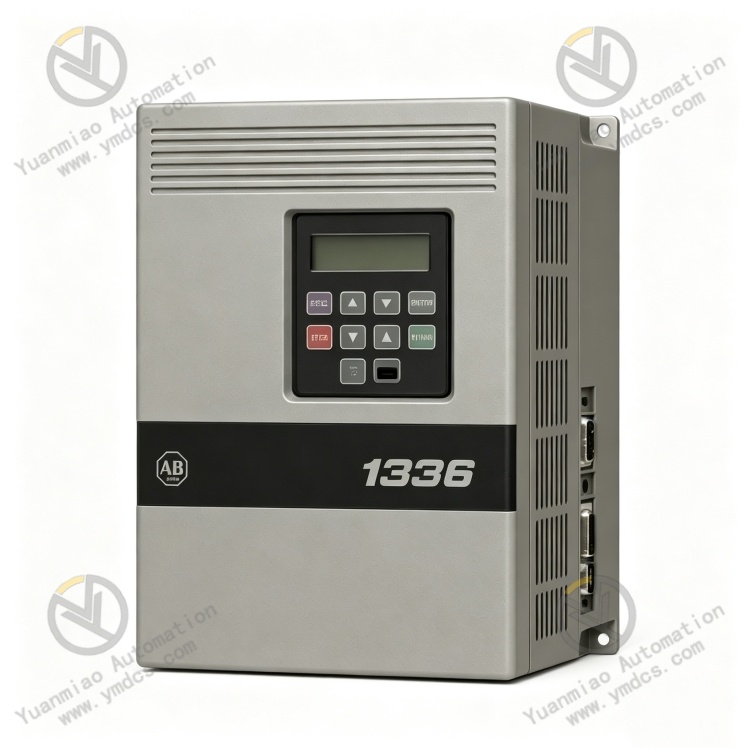
Allen‑Bradley 1336F‑B040‑AN‑EN‑HAS2‑LA4‑L6 is a high‑performance three‑phase AC variable‑frequency drive of Rockwell Automation 1336 PLUS II series. It is an industrial‑grade microprocessor‑based speed‑regulation device designed for speed control and energy‑saving control of industrial three‑phase induction motors. This model is a 40 HP standard‑power‑rating unit equipped with original integrated control options, enhanced safety modules, auxiliary sensor interfaces and matching expansion components. It is a mainstream industrial frequency converter featuring high stability and wide compatibility within the 1336 series.
Adopting PWM pulse‑width‑modulation technology, the drive supports wide‑range frequency and voltage adjustment and embeds high‑precision vector‑control algorithms to realize accurate regulation of motor speed and torque. Based on a modular selection architecture, it integrates standard communication, auxiliary heat dissipation, fault monitoring and expansion interfaces. With excellent environmental adaptability and system compatibility, it is widely deployed in various industrial motor‑drive applications including traditional manufacturing, production lines, fluid transportation and hoist transmission, and is suitable for long‑term continuous and heavy‑duty industrial operating conditions.
2. Functional Features
High‑precision Motor Speed and Torque Control
Equipped with advanced field‑oriented control and current‑regulated PWM algorithms, it supports dual‑mode control of closed‑loop speed and closed‑loop torque. It delivers smooth operation with high speed‑regulation accuracy and effectively suppresses low‑speed motor jitter and high‑speed overload fluctuation. It provides 0‑250 Hz wide‑range frequency adjustment and adapts to multiple load conditions of constant‑torque and constant‑power characteristics. It can precisely match load profiles of fans, pumps, transmission equipment and processing machinery to guarantee operational stability and control accuracy.
Comprehensive Protection and Fault‑Diagnosis Functions
It integrates full‑scale electrical and equipment‑protection mechanisms, including over‑voltage, under‑voltage, over‑current, overload, over‑temperature, short‑circuit, ground‑fault, motor stall and stall‑prevention protection. It monitors operating status in real time and triggers rapid shutdown protection to prevent equipment damage. With non‑volatile fault‑memory capability, it stores timestamped fault logs and operation alarms for fault tracing and on‑board status check, greatly simplifying troubleshooting.
Powerful Expansion and Integration Capabilities
This unit is factory‑integrated with AN basic‑control module, EN standard communication interface, HAS2 advanced sensing‑and‑safety module, LA4 auxiliary‑expansion module and L6 power‑adaptation assembly. Multi‑functional expansion is available without additional hardware installation. It supports external‑sensor signal access, auxiliary‑loop control, multi‑speed operation, start‑stop interlock and custom parameter configuration, meeting demands for complex process coordination and allowing networking with diverse industrial automation systems.
Convenient Debugging and Maintenance
It supports local keypad‑based debugging and remote parameter configuration. Dedicated configuration software enables parameter read‑write, program editing, online monitoring, as well as parameter backup and restoration. The onboard visual operator panel displays real‑time key data including operating frequency, output current, motor speed, fault codes and runtime. Parameters are stored in non‑volatile memory and retained after power‑off without re‑commissioning, streamlining daily maintenance workflows.
High Stability for Industrial Environments
Designed in compliance with industrial electrical standards, it offers outstanding EMC and anti‑interference performance against workshop electromagnetic radiation, voltage fluctuation and harmonic disturbance. The unit is industrially reinforced for dust resistance, vibration resistance and high‑temperature endurance. It allows long‑term continuous full‑load operation with fast start‑stop response and low noise, suited for harsh and high‑frequency industrial production conditions.
3. Technical Specifications
3.1 Power and Electrical Specifications
Product Series: 1336 PLUS II (1336F Series) Rated Power: 40 HP (approx. 30 kW) Applicable Motor: Three‑phase industrial induction motor Input Voltage: 3‑phase 380‑480 VAC industrial standard voltage Rated Output Current: Standard output current matching 40 HP motor Frequency Range: 0‑250 Hz Control Method: Field‑oriented vector control, PWM pulse‑width‑modulation control
3.2 Control and Operation Specifications
Control Modes: Speed control, torque control, combined control Regulation Characteristics: Adaptive for constant‑torque and constant‑power conditions Parameter Storage: Non‑volatile memory; parameters persist after power‑off Fault Recording: Timestamped fault / alarm queue storage Start‑Stop Modes: Local keypad, remote terminal, communication command
3.3 Communication and Expansion Specifications
Basic Configuration: AN basic control unit, EN standard industrial communication interface Expansion Configuration: HAS2 advanced sensing‑monitoring module, LA4 auxiliary control module, L6 power‑adaptation assembly Expansion Functions: External‑signal acquisition, auxiliary‑loop interlock, multi‑process parameter switching, safety interlock control
3.4 Environmental and Protection Specifications
Protection Class: Standard cabinet‑mount rating for indoor industrial environment Operating Temperature: Standard industrial equipment operating‑temperature range Operating Humidity: 10%‑95% RH (non‑condensing) EMC Standard: Compliant with industrial EMC specifications Mounting: Standard cabinet wall‑mount installation
4. Hardware Configuration & Structural Advantages
4.1 Core Hardware Configuration
The drive adopts an integrated hardware architecture centered on an industrial‑grade microprocessor control unit, together with high‑precision current‑voltage sampling circuits and PWM drive modules to guarantee accurate speed and torque regulation. The integrated AN basic‑control module executes core logic and speed‑regulation computation; the EN communication module realizes system networking and remote management; the HAS2 sensing‑and‑safety module collects real‑time operating data of motors and equipment for safety protection and anomaly warning; the LA4 auxiliary‑expansion module enhances peripheral‑control functions; the dedicated L6 power assembly ensures stable power output for the 40 HP power rating to handle high‑power motor loads.
A high‑resolution operator keypad with keypad debugging, data display and fault indication is provided as standard. Independent heat‑dissipation ducts and industrial cooling assemblies mitigate thermal risks under high‑power operation and prevent over‑temperature derating and overheating failures. Multiple onboard sampling and protection circuits monitor electrical parameters and deliver millisecond‑level fault response and protection.
4.2 Structural Design Advantages
It features a compact industrial wall‑mount form‑factor with neat layout and high integration, saving cabinet installation space and fitting standard industrial enclosures. The housing is constructed from high‑strength flame‑retardant material. Internal circuits are reinforced against dust, vibration and ageing to mitigate degradation caused by workshop dust, minor vibration and temperature variation, supporting long‑term continuous operation.
Thanks to modular pre‑integration, no additional expansion boards are required. Full‑function modules are factory‑fitted for plug‑and‑play deployment, reducing installation and retrofitting costs. The internal partitioned cooling duct delivers high heat‑dissipation efficiency with low air resistance, lowering temperature rise under high‑power operation and improving reliability and service life. Clearly‑labelled and partitioned terminal blocks facilitate wiring, commissioning, routine maintenance and fault troubleshooting.
5. Working Principle
The Allen‑Bradley 1336F‑B040‑AN‑EN‑HAS2‑LA4‑L6 frequency converter implements an “AC‑DC‑AC variable‑frequency speed‑regulation plus vector closed‑loop control” mechanism. Its operation consists of five key phases: rectification, voltage stabilization, inversion, closed‑loop regulation and condition monitoring.
After receiving three‑phase industrial AC input, the internal rectifier converts mains AC into DC. The DC‑bus voltage is stabilized by filter circuits to supply the inverter unit. According to parameters set locally or host‑controller commands, the main‑control unit generates precise PWM signals via core algorithms to drive the inverter. The inverter converts DC power into adjustable‑frequency adjustable‑voltage three‑phase AC to drive the induction motor and achieve accurate speed and torque regulation.
During runtime, onboard sampling circuits and the HAS2 sensing module continuously collect output current, voltage, motor speed and device temperature. Feedback signals are sent back to the main controller for closed‑loop processing. The system dynamically compares set‑points against actual values, adjusts PWM parameters in real‑time and adapts to load variations to suppress speed drift and torque spikes for smooth motor performance. Meanwhile, the AN module executes start‑stop, speed‑regulation and interlock logic; the EN communication module enables data exchange and remote supervision with host systems.
Electrical faults, over‑temperature conditions and overload events are monitored continuously. Upon anomaly detection, protection shutdown, alarm signalling and fault‑data logging are triggered to lock fault status, prevent damage to motors and the drive, and secure safe operation of the whole system.
6. Application Scenarios
Fluid‑transport Equipment
Widely used for industrial water pumps, fans, blowers and cooling‑tower fans. Variable‑frequency speed‑regulation adjusts flow rate and air pressure on demand, replacing traditional throttling control to achieve substantial energy savings. It meets requirements for continuous energy‑efficient operation in waterworks, power plants, chemical processes and HVAC systems.
Automatic Production‑line Equipment
Suitable for large conveyor lines, material‑handling machinery, packaging lines and assembly equipment. It precisely controls drive‑motor speed for steady adjustable‑speed line operation in mass continuous production, ensuring consistent production tact and smooth running.
Machining and Heavy‑duty Equipment
Applied to machine‑tool transmission units, grinders, punch presses, material roller tables and small hoist drives. Benefiting from stable torque performance and overload capacity, it adapts to frequent start‑stop and variable‑load conditions and guarantees machining and transmission accuracy.
Chemical and Rubber‑plastic Equipment
Compatible with extruders, pelletizers, agitators and transfer pumps for chemical and rubber‑plastic processing. It provides accurate speed and torque control for viscous‑material processing and continuous production, ensuring product consistency and operational stability.
General‑purpose High‑power Industrial Drives
Applicable to various 40 HP‑rated three‑phase induction‑motor drives across light‑industry manufacturing, building‑materials production, warehousing logistics and municipal industries. Supported by high stability, rich expandability and comprehensive protection functions, it fits both standard and custom‑built industrial motor speed‑control systems.