Description
1. Product Overview
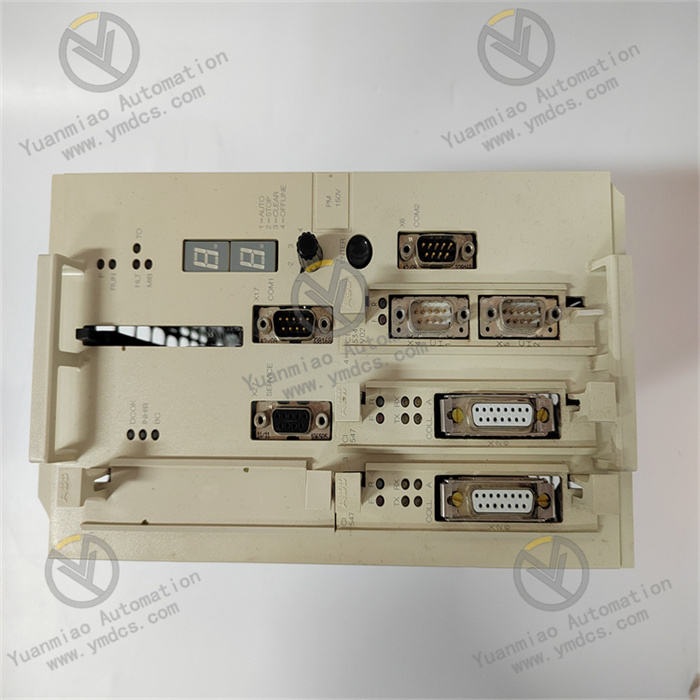
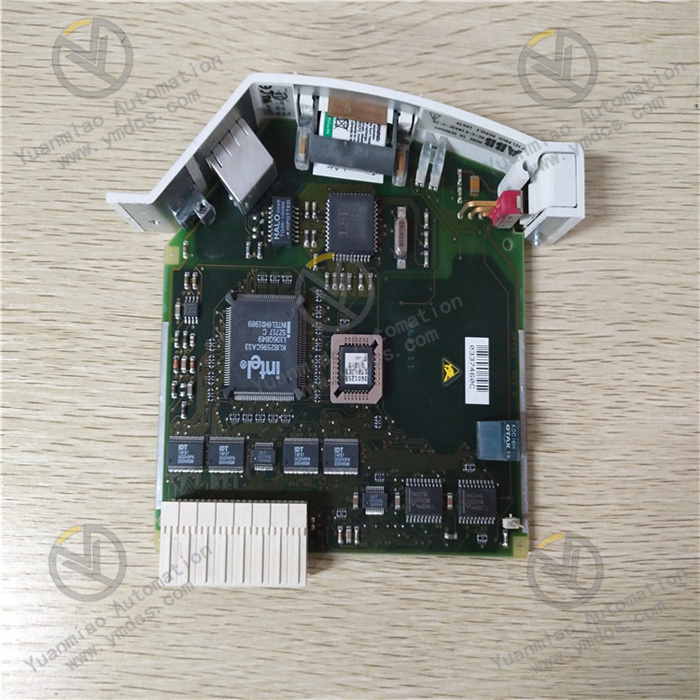
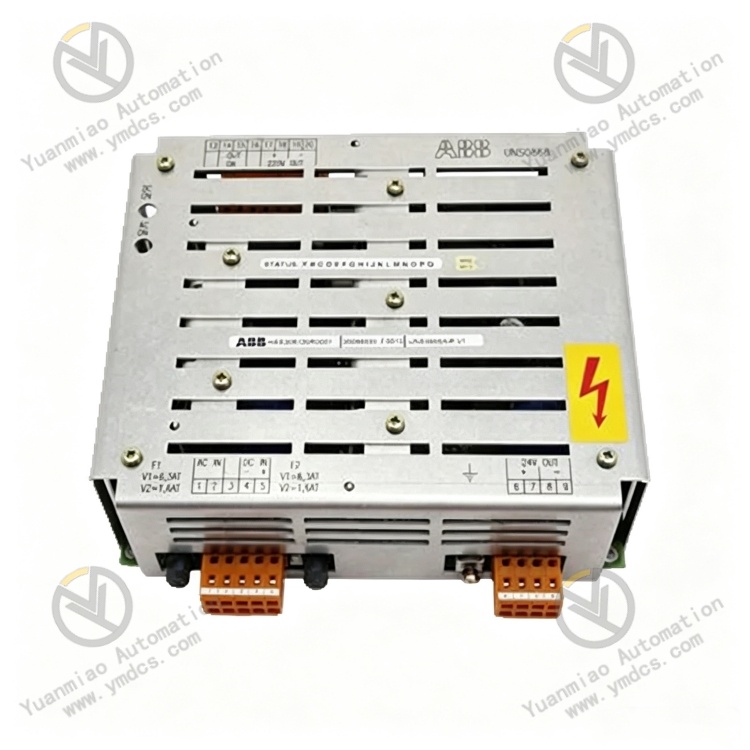
The ABB UNS0868A‑P V2 (part‑number: HIEE305120R2) is a high‑end main‑processor control board dedicated to the UNITROL 6000 excitation system manufactured by ABB Group, Switzerland. It acts as the core arithmetic and control unit of generator‑set excitation‑control systems and is designed for automatic excitation regulation, closed‑loop voltage control, system‑stability calculation and data‑communication interaction of large‑and‑medium‑sized synchronous generators, hydro‑/steam‑turbine generator units and industrial standby generator sets. Serving as the central hub of the excitation system, this board integrates high‑precision floating‑point computing chips, real‑time control‑algorithm units, multi‑channel signal acquisition, bus‑communication interfaces and hardware‑protection logic. It undertakes core tasks including AVR automatic voltage regulation, PSS power‑system stabilization control, closed‑loop excitation calculation, fault‑monitoring interlock and system data exchange, and constitutes the critical hardware of excitation‑control systems for power‑generation units.
As the second‑generation upgraded main‑control board, the UNS0868A‑P V2 is built upon ABB’s mature power‑excitation control architecture, equipped with an optimized real‑time operating system and dedicated excitation‑control algorithms for comprehensive improvements in calculation accuracy, response speed, anti‑interference performance and stability. Adopting industrial high‑precision PCB technology, military‑grade wide‑temperature electronic components, fully‑isolated signal‑acquisition circuits and multi‑stage hardware‑protection design, the board can accurately collect signals such as generator terminal voltage, stator current, rotor parameters and grid operating conditions. It rapidly responds to grid fluctuations and sudden load changes and precisely revises excitation‑output parameters to guarantee the safety and stability of generator‑sets during grid‑connection, steady‑state operation, load regulation and transient‑fault processes. Compatible with various large‑and‑medium‑sized synchronous generator units including thermal‑power, hydropower and gas‑turbine units, the equipment can withstand harsh operating conditions in power stations such as strong electromagnetic interference, alternating high‑low temperatures, dust, humidity and vibration shock, supporting 7×24‑hour continuous and stable operation. It is widely deployed in engineering projects including complete UNITROL 6000 excitation‑system packages for new‑built power plants, replacement of legacy main‑control excitation boards, performance upgrades of excitation systems and intelligent retrofits of power‑station electric‑control systems.
2. Core Functions
High‑precision AVR Automatic Closed‑loop Voltage Regulation: Built‑in dedicated excitation‑regulation algorithms collect real‑time three‑phase terminal voltage, current and frequency parameters of generators, dynamically compare them against rated reference values, and precisely adjust excitation‑output current and voltage through high‑speed PID closed‑loop calculation. It rapidly compensates voltage deviation caused by grid disturbances and load fluctuations, strictly controls steady‑state voltage accuracy of the unit, eliminates terminal‑voltage drift, over‑tolerance and abnormal fluctuation, and ensures stable supply voltage of grid‑connected generator‑sets.
PSS Power‑system Stabilization Control: Embedded power‑system stabilizer control logic effectively suppresses low‑frequency grid oscillation and unit power oscillation, improving grid‑connection damping characteristics of generator‑sets and the dynamic stability of power grids. Under transient conditions such as grid disturbances, sudden‑load changes and grid‑connection impacts, it quickly outputs suppression regulation quantities to avoid risks of unit instability and oscillation‑caused off‑grid disconnection, greatly enhancing the grid‑connection reliability of large‑scale generator‑sets.
Full‑range Excitation‑system Logic Operation and Interlock Control: It is fully responsible for whole‑process logical management of excitation systems, covering fully‑automatic sequential logics such as excitation build‑up, zero‑voltage boosting, grid‑connection tracking, reactive‑power regulation, constant‑power‑factor control, constant‑reactive‑power control and de‑excitation during shutdown. Meanwhile, it integrates functions of excitation‑system fault judgment, status interlock and abnormal blocking, accurately identifying problems such as excitation overload, under‑excitation, over‑excitation, signal anomalies and loop faults to realize multi‑level alarm and interlock protection.
Multi‑channel High‑precision Signal Acquisition and Calibration: On‑board multiple high‑speed isolated sampling channels synchronously collect key parameters including generator terminal voltage, stator current, rotor temperature, excitation current, grid frequency and system phase. Equipped with hardware filtering and software‑calibration functions, it automatically corrects sampling deviations induced by line losses and environmental interference, ensuring error‑free operational data for excitation regulation, fault judgment and steady‑state control.
Multi‑protocol High‑speed Bus‑communication and Data Exchange: Integrated with multiple industrial‑communication interfaces such as Ethernet and field‑bus ports, it supports mainstream protocols including Modbus, Profibus and power‑industry communication standards, enabling seamless connection with power‑station DCS, SCADA background systems, power‑monitoring platforms and unit‑control systems. It supports real‑time operating‑condition upload, remote‑parameter read‑write access, fault‑log transmission and on‑line program upgrade, realizing full‑dimensional intelligent remote‑operation‑and‑maintenance and data‑visualized management of excitation systems.
Hardware Self‑diagnosis and Fault‑tracing Protection: Board‑level full‑time self‑check logic executes automatic hardware inspection, program initialization and link detection upon power‑on. During operation, it continuously monitors chip status, sampling loops, communication links and power‑supply conditions. Once hardware anomalies, signal disconnection, communication interruption or calculation faults are detected, fault locking, alarm notification and system‑protection blocking are triggered immediately. Fault codes and operation logs are stored synchronously for precise fault localization and reduced maintenance troubleshooting workload.
- Multi‑mode Excitation‑control‑strategy Adaptation: It supports free switching among multiple control modes, including automatic voltage regulation, manual excitation regulation, constant reactive‑power, constant power factor and constant rotor‑current control. It adapts to various operating states of generator‑sets such as no‑load, on‑load, grid‑connected, island‑grid and transient‑fault conditions, flexibly meeting excitation‑control requirements of generator‑sets with different capacities and types and delivering strong scenario adaptability.
3. Technical Specifications
| Parameter Item | Technical Specification |
|---|---|
| Product Model | UNS0868A‑P V2 |
| Part Number | HIEE305120R2 |
| Product Brand | ABB |
| Product Series | UNITROL 6000 Generator‑set Excitation‑control System Series |
| Product Type | Excitation‑system main‑processor control board, AVR core‑control unit |
| Core Control Functions | AVR automatic voltage regulation, PSS system‑stabilization control, excitation‑logic calculation, multi‑mode excitation regulation, fault interlock protection, data‑communication interaction |
| Compatible Equipment | Large‑and‑medium‑sized synchronous thermal‑/hydro‑/gas‑turbine generator‑sets, complete UNITROL 6000 excitation systems |
| Sampling Accuracy | High‑precision power‑parameter sampling, low error and high repeatability, complying with accuracy standards for grid‑connected power stations |
| Computing Performance | High‑speed real‑time floating‑point calculation, millisecond‑level response, meeting rapid‑regulation requirements under grid transient conditions |
| Communication Protocols | Compatible with Modbus, Profibus, Ethernet‑based power‑communication protocols, supporting connection with upper‑level monitoring systems |
| Control Modes | Switchable modes: Automatic AVR, manual excitation, constant reactive‑power, constant power factor, constant rotor‑current |
| Hardware Protection | Fully‑isolated sampling loops, surge suppression, electrostatic protection, over‑voltage & over‑current protection, electromagnetic anti‑interference design |
| Operating Temperature | ‑20℃ ~ +60℃, wide‑temperature range for power‑station environments |
| Storage Temperature | ‑40℃ ~ +85℃ |
| Ambient Humidity | 5%‑95%RH, non‑condensing, suitable for humid enclosed control‑cabinets in power plants |
| Hardware Construction | Industrial multi‑layer precision PCB, wide‑temperature military‑grade chips, vibration‑reinforced board, dust‑proof and corrosion‑resistant coating |
| Operating Characteristics | Stable computation, high regulation accuracy, fast response, strong anti‑interference capability, zero data drift, long‑term calibration‑free operation |
| Compatible Systems | ABB UNITROL 6000 excitation systems, power‑station DCS/SCADA monitoring systems, complete generator‑set electric‑control systems |
| Key Advantages | High‑precision closed‑loop excitation control, PSS oscillation suppression, flexible multi‑mode regulation, powerful anti‑interference performance, hardware self‑diagnosis, non‑destructive replacement of legacy boards, steady‑state grid‑connection control for large‑and‑medium‑sized generator‑sets, high‑reliability power‑station‑grade operation |
4. Working Principle
The ABB UNS0868A‑P V2 HIEE305120R2 main‑control board adopts a fully‑closed‑loop intelligent‑control workflow: Real‑time Signal Acquisition → Data Calibration & Filtering → Closed‑loop Algorithm Calculation → Excitation‑output Adjustment → System‑stability Suppression → Real‑time Fault Monitoring → Bidirectional Data Interaction. After power‑on, the board completes hardware self‑inspection, program initialization, parameter loading and communication‑link handshake, then enters high‑speed real‑time control standby mode to continuously synchronously collect core operational data, including generator terminal voltage, stator current, grid frequency and rotor‑excitation parameters.
Under no‑load operating conditions, the AVR automatic‑voltage‑regulation algorithm compares real‑time measured terminal voltage against rated set‑points and dynamically outputs adjustment commands to precisely control output current of the excitation device. It realizes zero‑voltage boosting and no‑load voltage stabilization, ensuring smooth no‑load voltage without overshoot or fluctuation and laying a stable operational foundation for grid‑connection.
During grid‑connected operation, the board activates dual‑logic of closed‑loop voltage regulation and PSS stabilization control. On one hand, it revises excitation‑output in real‑time according to grid‑load variations and voltage fluctuations to accurately distribute unit reactive‑power and stabilize terminal voltage. On the other hand, the PSS algorithm monitors grid power oscillation and low‑frequency disturbances, outputs damping regulation values and rapidly suppresses power oscillation between generator‑sets and power grids, improving dynamic stability of the power system. Multiple steady‑state control modes such as constant‑reactive‑power and constant‑power‑factor are supported to satisfy grid‑dispatching requirements.
Under complex transient‑fault, sudden‑load‑change and grid‑disturbance conditions, the board delivers millisecond‑level responses via high‑speed computing capability, quickly modifying excitation parameters and suppressing operational fluctuations to avoid unit instability, voltage collapse and oscillation‑induced off‑grid risks. Hardware‑level fault monitoring and software‑logic judgment run continuously, tracking sampling loops, communication links and excitation‑output status. Alarms, blocking and interlock‑protection actions are triggered immediately upon anomaly detection, while fault logs are saved. Meanwhile, high‑speed communication interfaces upload real‑time excitation‑related operating conditions, parameters and fault information to upper‑level monitoring systems and receive remote‑parameter configuration and control instructions, forming a complete closed‑loop covering excitation control, safety protection and remote‑operation‑and‑maintenance.
5. System‑architecture Compatibility
The ABB UNS0868A‑P V2 HIEE305120R2 is a standardized second‑generation dedicated main‑control board for the UNITROL 6000 excitation system. Its hardware pin‑out definition, board dimensions, bus timing, control logic and communication protocols are fully matched with the full range of UNITROL 6000 excitation equipment. As the original core main‑control unit, it achieves 100% seamless integration with the complete ABB excitation‑system architecture without compatibility barriers or additional program adaptation.
The board delivers excellent power‑system interoperability and is compatible with domestic and overseas large‑and‑medium‑sized synchronous steam‑, hydro‑ and gas‑turbine generator‑sets, as well as mainstream supporting architectures for generator‑excitation windings, power units and rectifier modules. Natively supporting multiple standard power‑industry communication protocols, it connects seamlessly to power‑station DCS, SCADA, power‑dispatching background platforms and generator‑set PLC control systems, easily integrating into intelligent monitoring and dispatching frameworks of power plants and realizing visualized, remotely‑controllable and monitorable excitation‑system data.
Its standardized board structure and general‑purpose program architecture are well‑suited for retrofits of legacy power‑station excitation systems, enabling direct replacement of first‑generation UNS0868 and older main‑control boards. Retrofit projects require no modifications to excitation‑power loops, no reconstruction of control logic and no changes to external wiring, supporting plug‑and‑play non‑destructive replacement. After upgrade, excitation‑regulation accuracy, system stability, oscillation‑resistance capability and intelligent‑O&M performance are comprehensively improved, solving typical drawbacks of legacy main‑control hardware such as delayed computation, low regulation precision, absence of PSS optimization, high fault‑misjudgment rates and lack of remote‑maintenance functions.
6. Application Scenarios
Designed to resolve common limitations of conventional excitation main‑control boards including insufficient regulation accuracy, poor adaptability to grid disturbances, missing oscillation‑suppression functions, limited fault‑monitoring capacity, low intelligence level and long‑term operational drift, the ABB UNS0868A‑P V2 HIEE305120R2 leverages its core strengths of high‑precision AVR voltage stabilization, PSS system stabilization, multi‑mode flexible excitation regulation, strong anti‑interference capability, self‑diagnosis protection and intelligent communication‑based maintenance for core‑control applications of excitation systems on large‑and‑medium‑sized generator‑sets.
It is widely deployed in thermal‑power plants, hydropower stations, gas‑turbine power stations, combined‑heat‑and‑power plants, large self‑owned generator‑sets at industrial‑and‑mining enterprises and grid‑connected distributed‑energy power stations. Its primary tasks include automatic excitation regulation, generator terminal‑voltage stabilization, reactive‑power distribution, low‑frequency grid‑oscillation suppression, excitation‑system fault protection, operating‑condition data upload and remote‑operation‑and‑maintenance management for generator‑sets. Applicable engineering projects comprise complete UNITROL 6000 excitation‑system packages for new‑built power plants, main‑control‑board replacement for legacy generator‑set excitation systems, performance‑optimization upgrades for excitation hardware, intelligent‑retrofit projects of power‑station electric‑control systems and stability‑improvement renovations for grid‑connected generator‑sets. It mitigates operational risks such as excessive voltage fluctuation, grid‑connection oscillation, unbalanced reactive‑power distribution, poor transient‑state stability and high excitation‑system failure rates, comprehensively enhancing grid‑connection safety, power‑supply stability, grid adaptability and intelligent‑O&M performance of generator‑sets and ensuring long‑term, stable, safe and compliant operation of power systems.