Description
1. Product Overview
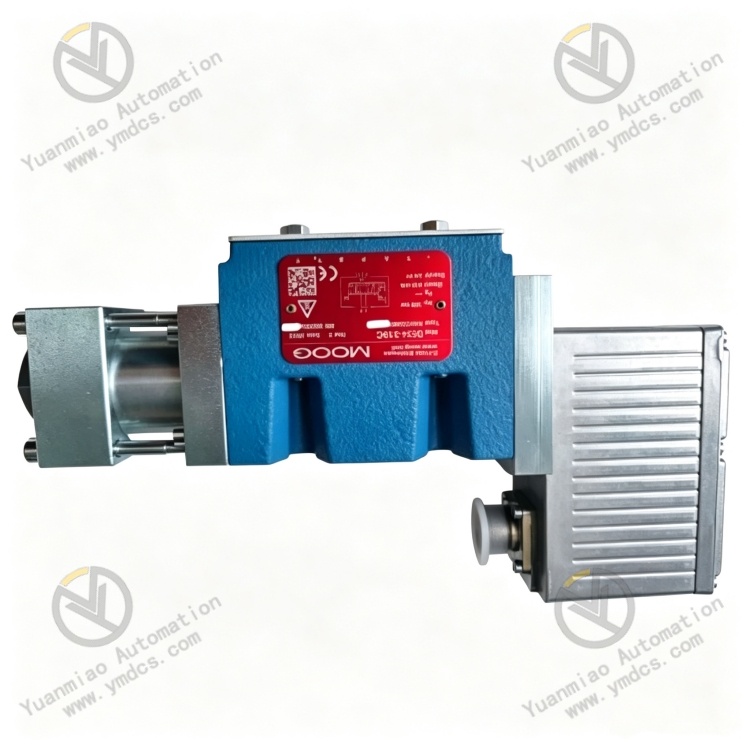
Moog D061‑9320 is a high‑performance direct‑drive electro‑hydraulic servo valve of the D061 series manufactured by MOOG (USA). As a core actuator for high‑precision industrial hydraulic control, it is designed specifically for electro‑hydraulic automatic‑control systems requiring high‑frequency dynamic response, superior control accuracy and outstanding stability under harsh operating conditions. This servo valve accurately converts electrical analogue control signals into linear hydraulic flow, pressure and spool‑displacement motion, realizing closed‑loop precision regulation of position, speed, pressure and force within hydraulic systems. It serves as a key control unit for high‑end intelligent manufacturing, heavy‑duty equipment, test‑and‑measurement facilities and precision hydraulic systems.
As a premium industrial‑grade servo valve from MOOG, the D061‑9320 adopts an integrated on‑board electronic amplifier and direct‑drive spool structure, eliminating the complicated configuration of conventional pilot‑operated valves. It delivers fast response, extremely low hysteresis error, excellent linearity and minimal temperature drift, together with strong resistance to vibration and shock. Equipped with an intelligent drive circuit, signal shaping function, overload protection and automatic zero‑point calibration, the unit supports continuous high‑frequency dynamic regulation free of jamming or lag, and offers exceptional repeatability. The valve body is forged from high‑strength alloy, fitted with hardened wear‑resistant spools and corrosion‑proof sealing assemblies. It can withstand long‑term exposure to severe operating conditions such as high‑pressure hydraulic shocks, high‑frequency reciprocating motion, industrial dust, vibration and wide temperature fluctuations, enabling 7×24‑hour uninterrupted high‑precision operation. Typical applications include new‑build precision‑control projects for test‑bench equipment and material‑testing machines, upgrading accuracy of ageing hydraulic systems, optimizing dynamic response and improving closed‑loop performance of automated forging equipment, aerospace‑related hydraulic systems and high‑end industrial hydraulic power stations.
2. Core Functions
High‑precision linear electro‑hydraulic conversion and control: Receives standard industrial analogue control signals and converts them linearly into hydraulic flow and pressure with excellent linearity, zero dead zone, no sudden changes or offset errors. It perfectly meets closed‑loop precision‑control requirements for hydraulic systems and performs fine position trimming, steady‑state speed regulation, constant‑pressure control and precise load‑force adjustment, overcoming common defects of ordinary hydraulic valves such as coarse regulation, low accuracy and non‑linear distortion.
Ultra‑low hysteresis and high repeatable control accuracy: Benefiting from MOOG’s mature spool‑machining technology and intelligent drive algorithms, the overall hysteresis error is less than 0.1%, delivering extremely high repeatability and micron‑level precision for hydraulic motion control. Under sustained high‑frequency, small‑amplitude dynamic‑regulation conditions, parameters remain stable without drift, satisfying stringent process requirements for high‑precision testing, precision forming and high‑accuracy attitude control.
High‑frequency fast dynamic‑response characteristics: Featuring an efficient direct‑drive spool mechanism and high‑speed electronic control unit, the valve provides rapid step‑response performance and superior dynamic‑following capability. It tracks dynamic commands issued by the host control system without regulation lag or phase offset, adapting to high‑speed dynamic hydraulic servo‑control scenarios and ensuring synchronous, instant dynamic‑action response of equipment.
Integrated electronic control eliminating requirement for external amplifier: A surface‑mount integrated electronic drive amplifier is built‑in. No external servo amplifier module is required; the valve can receive standard control signals directly from industrial‑control systems once powered on. This greatly simplifies system configuration and reduces potential failure points from external wiring. The on‑board circuit incorporates signal filtering, noise‑reduction shaping and stable‑gain functions to suppress industrial electromagnetic interference and guarantee clean, stable control signals.
Wide‑temperature low‑drift adaptive calibration capability: Integrated temperature‑compensation algorithms and automatic zero‑calibration mechanisms minimize zero‑point drift across wide temperature ranges and compensate actively for control deviations caused by temperature variation. Frequent manual calibration during long‑term continuous operation is unnecessary, lowering maintenance frequency and ensuring consistent control accuracy over time.
High‑strength resistance to operational shocks and multi‑layer safety protection: Hardened, precision‑ground wear‑resistant spools and robust valve‑body construction resist high‑pressure impact, fatigue and vibration, making the unit suitable for severe hydraulic‑circuit conditions with frequent reciprocating motion. Built‑in electronic over‑current, over‑voltage and short‑circuit protection prevents accidental spool movement, jamming or burnout caused by electrical faults. A safe power‑off reset function further improves operational safety.
- Standardized interfaces for convenient modification and upgrade: Complying with universal mechanical, hydraulic and electrical specifications of the MOOG D061 series, it shares identical mounting dimensions, port configurations, electrical pin‑out definitions and control logic. It can directly replace older D061‑series servo valves without modifying hydraulic piping or control programmes, enabling plug‑and‑play installation with zero adaptation risk and supporting non‑destructive upgrades of legacy precision hydraulic systems.
3. Technical Specifications
| Parameter Item | Technical Specification |
|---|---|
| Model | D061‑9320 |
| Brand | MOOG (USA) |
| Product Series | D061 Direct‑Drive High‑Precision Servo Valve Series |
| Product Type | Integrated Electronic‑Control Electro‑Hydraulic Servo Valve, Direct‑Drive Precision Flow‑Control Valve |
| Control Mode | Closed‑loop electrical‑signal control, direct‑spool actuation |
| Supply Voltage | 24 VDC standard industrial DC power supply |
| Control Signal | Compatible with standard analogue signals (voltage / current optional) |
| Overall Hysteresis Accuracy | ≤ 0.1 % ultra‑high‑precision hysteresis control |
| Control Linearity | Excellent linear characteristics, no control dead‑zone, no non‑linear distortion |
| Zero‑Point Temperature Drift | Ultra‑low drift over wide‑temperature range, built‑in temperature‑compensation calibration |
| Dynamic‑Response Performance | High‑frequency response, fast step‑response, excellent dynamic tracking performance |
| Core Structure | Direct‑drive spool, integrated SMD electronic drive, hardened wear‑resistant sleeve |
| Protection Features | Electronic over‑voltage / over‑current / short‑circuit protection; hydraulic shock‑resistance, vibration‑resistance, fatigue‑resistance |
| Operating Characteristics | High accuracy, excellent repeatability, fast dynamic response, long‑term drift‑free performance, infrequent calibration requirement, strong anti‑interference capability |
| Operating Temperature | ‑20 ℃ ~ +70 ℃, suitable for industrial wide‑temperature conditions |
| Storage Temperature | ‑40 ℃ ~ +85 ℃ |
| Ambient Humidity | 5 %‑95 % RH, non‑condensing, suitable for hydraulic‑equipment‑room environments |
| Hydraulic Fluid | Standard industrial anti‑wear hydraulic oil, clean compatible fluids |
| Hardware Construction | High‑strength alloy valve body, precision‑hardened spool, corrosion‑resistant sealing structure, SMD electronic drive circuitry |
| Compatible Systems | Precision electro‑hydraulic servo‑control systems, closed‑loop hydraulic test systems, dynamic hydraulic drive equipment |
| Key Advantages | Ultra‑high control accuracy, ultra‑low hysteresis error, high‑frequency dynamic response, integrated on‑board electronics without external amplifier, low wide‑temperature drift, vibration‑ and fatigue‑resistant, long‑term stable operation, non‑destructive replacement‑upgrade capability, suitable for high‑end precision‑hydraulic applications |
4. Working Principle
The Moog D061‑9320 servo valve operates via a full‑closed‑loop high‑precision workflow: electrical‑signal reception → filtering & signal conditioning → electronic amplification & drive → precise spool‑displacement regulation → linear hydraulic flow‑pressure output → closed‑loop feedback calibration → self‑diagnosis and fault protection.
After receiving the 24 VDC power supply, the integrated electronic‑control unit automatically completes hardware self‑check, circuit initialization, zero‑point calibration and gain‑parameter reset. Once the drive circuit, spool mechanism and protection loops are verified normal, the valve enters standby mode ready for high‑precision servo regulation.
Analogue control signals transmitted from the host PLC, servo‑controller or industrial computer are fed into the valve‑mounted electronic module. After hardware‑based filtering, noise reduction, waveform shaping and signal amplification, the signals are converted into precise electromagnetic drive signals that displace the direct‑drive spool. Spool displacement maintains a strict linear relationship with the incoming electrical command. Adjustment of spool opening modulates oil‑passage flow area, output flow rate and system pressure, thereby achieving precise regulation of position, speed, pressure and load force for hydraulic actuators.
A real‑time closed‑loop feedback mechanism continuously monitors actual spool‑position and hydraulic‑output parameters. It compares commanded set‑points against real‑time operating values and corrects deviations dynamically, compensating automatically for accuracy drift induced by temperature fluctuations, hydraulic‑oil viscosity changes and system‑pressure variations to preserve linearity and steady‑state precision. Under high‑frequency dynamic‑regulation conditions, the high‑speed spool and fast‑processing electronics rapidly track changing commands, eliminating regulation lag and phase offset.
Meanwhile, the electronic controller continuously monitors supply‑voltage health, signal anomalies, electrical overload and spool jamming. Upon fault detection, protection routines are triggered immediately to lock operation and avoid unintended hydraulic shocks that could damage downstream cylinders, loads or the complete hydraulic installation. This closed‑loop coordination between electrical commands and hydraulic actuation ensures long‑term high‑precision, high‑dynamic and highly stable operation of precision hydraulic systems.
5. System‑Architecture Compatibility
The Moog D061‑9320 is a standard high‑end servo‑valve unit within the D061 product family. Its mechanical mounting dimensions, hydraulic port specifications, electrical pin assignments, analogue‑signal formats and drive timing fully comply with series‑wide standards, enabling 100 % seamless integration with all D061‑series servo‑system configurations as a standard core actuator for premium precision‑hydraulic installations.
The valve natively supports mainstream industrial analogue control signals and interfaces without compatibility barriers with PLCs, servo‑controllers, industrial PCs and dedicated hydraulic closed‑loop control hardware from Siemens, ABB, Allen‑Bradley and other vendors. The built‑in electronic drive removes the need for external amplifier hardware. A complete closed‑loop control architecture (controller + servo valve + hydraulic cylinder) can be implemented independently, supporting single‑loop precision control, multi‑loop coordinated motion and multi‑device synchronous‑control topologies.
Its modular standardized design facilitates non‑destructive upgrades of legacy precision‑hydraulic systems, directly replacing older servo‑valve units suffering from low accuracy, slow response, high drift and complex external hardware requirements. Retrofit projects require no hydraulic‑pipe modification, no control‑logic reconstruction, no extra electronic‑drive hardware and minimal commissioning. The upgrade resolves common problems in ageing hydraulic installations including poor regulation accuracy, slow dynamic response, severe zero‑point drift, high failure rates and heavy maintenance workload, substantially improving control precision, dynamic performance and overall operational stability of precision hydraulic systems.
6. Application Scenarios
Designed to overcome limitations of conventional hydraulic control valves — such as low accuracy, large hysteresis, slow dynamic response, significant temperature drift, requirement for external drive hardware and poor long‑term stability — the Moog D061‑9320 delivers ultra‑high control precision, minimal hysteresis error, high‑frequency dynamic response, fully integrated electronics, low wide‑temperature drift and robust vibration‑fatigue resistance. It targets high‑end precision‑critical, high‑dynamic and high‑reliability electro‑hydraulic servo‑control applications.
Typical deployment sectors include aerospace‑related test‑equipment, material‑mechanics testing machines, precision forging‑forming equipment, high‑end hydraulic test‑benches, industrial precision attitude‑control systems, dynamic‑load simulators and research‑oriented precision hydraulic automatic‑control systems. Its principal control functions cover precise hydraulic‑pressure regulation, high‑accuracy closed‑loop position control, high‑speed dynamic speed adjustment, constant load‑force maintenance and high‑frequency dynamic‑condition simulation. It is suitable for new‑build high‑end precision‑hydraulic‑system projects, accuracy upgrades for legacy servo‑driven equipment, dynamic‑performance optimization of hydraulic installations, automation retrofits for precision test‑benches and stability‑enhancement projects for premium hydraulic processes. It mitigates common issues such as large regulation deviation, dynamic‑response lag, parameter drift, poor repeatability and limited environmental adaptability, improving control precision, dynamic behaviour, process stability and equipment reliability, and supporting long‑term accurate, stable and safe non‑stop operation of high‑precision industrial and laboratory hydraulic systems.