Description
1. Product Overview
Model: IS215AEPCH2FAA
Brand: GE (General Electric)
Product Name: Excitation System Auxiliary Power Control Module, EX2100 Excitation Cabinet Power Processing Unit
Product Positioning
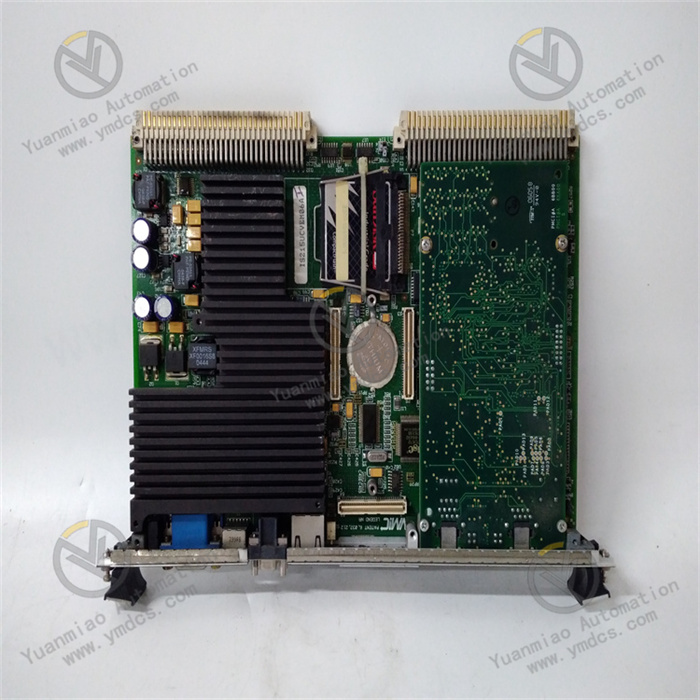
IS215AEPCH2FAA is a dedicated high-end power conditioning and auxiliary control module for GE EX2100 series digital excitation control systems, serving as a core hardware component of generator excitation systems. As a critical unit for secondary power supply, signal conditioning and circuit monitoring inside the excitation cabinet, it supplies stable and clean power as well as signal matching functions to the main control boards, sampling units, drive circuits and communication modules of the complete EX2100 excitation regulation system. It is an original key spare part that ensures round-the-clock stable operation of the excitation system, eliminates power disturbance faults and improves excitation regulation accuracy.
Core Functions
Integrated with power rectification, voltage regulation & filtering, surge suppression, electrical isolation, circuit monitoring and fault diagnosis, the module converts field input power into standard operating voltages compatible with various boards of the excitation system. It filters grid noise, voltage ripples and transient interference to deliver continuous and stable power to excitation main controllers, sampling units, drive and communication components. Meanwhile, it monitors operating conditions of power supply circuits in real time and detects faults including power anomalies, overload, undervoltage and overcurrent. Timely alarm and protection signals are output to prevent excitation regulation disorder, parameter drift, system crash, abnormal grid connection and other failures induced by power fluctuations, securing the whole process of excitation regulation, voltage stabilization, reactive power control and safe synchronization of generator sets.
Applicable Systems
Specially designed for the full range of GE EX2100 digital static excitation control systems. It is fully compatible with the hardware architecture, bus protocols, wiring logic and installation specifications of EX2100 excitation cabinets deployed on thermal, hydro and gas turbine generator sets. It achieves seamless compatibility with series excitation main control modules, sampling modules, drive boards and communication units. Typical applications include replacement of aging power modules in legacy excitation systems, hardware upgrading, faulty spare part replacement and performance improvement retrofit of excitation systems. Direct hot-swap in-situ replacement requires no modification to system configuration, control logic or field wiring, offering excellent interchangeability and compatibility.
Application Scenarios
Widely deployed on EX2100 excitation control systems for synchronous generator sets in thermal power plants, hydropower plants, gas turbine power plants, biomass power plants and industrial captive power stations. It undertakes power supply, power purification, circuit monitoring and fault protection for all core boards inside excitation cabinets. Adapted to harsh power operating environments featuring long-term continuous grid-connected operation, frequent load variations and volatile grid conditions, it acts as essential auxiliary equipment for long-term stable operation and maintenance of power excitation systems.
2. Technical Features
High-precision Power Voltage Regulation & Purification for Superior Power Supply Stability Adopting industrial-grade voltage regulator chips and multi-stage filter circuits, the module supports wide-range input voltage, precise voltage stabilization, noise filtering and ripple suppression. It thoroughly eliminates adverse impacts on excitation power supply caused by on-site voltage fluctuations, electromagnetic interference and transient pulses. Featuring high output voltage accuracy and ultra-low ripple, it provides clean and stable operating power for excitation main controller computation, high-precision sampling and accurate drive output. It fundamentally avoids excitation parameter drift, degraded regulation accuracy, system logic disorder and occasional crash & reboot triggered by power disturbances, greatly enhancing overall stability of the excitation system.
Comprehensive Power Fault Protection for High System Safety Embedded with complete power fault protection logic, it integrates multiple protection mechanisms against overvoltage, undervoltage, overcurrent, overload, short circuit, overtemperature and surge impact. It monitors input/output voltage, operating current, module temperature and load conditions 24/7. Once risks such as power anomalies, circuit overload, short-circuit faults and overheating are detected, current limiting and power cutoff protection will be activated immediately together with fault alarm signals. Faulty circuits are rapidly isolated to prevent fault propagation and damage to core boards including excitation main controllers, sampling units and drive components, comprehensively protecting excitation hardware and generator set operation.
Electrically Isolated Anti-interference Design Adapted to Severe Power Conditions The whole unit adopts a fully electrically isolated architecture with built-in high-frequency electromagnetic shielding, surge suppression and electrostatic protection circuits, and has passed stringent EMC electromagnetic compatibility certification for the power industry. It effectively resists strong electromagnetic fields in power plants, switching surge voltages, line induced interference and drastic temperature & humidity fluctuations. No performance degradation, parameter deviation or logic abnormality occurs during long-term operation. It meets the demand of 24/7 continuous heavy-duty operation in power sites, with anti-interference capability and environmental adaptability superior to ordinary industrial power modules.
Real-time Self-diagnosis and Fault Tracing for Efficient Maintenance Equipped with an intelligent self-diagnosis system, it continuously monitors the module’s hardware status, power supply circuits, output loads, temperature conditions and circuit operation. It accurately identifies hidden risks such as power anomalies, circuit aging, abnormal loads and internal component failures. Fault codes, event sequences and voltage/current abnormality records are automatically stored, which can be checked locally or retrieved and analyzed via the excitation background system. The root cause of power-related faults can be quickly located, significantly shortening troubleshooting, maintenance and recovery time and reducing outage losses of generator units.
Standardized Modular Design with Excellent Interchangeability Designed strictly in accordance with GE original hardware specifications, installation dimensions, pin definitions, electrical parameters and wiring standards for EX2100 excitation systems, it adopts a standard rack-mounted modular structure. The outline, mounting holes, wiring terminals and electrical logic fully match original equipment. Direct in-situ plug-and-play replacement of aged faulty modules is supported without rewiring, system reconfiguration or control logic commissioning. It covers full scenarios including routine maintenance, fault replacement, system upgrading and excitation retrofit of legacy units, featuring low renovation cost and zero compatibility risks.
- Wide-temperature, Durable and Low-power Design Ensuring Long-term Operational Reliability Constructed with military-grade components and high-density integrated circuits, the module has passed rigorous high-low temperature cycling, vibration resistance, dust resistance, moisture resistance and aging tests. Its operating temperature range covers typical harsh operating conditions of power equipment. Characterized by low power consumption, low heat generation, high voltage resistance and long service life, it maintains stable performance under prolonged continuous operation and is less prone to component aging, performance drift and frequent failures. It perfectly satisfies the requirement of non-stop year-round operation of generator excitation systems and greatly reduces equipment failure rate and maintenance costs.
3. Specification Parameters
| Item | Parameter |
|---|---|
| Model | IS215AEPCH2FAA |
| Manufacturer | GE (General Electric) |
| Equipment Type | EX2100 Excitation System Auxiliary Power Control Module, Power Conditioning & Monitoring Unit |
| Applicable System | Full range of GE EX2100 digital static excitation control systems |
| Application Scope | Power supply, power purification, circuit monitoring, fault protection and replacement & retrofit of legacy modules for EX2100 excitation cabinets of thermal, hydro and gas turbine generator sets |
| Core Functions | Power rectification and voltage regulation, multi-stage filtering & purification, electrical isolation and anti-interference, protection against overvoltage/undervoltage/overcurrent/overload/short circuit, temperature monitoring, fault self-diagnosis, alarm signal output, stable power supply for excitation boards |
| Input Voltage Range | Industrial wide-range input, compliant with power supply specifications of EX2100 excitation cabinets |
| Output Voltage | Multiple regulated output channels, matching operating voltage of excitation main control, sampling, communication and drive boards |
| Output Accuracy | High-precision regulated output, voltage error ≤±0.5% |
| Ripple Rejection | Multi-stage filter design for ultra-low ripple output, meeting requirements of high-precision excitation sampling and computation |
| Protection Mechanisms | Overvoltage, undervoltage, overcurrent, overload, short circuit, overtemperature, surge impact and electrostatic protection |
| Operating Temperature | -25℃~+70℃ (standard wide temperature range for power equipment) |
| Storage Temperature | -40℃~+85℃ |
| Ambient Humidity | 5%~95%RH, non-condensing, suitable for indoor environment of power plant excitation cabinets |
| Protection Performance | Electromagnetic shielding, electrical isolation, surge suppression, electrostatic protection, vibration & dust resistance, moisture & corrosion resistance, certified by power industry EMC standards |
| Operation Mode | Real-time power voltage regulation & purification, dynamic load adaptation, full-condition monitoring, automatic fault protection & alarm, automatic storage of operating data |
| Diagnosis Functions | Hardware self-diagnosis, power abnormality recording, overtemperature logging, overload fault tracing, fault code storage |
| Installation Method | Standard slot mounting for EX2100 cabinet, in-situ pluggable replacement, modular assembly |
| Equipment Characteristics | High-precision voltage regulation & purification, multi-layer safety protection, strong anti-interference capability, intelligent fault diagnosis, low power consumption and long service life, plug-and-play interchangeability, suitable for long-term stable operation of excitation systems |
4. Working Principle
4.1 Power-on Initialization and Overall Self-diagnosis
After receiving power supply from the EX2100 excitation cabinet, the module automatically completes power-on initialization and full-scale hardware self-inspection. It sequentially verifies the integrity of internal rectifier circuits, voltage regulation units, filter loops, protection circuits, temperature sensing components and signal output ports, and checks consistency between hardware programs and circuits. Potential hazards including circuit faults, component aging, short circuits and port abnormalities are comprehensively detected. Once self-test passes, the module enters steady regulated power supply mode to provide stable operating power for all excitation boards and activates full-process condition monitoring.
4.2 Power Rectification and Multi-stage Voltage Regulation & Purification
Raw input power on site suffers voltage fluctuations, noise interference, transient pulses and ripple noise. The module shapes power via built-in rectifier circuits, followed by multi-stage high-precision voltage regulation, filtering and isolation processing to eliminate various electromagnetic interference and voltage noise. Unstable input power is converted into multiple channels of clean, accurate and stable standard operating voltages. The fluctuation-free, low-ripple and high-precision output fully meets stringent power requirements of high-speed computation by excitation main controllers, high-precision electrical sampling, accurate drive regulation and stable communication transmission.
4.3 Dynamic Load Adaptation and Real-time Condition Monitoring
During operation, the module tracks load variations of downstream excitation boards and dynamically adjusts output power and voltage regulation parameters to adapt to load fluctuations under different working conditions including unit no-load, on-load, grid connection and variable load. Meanwhile, it continuously collects parameters such as input/output voltage, operating current, internal module temperature and circuit status. Real-time comparison against safety thresholds enables round-the-clock comprehensive detection of hidden risks including voltage anomalies, current overload, overtemperature and abnormal loads.
4.4 Multi-level Fault Protection and Alarm Linkage
When abnormal conditions such as overvoltage, undervoltage, overcurrent, overload, short circuit, overtemperature and surge impact are detected, the module triggers hierarchical protection mechanisms:
- Minor anomalies: automatically fine-tune voltage regulation parameters, filter interference signals, maintain normal power supply and record alarm information;
- Severe faults: rapidly activate current limiting and power-off isolation protection to cut faulty power output and prevent fault propagation damaging downstream core excitation boards. Dry contact alarm signals are transmitted to the excitation monitoring background, and fault sequences and parameters are accurately recorded to facilitate fault tracing.
4.5 Stable Power Supply Ensuring Closed-loop Operation of Excitation System
Continuous supply of clean and stable power maintains reliable operation of EX2100 excitation main control modules, sampling modules, drive modules and communication modules. It avoids failures such as distorted excitation sampling, regulation algorithm drift, grid connection logic disorder and system crash & reboot induced by power disturbances. The module cooperates with the excitation system to implement core functions including voltage regulation, reactive power control, grid voltage stabilization and fault protection. It guarantees stable synchronization of generator sets, smooth load regulation and qualified grid power quality, supporting reliable full-lifecycle operation of the excitation system.
5. Common Problems and Solutions
5.1 Phenomenon: No output after module power-on, partial excitation boards de-energized and equipment fails to operate normally
Possible Causes
① Abnormal input power supply of cabinet, missing voltage or voltage out of module operating range;
② Loose wiring, poor terminal contact or damaged cables in module input circuit;
③ Blown internal fuse, damaged rectifier circuit or voltage regulation unit inside the module;
④ Internal component aging and failure caused by long-term high-temperature operation;
⑤ Self-locking protection activated by short circuit of downstream loads leading to zero output.
Solutions
Shut down the system, cut off power and complete discharge. Verify input voltage of the cabinet and troubleshoot upstream power supply circuits. Fasten input and output terminals of the module, inspect cable integrity and replace damaged wires. Disassemble and check internal fuses of the module and replace blown fuses. Inspect downstream excitation boards for short circuit and overload faults; reset module protection after eliminating load abnormalities. Clean heat dissipation channels of the module and improve thermal conditions. If no output remains despite normal power supply, wiring and loads, hardware damage is confirmed and original IS215AEPCH2FAA module replacement is required.
5.2 Phenomenon: Excitation system parameter drift, degraded regulation accuracy and occasional voltage fluctuation
Possible Causes
① Aging filter circuits of the module, degraded ripple suppression and excessive noise on output power;
② Attenuated voltage regulation accuracy resulting in minor fluctuations of output voltage;
③ Severe on-site electromagnetic interference and weakened anti-interference performance of the module;
④ Heavy dust accumulation after long-term operation, poor heat dissipation leading to operating parameter shift;
⑤ Transient unstable power supply caused by poor contact in power circuits.
Solutions
Stop the unit, thoroughly clean dust on the module and cabinet, optimize ventilation and heat dissipation to stabilize module operating temperature. Inspect wiring terminals, fasten loose cables, optimize grounding and shielding to isolate on-site electromagnetic interference. Monitor output voltage and ripple parameters of the module and compare with original specifications to assess voltage regulation and filtering performance. Reboot the module to reset operating parameters and clear running cache. If parameter drift and regulation disorder persist, circuit aging and performance degradation are confirmed and module replacement is needed.
5.3 Phenomenon: Frequent module alarms, recurrent overcurrent/overload/overtemperature faults
Possible Causes
① Abnormal loads of downstream excitation boards, partial short circuit or overload;
② Blocked heat dissipation channels and excessive dust triggering overtemperature protection;
③ Internal component performance drift and offset protection thresholds leading to false alarms;
④ Excessive fluctuation and frequent transient surges of input power supply;
⑤ Reduced load capacity due to module aging, overload protection triggered under light loads.
Solutions
Inspect load conditions of downstream excitation boards section by section, eliminate hidden risks of short circuit, overload and leakage and restore normal load status. Fully clean heat dissipation channels of cabinet and module to ensure smooth ventilation and lower operating temperature. Monitor stability of input power and install voltage regulation & filtering devices to suppress voltage fluctuation and transient surges. Reset module protection parameters and calibrate fault judgment thresholds. If frequent alarms persist after rectification, hardware aging and performance failure are confirmed and spare part replacement is required.
5.4 Phenomenon: Occasional reboot of excitation system, communication interruption and distorted sampling data
Possible Causes
① Transient fluctuation or momentary interruption of module output power causing abnormal board operation;
② Degraded electrical isolation of the module, electromagnetic interference coupling into power supply circuits;
③ Poor internal solder joints and intermittent component failures inside the module;
④ Poor cabinet grounding preventing interference discharge;
⑤ Abnormal program logic and accumulated cache after long-term module operation.
Solutions
Optimize overall grounding and shielding system of the cabinet to eliminate accumulated electromagnetic interference. Check stability of module output power and trace hidden risks of transient fluctuation and momentary disconnection. Reboot excitation system and module, clear running cache and reset operation logic. Inspect wiring and soldering status of the module to find poor connections and cold solder joints. If intermittent anomalies occur frequently, internal circuit aging and failure are confirmed and original module replacement is required.
5.5 Phenomenon: Severe heat generation and gradual performance degradation of module during long-term operation
Possible Causes
① Sealed cabinet with heavy dust and blocked air ducts leading to poor heat dissipation;
② Long-term full-load operation causing continuous thermal aging of components;
③ Excessive power supply ripple and unstable voltage increasing module operating load;
④ Rising power consumption and intensified heat generation resulting from module aging.
Solutions
Regularly shut down the unit to clean dust on cabinet and module, dredge heat dissipation air ducts and guarantee air circulation. Improve upstream power quality with voltage regulation and filtering to reduce power noise and ripple interference. Reasonably control operating load of the excitation system and avoid long-term overload of the module. Proactively replace severely aged modules with excessive heat and continuous performance attenuation to prevent unexpected in-service faults and ensure long-term stable operation of the excitation system。