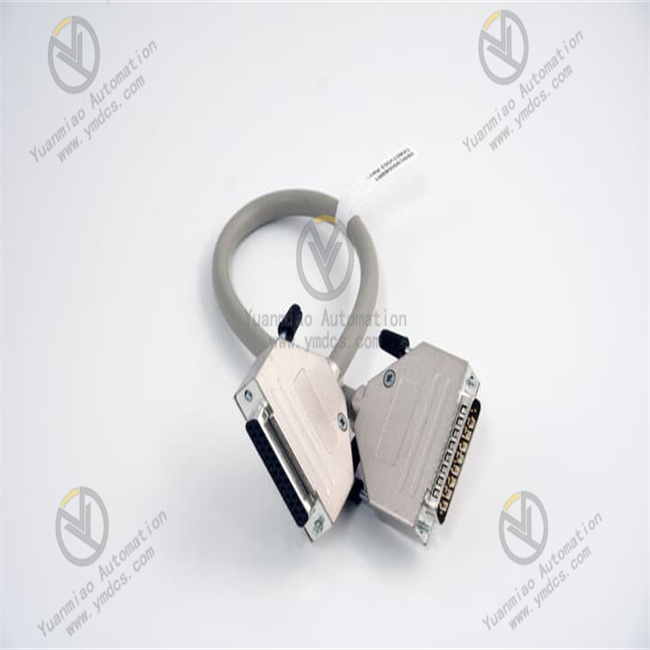
Description
Vibro-meter VM600-ABE042 204-042-100-011
1. Basic Information
The Vibro-meter VM600-ABE042 (Part No.: 204-042-100-011) is an industrial high-precision vibration monitoring system rack. It serves as the core hardware carrier of the VM600 series vibration monitoring and protection system, mainly used to accommodate various functional modules. It provides a stable hardware support and electrical interconnection foundation for vibration monitoring, condition diagnosis and fault early warning of industrial rotating machinery.
As a key component of the VM600 modular system, this device adopts a standardized design and can flexibly integrate various functional cards such as signal processing and data acquisition I/O modules. Widely applied for critical equipment monitoring in various industrial scenarios, it features high reliability, strong compatibility and excellent adaptability to harsh environments. It is an important hardware platform for implementing predictive maintenance and continuous condition monitoring of equipment in the field of industrial automation.
Core Positioning: A 19-inch standard system rack that provides mounting carrier, electrical interconnection and power distribution for VM600 series functional modules, forming the fundamental hardware framework of the entire vibration monitoring system.
2. Technical Specifications
2.1 General Specifications
- Brand: Vibro-meter (Affiliated to Parker Meggitt)
- Model: VM600-ABE042, Part No.: 204-042-100-011
- Equipment Type: Industrial Vibration Monitoring System Rack / Chassis
- Weight: Approximately 0.5kg
- Overall Dimensions: 10cm×15cm×5cm (Length × Width × Height)
- Mounting Standard: 19-inch standard rack, 6U height (approx. 26.67cm), supports cabinet and panel mounting
2.2 Environmental Specifications
- Operating Temperature: -20℃ ~ +70℃ (0℃ ~ 70℃ applicable for partial scenarios)
- Storage Temperature: -40℃ ~ 85℃
- Humidity Range: 0% ~ 95% non-condensing, compliant with IEC 60068-2-30
- Vibration Resistance: 0~55Hz, below resonance peak, 0.35mm above 2g peak value, 6 hours per axis (compliant with IEC 60068-2-6)
- Shock Resistance: 6g peak, 11ms half-sine pulse, 3 shocks per axis (compliant with IEC 60068-2-27)
- Protection Performance: Manufactured with high-quality materials, capable of resisting dust, moisture and partial chemical substances in industrial environments, suitable for harsh industrial conditions.
2.3 Electrical Specifications
- Bus Support: Integrated VME backplane bus; compatible with VM600 system Tacho Bus, RAW Bus and Open Collector (OC) Bus to realize electrical interconnection and signal transmission between modules.
- Power Supply Support: Compatible with RPS6U rack power supply module; supports single power supply or redundant power supply configuration. Under redundant mode, each power module bears 50% load; if one power supply fails, the other switches seamlessly to 100% load operation.
- Power Monitoring: Equipped with a power check relay at the rear of the rack to indicate the normal operating status of RPS6U power modules; power failure alarm is configurable to trigger upon single or all power supply loss.
- Communication Interface: Supports Modbus RTU/TCP, Profinet and other communication protocols (requires matching CPU module); seamlessly connects to existing industrial networks for data uploading and remote control.
2.4 Module Compatibility Specifications
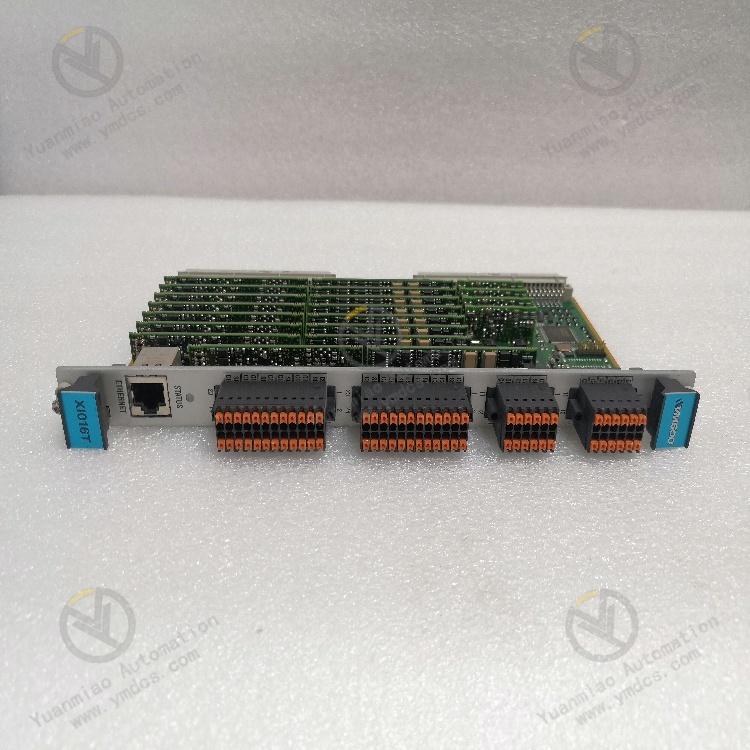
- Slot Quantity: 15 slots available for single-slot or dual-slot functional cards; maximum 12 functional cards (e.g. MPC4, AMC8, XMV16) can be installed.
- Compatible Module Types: Supports full range of VM600 series modules, including CPU modules (CPU M/CPU R/CPU R2), machinery protection modules (MPC4), condition monitoring modules (CMC16), I/O modules (IOCN/IOC4T/IOC16T), relay modules (RLC16/IRC4) and power supply modules (RPS6U).
- Module Layout: Processing modules such as CPU and MPC4 are mounted on the front side of the rack; IOC series I/O modules and RLC16 relay modules are installed on the power input side. Vacant slots shall be covered with blank panels to ensure equipment stability.
3. Hardware Structure & Design Details
3.1 Overall Structural Design
Adopting a modular and standardized frame design, the device features a 19-inch 6U standard rack structure made of high-strength aluminum alloy, balancing structural rigidity and lightweight design. It effectively resists vibration, shock and dust erosion in industrial environments, meeting the requirements of long-term continuous operation. The rack is divided into front panel, rear panel and internal backplane with clear functional zoning for easy installation, maintenance and expansion.
The core structure consists of rack enclosure, VME backplane bus, slot mounting mechanism, power installation area, relay alarm interface and cable interface. All components are designed per industrial standards to ensure stable electrical connection and reliable equipment operation.
3.2 Key Component Design
3.2.1 Rack Enclosure & Material
The enclosure is made of corrosion-resistant high-strength aluminum alloy with special surface treatment to prevent oxidation and corrosion. Complying strictly with 19-inch industrial standard and 6U height, it fits standard industrial cabinets and panel mounting. The 300mm depth structure meets installation requirements of various functional modules and reserves sufficient heat dissipation space to guarantee long-term stable operation of modules.
3.2.2 VME Backplane Bus
The built-in VME backplane bus acts as the core of electrical interconnection for all functional modules, responsible for power distribution, signal transmission and data interaction to coordinate the operation of power modules, CPU modules, monitoring modules and I/O modules.The backplane supports 64 RAW-BUS channels covering all slots, 8 Tacho-BUS channels covering slots 3–14, and 6 groups of OC-BUS (2 slots per group, 16 channels per group). It ensures high-efficiency and stable signal transmission with electrical isolation between all modules to avoid interference.
3.2.3 Slot & Mounting Mechanism
The rack is configured with 15 standardized slots compatible with all single-slot and dual-slot functional cards of the VM600 series. Precision positioning and locking structures inside slots ensure firm module installation and prevent looseness or poor contact caused by industrial vibration.Slots 15–20 are dedicated for power modules (1–2 RPS6U modules installable); Slots 0/1 are exclusive for CPU-M; Slots 3–14 accommodate MPC4 and other monitoring & processing modules; Rear Slots 1/2/15~18 are for RLC16, IRC4 and other relay modules. The rational layout facilitates classified installation and maintenance.
3.2.4 Power & Alarm Interface
Power input interface and power check relay interface are arranged at the rear of the rack. The power interface adapts AC/DC input of RPS6U modules (90~264VAC, 9.2~28.8VDC and other specifications) and supports redundant power access. The power check relay monitors real-time power status and outputs alarm signals via the rear interface upon power failure for timely troubleshooting.
3.2.5 Heat Dissipation & Protection Design
Reasonable heat dissipation channels are reserved inside the rack. Combined with the heat dissipation structure of functional modules, it adopts natural cooling plus forced cooling to ensure stable operation within -20℃~+70℃ working temperature. The sealed enclosure effectively blocks dust and moisture ingress. Conformal coatings are applied to power circuits to further enhance resistance to chemical substances and extreme temperatures and extend service life.
4. Working Principle
As the core rack of the VM600 vibration monitoring system, the Vibro-meter VM600-ABE042 204-042-100-011 provides a stable hardware mounting carrier, electrical interconnection channel and power distribution for the entire system. It coordinates collaborative operation of all functional modules to realize collection, processing, analysis and early warning of vibration signals from industrial rotating machinery.
Specific Working Process
Power Supply Distribution: The externally input AC/DC power is converted into 5V and ±12V system power via RPS6U modules installed on the rack, then distributed to each functional module through the VME backplane bus to provide stable power supply. Redundant power configuration ensures continuous system operation and avoids monitoring interruption when one power supply fails.
Module Coordination: The VME backplane bus realizes electrical connection and data interaction among CPU modules, monitoring modules (MPC4/CMC16), I/O modules and relay modules. As the system core, the CPU module undertakes configuration, data processing and communication control. Monitoring modules collect and pre-process vibration sensor signals via I/O modules; processed data is transmitted to the CPU module for further analysis and storage, then uploaded to the industrial control system through communication interfaces.
Condition Monitoring & Alarm: The power check relay monitors the running status of power modules in real time and outputs alarm signals via the rear interface in case of power abnormality such as power loss or voltage instability. Operating status of each functional module is fed back to the CPU module via the bus. Once module faults or vibration data exceed preset thresholds, the system outputs alarm signals through relay modules to remind maintenance personnel and prevent fault escalation.
Data Transmission & Interaction: The rack supports Modbus RTU/TCP, Profinet and other protocols. It establishes connection with external industrial networks and monitoring terminals via the CPU module to realize real-time uploading of vibration data and equipment status as well as remote control, supporting predictive maintenance and remote equipment monitoring.
Core Logic: Taking the rack as the carrier, the backplane bus realizes power distribution and data interaction among modules, constructing a modular and expandable vibration monitoring system. It enables continuous vibration condition monitoring, data analysis and fault early warning for industrial machinery to ensure safe and stable equipment operation.
5. Application Scenarios
5.1 Power Industry
Mainly applied in thermal power plants, hydropower stations, nuclear power plants and other facilities for vibration condition monitoring of key equipment such as turbo-generator sets, hydro-generator sets, water pumps and fans. By integrating protection modules (e.g. MPC4) and condition monitoring modules (e.g. CMC16), it realizes real-time monitoring of vibration, rotating speed, displacement and other parameters, detects potential equipment faults in advance, avoids power supply interruption caused by equipment shutdown, and ensures stable operation of power systems.
5.2 Petrochemical Industry
Suitable for petroleum refining and chemical production sites to monitor vibration conditions of centrifugal pumps, compressors, reactors, oil transmission pipelines and other equipment. Featuring harsh operating conditions including high temperature, high pressure, dust and corrosive gas, the VM600-ABE042 rack with high-strength material and excellent protection performance stably carries various monitoring modules to achieve continuous equipment monitoring, prevent safety accidents such as medium leakage and unplanned shutdown, and guarantee production safety and efficiency.
5.3 Metallurgy & Mining Industry
Applied in steel plants and mining enterprises for vibration monitoring of heavy-duty equipment such as rolling mills, crushers, ball mills and fans. Such equipment operates under heavy load with intense vibration and requires extremely high reliability of monitoring systems. With modular configuration, the rack adapts to diversified monitoring demands, captures abnormal vibration in real time, gives early warning of equipment wear and faults, and reduces maintenance costs and downtime.
5.4 General Manufacturing Industry
Widely used in automotive manufacturing, mechanical processing, papermaking, cement and other general manufacturing fields for condition monitoring of motors, reducers, conveyor belts, machine tools and other production line equipment. By building a vibration monitoring system based on this rack, enterprises can implement predictive maintenance for production equipment, detect faults in a timely manner, avoid production line interruption, improve operational efficiency and reduce maintenance costs.
![]()