Description
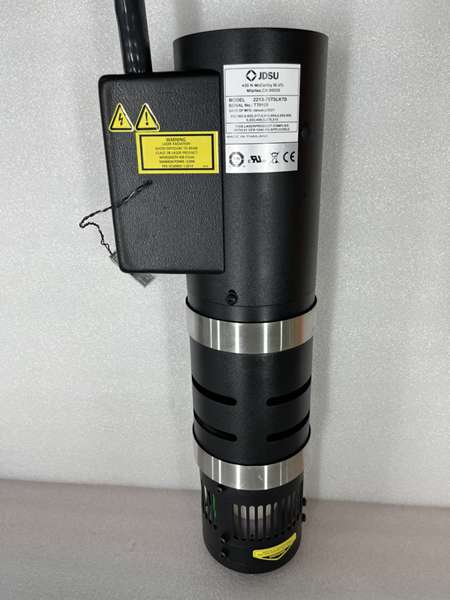
jdsu 2213-75TSLKTB
1. Basic Information
JDSU 2213-75TSLKTB is an industrial-grade optical module belonging to JDSU (JDS Uniphase) core optical communication product series. It is specially designed for optical fiber communication, industrial data transmission and other scenarios, and serves as a key core device for optical signal transmission, reception and conversion. Integrating JDSU's advanced optoelectronic technology, this optical module features high transmission rate, high stability and low loss. Its core function is to convert electrical signals into optical signals for long-distance transmission, and simultaneously convert received optical signals back into electrical signals, realizing high-speed and stable data transmission. It is suitable for harsh industrial communication environments, balancing transmission efficiency and reliability.
2. Technical Specifications
2.1 Core Optical & Electrical Specifications
- Transmission Parameters: Supports high-speed optical signal transmission, with transmission rate adapting to industrial communication requirements. The typical rate can meet gigabit-level transmission, and the transmission distance can reach several kilometers (adjusted according to optical fiber type), enabling stable transmission of medium and long-distance data to meet the communication needs of industrial scenarios.
Optical Characteristics: Transmit optical power and receive sensitivity comply with general standards for industrial optical modules. The optical wavelength is compatible with mainstream optical fiber communication specifications, featuring low optical loss to effectively reduce signal attenuation during transmission and ensure transmission quality. It supports single-mode/multi-mode optical fiber adaptation (configured according to specific models), improving the flexibility of scenario adaptation.
- Electrical Parameters: The working voltage is compatible with industrial power supply standards, with a typical working voltage of 5V DC and rated current controlled within a reasonable range. It has low power consumption, which can effectively reduce the overall energy consumption of the equipment. It also has stable electrical performance and low signal conversion delay to ensure the timeliness of data transmission.
Temperature Adaptability: Operating temperature range: -40°C ~ 85°C; Storage temperature range: -55°C ~ 100°C. It has excellent high and low temperature adaptability, capable of withstanding extreme temperature fluctuations on industrial sites, avoiding transmission interruption or module damage caused by abnormal temperature.
2.2 Physical & Structural Specifications
- Physical Dimensions: Adopting compact industrial packaging, the standard size is compatible with conventional optical module installation slots. Its small overall volume allows direct integration into various communication equipment and control boards, saving installation space and facilitating the overall layout of the equipment.
Weight: Net weight is about 15 grams, lightweight without increasing the overall load of the equipment. It is suitable for the installation needs of various portable and miniaturized communication equipment, facilitating the lightweight design and deployment of the equipment.
- Packaging & Connection: Adopts standardized optical module packaging with good sealing and insulation performance. The optical interface adopts SC/LC standard interface (subject to actual configuration), and the electrical interface adopts standardized pin design, facilitating optical fiber connection and circuit board welding. It can be quickly integrated into various optical communication systems, while ensuring the stability of optical signal and electrical signal transmission.
Product Features: Made of high-quality industrial-grade optoelectronic materials, it has a firm structure and good vibration resistance, impact resistance and electromagnetic interference resistance. It can adapt to the complex physical environment of industrial sites, reduce transmission failures caused by external interference and extend the service life of the module.
2.3 Core Function & Compatibility Specifications
- Core Functions: It has core functions such as electro-optical conversion, photoelectric conversion, optical signal amplification and shaping. It can realize bidirectional accurate conversion between electrical signals and optical signals, and simultaneously amplify and shape optical signals during transmission, reducing signal attenuation and distortion, and ensuring the accuracy and stability of data transmission.
Integration Performance: Highly integrated design with built-in core units such as optical transmission, optical reception and signal processing. It does not need to add too many additional auxiliary components, and can be directly adapted to various optical communication systems, simplifying the system design and wiring process, and reducing the system construction and maintenance costs.
- Compatibility: Seamlessly compatible with various optical fibers (single-mode/multi-mode), optical switches, industrial communication terminals, control units and other equipment, adapting to mainstream optical communication protocols. It can also work cooperatively with JDSU's same-series optical modules and third-party optoelectronic devices, improving the flexibility of system integration.
- Reliability: It has excellent anti-interference ability and stable transmission performance, capable of long-term stable operation in industrial optical communication scenarios with low transmission bit error rate. It reduces the incidence of communication failures, lowers equipment maintenance costs, and meets the reliability standards of industrial optical modules.
3. Working Principle
- Electrical Signal Reception & ProcessingThe module receives electrical signals from industrial control terminals and communication equipment through electrical interfaces. Built-in signal processing circuits filter, amplify and shape the electrical signals to remove signal noise, improve signal stability and ensure that the electrical signals meet the requirements of electro-optical conversion.
- Electro-Optical ConversionThe processed electrical signals are sent to the built-in optical transmitting unit (such as laser diode) of the module. The optical transmitting unit converts the electrical signals into corresponding optical signals, adjusts the optical power and wavelength according to transmission needs, ensures that the optical signals have sufficient transmission intensity for medium and long-distance transmission, and reduces signal attenuation during transmission.
- Optical Signal Transmission & ReceptionThe converted optical signals are transmitted into the optical fiber through the optical interface and realize long-distance transmission with the help of the optical fiber. When the optical signals are transmitted to the receiving end module, the built-in optical receiving unit (such as photodiode) of the module receives the optical signals and converts them back into electrical signals, completing the reverse conversion from optical signals to electrical signals.
- Electrical Signal Output & Safe Stable OperationThe restored electrical signals are amplified and shaped again by the signal processing circuit to ensure the integrity and stability of the electrical signals. Then they are transmitted to subsequent communication equipment or control units through electrical interfaces to realize effective data transmission. The module has a built-in comprehensive protection mechanism that can real-time monitor operating parameters such as optical power, temperature and current. When abnormal optical power, overcurrent, overheating and other conditions are detected, it will automatically adjust the working state or trigger protection actions to prevent module damage and ensure the stable operation of the communication link.
4. Application Scenarios
4.1 Industrial Optical Communication Field
It is suitable for the optical communication link of industrial automation control systems. As a core optical transmission device, it realizes long-distance data transmission between industrial control terminals, sensors and actuators, adapts to the complex communication needs of industrial scenarios such as metallurgy, mining and petrochemical industry, ensures the timely and accurate transmission of control signals, and guarantees the stable operation of industrial production.
4.2 Data Center Field
Applied in internal communication and data interaction of data centers, it realizes high-speed optical transmission between servers, switches and storage devices. With the advantages of high transmission rate and low bit error rate, it improves data transmission efficiency, ensures the stable operation of data centers, and adapts to the communication needs of big data, cloud computing and other scenarios.
4.3 Long-Distance Data Transmission Field
Suitable for various medium and long-distance data transmission scenarios, such as urban security monitoring, power system communication, rail transit communication, etc. It realizes long-distance and interference-free data transmission through optical fibers, avoids the impact of electromagnetic interference on transmission quality, ensures the stability and security of data transmission, and provides reliable support for various long-distance communication systems.
4.4 General Optical Communication Equipment Field