Description
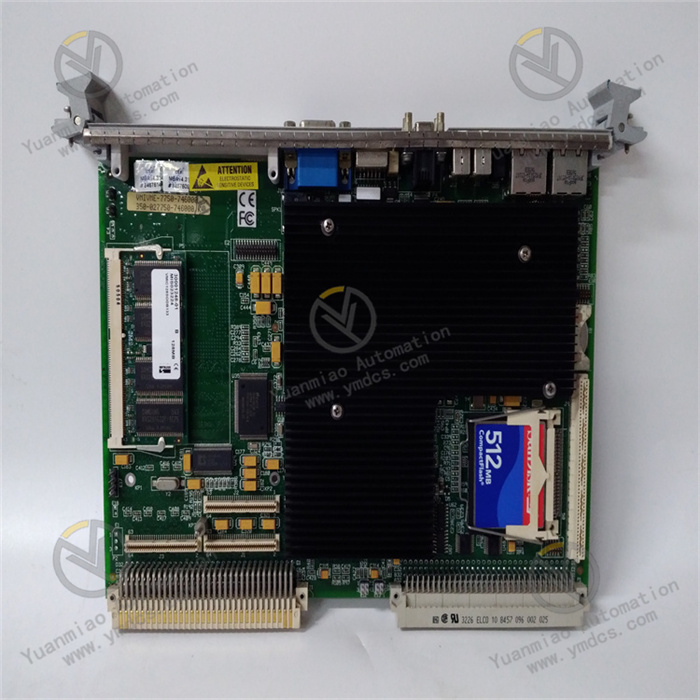
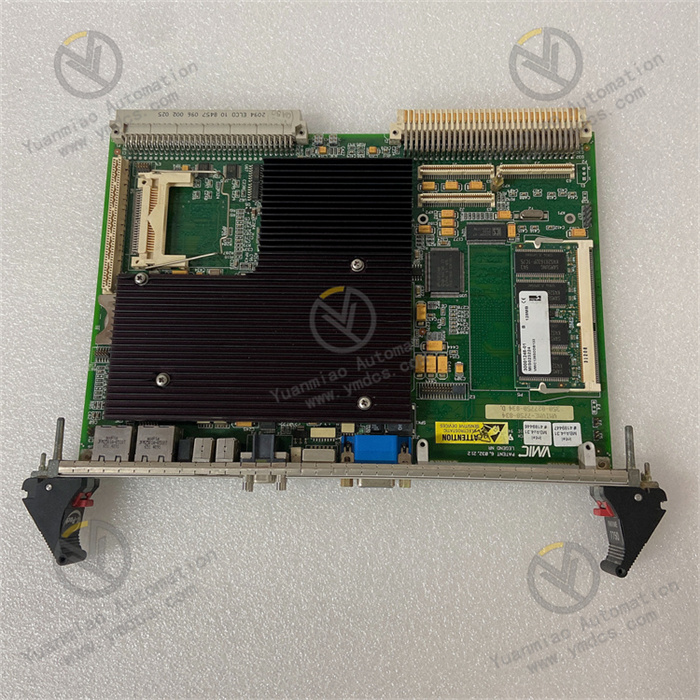
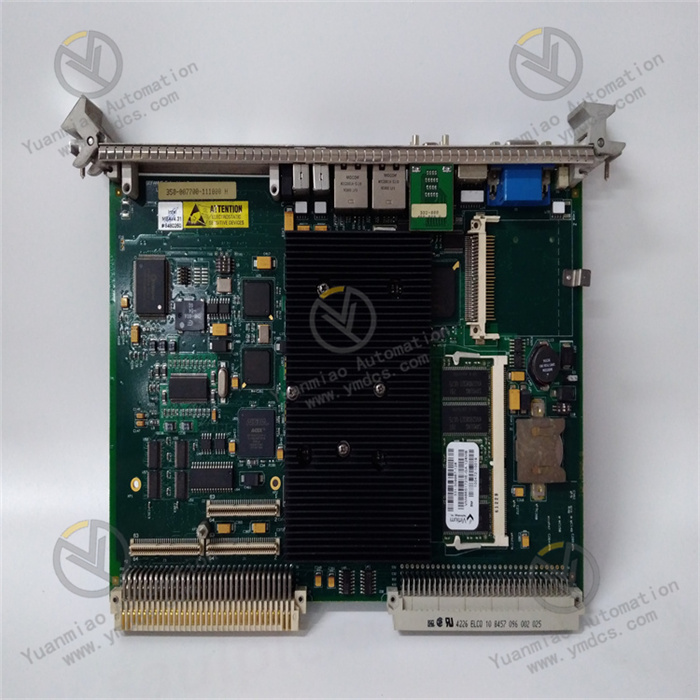
GE VMIVME-770
I. Basic Information
Model: VMIVME-7700 (Abbreviated as VMIVME-770)
Brand: GE Fanuc (VMIC, now Abaco Systems)
Product Line: 6U single-slot VME64 bus industrial single board computer (SBC), equipped with Intel ULV Celeron processor and fanless passive cooling structure. It acts as the main controller of VME industrial control systems, matched with various VME acquisition and communication daughter boards, widely used in power DCS, nuclear control, rail transit interlock, metallurgical safety control and other high-reliability embedded real-time fields.
Product Positioning
VMIVME-7700 is a general embedded main control board based on Intel 815E chipset, adopting fanless passive cooling design. It can work as either the main system controller or slave computing node under multi-processor architecture. Equipped with dual Ethernet, VGA display, multi-channel serial ports, CF local storage and PMC expansion slot, it completes mass field signal acquisition, millisecond SOE event parsing, closed-loop process control algorithm operation and multi-device network data interaction. With wide-temperature industrial protection and strong anti-electromagnetic interference capability, it is the mainstream replacement main control hardware for the renovation of legacy VME architectures in thermal power, hydropower, substation automation and rail transit signal systems.
Hardware Architecture
Standard 6U Eurocard single-layer flame-retardant PCB with three-proof coating, consisting of six core units:
- Main Processing Unit: 400MHz/650MHz ULV Celeron processor with Intel 815E chipset, hardware watchdog and programmable timers to ensure real-time task scheduling and automatic fault reset.
- Memory & Local Storage Unit: Max 512MB SDRAM, CF boot slot (up to 1GB), IDE interface, 32KB non-volatile SRAM, battery-backed RTC clock to retain key offline data.
- Front Peripheral Interface Unit: Dual 10/100M Ethernet, VGA, dual RS232, USB, reset button and status LEDs for local commissioning and remote data transmission.
- VME64 Bus Interface: Compliant with VME Rev.C.1, PCI-to-VME transparent bridge, supports multi-master bus mode and programmable interrupt priority.
- PMC Expansion Unit: Single PMC slot for optical fiber, multi-serial and high-speed acquisition expansion cards to extend system functions.
- Power & Protection Unit: Powered by VME backplane +5V/+12V, equipped with EMI filter, ESD and EFT surge protection, metal shielding to adapt to harsh electromagnetic industrial environments.
Mounting Specification
Vertical single-slot snap-in installation on standard 19-inch 6U VME rack, compatible with all series of VME functional daughter boards. It has passed IEC anti-vibration, humidity cycling and wide-temperature aging reliability tests, with standardized dimensions for direct spare replacement.Dimension (H×W×D): 233.35mm × 160mm × 40mm, net weight: 0.45kg.
Compatible Systems
- Hardware: Standard 6U VME chassis, VME I/O daughter boards, PMC expansion cards, shielded communication cables, industrial CF cards;
- Software: VxWorks, QNX, Linux, Windows embedded OS, VME bus driver, BIOS configuration tool, SCADA monitoring software;
- Upper Platforms: Power plant DCS, relay protection fault information station, SCADA dispatching system, rail transit interlock platform, chemical ESD system;
- Application Industries: Thermal/hydraulic/nuclear power control, substation automation, rail transit signal system, metallurgical rolling line safety control.
Product Characteristics
- Fanless passive cooling design with no mechanical wearing parts, supporting 7×24h unattended continuous stable operation;
- Dual physically isolated Ethernet for redundant control and monitoring network deployment to improve industrial control network security;
- CF solid-state boot storage replaces mechanical hard drives, featuring shock resistance and non-volatile program storage for convenient on-site deployment and spare replacement;
- Supports VME multi-master architecture for parallel collaborative computing of multiple main control boards to meet high-performance computing demands of large-scale process systems;
- Rich onboard peripherals plus PMC expansion slot balance local debugging, remote networking and function expansion requirements;
- Industrial wide-temperature three-proof design, CE & UL certified, resistant to dust, moisture and electromagnetic surge interference.
II. Technical Specifications
2.1 Electrical Parameters
- VME Backplane Power: +5VDC, +12VDC, typical power consumption 12W, max 15W
- Backup Battery: 3.6V lithium battery for RTC and non-volatile SRAM, service life ≥1 year
- Port Withstand Voltage: 500VAC/1min between communication ports and ground, full-port ESD & EFT industrial surge protection
- Bus Isolation: Electrical isolation between VME backplane and front peripheral interfaces.
2.2 Calculation & Storage Parameters
- Processor: Intel ULV Celeron 400MHz/650MHz, Intel 815E chipset, 100MHz FSB
- System RAM: 128MB standard, max expandable to 512MB
- Boot Storage: CompactFlash (max 1GB), IDE hard disk interface
- Non-Volatile Memory: 32KB SRAM for process parameters and fault logs
- Timers: 2×16-bit, 2×32-bit programmable hardware timers.
2.3 Communication & Expansion Parameters
- Ethernet: 2×10/100Base-TX RJ45, supports TCP/IP, Modbus TCP
- Serial Ports: 2×RS232 DB9, max baud rate 115200bps
- Display: Standard VGA video output
- Expansion: 1×PMC standard expansion slot
- VME Bus: VME64 Rev.C1, supports 8/16/32/64-bit data transmission, programmable interrupt and multi-master access.
2.4 Environmental Specifications
- Standard Operating Temperature: 0℃ ~ +60℃; Rugged Version: -40℃ ~ +85℃
- Storage & Transport Temperature: -40℃ ~ +85℃
- Relative Humidity: 5%~95%RH, non-condensing, no corrosive gas or heavy dust
- Vibration Standard: IEC 60068-2-6, 0.7g continuous vibration horizontally & vertically
- EMC Compliance: IEC61000-6-2 industrial immunity standard
- Protection Class: Bare board IP20, IP30 in sealed metal control cabinet.
2.5 Mechanical Parameters
- Form Factor: Standard 6U VME (233.35mm × 160mm × 40mm)
- Net Weight: 0.45kg
- Mounting: Vertical single-slot snap-in installation on 19-inch VME rack with front locking lever
- PCB: FR4 V0 flame-retardant material with full-area three-proof coating
- Interfaces: Front peripheral ports, rear 96-pin gold-plated VME P1/P2 connector.
III. Key Features
3.1 Global Main Control Scheduling & Computing for VME Systems
As the system master controller, it schedules all VME I/O and communication daughter boards via VME64 backplane, collects field process signals, executes PID regulation, sequential interlock logic and millisecond SOE event parsing, and uploads operating data and fault alarms to upper DCS/SCADA platforms for remote monitoring and parameter configuration.
3.2 Dual-Redundant Ethernet Networking & Multi-Protocol Data Interaction
Two physically independent Ethernet ports can be deployed as real-time control network and monitoring network separately. Dual-network automatic switching ensures uninterrupted communication upon single-link failure, supporting standard industrial protocols for interconnection with third-party automation equipment.
3.3 Local Solid-State Storage & Power-Failure Secure Data Protection
CF card serves as the system boot medium to avoid mechanical hard disk failures; battery-backed RTC and non-volatile SRAM retain process setpoints, timestamped fault records and bus configuration after power loss, enabling quick system recovery without reconfiguration after restart.
3.4 PMC Flexible Expansion & Multi-Processor Collaboration
The PMC slot supports various function expansion daughter cards to break onboard interface limitations. VME multi-master mode enables parallel task allocation of multiple main controllers to improve overall system computing throughput for large distributed process control applications.
3.5 Hardware Watchdog Fault Self-Recovery & Full-Range Diagnosis
Automatic power-on self-test covers CPU, memory, storage, bus, network and backup battery. The hardware watchdog triggers automatic system reset once program runaway or bus failure is detected, latching fault codes and runtime parameters for troubleshooting and accident tracing.
IV. Working Principle
VMIVME-7700 operates based on embedded real-time computing + VME64 backplane global data scheduling + dual-redundant industrial communication.After power-on, the board loads BIOS and embedded OS from CF card, initializes all hardware peripherals and VME bus, then launches user control applications. As the VME master controller, it cyclically acquires field process data from daughter boards, executes control algorithms, outputs actuation commands, and uploads operating information to upper monitoring systems via dual Ethernet. Under multi-master mode, multiple main controllers share data and divide tasks through the VME bus, with PMC cards expanding system functions. The backup battery preserves clock and key process data to avoid information loss after power failure, and the hardware watchdog realizes automatic fault recovery to ensure continuous system operation.
V. Application Scenarios
- Thermal/hydraulic/nuclear power DCS: Turbine & boiler main control, high-voltage equipment SOE fault sequence acquisition and safety interlock calculation;
- Substation automation: Relay protection fault information station main control, primary equipment condition monitoring and remote dispatching data interaction;
- Rail transit signal interlock: Switch & signal equipment status acquisition, interlock logic operation and fault event recording;
- Metallurgical & chemical ESD safety systems: Emergency shutdown interlock control for reaction units and over-limit fault protection calculation;
- Legacy VME industrial control renovation: Direct replacement of old MVME series main controllers, fully compatible with original chassis, I/O daughter boards and driver programs.