Description
1. Overview
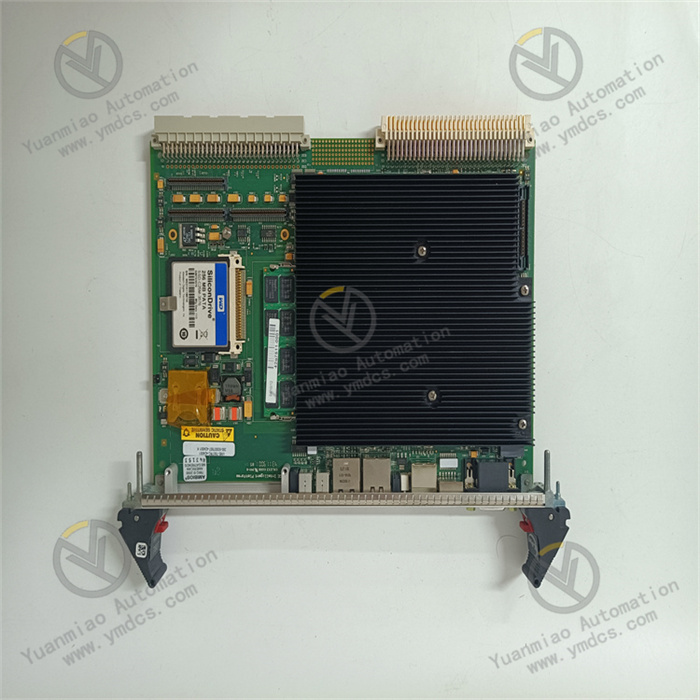
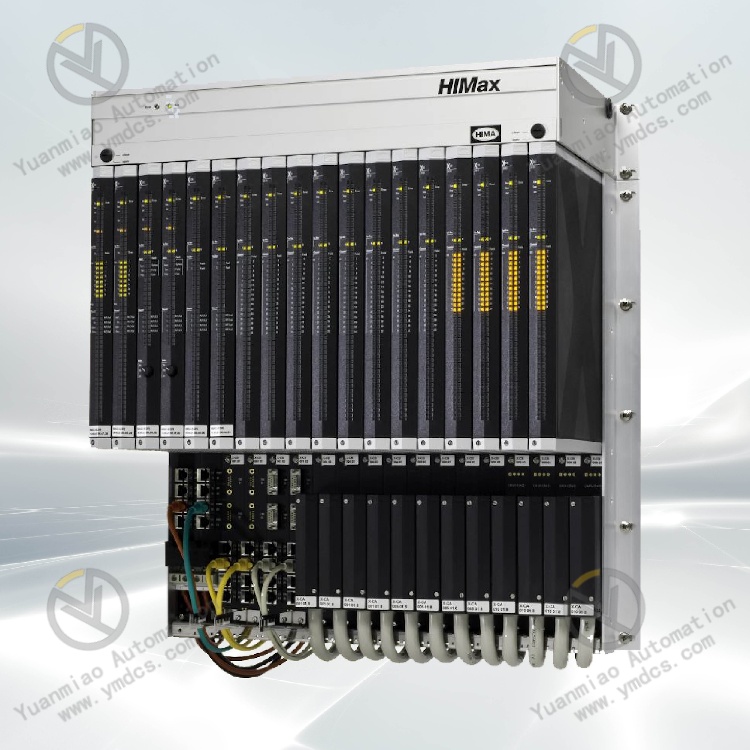
HIMA X-CPU 31 is a compact safety CPU master module of the HIMax series manufactured by HIMA Germany. Designed for small and medium-sized process safety systems, it adopts an integrated single-module structure integrating CPU computation, system bus management and communication interface. It serves as the core main control hardware of HIMA NONSTOP uninterruptable safety control systems. Replacing the traditional split architecture consisting of independent CPU and system bus modules, this highly compact module is widely deployed in Safety Instrumented Systems (SIS), Emergency Shutdown Systems (ESD) and Fire & Gas Systems (FGS) in petroleum, chemical, power, gas and other industries. Equipped with HIMA native quadruplex redundant fault tolerance, it supports on-line program modification, on-site maintenance and fault self-recovery. Complying with SIL3 safety integrity level requirements, it adapts to 24/7 continuous operation in industrial sites. As the standard original core spare part for small and medium safety control systems, there is no universal alternative model.
2. Functions and Features
2.1 Core Functions
Safety Logic Operation and Control: As the core main control unit of the system, it executes global safety logic program calculation, interlock logic judgment and process protection logic implementation, accurately performing core safety functions including ESD emergency shutdown, process interlock, fault trip and safety status management.
Integrated System Bus Management: Embedded with native HIMax system bus function; no additional X-SB bus module is required. It independently completes rack I/O module enumeration, bus timing scheduling, data exchange and link monitoring to realize unified management of all I/O signals in the rack.
Multi-protocol Communication Interaction: Equipped with industrial Ethernet and dedicated fieldbus interfaces, it supports data exchange with upper-level DCS, touch screens, engineering workstations and third-party devices. It enables program upload/download, on-line monitoring, parameter read/write and fault diagnosis upload.
Quadruplex Redundant Fault-tolerant Operation: Adopting HIMA proprietary quadruplex redundant core architecture with parallel hardware computation, cross-comparison of data and autonomous fault voting. Single-point hardware faults will not trigger system shutdown or loss of safety logic.
Uninterrupted On-line Maintenance: Supports on-line program modification, on-line parameter adjustment, on-line module replacement and firmware upgrade without unit shutdown. It greatly reduces the risk of production downtime during maintenance and ensures production continuity.
Full-range Hardware Self-diagnosis: Continuously monitors CPU core, bus links, communication ports, power supply status and I/O link conditions. It enables accurate fault localization, code-based alarms and event logging to facilitate rapid troubleshooting and traceability.
2.2 Product Features
High-grade Safety Certification: Complies with SIL3 standards IEC61508 and IEC61511 for process safety. Suitable for safety interlock control under high-risk industrial conditions with excellent safety and reliability.
Highly Integrated Compact Architecture: Integrated CPU and system bus reduces the quantity of rack modules, lowers potential fault points and saves cabinet space, meeting the demand for simplified configuration of small and medium-sized SIS systems.
Adaptability to Stable Industrial Operation: Designed with wide temperature range, dust resistance, vibration resistance and enhanced EMC electromagnetic compatibility. It withstands harsh environments featuring high temperature, high humidity and strong electromagnetic interference in chemical, power, oil & gas sites.
Fault-tolerant Maintenance Without Shutdown: Supports hot swapping and on-line module replacement as well as bumpless program update. Outstanding fault tolerance avoids unplanned unit shutdown caused by routine maintenance.
Convenient Configuration Compatibility: Compatible with HIMA standard SILworX configuration software. Standardized processes for program development, commissioning, diagnosis and maintenance support compatibility and retrofitting of new and legacy HIMax systems.
3. Specifications
| Parameter Item | Technical Specification |
|---|---|
| Model | X-CPU 31 |
| Device Type | Compact Integrated Safety CPU Master Module of HIMax Series |
| Safety Level | SIL3 (IEC61508) |
| System Architecture | Quadruplex Redundant Fault-tolerant Architecture, NONSTOP Uninterrupted Operation |
| Bus Function | Integrated system bus management, no external bus module required |
| Configuration Software | SILworX |
| Operating Power Supply | Standard Industrial DC24V Control Power Supply |
| Operating Temperature | 0℃ ~ +60℃ |
| Storage Temperature | -40℃ ~ +85℃ |
| Ambient Humidity | ≤95%RH, non-condensing |
| Protection Class | IP20 |
| Installation Method | Slot-mounted in standard HIMax rack, hot-swap supported |
| Applicable Systems | HIMA HIMax Small & Medium-scale SIS / ESD / FGS Safety Control Systems |
4. Working Principle
HIMA X-CPU 31 operates on an integrated fault-tolerant closed-loop mechanism: Bus Self-test → Signal Acquisition → Redundant Calculation → Logic Voting → Command Output → Self-diagnosis & Maintenance. After power-on, the module firstly conducts comprehensive self-test on internal core hardware, integrated system bus and communication ports. It automatically enumerates all digital and analog I/O modules in the rack and completes hardware address registration and bus link synchronization. During system operation, the CPU collects real-time data from all field safety measurement points, equipment status and interlock feedback signals, and executes safety logic calculation in parallel via the quadruplex redundant core.
The module performs real-time cross-comparison and fault-tolerant voting on four groups of calculation results, automatically eliminating abnormal single-point calculation data and faulty links to guarantee uniqueness and accuracy of safety logic output. It executes normal process regulation, interlock switching and emergency shutdown actions according to calculation results, and realizes data upload and command interaction through communication ports. Hardware status, bus conditions, communication links and program operation are monitored continuously. Once abnormalities are detected, fault codes are recorded and alarm information is uploaded. Faulty points are isolated without disrupting safe system operation, achieving uninterrupted fault-tolerant operation and on-line maintenance.
5. Application Scenarios
SIS Safety Systems for Chemical Processes: Safety Instrumented Systems for refining, fine chemical and coal chemical plants. It implements interlock protection and emergency shutdown control against abnormal process conditions including overtemperature, overpressure, abnormal liquid level and abnormal flow.
ESD Control Systems for Oil & Gas Industry: Emergency shutdown systems for oilfields, gas fields, long-distance pipelines and LNG facilities. It triggers emergency interlock cut-off upon equipment failure, fire and leakage to ensure plant safety.
Safety Control for Power Industry: Safety interlock of auxiliary equipment in power plants, boiler auxiliary systems, gas turbine auxiliary safety systems and safety protection control for captive power stations.
Fire & Gas (FGS) Monitoring Systems: Detection and linkage control systems for fire, combustible gas and toxic gas in industrial plants and workshops, realizing linkage logic for alarm, ventilation shutdown, isolation and sprinkler activation.
Maintenance and Retrofit of Legacy Systems: Compatible with existing small and medium-sized HIMax units for replacement of aging CPU modules, system simplification, expansion and upgrade without modification of system configuration and interlock logic.
6. Common Faults and Troubleshooting
6.1 CPU Fails to Start, RUN Indicator Off, No System Response
Fault Causes: Abnormal DC24V power supply to the module; poor contact with rack backplane; damaged internal firmware; failure of core computing hardware.Solutions: Inspect cabinet supply voltage, fuses and power circuits; power off, clean module edge connectors and rack slots then reinsert and secure the module; perform power cycle reset. Re-flash matching firmware if firmware is corrupted; replace original X-CPU 31 module in case of hardware failure.
6.2 System Bus Alarm, Disconnected I/O Modules, All Measurement Points Offline
Fault Causes: Malfunction of integrated bus function; disordered bus timing; backplane link failure; aging of module bus drive circuit.Solutions: Verify integrity of rack backplane bus links; restart bus service and main control unit; check rack grounding and electromagnetic interference conditions. Replace the CPU module to restore overall I/O communication if bus function cannot be recovered.
6.3 Intermittent Communication Disconnection, Slow Data Refresh of Upper System, Abnormal Parameter Update
Fault Causes: Poor contact at network ports; mismatched communication parameter configuration; degraded communication processing capability of the module; on-site electromagnetic interference.Solutions: Inspect network cables and ports, re-plug and fasten connections; verify consistency of IP address, communication protocol and baud rate; optimize cabinet shielding and grounding to eliminate interference. Replace the module if communication hardware is aging.
6.4 System Alarms of Abnormal Redundant Voting and Deviation in Logic Calculation
Fault Causes: Abnormal calculation on a single channel of quadruplex redundant core; internal timing drift; degraded hardware precision; abnormal firmware operation.Solutions: Read system fault codes to locate abnormal channels; restart the system to reset firmware operation status; calibrate system timing and logic calculation reference. Replace the original module directly when hardware fault tolerance fails.
6.5 Failed On-line Program Modification and Firmware Upgrade Errors
Fault Causes: Outdated module firmware version; abnormal program cache; incompatible configuration software version; module read/write failure.Solutions: Deploy matching SILworX software version; clear module fault cache and retry program download and upgrade. If failures persist after repeated attempts, hardware abnormality is confirmed and the module shall be replaced.