Description
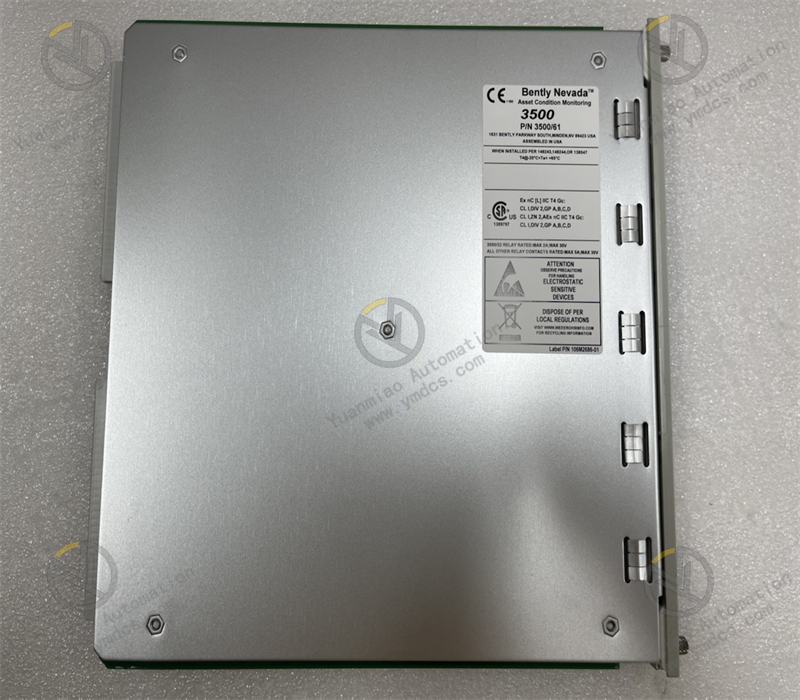
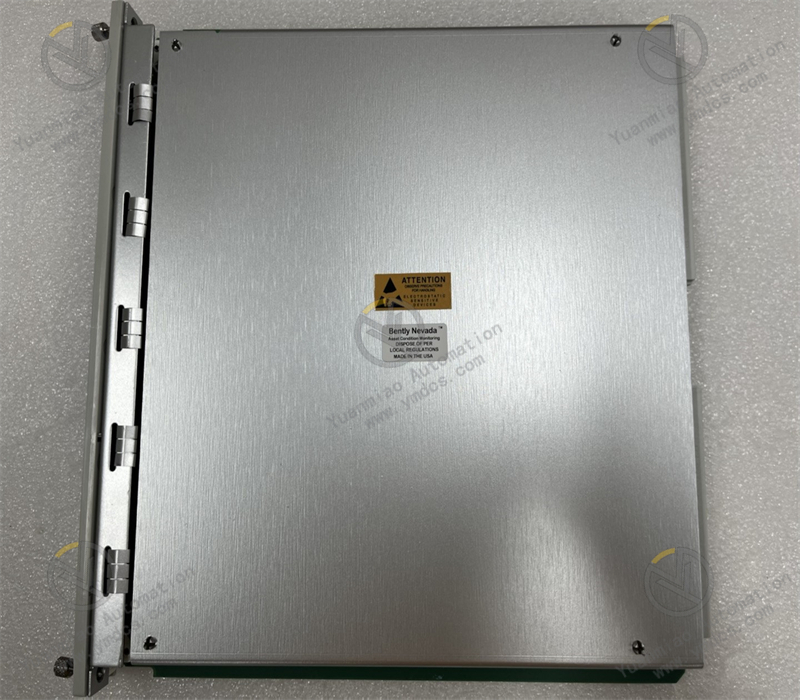
Bently Nevada 3500/61 163179-02
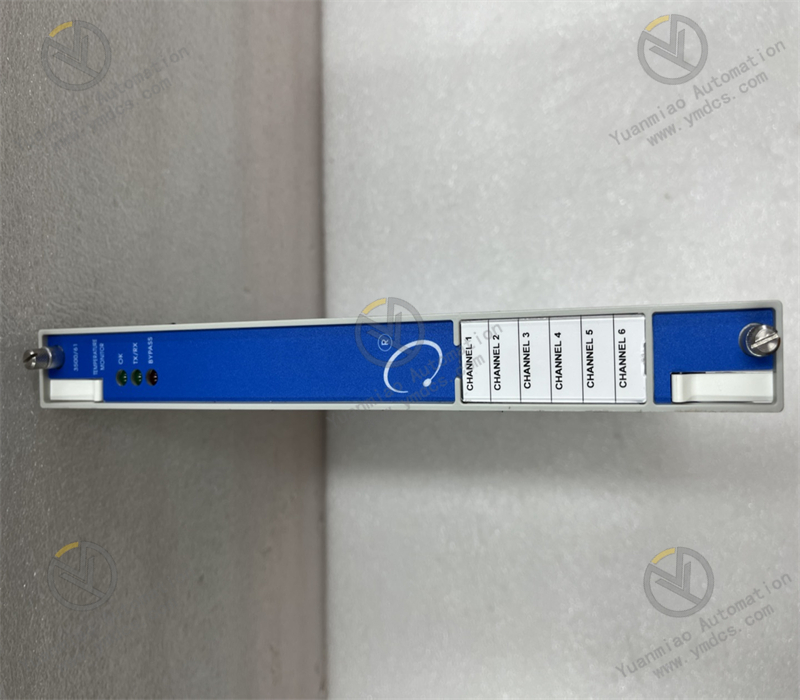
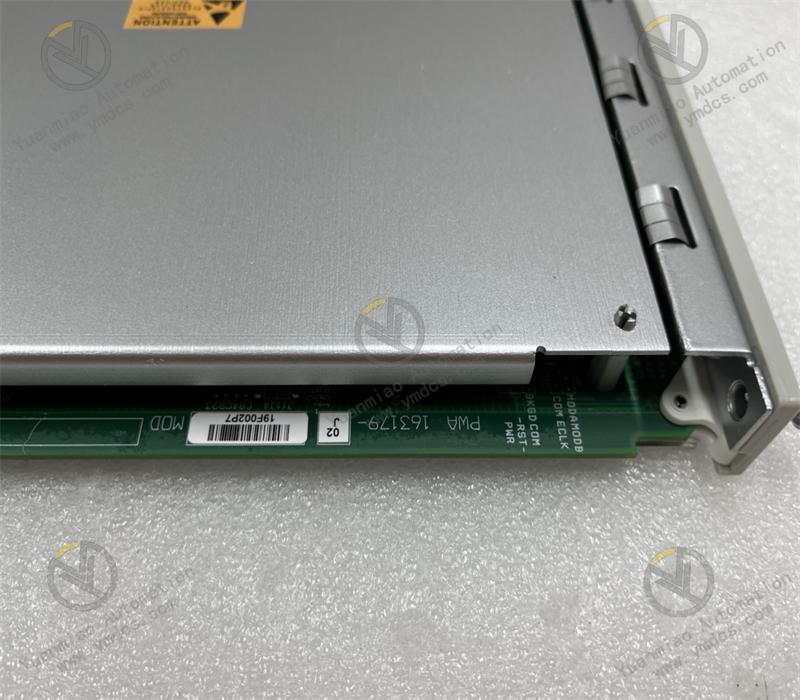
Bently Nevada 3500/61 163179-02 is a temperature monitor belonging to the Bently Nevada 3500 Series machinery condition monitoring system. As a core temperature monitoring component in the series, it specializes in the accurate acquisition, processing, and transmission of temperature parameters for industrial equipment. It features core advantages including multi-channel monitoring, high compatibility, and redundant design.It is widely used in industries with stringent requirements for temperature monitoring accuracy and operational reliability, such as power generation, oil and gas, chemical processing, and manufacturing, providing precise temperature data support and abnormal early warning protection for the safe and stable operation of large rotating machinery and stationary equipment including steam turbines, compressors, pumps, and gearboxes.
1. Purpose and Functions
This unit serves as a dedicated core temperature monitoring component within the 3500 Series monitoring system. It is primarily responsible for key functions such as on-site industrial temperature signal acquisition, high-precision measurement, data processing, anomaly alarming, and data transmission. As a critical link in equipment condition monitoring, it captures real-time temperature changes at key equipment locations, delivering reliable data support for equipment fault diagnosis, prediction, and process optimization. Its specific functions are as follows:
- Multi-channel high-precision temperature monitoring: Equipped with 6 independently configurable monitoring channels, it supports both RTD (Resistance Temperature Detector) and TC (Thermocouple) sensor inputs, with the ability to switch between the two measurement types on the same channel, greatly enhancing system adaptability. It simultaneously monitors temperature changes at multiple critical points such as equipment bearings, oil tanks, and windings, meeting the demand for synchronous multi-point monitoring in industrial environments and adapting to temperature monitoring scenarios for various rotating and stationary machinery.
- High-precision measurement and signal processing: Adopts a high-impedance input design (>10MΩ) to minimize loading effects on signal sources. Paired with advanced A/D converters and microprocessors, it achieves high-precision temperature measurement with accuracy up to ±0.1% FS, enabling precise detection of small temperature fluctuations. It also filters and amplifies collected temperature signals to effectively suppress interference and ensure accurate and stable data transmission. Different sensor types correspond to different measurement ranges: RTDs cover up to -200°C to +850°F, while TCs range from -160°C to +1370°C depending on the model.
- Data acquisition and multi-format transmission: Collects real-time temperature data from all channels, performs preliminary processing and filtering, and supports digital output (typically 4–20 mA or 0–10 V). Each channel is equipped with a recorder output, a key distinction from the 3500/60 module in the same series. It supports multiple industrial communication protocols and integrates seamlessly with 3500 Series racks, power supplies, and communication modules to form a complete machinery condition monitoring system. It also enables data upload to SCADA, DCS, and other control systems for centralized temperature monitoring and management, allowing operation and maintenance personnel to track equipment temperature status in real time.
- Flexible configuration and fault warning: Parameters such as measurement type and alarm thresholds (upper/lower limits) for each channel can be flexibly configured using dedicated Bently Nevada 3500 rack configuration software without complex hardware modifications, adapting to monitoring requirements across diverse industrial scenarios. It features comprehensive temperature anomaly warning and shutdown protection: when monitored temperatures exceed preset thresholds, it issues timely alarms and triggers associated protection mechanisms to prevent overheating damage and minimize fault-related losses.
- Redundant configuration and status feedback: Supports Triple Modular Redundant (TMR) configuration, where three modules are installed adjacently as a group to ensure high monitoring system reliability through dual voting and eliminate single points of failure. Built-in status indicators provide intuitive visualization of module operation and fault conditions, while real-time self-status feedback allows O&M personnel to quickly troubleshoot anomalies in the module and associated equipment, reducing fault resolution time.
2. Features and Specifications
(1) Key Features
- High reliability and environmental adaptability: Engineered to rigorous industrial standards, it withstands harsh industrial conditions including high temperatures, dust, and humidity, with an operating temperature range of -40°C to +85°C. It offers strong electromagnetic interference immunity; isolated TC versions provide 250 VDC channel-to-channel isolation to effectively resist external interference, ensuring long-term stable operation and reducing equipment downtime risks. Its enclosure complies with industrial protection standards, suitable for various harsh industrial environments.
- Modular design and ease of maintenance: Features a standardized modular structure with dimensions of approximately 140mm × 112mm × 76mm and a weight of about 1.8kg. Compact and easily installable in 3500/61 main racks, it supports quick plug-in and replacement. Combined with dedicated configuration software, it enables fast parameter commissioning and fault troubleshooting, minimizing downtime for maintenance and improving operational efficiency.
- High compatibility and seamless integration: As a core companion component of the 3500 Series, it integrates smoothly with other monitoring modules such as vibration modules and power modules to form a complete asset health monitoring system. Supporting standard 4–20 mA analog output, it is compatible with various industrial control systems and PLCs, allowing deployment without extensive modifications to existing infrastructure and offering strong versatility.
- Flexible adaptability: Non-isolated versions can be configured for pure RTD, pure TC, or mixed RTD/TC inputs to match sensor requirements across different industrial scenarios. Measurement ranges can be adjusted using external barriers based on actual applications, further enhancing module adaptability to diverse monitoring needs.
(2) Core Specifications
- Number of channels: 6 independent monitoring channels
- Measurement types: Compatible with RTD (Resistance Temperature Detector) and TC (Thermocouple), switchable on the same channel
- Measurement range:
- RTD (100Ω 3/4-wire platinum resistor): -200°C to +850°C (-50°C to +850°C with external barrier limitation)
- TC (by type): Type E (-100°C to +1000°C), Type J (-18°C to +760°C), Type K (-18°C to +1370°C), Type T (-160°C to +400°C)
- Measurement accuracy: ±0.1% FS
- Input impedance: ≥10MΩ per input
- Output signal: Digital output (4–20 mA or 0–10 V), with recorder output for all 6 channels
- Operating temperature: -40°C to +85°C
- Operating voltage: 24V DC
- Power consumption: Nominal 9 watts
- Dimensions: Approx. 140mm × 112mm × 76mm
- Weight: Approx. 1.8kg
- Redundancy: Supports TMR (Triple Modular Redundant) configuration
- Series: Bently Nevada 3500 Series Temperature Monitor
- Module type: Available in non-isolated RTD/TC or isolated TC versions
3. Troubleshooting Guidelines
- Fault symptom identification: Abnormal temperature data, acquisition failures, temperature alarms, or communication malfunctions in the control system may indicate unit failure. Abnormal status indicators (e.g., configuration error lights), overheating at the module mounting location, or loose wiring also require priority inspection of unit status and connections. A lit configuration error indicator typically means the module is unconfigured, incorrectly configured, or the preset configuration in the rack interface module does not match the physical configuration or meet safety conditions.
- Basic inspection steps: First inspect for loose or oxidized wiring, ensuring intact, undamaged terminal connections, with special attention to temperature input terminals and sensor links. Next, use professional tools to measure the 24V DC input voltage to identify power anomalies. Inspect the installation environment to verify compliance with temperature, humidity, and dust requirements to avoid environment-induced faults. For isolated versions, verify proper channel-to-channel isolation performance.
- Application of diagnostic tools: Use dedicated Bently Nevada 3500 rack configuration software to read operating data and fault codes, identifying root causes such as channel faults, incorrect parameter settings, communication errors, configuration mismatches, or sensor failures. Calibrate measurement accuracy via software to check for deviations. For redundantly configured modules, verify proper operation of the triple-module voting mechanism.
- Precautions for replacement and maintenance: Before replacement, inspect other 3500 Series components including racks, communication modules, and sensors for faults to prevent recurrence after installation. Replacement must be performed with power disconnected, and ESD protection must be used to avoid damaging internal electronic components. After replacement, reconfigure parameters, complete configuration setup, and calibrate accuracy using dedicated software to ensure system compatibility and proper temperature monitoring performance. For routine maintenance, regularly clean dust from the unit surface, inspect wiring tightness, and calibrate measurement accuracy to extend service life.
4. Application Scenarios
- Power industry: Used for temperature monitoring of key equipment including generator sets, steam turbines, and transformers, focusing on temperature changes in bearings, windings, oil tanks, and other components. It provides data support for operating parameter acquisition and fault early warning, enabling real-time monitoring and precise control of power generation processes to improve generation efficiency and equipment safety.
- Oil and gas industry: Adapts to high-temperature, high-pressure, flammable, and explosive conditions, monitoring temperature status of critical equipment such as centrifugal compressors, pumping units, pumps, and centrifuges. It detects real-time temperature anomalies during operation to prevent overheating damage, ensuring safe and stable operation of oil and gas extraction, transmission, and processing.
- Chemical and steel industries: Applied to temperature monitoring of chemical and steel production equipment in high-temperature, corrosive environments. It tracks temperature changes in equipment and processes to avoid production interruptions or safety incidents caused by temperature anomalies, ensuring continuous production while providing data support for process optimization.
- General industry and manufacturing: Widely deployed in automated production lines and machinery monitoring systems to monitor temperature changes in motors, gearboxes, bearings, and other components, preventing overheating-related failures. It also serves water treatment, transportation, and other sectors by monitoring operating temperatures of pumps, motors, and similar equipment to optimize processes and improve production efficiency and equipment reliability.
- Rotating machinery monitoring systems: Integrated with Bently Nevada 3500 Series racks, power supplies, communication modules, and vibration monitoring modules to form a complete TSI (Turbine Supervisory Instrumentation) system. It provides supporting temperature monitoring for shaft vibration and shaft displacement of rotating machinery including steam turbines, compressors, and pumps, comprehensively ensuring their safe and stable operation and enabling full-scope equipment condition monitoring and fault prediction.