Description
1. Product Overview
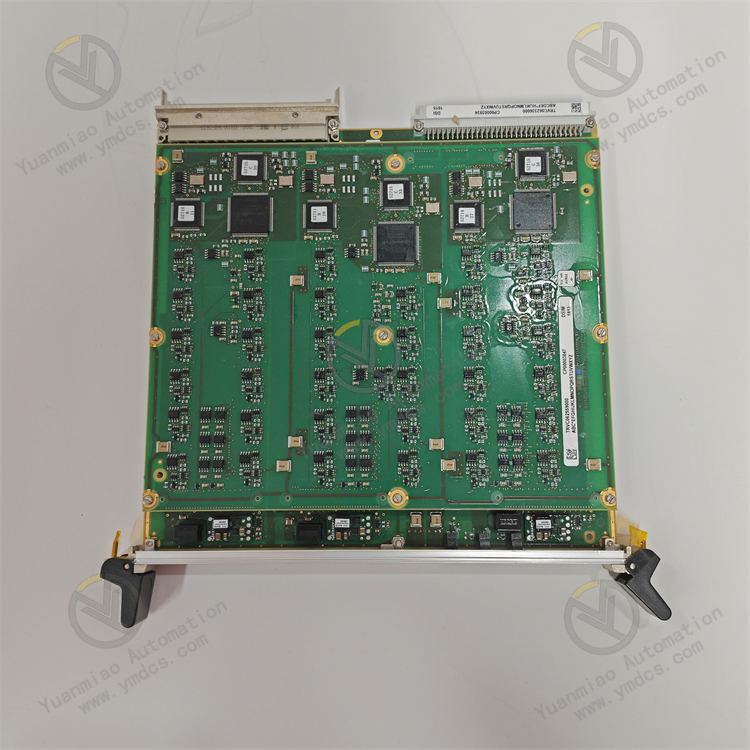
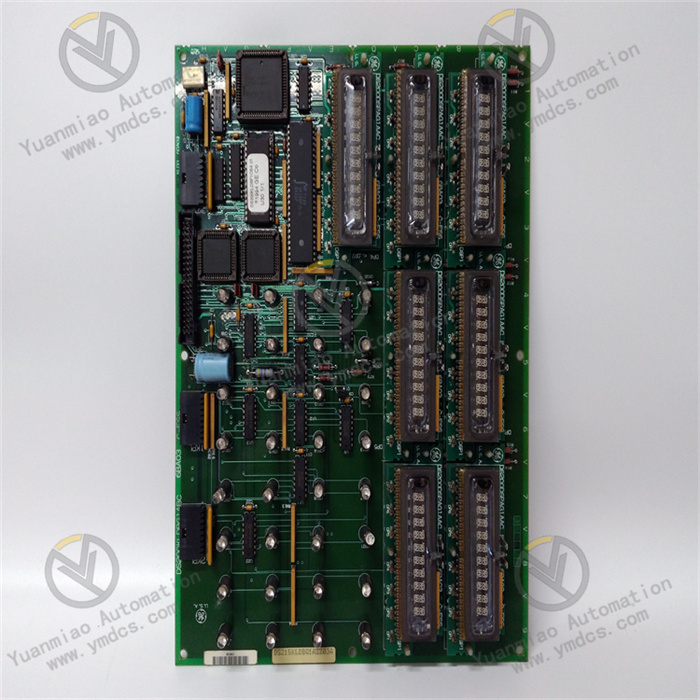
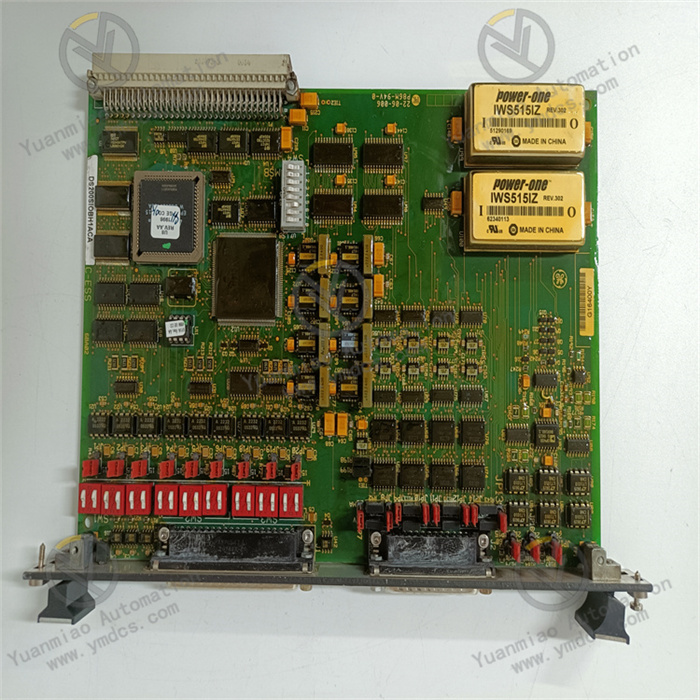
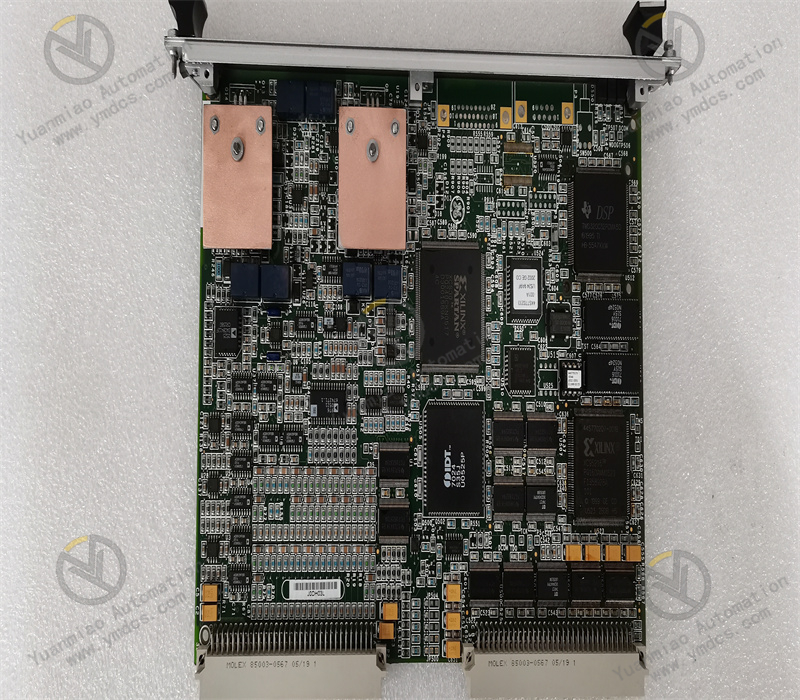
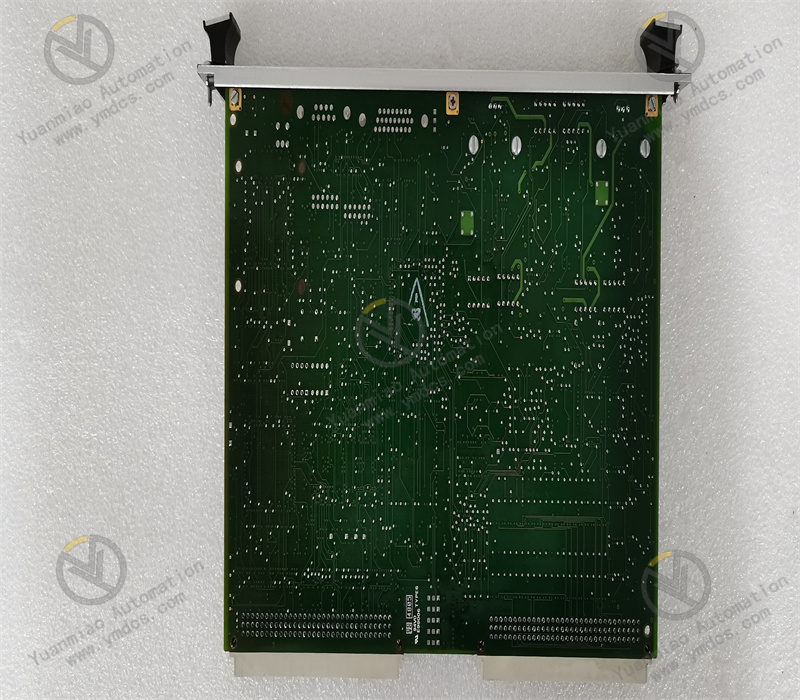
IS200VAICH1D is a high‑precision analog‑input board with VME bus, specially developed by General Electric (GE, USA) for the Speedtronic Mark VI control system. It serves as a core signal‑acquisition unit for automatic‑control systems of gas‑turbine and steam‑turbine generator sets, and is compatible with both TMR (Triple Modular Redundancy) and simplex control architectures.
Designed for operating‑condition monitoring of industrial turbine and generator units, this board supports multi‑format standard analog‑signal acquisition. Equipped with a 16‑bit high‑precision AD sampling chip, it accurately collects on‑site process signals of voltage and current, and provides high‑precision raw data for logic operation, closed‑loop regulation and fault protection of the unit’s main‑control system. The whole board adopts industrial conformal‑coated PCB technology, full‑channel electrical‑isolation design and wide‑temperature reinforced hardware architecture. It features high sampling accuracy, excellent signal linearity, ultra‑low temperature drift, strong anti‑interference performance and stable long‑term operation. Natively compatible with the full range of GE Mark VI turbine‑control systems and EX2100/EX2100E excitation systems, it adapts to harsh power‑plant conditions of high temperature, intensive electromagnetic interference and 24‑hour non‑stop heavy‑duty operation. With plug‑and‑play capability and excellent interchangeability, it is a standard core analog‑signal acquisition board for automatic‑control systems of thermal‑power, gas‑turbine and hydro‑generator units.
2. Core Functions
Multi‑format compatible analog‑signal acquisitionIt supports acquisition of mainstream industrial analog signals, including 4‑20 mA, 0‑5 VDC, ±10 VDC and ±1 mA. The signal type of each channel can be flexibly configured through jumpers on the terminal board, meeting the acquisition requirements of various process measuring points such as unit pressure, temperature, vibration, flow, load, voltage and current, with strong scene adaptability.
16‑bit ultra‑high‑precision AD sampling and conversionBuilt‑in industrial‑grade 16‑bit high‑precision analog‑to‑digital conversion chip delivers high sampling resolution, extremely low signal distortion and excellent full‑range linearity. It can accurately capture tiny operating‑condition fluctuations and transient signal changes of the unit, eliminating regulation deviation, data drift and false unit actions caused by insufficient accuracy of ordinary acquisition boards, and ensuring precise unit control.
Independent electrical‑isolation protection for all channelsSingle‑channel independent optoelectronic isolation is adopted to completely isolate complex on‑site electromagnetic interference, high‑voltage clutter, ground‑potential difference and reverse‑signal impact. It effectively blocks interference signals from flowing back and damaging the main‑control rack and core boards, greatly improving the electrical safety and operational stability of the whole control system for high‑interference complex power‑plant environments.
Fault‑tolerant operation compatible with TMR redundant architectureNatively adapted to the TMR triple‑modular‑redundant control architecture of Mark VI systems, it supports synchronous data acquisition, comparison‑verification and fault‑tolerance judgment over three links. When abnormal signals or failures occur on one single board or channel, the system can normally complete data acquisition and logic operation via redundant links without affecting overall unit operation, substantially reducing the risk of shutdown caused by single‑point failures.
Long‑term steady‑state acquisition with ultra‑low temperature driftImported precision low‑drift components and factory precision‑calibration technology are applied. Parameter drift remains minimal across the full temperature and load spectrum during 7×24‑hour continuous long‑term operation without accuracy degradation, delivering excellent data consistency and repeatability. Acquisition deviation and system false alarms induced by temperature rise and load fluctuation can be effectively avoided.
- High‑speed bus transmission and convenient maintenanceHigh‑speed data interaction is realized through the standard VME backplane bus. Sampled data is uploaded to the main‑control unit in real‑time with low transmission delay and strong data synchronism. The board supports plug‑and‑play replacement without complex configuration or parameter modification. Wiring adaptation can be completed rapidly with supporting TBAI, TBAH and STAI terminal boards. Board status can be traced in real‑time for efficient troubleshooting and maintenance.
3. Technical Specifications
| Parameter Item | Technical Specification |
|---|---|
| Model No. | IS200VAICH1D |
| Brand | GE (General Electric, USA) |
| Product Series | GE Speedtronic Mark VI Turbine‑Control System |
| Product Type | VME‑bus high‑precision analog‑input acquisition board |
| Signal Acquisition Formats | 4‑20 mA, 0‑5 VDC, ±10 VDC, ±1 mA (jumper‑configurable) |
| Sampling Accuracy | 16‑bit high‑precision AD conversion, high linearity & low distortion |
| Bus Type | Standard VME backplane high‑speed bus |
| Supported Architectures | TMR (Triple Modular Redundancy), Simplex |
| Compatible Terminal Boards | TBAI, TBAH, STAI series terminal boards |
| Electrical Characteristics | Independent optoelectronic isolation for all channels, clutter‑interference resistance, low temperature drift, high repeatability |
| Operating Temperature | -40 ℃ ~ 85 ℃, ultra‑wide industrial temperature range |
| Protective Treatment | PCB conformal coating, dust‑proof, moisture‑proof, corrosion‑resistant, anti‑ageing & vibration‑resistant |
| Physical Dimension | Standard 6U VME board size, fits Mark VI standard racks |
| Key Features | Multi‑signal compatibility, high‑precision sampling, isolation protection, redundancy fault tolerance, wide‑temperature operation, maintenance‑free & high stability |
4. Working Principle
IS200VAICH1D adopts a closed‑loop acquisition workflow: on‑site analog‑signal access → channel isolation & filtering → high‑precision AD conversion → data verification & shaping → VME‑bus upload → redundancy comparison & correction.
During unit operation, analog signals such as on‑site temperature, pressure, vibration, load and electrical parameters are fed into board channels via supporting terminal boards. The signals first pass through independent electrical‑isolation circuits and filtering units to filter out industrial electromagnetic clutter and voltage fluctuations, achieving galvanic separation between strong‑current and weak‑current circuits and guaranteeing signal purity and equipment safety.
Pre‑processed standard analog signals are sent to the 16‑bit high‑precision AD conversion unit for accurate analog‑to‑digital conversion. On‑board algorithm verification, data shaping and noise‑reduction correction are then performed to eliminate abnormal distorted data. Finally, standardized digital signals are uploaded in real‑time to the Mark VI main‑control unit and EX2100 excitation‑control system through the high‑speed VME bus. Under the TMR redundant architecture, data from three identical boards is synchronously compared and verified to automatically correct acquisition deviations and shield abnormal signals. Accurate, reliable and synchronous raw data is supplied for excitation regulation, load control, condition monitoring and interlock fault protection of the main unit, ensuring precise closed‑loop regulation, comprehensive condition monitoring and credible fault judgment of the whole automatic‑control system.
5. System‑Architecture Compatibility
This original‑GE dedicated analog‑input board for Mark VI control systems features hardware dimensions, VME‑bus protocol, data‑interaction logic and pin‑out definitions fully natively compatible with GE Speedtronic Mark VI gas‑/steam‑turbine control systems, as well as EX2100/EX2100E generator excitation‑control systems. It supports both TMR triple‑modular‑redundant and simplex architectures. No extra programming‑configuration, hardware modification or signal adapter is required. Plug‑and‑play replacement is available for aged, faulty or worn‑out boards of the same model, suitable for power‑plant maintenance, system upgrades, accuracy retrofits and redundancy expansion projects.
It seamlessly connects with various industrial analog sensors, transmitters and measuring instruments for measuring‑point acquisition of temperature, pressure, flow, vibration and electrical parameters. Fully compatible with power‑plant upper‑level SCADA monitoring systems, fault‑diagnosis platforms and unit data‑acquisition systems, it requires no modification to existing main‑control programs, protection logics or wiring specifications. Its standardized rack‑mount layout fits standard power‑plant cabinets and can be rapidly integrated into new‑build system projects and legacy‑unit automation retrofits, delivering outstanding adaptability, universality and scalability.
6. Application Scenarios
Benefiting from multi‑format signal compatibility, ultra‑high‑precision sampling, full‑channel isolation and stable redundant fault‑tolerant performance, the board is engineered for harsh operating‑conditions of generator and turbine units, including high/low ambient temperature, intensive electromagnetic interference, mechanical vibration, frequent load swings and 24‑hour non‑stop continuous operation. It is widely deployed in GE Mark VI automatic‑control systems and EX2100‑series excitation‑control systems for large‑scale thermal‑power plants, gas‑turbine power stations, combined‑cycle power plants and hydro‑power stations.
It is mainly applied to high‑precision acquisition and monitoring of core process parameters including unit temperature, pressure, flow, vibration, displacement, active/reactive load, bus‑bar voltage, excitation current and excitation voltage, providing accurate data support for grid‑connection regulation, load optimization, closed‑loop excitation control, equipment‑condition monitoring, interlock fault protection and abnormal alarming. Widely used in routine power‑plant maintenance, legacy control‑system upgrades, acquisition‑accuracy optimization, redundancy‑system retrofits and faulty‑board replacement, it effectively solves common defects of traditional acquisition boards such as low precision, high temperature drift, poor anti‑interference capacity and weak fault tolerance. The monitoring accuracy, operational stability and safety‑fault‑tolerance performance of generator‑unit automatic‑control systems are greatly improved, ensuring long‑term safe, efficient and stable grid‑connected power generation of generator sets.