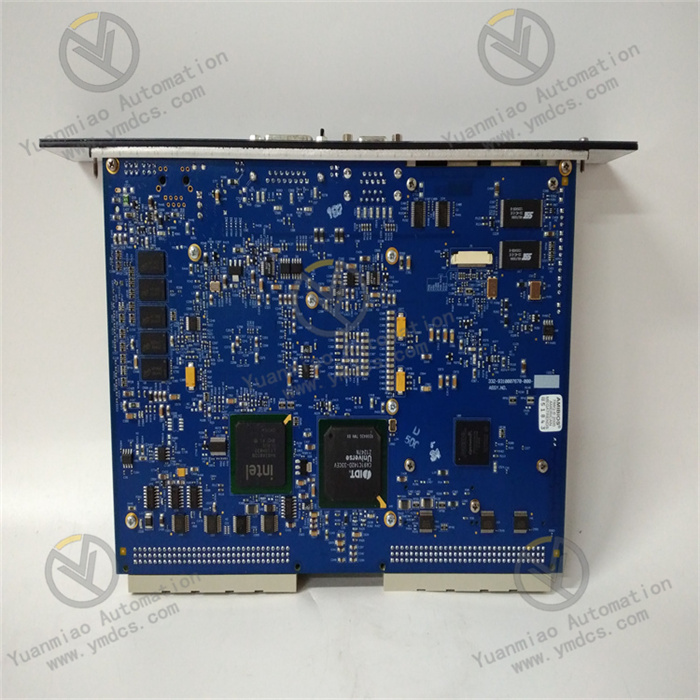
Description
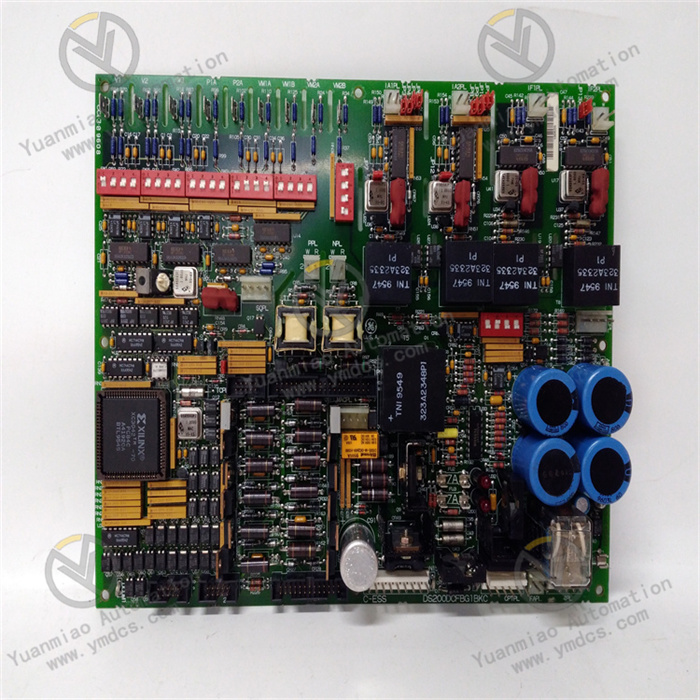
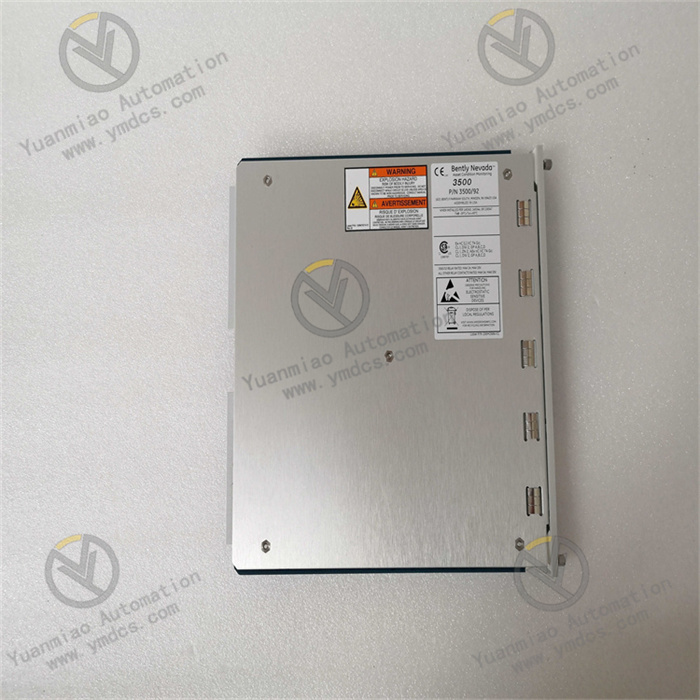
GE IC698CHS117C
I. Overview
The GE IC698CHS117C is a high-performance redundant controller chassis belonging to the ControlLogix series. Specifically designed for industrial control scenarios requiring high reliability and availability, this product is compatible with GE ControlLogix series processor modules, I/O modules, communication modules, and more. It is widely used in critical industrial fields such as power generation control, petrochemical process control, metallurgical production line control, and rail transit signal control. Serving as a stable hardware operation platform for complex control systems, it is a core device for realizing closed-loop control and remote monitoring in industrial automation.
With the core value proposition of "high redundancy reliability, flexible expansion architecture, harsh environment adaptability, and in-depth module compatibility", the chassis adopts a standard 17-slot rack-mounted design. It supports dual-processor redundant configuration and dual-power redundant input, constructing a highly available operating environment featuring "hardware redundancy + architecture fault tolerance", which can effectively prevent system downtime caused by single-point failures. In terms of core features, the chassis employs a modular slot design: 17 standard ControlLogix slots support the mixed deployment of processor modules, local I/O modules, communication modules, and dedicated function modules, meeting the functional expansion needs of different control scenarios. It supports hot redundancy for processors (1+1 redundancy); in case of a primary processor failure, it can automatically switch to the standby processor within 10ms, with no control logic interruption or data loss during the switching process. Equipped with dual-channel redundant power interfaces, it supports a wide range of AC or DC power inputs, and enables automatic seamless switching when a power module fails, ensuring continuous power supply for the chassis. Adopting a backplane bus architecture with a transmission rate of up to 1Gbps, it guarantees real-time and efficient data interaction between modules. Through industrial-grade environmental adaptability design, it can operate stably in environments with an operating temperature range of 0℃~60℃ and a relative humidity of 5%~95% (without condensation), and possesses a certain level of resistance to vibration and electromagnetic interference, making it suitable for complex working conditions in industrial sites.
II. Technical Specifications
III. Functional Features
1. 17-Slot Flexible Expansion Architecture, Adapting to Complex Control Scenarios
The IC698CHS117C adopts a 17-slot modular design, which is its core advantage in adapting to medium and large-scale complex control systems. 2 dedicated processor slots support 1+1 redundancy configuration, and 15 universal I/O slots allow flexible deployment of various modules such as digital I/O, analog I/O, temperature acquisition, and motion control, enabling the integrated deployment of "control core + data acquisition + communication interaction". For example, in a petrochemical process control system, the chassis can be configured with 2 IC698CPU340 redundant processors, 8 analog input modules (for collecting pressure, temperature, and flow signals), 4 digital output modules (for controlling valves and pumps), and 2 EtherNet/IP communication modules (for connecting upper computers and remote I/O). Through the 17-slot architecture, it realizes the integrated deployment of multi-parameter acquisition, multi-device control, and remote monitoring without the need for additional expanded chassis, reducing system complexity and costs.
2. Dual Redundancy Design, Ensuring High System Availability
The IC698CHS117C has built a dual redundancy system of "processor redundancy + power redundancy", which is the core guarantee for meeting the "zero downtime" requirement in critical industrial scenarios. In terms of processor redundancy, 2 dedicated processor slots support 1+1 hot redundancy configuration. The primary processor synchronizes data with the standby processor in real-time via the backplane bus, including control program logic, I/O point status, internal register data, and communication status, with a synchronization cycle as short as 1ms. If the primary processor experiences hardware failures (such as CPU failure or memory error) or software anomalies (such as program crash), the standby processor can automatically take over control tasks within 10ms. During the switching process, there is no control logic interruption or I/O output jitter, ensuring the continuity of the control process. In the control of metallurgical production lines, this redundancy design can prevent production line downtime caused by processor failures, and the economic loss avoided per failure can reach hundreds of thousands of yuan.
3. High-Speed Backplane Bus, Ensuring Real-Time Data Interaction
The chassis adopts GE's proprietary ControlLogix backplane bus technology with a transmission rate of up to 1Gbps, which is crucial for ensuring real-time data interaction between modules. The bus adopts a 64-bit data bus and 32-bit address bus design, supporting concurrent access by multiple master devices. Multiple modules can transmit data through the bus simultaneously without bus congestion. For example, in a multi-loop process control system, 8 analog input modules collect data and transmit it to the processor at the same time, and 2 communication modules interact with the upper computer and remote I/O simultaneously. The bus can still maintain a stable transmission rate, with a data transmission delay between modules ≤1μs, ensuring that the processor can obtain on-site data in real-time and issue control commands.
The bus architecture supports the "producer-consumer" communication mode, allowing modules to send data directly to target modules via the bus without the need for processor transfer, further improving data transmission efficiency. For example, the pressure signal collected by the analog input module can be directly sent to the digital output module for logic judgment, reducing the computing load of the processor. In addition, the bus is equipped with a comprehensive error detection and retransmission mechanism, using CRC check technology to detect data transmission errors with an error detection rate ≥99.9%. When an error is detected, data retransmission is automatically triggered to ensure the reliability of data transmission. In rail transit signal control scenarios, high-speed and reliable bus transmission can ensure the real-time issuance of signal commands and status feedback, avoiding safety risks caused by signal delays.
4. Industrial-Grade Environment Adaptability, Withstanding Complex On-Site Working Conditions
Through structural optimization and component selection, the IC698CHS117C has excellent industrial-grade environment adaptability and can cope with complex working conditions such as high temperature, vibration, and electromagnetic interference in industrial sites. In terms of temperature adaptation, the chassis adopts a partitioned heat dissipation air duct design, with air intake from the front and exhaust from the rear. 4 redundant axial fans form forced convection heat dissipation, which can quickly remove the heat generated by the operation of the modules. In the case of fully configured high-power-consuming modules, the internal temperature of the chassis can be controlled within 60℃, ensuring that the modules operate stably within the operating temperature range of 0℃~60℃. In scenarios such as high-temperature metallurgical workshops, even if the ambient temperature reaches 45℃, the chassis can still maintain internal heat dissipation balance by increasing the fan speed (to 3500rpm).
In terms of mechanical environment adaptability, the chassis adopts a 5U thickened steel plate shell and a reinforced backplane design, with excellent vibration and shock resistance. Its vibration resistance reaches 5g (10~500Hz, tri-axial), making it suitable for vibration environments generated by the operation of industrial motors and pumps; its shock resistance reaches 15g (11ms half-sine wave), which can resist shock damage during transportation and installation. In marine power control systems, the chassis can withstand continuous vibration and bumpy ride during ship navigation and maintain stable operation. In terms of electromagnetic compatibility, the chassis has passed EN 55011 Class A and FCC Part 15 Class A electromagnetic emission certifications, as well as EN 61000 series electromagnetic immunity certifications. In environments with strong electromagnetic interference (such as near industrial frequency converters and high-voltage equipment), it can still avoid bus data transmission errors and module misoperations, ensuring the stability of the control system.
5. Intelligent Diagnosis and Maintenance, Reducing Operation and Maintenance Costs
The IC698CHS117C has a built-in comprehensive intelligent diagnosis system, which realizes full-time monitoring and fault early warning of the chassis hardware status, significantly reducing operation and maintenance costs. The diagnosis content covers key parameters such as fan status, power status, bus status, and module status: Fan diagnosis can monitor the fan speed in real-time (accuracy ±100rpm), and trigger a fault alarm when the fan speed is lower than 2000rpm; Power diagnosis can monitor the input voltage, output current, and module temperature, and issue an alarm when the input voltage exceeds the range of 100~240V or the module temperature exceeds 75℃; Bus diagnosis can detect the bus transmission error rate and module communication status, and trigger a bus fault alarm when the error rate exceeds 1×10⁻⁶; Module diagnosis can identify statuses such as uninstalled modules and faulty modules, and read the internal fault codes of the modules via the backplane bus.