Description
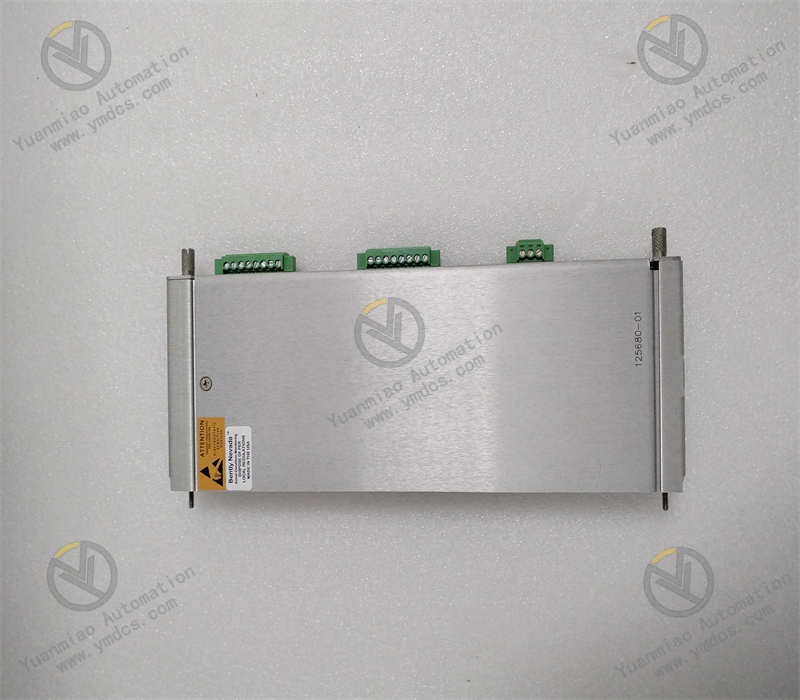
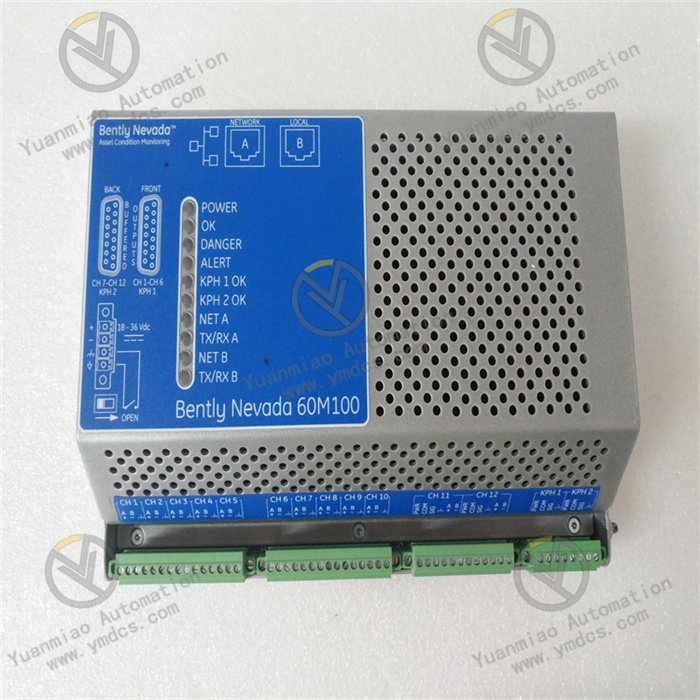
Bently Nevada 60M100-00
I. Basic Information
Bently Nevada 60M100-00 is a condition monitoring system, positioned as an advanced solution for industrial equipment vibration monitoring and mechanical fault diagnosis. As a core product in Bently Nevada’s condition monitoring portfolio, it is mainly used for continuous, permanent monitoring of train units in key industrial equipment such as wind turbine generators and turbines. Through high-precision vibration data acquisition, signal processing, and fault diagnosis, it provides core technical support for equipment maintenance management, helping enterprises detect potential faults in advance, reduce downtime losses, and improve equipment operational reliability and production efficiency.
This monitoring system integrates Bently Nevada’s mature vibration monitoring technology and advanced signal processing algorithms. Unlike conventional monitoring modules, it features dual capabilities of standalone operation and integrated adaptation. It can be used as an independent condition monitoring system, integrated as part of an original equipment manufacturer (OEM) control and instrumentation package, or configured as a networked, distributed interoperable system, flexibly meeting monitoring requirements of different scales and scenarios. Its core value lies in detecting potential faults months in advance, providing data support for condition-based maintenance, helping enterprises rationally arrange maintenance shutdowns and crane operations, and significantly reducing maintenance costs and revenue losses.
As a compact, rugged, high-performance monitoring system, the Bently Nevada 60M100-00 offers strong functional integration, covering all necessary functions for condition monitoring of wind turbine generator train units, including signal conditioning, alarming, configuration, speed input, and control system communication. It adapts to harsh industrial operating environments, is highly compatible with various sensors and control systems, and is widely used in wind power, petrochemical, power generation, and other industries, serving as a core component for health management of critical industrial equipment.
II. Technical Specifications
- Signal Acquisition Specifications: Supports up to 12 dynamic input channels, 2 keyphasor signal inputs, and digital communication. Channels 1–10 can connect to 2-wire ICP accelerometers, while channels 11–12 can be flexibly configured for 2-wire ICP sensors or 3-wire proximity probes, adapting to monitoring requirements of different sensor types. It can collect key parameters in real time such as equipment vibration velocity, acceleration, and displacement.
- Signal Processing Parameters: Adopts advanced signal processing algorithms to filter, denoise, and extract features from collected vibration signals. It can derive dozens of measurement values and health indicators from each accelerometer measurement point, and supports custom calibration based on the characteristics of specific bearings and gearboxes to ensure signal quality and fault diagnosis accuracy. It provides various signal conditioning functions including filtering, amplification, and calibration to suit monitoring needs of different equipment.
- Communication Characteristics: Supports the industrial standard Modbus/TCP communication protocol, compatible with both server and client modes for easy data exchange and integration with external control systems. It features flexible communication interfaces for seamless connection to various control systems and data acquisition platforms, enabling real-time transmission and remote access of monitoring data to support networked monitoring and management.
- Data Monitoring Capability: Monitors up to 150 static variables, generates high-resolution waveform data and trend curves to capture changes in equipment operating status in real time, providing accurate data support for fault diagnosis and trend analysis. It supports user-programmable alarm functions, allowing alarm thresholds to be set according to equipment operating standards for timely fault early warning.
- Environmental Parameters: Ruggedly designed for harsh industrial and outdoor environments, with excellent resistance to electromagnetic interference, vibration, temperature, and humidity variations. It adapts to complex outdoor environments such as wind farms, with an operating temperature range covering standard industrial and extreme outdoor conditions, and a humidity range of 5%–95% (non-condensing), ensuring stable continuous operation in harsh environments.
- Compatibility: Highly compatible with various sensors including 2-wire ICP accelerometers and 3-wire proximity probes. It can operate as a standalone system, integrate into OEM control and instrumentation packages, or form a distributed network system. It is compatible with Adapt.Wind software for configuration, data reading, and analysis, as well as various industrial control systems, offering high integration flexibility.
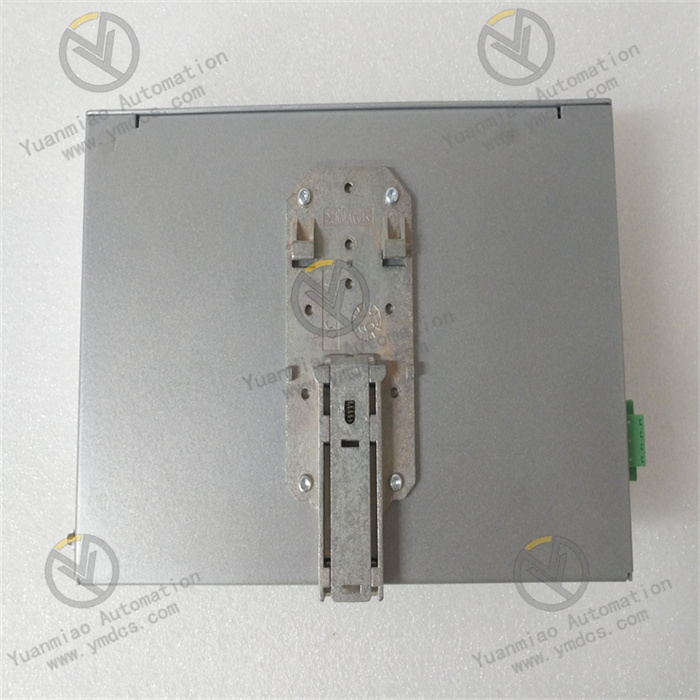
- Physical Specifications: Compact design with small size and light weight, convenient for on-site or control cabinet installation. The system features a rugged structure built with industrial-grade high-quality components, requiring no extra maintenance under normal use, with a long service life. It supports on-site rapid maintenance, sensor replacement, and system upgrades.
III. Functional Features
- High-Precision Vibration Monitoring and Data Acquisition: Delivers high-precision vibration measurement, collecting key parameters such as vibration velocity, acceleration, and displacement in real time. It supports 12 dynamic channels and 2 keyphasor inputs, adapting to different sensor types. The acquired data features high resolution and strong stability, accurately capturing subtle changes in equipment status and providing a reliable data foundation for health assessment.
- Advanced Signal Processing and Real-Time Fault Diagnosis: Uses sophisticated signal processing algorithms to filter, denoise, and extract features from vibration signals. It derives dozens of health indicators from measurement data and allows custom calibration based on components such as bearings and gearboxes, accurately identifying common mechanical faults including bearing wear, unbalance, and looseness. It detects potential faults months in advance to prevent equipment damage and production interruptions.
- Flexible Configuration and Integration Capability: Supports three configuration modes: standalone condition monitoring system, networked distributed interoperable system, or integrated OEM control and instrumentation package, adapting to monitoring needs of different scales and scenarios. It offers extensive configuration options for parameter customization per application requirements, and supports connection to multiple sensors and control systems with low integration difficulty and high flexibility.
- Comprehensive Equipment Monitoring Coverage: Specifically designed for wind turbine generator train units, monitoring key components including tower vibration, main bearings, main rotors, and gearboxes (including all internal bearings and gear meshing). It also adapts to monitoring needs of other industrial equipment, enabling full-dimensional health status monitoring and comprehensive data support for equipment maintenance.
- Convenient Communication and Data Management: Supports Modbus/TCP protocol in both server and client modes, enabling real-time transmission and remote access of monitoring data. Paired with Adapt.Wind software, it allows system configuration, data reading, trend analysis, and fault report generation, helping users intuitively understand equipment status and optimize maintenance decisions.
- Industrial-Grade High Reliability and Environmental Adaptability: Compact and rugged structure with industrial-grade high-quality components provides excellent resistance to EMI, vibration, temperature, and humidity changes. It operates stably long-term in complex conditions such as outdoor wind farms and industrial workshops with a long mean time between failures, meeting the 24/7 continuous monitoring demands of critical equipment.
- Programmable Alarming and Maintenance Optimization: Supports user-programmable alarms with flexible threshold settings based on equipment operating standards, issuing timely warnings when abnormalities occur. By detecting faults early and providing equipment health data, it helps enterprises plan maintenance shutdowns rationally, optimize maintenance workflows, and reduce maintenance costs and downtime losses.
IV. Application Areas
- Wind Power Industry: As a condition monitoring system specifically designed for wind turbine generator train units, it is widely applied in various wind turbines to monitor the operating status of key components including tower vibration, main bearings, main rotors, and gearboxes. It detects potential faults in advance, reduces turbine downtime and maintenance costs, improves wind power generation efficiency and equipment reliability, and serves as a core component for health management in wind farms.
- Power Industry: Used in key equipment such as turbines and generator sets in thermal power, hydropower, and other power plants. Through high-precision vibration monitoring and fault diagnosis, it tracks equipment status in real time and provides early fault warnings, ensuring safe and continuous operation of power plant equipment and avoiding power supply interruptions caused by equipment failures.
- Oil and Gas Industry: Applied to critical equipment including compressors, pumps, and turbines in petrochemical, natural gas extraction, and transmission facilities. Adapting to harsh industrial environments, it continuously monitors vibration status to identify potential faults promptly, ensuring stable equipment operation and maintaining continuity in oil and gas production and transportation processes.
- Heavy Industry: Deployed in heavy industrial scenarios such as metallurgy and mining for large machinery, centrifugal equipment, reciprocating machinery, and other assets. Through full-dimensional condition monitoring and fault diagnosis, it reduces equipment downtime, lowers maintenance costs, improves production efficiency and operational safety, and withstands complex heavy industrial conditions.
- Other Industrial Fields: Also used for condition monitoring of critical equipment in rail transit, marine power systems, large machine tools, and more. With flexible integration and high-precision monitoring performance, it provides technical support for health management of various equipment, helping enterprises implement condition-based maintenance and reduce operating costs.