Description
1. Product Overview
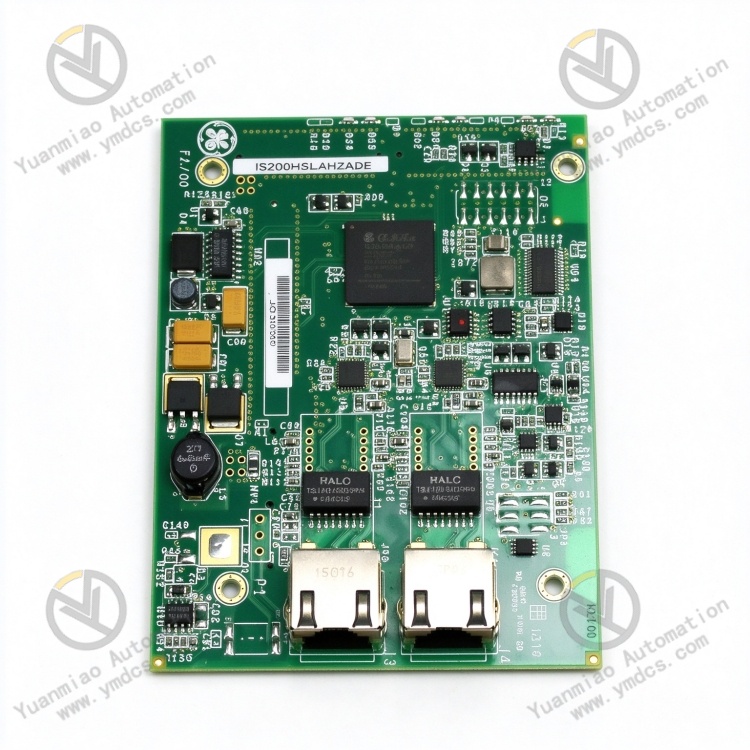
IS200HSLAH6A is an original General Electric (GE) high-speed serial link interface module for Mark VI / Mark VIe gas turbine control systems. It belongs to the core industrial control boards of the GE IS200 series and serves as dedicated high-speed communication hardware for the Speedtronic turbine control system. As the core data exchange hub of the system distributed architecture, the module is mainly responsible for high-speed optical fiber data transmission, signal distribution, data synchronization and link redundancy management between the controller, remote I/O stations, various functional boards and upper monitoring systems. It is a critical core board that ensures real-time data interaction, logic synchronization and accurate command delivery for gas turbine and steam turbine generator set control systems.
The IS200HSLAH6A module strictly complies with GE industrial turbine control communication standards and IEEE 1613 EMC specifications for power industrial control equipment. It has obtained full industrial certifications including UL508 and CE, and adapts to harsh working conditions in power station cabinets such as high temperature, vibration, strong electromagnetic interference and alternating temperature difference. Adopting an all-fiber high-speed serial transmission architecture, the module features high transmission rate, ultra-low latency, strong anti-interference capability, high link stability and zero data loss. It enables millisecond-level data synchronization for multi-node control systems and effectively avoids signal attenuation, electromagnetic crosstalk, data delay and communication flicker caused by traditional cable transmission. It is widely used in new unit assembly of GE Mark VI/VIe systems, replacement of aging communication link boards, upgrading of control system communication architecture and strategic spare parts reserve of core industrial control components in power stations. It fully guarantees stable communication links, precise synchronization and reliable operation of control systems for large power units.
2. Functional Features
2.1 High-speed Fiber Serial Communication with Ultra-low Latency Data Interaction
The module natively supports industrial-grade high-speed serial fiber link transmission. Its communication timing is optimized specifically for dynamic control scenarios of gas turbines and steam turbines, delivering extremely high data throughput and millisecond-level response speed. It can rapidly complete core communication tasks including control command issuance, field measurement point data upload, system logic parameter synchronization and cross-node data interaction. Compared with traditional bus communication, it thoroughly resolves issues such as data delay, timing misalignment and command lag. It ensures the real-time performance and accuracy of dynamic control logic including unit load regulation, speed control and protective interlock, and meets stringent timing requirements for high-precision dynamic regulation of large power units.
2.2 Multi-node Data Distribution and Synchronization with Strong System Coordination
It supports multi-channel parallel data transceiving and intelligent signal distribution. It can synchronously connect the system main processor, multiple I/O modules, remote control substations and upper monitoring platforms, and uniformly manage the timing of data interaction across the whole network. Equipped with a precise clock synchronization mechanism, it realizes data timing alignment for full racks, cross-racks and distributed I/O stations. It prevents control logic deviation, regulation disorder and false protection actions induced by asynchronous data among multiple modules and stations, and ensures coordinated operation, unified logic and synchronized working conditions of the entire Mark VI/VIe control system.
2.3 All-fiber Isolated Transmission with Superior Anti-interference Performance
It adopts a pure fiber photoelectric isolation transmission architecture. The communication link is completely electrically isolated, which thoroughly cuts off propagation paths of electrical signal crosstalk, ground loop current, power grid surge and high-frequency electromagnetic interference. Its isolation level meets the highest standards of power industrial control. It can effectively resist harsh working conditions such as strong magnetic field radiation in power stations, high-frequency equipment vibration, power grid harmonic interference and instantaneous voltage impact, and eliminate faults such as communication drift, data jumping, link flicker and transmission distortion. It guarantees long-term stable communication of unit control systems under complex electromagnetic environments.
2.4 Link Redundancy and Fault Tolerance for Uninterrupted High-reliability Communication
It supports the hot standby architecture of high-speed serial links and can be configured for dual-link parallel operation and automatic fault switching. When a single fiber link breaks, suffers abnormal attenuation or signal loss, the module can automatically switch to the standby link within milliseconds without communication interruption, data loss or system offline status, requiring no manual intervention. It greatly improves the fault tolerance of communication links in the control system. It effectively avoids major risks such as system communication paralysis, unit runaway and unplanned shutdown caused by single-link faults, and meets high-standard requirements for uninterrupted operation of critical units.
2.5 Full-dimensional Link Self-diagnosis for Accurate Fault Tracing
It adopts GE exclusive board-level intelligent diagnosis system to monitor fiber link continuity, optical power attenuation, data transceiving status, communication timing, board hardware working conditions and bus link health status round the clock. It can accurately identify latent and obvious problems including fiber aging, loose links, insufficient optical power, data packet loss, timing abnormality and hardware faults. Standardized fault codes, link parameters and alarm information are uploaded to the upper system in real time, helping operation and maintenance personnel quickly locate fault points and troubleshoot communication hazards, eliminating blind spots in system communication monitoring.
2.6 Native System Adaptation with Full Coverage of Compatibility
It is tailor-made for GE Speedtronic Mark VI and Mark VIe turbine control systems. It natively supports bus protocols, system communication architecture and configuration logic of the full range of IS200 series boards, with no need for additional adapter equipment or modification of system communication protocols. It can seamlessly connect with unit DCS systems, EX2100 excitation systems, upper monitoring and data playback platforms, and supports remote online configuration, link parameter calibration, communication timing tuning and fault log query. It satisfies intelligent, high-precision and high-stability control and operation requirements of units.
2.7 In-situ Non-destructive Replacement for Efficient and Low-cost O&M
It strictly follows GE IS200 series standardized specifications for board dimensions, slot definition, backplane bus protocol, communication logic and system adaptation. It enables in-situ non-destructive replacement of old HSLA communication boards suffering from communication attenuation, unstable links, frequent flicker and hardware aging failure. Replacement requires no modification of system wiring, adjustment of communication architecture, reconfiguration of system parameters or large-scale commissioning with unit shutdown. It is plug-and-play and can rapidly restore the high-speed communication function of the system. It covers scenarios including emergency repair of power plants, communication upgrading of legacy control systems, link redundancy expansion and daily spare parts replacement, effectively cutting O&M and technical renovation costs.
3. Technical Parameters
3.1 Core Adaptation Parameters
Model: IS200HSLAH6A Brand: General Electric (GE) Series: IS200 Turbine Industrial Control Board Series Compatible Systems: GE Mark VI / Mark VIe Gas/Steam Turbine Control System, Speedtronic Control System Product Type: High-speed Serial Fiber Link Interface Communication Board Applicable Equipment: Gas Turbines, Steam Turbines, Generator Sets, Large Complete Power Equipment Core Functions: High-speed fiber serial data transmission, multi-node data distribution, system clock synchronization, communication link redundancy management, link fault self-diagnosis, photoelectric isolated signal transmission Application Scenarios: New unit assembly of turbine control systems, replacement of legacy communication boards, redundancy upgrading of communication links, stability technical transformation of industrial control systems, strategic spare parts reserve of core industrial control components for power stations
3.2 Communication and Transmission Parameters
Transmission Medium: Industrial dedicated optical fiber, photoelectric isolated transmission Communication Mode: High-speed serial bidirectional data transceiving, full-duplex transmission Transmission Latency: Millisecond-level ultra-low latency with accurate and non-offset timing Synchronization Mechanism: Hardware-level clock synchronization for timing alignment of multi-node data Redundancy Feature: Support dual-link hot standby and seamless automatic switching upon faults Transmission Performance: High throughput, zero packet loss, no data distortion and stable long-term transmission
3.3 Electrical and Isolation Parameters
Operating Voltage: Compatible with standard backplane DC power supply of GE systems, industrial-grade stable power supply mode Isolation Method: Global photoelectric electrical isolation to completely isolate internal and external electrical loops Isolation Withstand Voltage: Meet high-voltage isolation standards for power industrial control, surge and electrostatic shock resistance Circuit Protection: Built-in multiple hardware protections against overvoltage, undervoltage, overcurrent, short circuit, overheating and surge Anti-interference Level: Compliant with IEEE 1613 and UL508 top EMC standards for power industrial control
3.4 Diagnosis and Configuration Parameters
Diagnosis Content: Full-range self-inspection covering fiber link continuity, optical power attenuation, abnormal data transceiving, timing deviation, hardware faults and communication flicker Status Feedback: On-board LED indicators visually display communication operation, link normal status, fault alarm and data transmission status Data Upload: Real-time upload of communication working conditions, fault codes, link parameters and operation logs to upper systems Configuration Method: Online parameter configuration, link calibration, timing tuning and fault query via Mark VI/VIe host software System Compatibility: Fully compatible with Mark VI/VIe architecture, distributed I/O system, DCS monitoring and excitation control system
3.5 Environmental and Operating Condition Parameters
Operating Temperature: -40℃~+70℃, ultra-wide industrial temperature range adapting to complex temperature differences in power station cabinets Storage Temperature: -45℃~+85℃ Operating Humidity: 5%~95%RH (non-condensing) Operation Mode: Support 7×24-hour full-load continuous energized operation all year round Environmental Resistance: Capable of long-term exposure to strong electromagnetic interference, continuous equipment vibration, high-temperature heat accumulation, humid dust and alternating temperature difference conditions Seismic Grade: Passed industrial vibration and shock tests, suitable for long-term high-frequency vibration operating environment of turbines Certifications: UL 508, CE, IEEE 1613 professional certifications for power industrial control
4. Hardware Configuration and Structural Advantages
4.1 Core Hardware Configuration
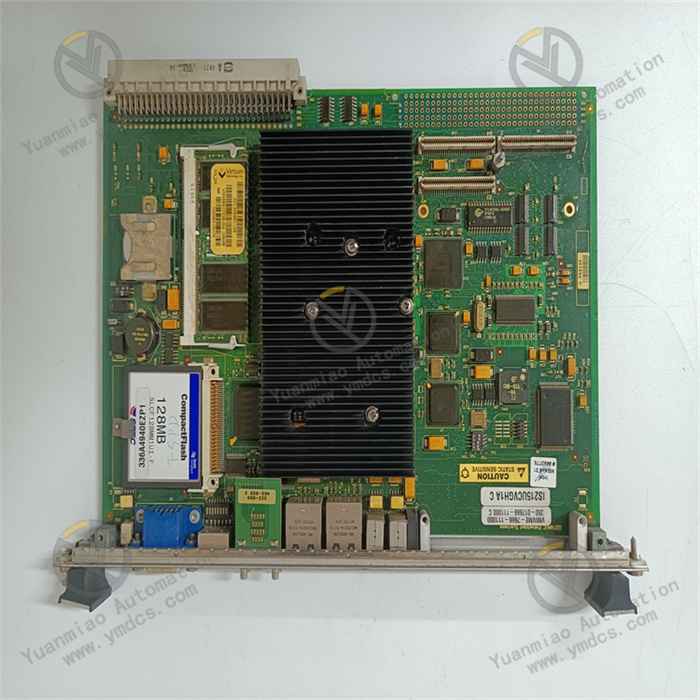
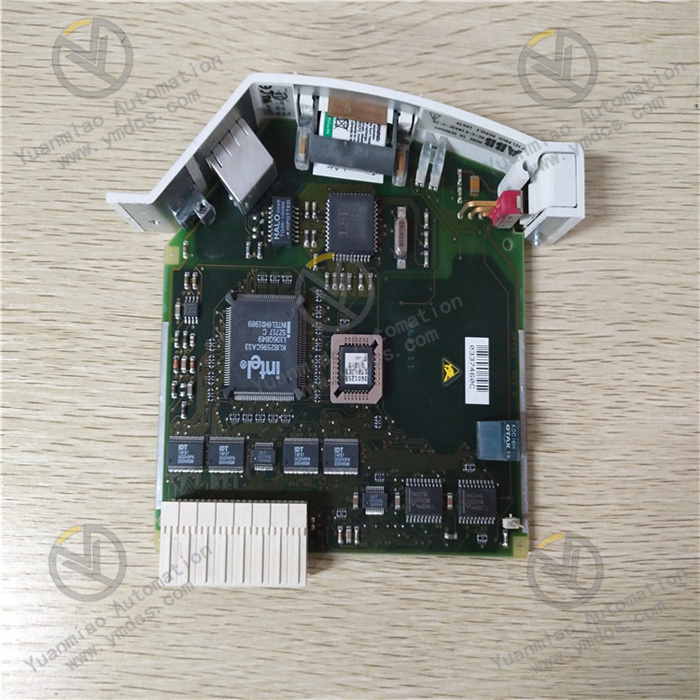
The IS200HSLAH6A board adopts GE original industrial-grade dedicated hardware architecture for high-speed communication. It is equipped with a high-speed serial communication processing chip, high-precision photoelectric conversion module, optical power detection unit, clock synchronization arithmetic unit, link redundancy switching module, multiple hardware protection units and full-range intelligent self-diagnosis unit. The board adopts fully isolated partition design for photoelectric signals. The communication transmission loop, power supply loop and signal processing loop are independently partitioned and isolated, fundamentally eliminating electrical crosstalk, signal attenuation, timing drift and communication bit errors from the hardware perspective. All core components have passed multi-stage electrical screening, extreme high-low temperature aging, full-load stability test and insulation withstand voltage test by the manufacturer. Optimized for high-speed, high-synchronization and high-reliability communication requirements of turbine control systems, it features large transmission throughput, high timing precision, strong link stability and no performance degradation after long-term operation. It can independently complete the whole process of system high-speed data interaction, link management and fault protection without external expansion devices.
4.2 Structural Design Advantages
The board adopts standard embedded plate structure of GE IS200 series with compact layout and small cabinet footprint, perfectly fitting the slot-type installation system of Mark VI/VIe system racks. With industrial reinforced overall design and fixed locking of core devices, it can effectively prevent component loosening, poor fiber contact and communication interruption caused by long-term high-frequency vibration of gas turbines and steam turbines. The circuit board is fully coated with military-grade three-proof protective coating, featuring outstanding dust-proof, moisture-proof, anti-corrosion, anti-oxidation, anti high-low temperature aging and strong anti-electromagnetic interference performance. It can effectively resist erosion from harsh environments such as high-temperature heat accumulation, humid condensation, dust accumulation and high-frequency electromagnetic radiation in power station cabinets, thoroughly solving common defects of ordinary communication boards such as rapid optical power attenuation, unstable communication, susceptibility to interference and aging failure. The standardized pluggable installation structure is easy to assemble and disassemble, firmly fixed, anti-seismic and anti-loosening, adapting to long-term continuous operation of units. On-board status indicators can intuitively reflect board operation, link conditions, data transmission and fault alarm information, facilitating rapid inspection and anomaly localization by O&M personnel and greatly improving the operation and maintenance efficiency of turbine control systems. The original standardized universal design supports non-destructive replacement and upgrading without modifying system wiring and communication logic, effectively reducing unit technical renovation and shutdown maintenance costs.
5. Working Principle
The IS200HSLAH6A high-speed serial link interface module adopts a full closed-loop high-speed communication mechanism: photoelectric signal reception → high-speed data parsing → clock synchronization calibration → multi-node data distribution → command packet transmission → real-time link monitoring → fault redundancy switching → working condition self-diagnosis upload. It realizes full-domain high-precision, low-latency and highly reliable data interaction and timing synchronization of Mark VI/VIe control systems.
During unit operation, the module receives field working condition data collected by various I/O boards and remote substations in real time through fiber links. The high-precision photoelectric conversion unit converts optical signals into electrical signals, and the core communication chip completes data decoding, verification and filtering to eliminate transmission interference and error code data. Accurate timing calibration is carried out combined with the global system clock signal to ensure unified timing of all measurement point data and control commands across the whole network. Then, according to system communication logic, the control commands, regulation parameters and interlock instructions issued by the main controller are rapidly distributed to each functional board. Meanwhile, field collected working condition data and equipment status are uploaded to the main processor and upper monitoring platform in real time, providing data interaction support for system closed-loop control.
The module continuously monitors optical power of fiber links, data transceiving status, communication timing deviation, hardware operating temperature and power supply conditions. It dynamically and adaptively calibrates communication parameters to offset communication deviation induced by environment, working condition fluctuation and equipment aging. In case of fiber breakage, optical power attenuation, link interference, data packet loss and other faults, the redundancy switching mechanism is triggered immediately to seamlessly switch to the standby link and guarantee uninterrupted communication. Meanwhile, hardware protection and fault alarms are activated, fault codes and link working conditions are uploaded in real time to cooperate with the upper system for fault tracing and hidden danger troubleshooting. The full-time intelligent self-check mechanism can detect latent communication faults in real time to fully ensure stable communication links, accurate timing and reliable interaction of turbine control systems.
6. Application Scenarios
6.1 Core High-speed Communication Support for Turbine Control Systems
Widely applied in GE Mark VI/VIe gas turbine and steam turbine control systems of thermal power and combined-cycle power plants. As the core communication hub of the whole system, it is fully responsible for high-speed data interaction and timing synchronization between the main control unit, various I/O modules, excitation systems, remote substations and upper platforms. It guarantees real-time and accurate operation of core logic including unit speed regulation, load control, valve position servo regulation, protective interlock and grid connection control. It avoids unit working condition fluctuation, regulation overshoot and false protection actions caused by communication delay and asynchronous data. It is an indispensable core communication hardware for control systems of large power units.
6.2 Redundancy Upgrading and Transformation of Control System Communication Links
Suitable for redundancy upgrading scenarios of legacy single-link communication systems. It can be newly added or replaced with dual-HSLA board redundant communication architecture to achieve zero-fault-tolerance and zero-interruption protection for communication links. Without modifying rack structure and system wiring, it can greatly improve communication stability and fault tolerance of turbine control systems, thoroughly eliminating risks of system communication paralysis and unit runaway caused by single-link faults. It meets high-standard communication requirements for uninterrupted stable operation of key power units and satisfies intelligent and high-reliability O&M upgrading demands of power plant control systems.
6.3 Communication Stability Optimization under Harsh Working Conditions
Aiming at harsh working conditions in power stations such as strong electromagnetic interference, high-frequency unit vibration, large cabinet temperature difference, dust and humidity, it leverages core advantages including all-fiber photoelectric isolation, high anti-interference, wide temperature adaptation and redundancy fault tolerance. It effectively solves common problems of ordinary communication boards such as susceptibility to interference, frequent flicker, fast attenuation and high failure rate. It guarantees uninterrupted and stable communication of control systems all year round and greatly reduces the frequency of unit abnormalities and shutdown maintenance caused by communication faults.
6.4 Strategic Spare Parts Reserve for Power Station Industrial Control Systems
As original dedicated high-speed serial communication board for GE Mark VI/VIe systems, IS200HSLAH6A serves as strategic maintenance spare parts of core industrial control equipment for power generation and energy heavy industry enterprises. It can rapidly handle on-site emergencies including board communication failure, link interruption, timing abnormality, hardware damage and data packet loss. It quickly restores data interaction and logic synchronization functions of the whole control system, eliminates blind spots of system communication, and ensures year-round safe and stable uninterrupted operation of large gas turbines, steam turbines and generator sets.