Description
1. Product Overview
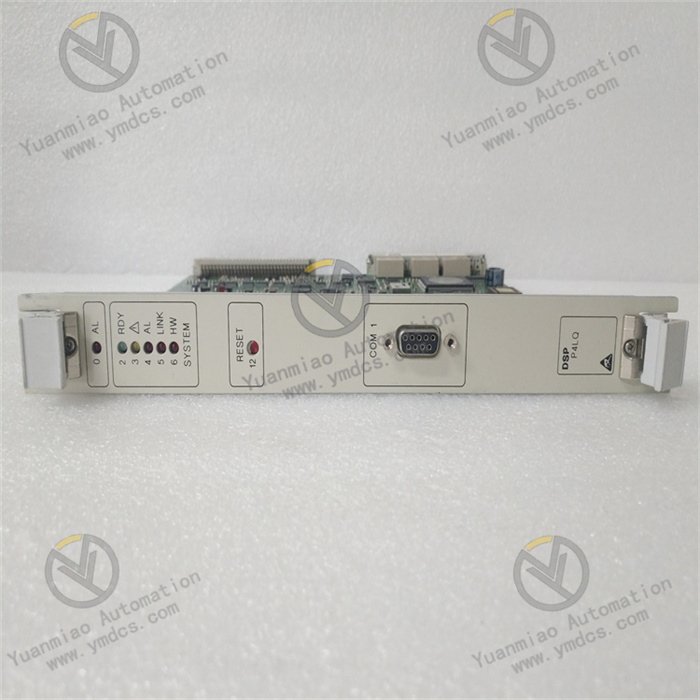
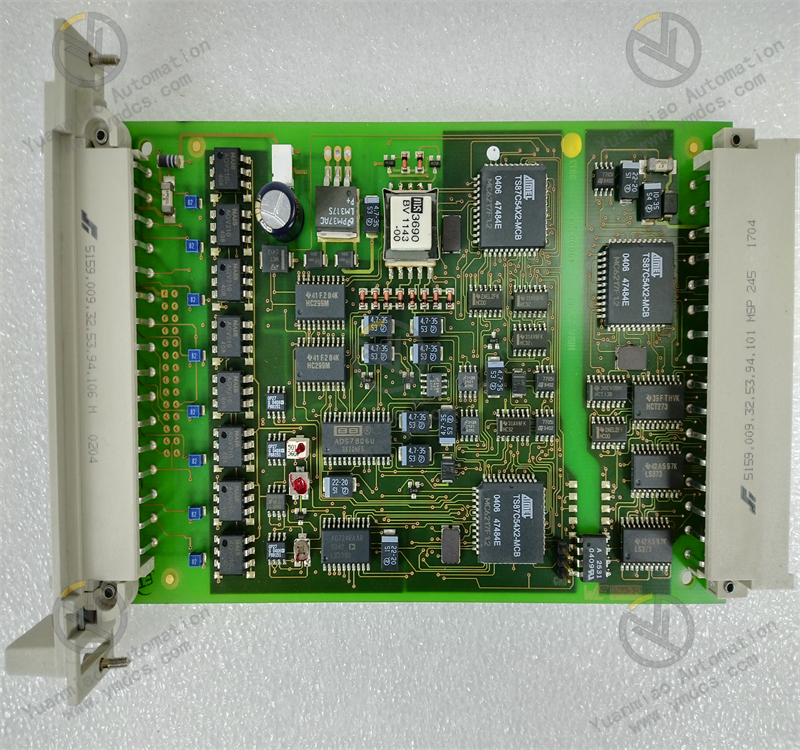
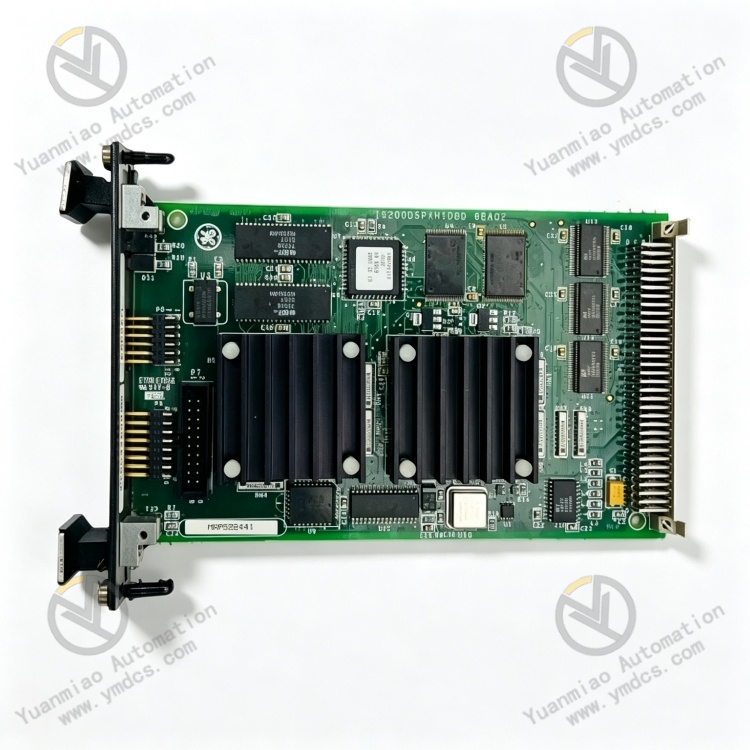
GE IS200DSPXH1D (abbreviated as DSPX) is a high‑performance Digital Signal Processor main control board under GE Speedtronic Mark VI platform. It serves as the core computation and control unit for the EX2100 / EX2100e generator‑set excitation control system, widely deployed in electronic control systems for gas‑turbine units, steam‑turbine generator sets and pumped‑storage units. Designed for high‑precision excitation regulation, bridge control and system algorithm computation in power‑plant environments, this board acts as the central computation hub of the complete excitation system, undertaking core tasks including closed‑loop regulation, logic operation, pulse firing and data exchange.
Equipped with a 60 MHz high‑speed industrial‑grade DSP chip and custom ASIC logic circuitry, it delivers high‑speed floating‑point calculation, real‑time closed‑loop regulation and multi‑task parallel processing. It accurately executes key functions such as excitation PID regulation, thyristor rectifier‑bridge firing control, voltage‑and‑current closed‑loop computation and fault discrimination. Adopting GE‑standard 3U single‑slot VME‑bus architecture, it fits the Mark VI back‑plane rack, supports multi‑bus communication including ISBus, RS485 and Industrial Ethernet, and enables coordinated networking with the full suite of EX2100 system boards. Certified for SIL2 safety level together with UL / CE industrial approvals, it offers outstanding stability, safety and anti‑interference performance for demanding continuous‑operation power‑plant conditions in thermal‑power, nuclear‑power and combined‑cycle facilities.
2. Functional Features
High‑speed DSP Core Calculation & Precision Excitation Regulation
Powered by a 60 MHz dedicated power‑oriented DSP core coupled with custom ASIC logic chips, it achieves Boolean execution speed of 0.8 ms with millisecond‑level high‑speed response. Embedded standardized excitation PID algorithms and voltage‑current double closed‑loop control logic enable real‑time precise adjustment of generator excitation voltage and excitation current. It automatically adapts to unit load fluctuations and grid‑voltage disturbances, stabilizes generator terminal voltage and reactive‑power output, and guarantees steady‑state accuracy and dynamic response performance for grid‑connected generators, satisfying high‑precision excitation‑control requirements for large‑scale units.
Rectifier‑Bridge Firing & Inner‑Loop Core Control
As the inner‑loop control core of the excitation system, the board is dedicated to calculating and managing firing pulses for the thyristor rectifier bridge. It precisely controls conduction timing and firing angles of the rectifier bridge to achieve stable output from the excitation power unit. Dynamically matching excitation‑power demands under varying‑load conditions, it effectively suppresses excitation fluctuation, abnormal circulating current and power oscillation. As a critical unit securing stable operation of the excitation power loop, it fully accommodates continuous variable‑load operation of large‑scale generating units.
Multi‑bus High‑speed Data Exchange & System Coordination
Integrated with multiple industrial communication interfaces, it supports dual 5 Mb/s ISBus channels, RS485 serial port and Industrial Ethernet. It performs high‑speed data exchange with EMIO I/O boards, EGDM ground‑fault detection modules, supervisory HMI systems and unit master controllers. Real‑time transmission of excitation parameters, status signals, fault information and command data enables coordinated computation across multiple boards, system interlocked control and remote data upload to build a complete closed‑loop excitation‑control system.
Comprehensive Fault Monitoring & Safety Protection
Dual hardware‑and‑software self‑test mechanisms execute automatic chip, bus, channel and firmware checks upon power‑on. During runtime, it continuously monitors DSP computation anomalies, bus communication loss, parameter over‑range and firing faults. Dual‑channel LED diagnostic indicators provide intuitive status feedback for board operation, fault and communication conditions. Fault codes and runtime logs are automatically stored for traceability and precise troubleshooting. Under abnormal conditions, it rapidly latches control outputs, triggers system alarms and interlock protection to mitigate risks of unit oscillation, tripping and equipment damage caused by excitation runaway, complying with SIL2 industrial‑safety requirements.
Industrial‑grade High‑reliability Environmental Adaptability
Designed for power‑plant environments with intensive electromagnetic interference, wide temperature swings and 24‑hour non‑stop operation, it complies with power‑industry EMC standards to resist grid harmonics, high‑frequency electromagnetic radiation, voltage transients and lightning‑induced surges. The board is finished with conformal coating, delivering dust‑proof, moisture‑proof, corrosion‑resistant and ageing‑resistant properties. Its broad operating temperature range suits harsh plant conditions including thermal‑power stations, nuclear facilities, offshore wind farms and pumped‑storage power stations for years of uninterrupted stable service.
3. Technical Specifications
3.1 Core Processing Parameters
Device Model: IS200DSPXH1D (DSPX Digital Signal Processor Board) Main Processor: 60 MHz high‑speed industrial DSP chip Auxiliary Logic Chip: Custom ASIC logic controller Boolean Execution Speed: 0.8 ms Safety Certification Level: SIL2 (per IEC 61508 industrial‑safety standard) Compliance Approvals: UL, CE industrial certifications
3.2 Electrical & Communication Parameters
Operating Power Supply: Standard industrial DC power, powered via Mark VI back‑plane Bus Interfaces: Dual ISBus, 5 Mb/s transmission rate Expansion Interfaces: RS485 serial port, Industrial Ethernet Control Functions: Excitation double‑closed‑loop regulation, rectifier‑bridge firing control, system logic computation Diagnostics: Dual‑channel LED status diagnostic indicators
3.3 Physical Specifications
Hardware Form Factor: 3U standard single‑slot VME board Compatible Rack: GE Mark VI VME standard back‑plane rack Dimensions: 180 mm × 140 mm × 30 mm Weight: Approx. 0.4 kg Surface Treatment: Full‑board conformal coating protection
3.4 Environmental & Protection Specifications
Operating Temperature: −40 ℃ ~ +70 ℃ Storage Temperature: −55 ℃ ~ +85 ℃ Operating Humidity: 10 %‑95 % RH (non‑condensing) Protection Features: Dust‑proof, moisture‑proof, corrosion‑resistant, EMI‑resistant Compatible Systems: Full series GE EX2100 / EX2100e excitation‑control systems, Speedtronic Mark VI control system
4. Hardware Configuration & Structural Advantages
4.1 Core Hardware Configuration
Built upon GE industrial‑grade standardized main‑control architecture, the board integrates a 60 MHz high‑precision DSP and independent ASIC logic unit for partitioned high‑speed algorithm execution and deterministic logic control, delivering high computational efficiency and precise logical response. On‑board independent bus transceivers, signal‑conditioning circuits, power regulators and fault‑diagnosis circuitry guarantee stable and accurate signal acquisition, data transmission and command output. Non‑volatile memory securely stores control firmware, excitation parameters and fault logs with data retention through power loss, supporting parameter traceback and commissioning. Two dedicated LED indicators independently reflect operational and fault states for convenient on‑site maintenance. All components adopt military‑grade temperature‑stable, ageing‑resistant materials suited for long‑term heavy‑duty continuous operation in power‑plant environments.
4.2 Structural‑design Advantages
Compact standardized 3U single‑slot form‑factor features small footprint and high integration. It fits directly into GE Mark VI VME‑standard racks, occupying only one slot and enabling dense multi‑module system configuration. Circuit zones for computation, communication, power supply and output are physically partitioned to minimise crosstalk and signal interference, substantially improving system stability.
Standard plug‑in modular construction supports fast installation, removal and spare‑part replacement with minimal re‑commissioning, reducing maintenance and repair costs. Full‑board conformal coating defends against dust, moisture, salt spray and mild corrosion. Fan‑less passive cooling eliminates moving‑component failure modes, lowering failure rates and extending service life for unattended continuous power‑plant operation.
5. Working Principle
The GE IS200DSPXH1D main‑control board implements a closed‑loop workflow: data acquisition → algorithm computation → logical judgment → command output → status feedback. Acting as the computation hub for the EX2100 excitation system, it governs core regulation across the full excitation system.
Upon power‑on, the board automatically executes hardware initialization, bus calibration, firmware loading and comprehensive self‑tests before entering real‑time operation. Via the ISBus, it collects raw measurements including generator terminal voltage, stator current, rotor excitation current, grid parameters and unit‑load signals from peripheral I/O boards. Signals are filtered, isolated and conditioned before feeding into the core DSP processing unit.
Running embedded excitation PID closed‑loop algorithms, power‑regulation routines and rectifier‑firing logic, the DSP continuously compares set‑point parameters against real‑time measured values. It dynamically calculates optimal excitation demand and rectifier‑bridge firing angles to generate precise pulse commands sent to the excitation power unit. This achieves dynamic adjustment of generator excitation voltage and excitation current, stabilizing unit reactive‑power and terminal‑voltage performance. The ASIC co‑processor handles fixed‑logic tasks including system interlocks, timing sequences and fault discrimination.
Throughout runtime, the board continuously monitors its own hardware health, bus‑communication status and system operating parameters. When computation errors, communication dropout, parameter over‑ranges or firing malfunctions are detected, it immediately latches output commands, raises fault alarms, saves fault logs and triggers coordinated system protection actions. This prevents excitation‑runaway‑induced unit oscillation, tripping and equipment damage, ensuring safe, stable and accurate performance of generator‑set excitation systems.
6. Application Scenarios
Large‑scale Thermal‑power & Nuclear‑power Generator Sets
Widely deployed within EX2100 excitation‑control systems for 300 MW‑1300 MW thermal‑power and nuclear‑power steam‑turbine units. As the core computational main‑controller, it executes excitation closed‑loop regulation, power‑stabilizing control and fault‑protection calculations. It secures grid‑connection stability and load‑regulation accuracy for large base‑load units to satisfy stringent grid‑supply‑control requirements.
Heavy‑duty Gas‑turbine Combined‑cycle Power Plants
Compatible with the full GE heavy‑duty gas‑turbine portfolio including 9FA, 9FB, 7HA and 7HB series. Leveraging high‑speed DSP processing to respond rapidly to load changes under frequent start‑stop and dynamically‑varying‑load operating profiles, it precisely modulates excitation output and suppresses unit dynamic oscillation to improve overall combined‑cycle‑plant efficiency and reliability.
Pumped‑storage & Grid Synchronous‑condenser Power Stations
Implemented in excitation‑control systems for pumped‑storage units and grid synchronous condensers. Adapted to frequent mode transitions between generation, pumping and phase‑modulation plus forward/reverse rotation, it dynamically adjusts excitation parameters to ensure stable equipment performance during grid frequency‑regulation, voltage‑regulation and reactive‑power‑compensation duties.
Offshore Renewable‑energy & Offshore‑platform Power Plants
Benefiting from conformal‑coating environmental protection and strong anti‑interference capability, it withstands high‑humidity, salt‑spray and high‑EMI offshore conditions for excitation computation and control of offshore wind‑farm generators and offshore‑oil‑platform captive power plants, lowering equipment‑failure risk in harsh marine environments.
- Large‑scale Industrial Captive‑power PlantsSuitable for gas‑fired, steam‑turbine and waste‑heat‑recovery generator sets in energy‑intensive industries such as chemical, metallurgical and building‑materials manufacturing. It precisely governs excitation operating states of on‑site generators, stabilizes power supply for continuous industrial production and fulfils power‑safety and load‑control demands of industrial facilities.