Description
1. Product Overview
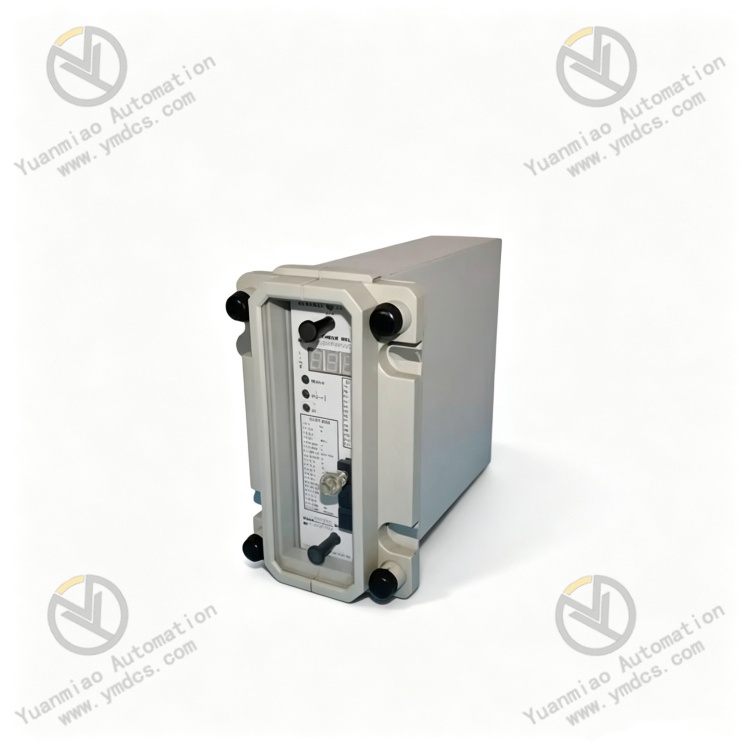
GE MLJ1005B010H00C is an industrial‑grade high‑precision digital synchro‑check relay developed by General Electric. Designed for power grid paralleling, traction power supply and energy‑system synchronous monitoring, it serves as a core safety control device for power grids, new‑energy facilities, rail transit and industrial power stations. Integrating high‑precision voltage‑phase acquisition, synchronous calculation, fault discrimination and interlock output functions, the unit monitors voltage magnitude, phase difference and frequency difference of two‑channel AC power sources in real‑time to accurately judge power‑source synchronization status, eliminating electrical hazards such as non‑synchronous closing, paralleling inrush and excessive circulating current.
Built on an industrial‑grade modular hardware architecture, the relay features dual independent signal‑acquisition channels, high electrical isolation, superior measurement accuracy and strong anti‑interference performance for harsh industrial power‑system conditions. It supports custom parameter configuration, automatic synchronization judgment and intelligent alarm protection, and is compatible with various high‑voltage switchgears, paralleling control cabinets and traction substation control systems. With stable performance and reliable protection logic, it is widely deployed in conventional power grids, wind‑solar new‑energy grid‑connection, rail‑transit power supply and industrial captive power stations. It is a critical automatic control device ensuring smooth paralleling and safe operation of power systems.
2. Functional Features
High‑precision Synchronous Monitoring and Judgment
Equipped with high‑speed AD sampling and dedicated synchronous‑calculation algorithms, it acquires voltage, frequency and phase parameters of two incoming power sources in real‑time, automatically calculates voltage difference, frequency difference and phase difference, and intelligently evaluates synchronization status against preset thresholds. Its measurement accuracy reaches ±0.1% Full‑Scale (FS), enabling detection of minor synchronous deviations. It effectively mitigates risks including paralleling inrush, equipment overload and grid fluctuation, satisfying stringent accuracy requirements for power‑system paralleling.
Dual‑channel Independent Isolated Acquisition
Two fully independent signal‑input channels support both active and passive 4‑20 mA signals. Electrical isolation between channels and from channels to ground is no less than 500 V AC, eliminating channel crosstalk, ground‑loop interference and high‑voltage intrusion. The two channels perform synchronous acquisition and independent calculation with mutual redundancy, greatly improving equipment reliability for electromagnetically harsh power‑system environments.
Comprehensive Protection and Interlock Control
Embedded with standardized power‑system synchronous‑protection logic, it provides multi‑layer protection including non‑synchronism blocking, over‑voltage‑difference blocking, over‑frequency‑difference blocking and over‑phase‑deviation blocking. When synchronization conditions are not satisfied, the closing circuit is automatically latched to prevent mis‑closing. Upon synchronous anomaly, signal loss or internal device fault, alarm signals are output and fault data are logged for traceability and status supervision, delivering all‑round safety assurance for power‑system paralleling.
Flexible Configuration and Convenient Maintenance
Voltage thresholds, frequency thresholds, phase thresholds, delay parameters, alarm logic and interlock modes are fully configurable to match different voltage levels and paralleling processes. Onboard status indication and fault prompts display real‑time synchronization status, process variables and fault codes. Critical parameters are stored in non‑volatile memory and retained after power loss without re‑commissioning. Simple calibration procedures reduce maintenance workload significantly.
Industrial‑grade High Stability and Environmental Adaptability
Designed in compliance with power‑industry standards, it delivers excellent EMC and anti‑interference performance against grid harmonics, electromagnetic radiation, voltage fluctuations and lightning‑induced surges. It operates reliably across a wide temperature range. With dust‑proof, vibration‑resistant and ageing‑resistant reinforced hardware, it supports 24‑hour non‑stop continuous operation under severe conditions in power stations, rail‑transit sites and industrial plants.
3. Technical Specifications
3.1 Acquisition and Accuracy Specifications
Input Channels: 2 independent isolated acquisition channels Input Signal Type: 4‑20 mA (compatible with active and passive signals) Measurement Accuracy: ±0.1% FS (Full Scale) Calculation Response: Millisecond‑level synchronous judgment and response Isolation Rating: ≥500 V AC between channels and from channels to ground
3.2 Synchronous Control Specifications
Monitored Variables: Voltage magnitude, system frequency, phase difference Control Logic: Synchronous closing enable, non‑synchronism blocking, over‑limit alarm Parameter Configuration: Thresholds for voltage difference, frequency difference and phase difference user‑configurable Output Types: Relay interlock output, alarm signal output Operating Mode: Automatic synchronous monitoring, continuous status evaluation
3.3 Environmental and Protection Specifications
Operating Temperature: ‑30 ℃ ~ +70 ℃ Storage Temperature: ‑40 ℃ ~ +85 ℃ Operating Humidity: 10%‑95% RH (non‑condensing) Protection Class: IP20 (for cabinet‑internal installation) EMC Performance: Compliant with power‑industry EMC anti‑interference standards
3.4 Operation and Storage Specifications
Data Storage: Non‑volatile memory; parameters and fault logs retained after power‑off Fault Recording: Automatic logging of abnormal events and synchronization failures Operating Mode: Long‑term continuous non‑stop operation Mounting: Standard DIN‑rail mounting / wall‑mount inside control cabinet
4. Hardware Configuration & Structural Advantages
4.1 Core Hardware Configuration
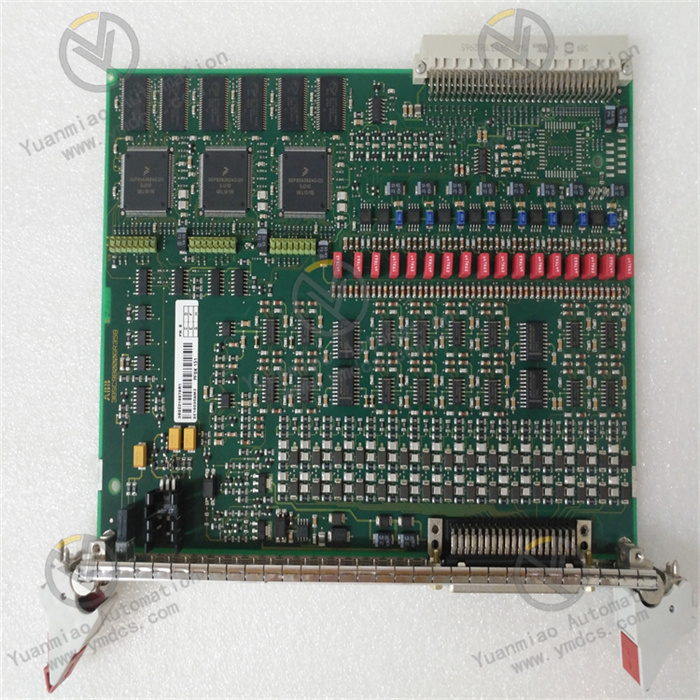
Adopting an integrated industrial modular hardware architecture, the device employs high‑precision power‑dedicated sampling ICs and high‑speed processing units to guarantee accurate synchronous‑parameter acquisition and efficient computation. Two built‑in independent signal‑conditioning and isolation modules implement filtering, voltage regulation and signal isolation, eliminating measurement deviations caused by external interference. An onboard dedicated logic‑control unit and relay output module execute rapid synchronous interlock, alarm output and blocking protection. Non‑volatile memory chips securely store configuration parameters and historical fault records for traceability and commissioning. Industrial‑grade components withstand wide temperature swings and continuous electrical stress for superior hardware reliability.
4.2 Structural Design Advantages
The compact standardized industrial form factor achieves small footprint and high integration for installation inside standard electrical cabinets and saves cabinet space. The flame‑retardant insulating enclosure provides dust‑proof, corrosion‑resistant and ageing‑resistant properties for power workshops and outdoor cabinets. Internal circuits are physically partitioned among acquisition, computation and output modules to suppress crosstalk and enhance interference immunity.
Clearly‑marked, well‑organized terminal blocks simplify wiring, installation and troubleshooting. The plug‑in modular design enables fast replacement without complex re‑commissioning, lowering installation, maintenance and replacement costs. Fan‑less silent architecture reduces potential failure points and extends service life for continuous long‑run operation.
5. Working Principle
The GE MLJ1005B010H00C digital synchro‑check relay implements a closed‑loop workflow: dual‑channel signal acquisition → parameter computation and comparison → synchronous‑logic judgment → interlock‑protection output, enabling fully automatic monitoring and safety management of power‑paralleling synchronization status.
After power‑on initialization, the unit performs hardware self‑test, parameter loading and channel calibration. Upon successful self‑test, it enters real‑time monitoring mode. Two independent acquisition channels receive signals from the grid‑side source and the incoming circuit‑breaker source. Raw voltage, frequency and phase data are sampled by high‑precision circuits, conditioned via filtering and isolation, and delivered to the core processing unit.
The main processor compares real‑time readings against user‑defined thresholds for voltage difference, frequency difference and phase difference to evaluate synchronization. When all variables are within permitted ranges, synchronization is confirmed; a closing‑enable signal is issued to unlock the closing interlock loop for valid paralleling. If any variable exceeds limits, abnormal phase shift occurs or signal loss is detected, synchronous fault is identified. Blocking protection activates immediately to lock the closing circuit and prevent mis‑closing, meanwhile triggering alarm outputs and fault logging.
Cyclic continuous monitoring and dynamic logic adjustment adapt to grid‑load variations and minor frequency trimming. The relay consistently ensures paralleling safety and stability and prevents grid surges, equipment damage and system oscillations induced by non‑synchronous closing.
6. Application Scenarios
New‑energy Grid‑connection Systems
Widely applied for grid‑paralleling of wind farms, photovoltaic plants and energy‑storage stations. It monitors synchronization between new‑energy generation side and utility grid, determines proper paralleling instant, suppresses inrush current and ensures smooth, stable connection of new‑energy units. Meets safety‑control requirements for large‑scale centralized new‑energy integration.
Rail‑transit Power‑supply Systems
Deployed for metro and light‑rail traction substation systems. It monitors voltage synchronization between traction substations and catenaries. Accurate synchronous interlock maintains continuity and stability of train traction power supply, avoiding voltage fluctuation and power interruption during supply switching and paralleling for safe and reliable rail‑transit operation.
Industrial Captive‑power‑station Systems
Used for paralleling and transfer control of factory on‑site generators and emergency power plants. It implements synchronization check and closing blocking between generator‑to‑mains and generator‑to‑generator connections, prevents non‑synchronous‑closing faults, and ensures safe switching and stable performance of industrial captive and emergency power systems.
Municipal and Utility Power‑grid Systems
Suitable for power paralleling, section‑switch closing and dual‑source transfer in urban distribution networks, industrial‑mining substations and switchgear bays. It precisely governs synchronous closing operations, improves distribution‑network stability and power‑supply reliability, and reduces grid‑maintenance fault risks.
Large‑scale Industrial Energy‑equipment Systems
Applied to dual‑source redundant power‑supply systems and waste‑heat power‑generation plants in energy‑intensive industries such as chemical, metallurgical and building‑materials manufacturing. High‑precision synchronous monitoring and interlock protection guarantee seamless transfer and safe paralleling between on‑site generation and utility supply, satisfying power‑safety requirements for non‑stop industrial production.