Description
1. Product Overview
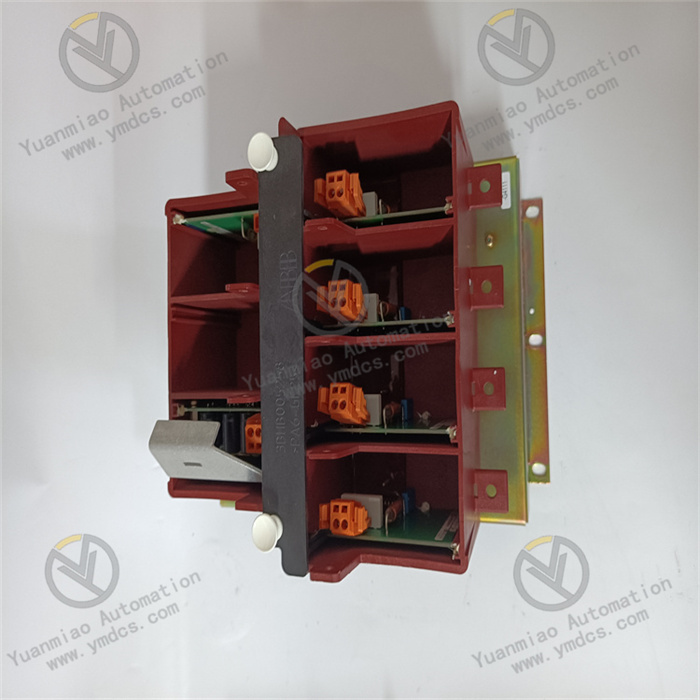
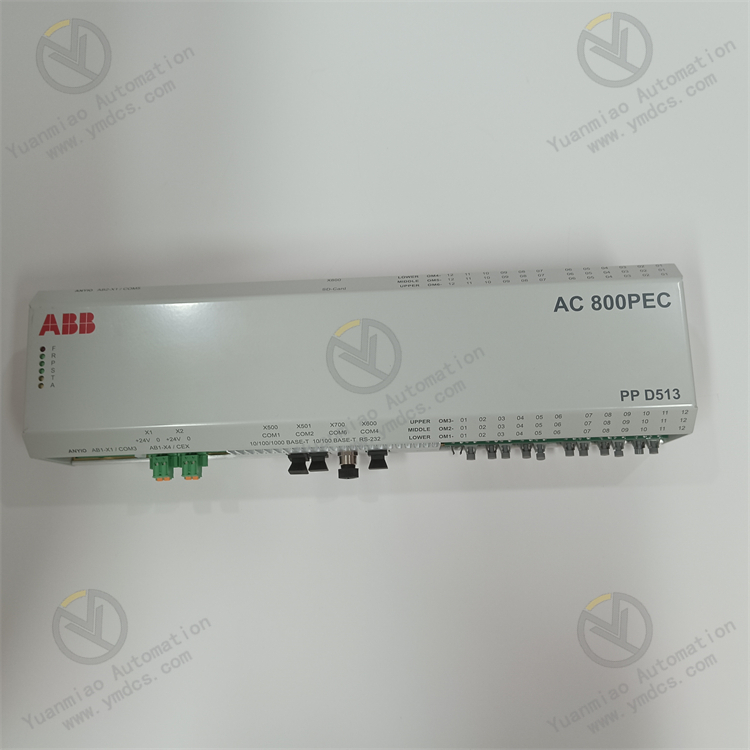
ABB PPD513 (part‑no.: 3BHE039724R2643) is a high‑precision core excitation‑control module designed by ABB for generator sets and power transformers. It serves as a critical hardware component of power excitation‑regulation systems. Integrated with multiple functions including excitation‑signal acquisition, closed‑loop regulation, pulse output and fault monitoring, this module is mainly applied for automatic voltage stabilization, reactive‑power regulation, fault protection and system stability control of synchronous‑generator excitation systems. It can be perfectly matched with excitation‑control systems of large‑and‑medium‑sized thermal‑power units, hydro‑power units, waste‑heat generation units and industrial captive power stations. Adopting mature ABB power‑control algorithms and industrial‑grade hardware architecture, the module features high regulation accuracy, fast dynamic response, stable operation and excellent anti‑interference capability. It is suitable for 24‑hour non‑stop continuous operation in the power industry and acts as a standard core component for renovation of new and legacy excitation systems, unit capacity expansion and control‑system upgrading.
2. Core Technical Parameters
2.1 Basic Specifications
- Model: PPD513
- OEM Part Number: 3BHE039724R2643
- Product Type: Excitation‑control & regulation module for generator sets
- Applicable Equipment: Synchronous generators, industrial transformers, excitation‑control systems for large‑and‑medium‑sized units
- Compliance Standards: Technical specifications for power‑industry excitation systems and IEC safety standards for power‑control equipment
2.2 Control and Electrical Parameters
- Control Accuracy: High‑precision voltage regulation with extremely small steady‑state voltage deviation, capable of stably maintaining generator terminal voltage
- Regulation Response: Fast dynamic regulation, quickly responding to power‑grid load fluctuations and voltage disturbances and suppressing system oscillation
- Working Power Supply: Compatible with standard industrial control power supplies as well as DC panels and AC stabilized power‑supply systems in power stations
- Signal Sampling: High‑speed multi‑channel analogue sampling for accurate acquisition of key parameters such as generator terminal voltage, stator current and excitation current
- Output Characteristics: Controllable excitation pulse output with stable waveform and precise triggering to guarantee smooth operation of the excitation loop
2.3 Environmental and Structural Parameters
- Operating Temperature: ‑20 ℃ ~ +70 ℃, suitable for constant‑temperature and slightly‑fluctuating working conditions in main‑control rooms and excitation cabinets of power plants
- Operating Humidity: 5%‑95% RH, non‑condensing, adapted to dry indoor operating environments of power stations
- Anti‑interference Level: High‑grade EMC‑compliant design, resistant to electromagnetic interference from strong magnetic fields, frequency converters and high‑voltage equipment inside power plants
- Structural Form: Standard board‑type modular design for slot‑mounting inside dedicated excitation cabinets, compact footprint and high hardware integration
- Protection Features: Industrial‑grade dust‑proof, anti‑static and vibration‑resistant design, suitable for long‑term vibration‑prone operation of generator units
3. Product Functions and Core Advantages
3.1 Core Product Functions
- Automatic Closed‑loop Voltage Regulation: Real‑time acquisition of generator terminal voltage; excitation output is automatically adjusted via precise PID closed‑loop algorithm to stabilize generator output voltage, eliminate voltage deviation caused by load fluctuations and guarantee power‑supply quality.
- Accurate Reactive‑power Control: Supports constant‑value regulation of generator reactive power and power factor. Reactive‑power output can be automatically adjusted according to grid‑dispatching instructions to satisfy grid‑connection specifications.
- System‑fault Monitoring and Protection: Built‑in multi‑monitoring logic for over‑excitation, under‑excitation, over‑voltage, under‑voltage, excitation abnormality and sampling failure. It triggers timely blocking and alarms upon faults so as to avoid generator shutdown accidents caused by abnormal excitation‑system operation.
- Dynamic System‑oscillation Suppression: Capable of suppressing power‑system oscillation. Excitation parameters are rapidly adjusted during grid disturbances to improve grid‑connection stability of generators and prevent loss‑of‑sync and off‑grid oscillation.
- Data Acquisition and Status Upload: Real‑time collection of excitation‑system operating parameters, equipment status and fault information. Data can be uploaded to the unit DCS and background monitoring system for remote monitoring and operation‑and‑maintenance management.
3.2 Core Product Advantages
- Superior Regulation Accuracy and Dynamic Performance: Optimized ABB‑specific excitation algorithm delivers zero steady‑state deviation and millisecond‑level dynamic response, meeting high‑precision grid‑connection requirements and greatly enhancing power‑grid stability.
- Wide Generator Compatibility: Adaptable to various synchronous generators including thermal‑power, hydro‑power, waste‑heat and biomass‑power units. It is interoperable with the full ABB excitation‑system portfolio and mainstream domestic excitation‑control equipment for both new and retrofitted systems.
- Industrial‑grade Long‑term Reliability: Manufactured with high‑specification original components and strict power‑industry workmanship. Vibration‑resistant, high‑temperature‑resistant and EMI‑immune; no parameter drift or regulation failure after prolonged operation.
- Multi‑layer Safety‑protection Mechanism: Dual hardware‑and‑software fault‑protection logic enables early identification of hidden excitation‑system risks and effectively prevents safety hazards such as over‑excitation burnout, under‑excitation instability and over‑voltage tripping.
- Modular Maintenance‑friendly Design: Standard board architecture supports hot‑swap replacement and single‑point fault repair without full‑system shutdown, significantly cutting overhaul downtime and maintenance costs.
- Seamless Integration with Intelligent Systems: Interoperable with plant‑wide DCS, SCADA and intelligent O&M platforms to satisfy unmanned operation, remote monitoring and digital‑maintenance requirements of smart power stations.
4. Typical Application Scenarios
- Thermal‑power Plants: Core control unit for excitation systems of large‑and‑medium‑sized steam‑turbine generator sets
- Hydro‑power Plants: Automatic excitation regulation and grid‑connection voltage stabilization for hydro‑turbine generators
- Industrial Captive Power Stations: Excitation control for waste‑heat and biomass‑power generators in steel‑making, chemical‑industry and park‑based power plants
- Renewable‑energy Supporting Power Stations: Excitation‑voltage‑stabilization systems for generators matched with distributed‑energy and energy‑storage projects
- Power‑system Renovation Projects: Upgrading of legacy generator excitation systems, faulty‑module replacement and control‑accuracy‑optimization retrofits
- Grid‑connected Generator Units: All grid‑tied generators requiring high‑precision voltage stabilization, reactive‑power regulation and stable grid‑synchronization
5. Installation, Operation and Maintenance Guidelines
- The module shall be installed in the dedicated slot of an excitation cabinet. Power must be fully cut‑off before installation. Clean dust inside the slot, insert the board smoothly and fasten the fixing screws to prevent poor contact caused by vibration‑induced loosening during operation.
- Complete wiring strictly in accordance with excitation‑system drawings. Distinguish sampling‑signal loops, pulse‑output loops and power‑supply loops. Avoid mis‑wiring, loose connections and short‑circuits which may lead to abnormal sampling or failed excitation regulation.
- Mount the equipment inside a well‑ventilated excitation cabinet kept dry, dust‑free and free of corrosive gases to prevent over‑heating and condensation‑induced faults and ensure long‑term stable board‑card performance.
- Use shielded signal cables with proper single‑point earthing. Route signal wires away from high‑voltage power cables to reduce electromagnetic interference affecting sampling accuracy and excitation‑pulse output.
- Carry out static commissioning, dynamic no‑load tests and grid‑connected load tests before generator commissioning. Calibrate voltage and reactive‑power regulation parameters to ensure regulation logic matches generator characteristics.
- Check module operating status, sampled parameters and fault logs periodically during routine maintenance. Timely eliminate hidden risks such as excitation fluctuation and parameter offset and calibrate regulation accuracy at regular intervals.
- Faulty modules must be replaced with original spare parts of the identical model. Re‑commission and re‑tune parameters after replacement to guarantee consistent overall excitation‑system regulation performance and stable generator operation.