Description
1. Product Overview
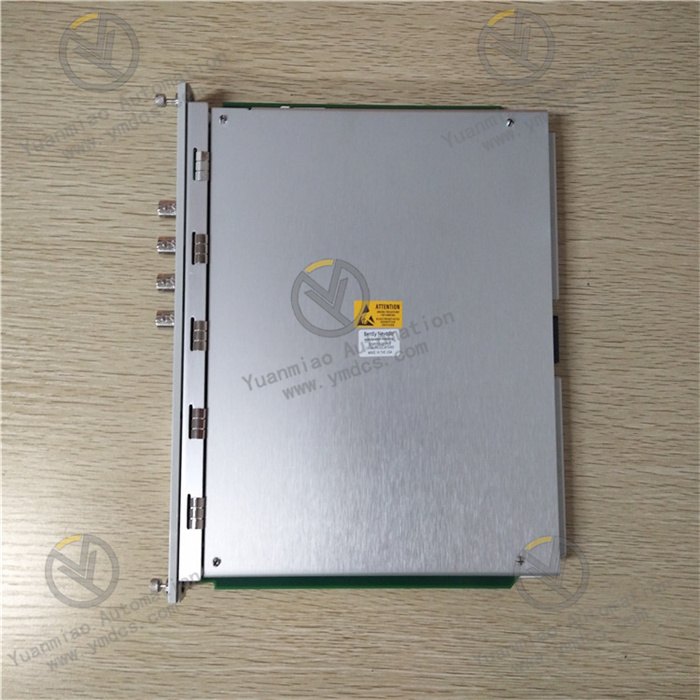
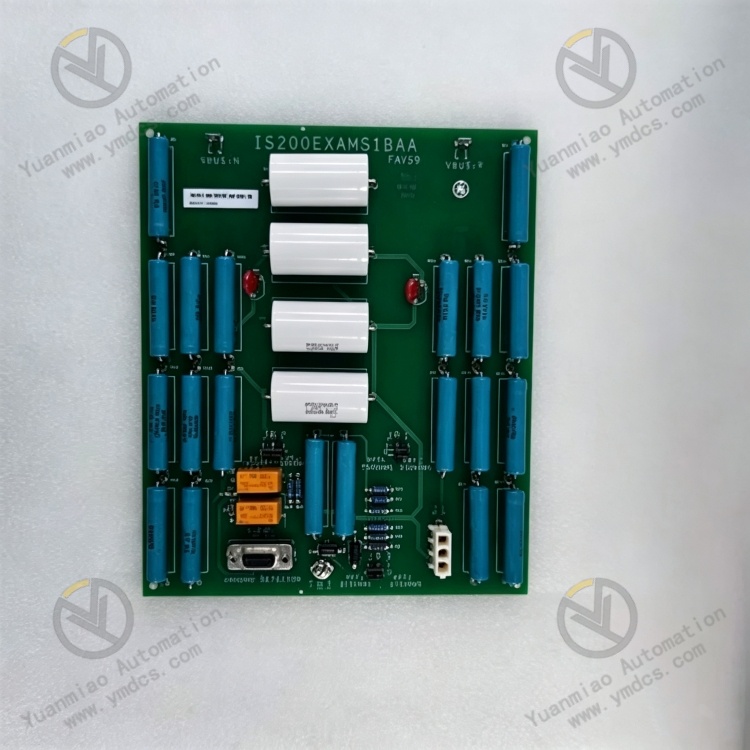
IS200EXAMG1BCB is an exciter‑attenuator board developed by General Electric (GE) exclusively for the EX2100 excitation system. As one of the core signal‑processing modules supporting the GE Mark VI gas‑turbine and steam‑turbine control system, it is engineered for closed‑loop excitation regulation of generator units.
Serving as a critical signal‑conversion and isolation component inside the excitation ground‑fault detection system, this board mainly undertakes low‑frequency signal acquisition, precision attenuation, voltage conversion and signal transmission for the excitation loop. It accurately processes weak analogue signals output by the exciter ground‑detection module and supplies standard, stable and high‑precision feedback data to the main control unit. Built‑in industrial‑grade high‑voltage‑isolation circuitry, low‑temperature‑drift precision resistor networks and ruggedized PCB technology deliver strong insulation, high‑signal accuracy, low transmission latency, excellent anti‑interference performance and reliable long‑term operation. Designed to withstand harsh power‑plant conditions with high ambient temperature, heavy electromagnetic interference and non‑stop operation, the module is widely deployed in excitation‑control systems of thermal‑power and gas‑turbine generator sets. It is an essential board for precise excitation adjustment, reliable ground‑fault detection and stable grid‑connection of generator units.
2. Core Functions
Precision signal attenuation and conversion for excitation loopEquipped with high‑precision low‑drift resistor‑attenuation networks, the board accurately attenuates low‑frequency weak signals from excitation‑ground detection, converts amplitude levels and conditions waveforms. Non‑standard raw detection signals are transformed into system‑recognizable standard voltage signals with extremely low conversion error. Acquisition accuracy of excitation parameters is guaranteed at source, eliminating regulation deviations and false alarms caused by signal distortion.
High‑voltage electrical‑isolation safety protectionA 2.5 kV RMS high‑voltage‑isolation architecture physically separates the high‑voltage excitation‑detection side from the low‑voltage control circuit. It effectively blocks high‑voltage surges and noise transients that could damage the main‑control system. Galvanic separation between high‑power and low‑signal circuits protects control‑system hardware and improves unit stability while preventing breakdown and module burnout risks.
Millisecond‑level high‑speed signal transmission and responseOptimized circuitry with a streamlined signal‑processing path achieves signal‑transmission latency below 1 ms. Excitation‑ground‑state data is sampled, processed and uploaded in real‑time to rapidly respond to excitation‑condition fluctuations, matching the high‑speed closed‑loop regulation logic of the EX2100 excitation system and ensuring timely, synchronized excitation control.
High‑precision steady‑state performance with low temperature driftComponents with 0.1 % accuracy and 5 ppm/℃ temperature drift maintain signal‑output error below 0.3 % across the full operating‑temperature range. Temperature‑induced parameter drift caused by self‑heating or ambient‑temperature variation is suppressed, preserving measurement accuracy over long‑term operation and avoiding false excitation‑fault alarms and parameter offset.
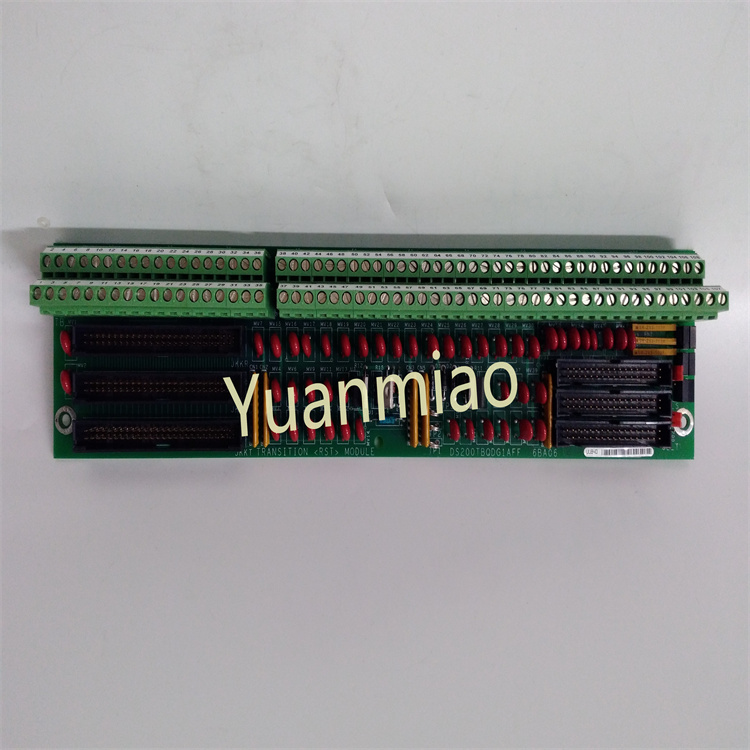
Standardized port compatibility and configurable jumpersOn‑board configuration jumpers (JP1 / JP2 / JP3), dedicated ground‑detection interfaces and standard signal ports support custom configuration to suit excitation‑detection logic for generator units of different power ratings. Standard‑definition connectors simplify wiring and enable fast installation, replacement of legacy boards, maintenance and system upgrades.
- Strong anti‑interference capability for long‑term harsh‑condition operationThe ruggedized PCB together with electromagnetic‑shielding design provides immunity against high‑frequency plant noise, voltage fluctuations and mechanical vibration. Moisture‑proof, dust‑proof and anti‑ageing characteristics support 7×24‑hour non‑stop operation, meeting requirements for continuous high‑load generator‑unit service.
3. Technical Specifications
| Parameter Item | Technical Specification |
|---|---|
| Model No. | IS200EXAMG1BCB |
| Brand | GE (General Electric, USA) |
| Product Type | Attenuator Signal‑Processing Board for EX2100 Excitation System |
| Compatible Systems | GE Mark VI, EX2100 Generator Excitation‑Control System |
| Dielectric‑Withstand Voltage | 2.5 kV RMS high‑voltage galvanic isolation |
| Signal‑Accuracy Parameters | 0.1 % accuracy, 5 ppm/℃ temperature drift, full‑range error < 0.3 % |
| Signal‑Response Speed | Transmission latency < 1 ms, millisecond real‑time signal processing |
| On‑Board Components | JP1/JP2/JP3 configuration jumpers, dedicated ground‑detection port, standard signal connectors |
| Core Functions | Excitation ground‑signal acquisition, precision attenuation conversion, high‑voltage isolation, conditioned‑signal transmission |
| Operating Temperature | 0 ℃ ~ 60 ℃, standard power‑plant operating range |
| Storage Temperature | ‑40 ℃ ~ 85 ℃ |
| Environmental Compatibility | 5 %‑95 % RH non‑condensing humidity, EMI resistance, vibration resistance |
| Operating Characteristics | High precision, low temperature drift, low latency, high‑voltage isolation, maintenance‑free, stable performance |
4. Working Principle
IS200EXAMG1BCB implements a complete control workflow: excitation‑signal acquisition → high‑voltage‑isolation protection → precision attenuation conversion → conditioned‑signal output → closed‑loop feedback transmission.
During generator‑unit operation, raw low‑frequency detection signals from the excitation‑ground‑fault‑detection module are sent to this board. High‑voltage‑isolation circuits first provide galvanic separation to protect the low‑voltage control loop from high‑voltage transients.
High‑precision low‑drift resistor networks then perform accurate attenuation, amplitude calibration and waveform filtering. Weak non‑standard input signals are converted into stable 0‑10 V analogue outputs, compensating deviations induced by temperature drift and plant disturbances. The conditioned standard‑level signals are transmitted in real‑time to the EX2100 excitation main‑controller. Based on the feedback data, the main unit judges the excitation‑loop ground‑fault status and operating parameters, dynamically adjusts excitation output, realizes high‑precision closed‑loop excitation regulation, identifies ground faults and triggers protective alarms, thus ensuring safe, stable and accurate performance of the whole excitation system.
5. System‑Architecture Compatibility
This board is an original GE dedicated accessory for the EX2100 excitation system. Natively compatible with the full GE Mark VI and EX2100 generator‑excitation‑control architecture, its configuration logic, port protocols and signal parameters are factory‑matched, enabling plug‑and‑play replacement without extra programming or hardware modification.
It seamlessly interfaces with excitation‑ground‑detection modules, excitation main‑controllers and upper‑level monitoring platforms, fully supporting the full acquisition‑conversion‑feedback signal chain without altering existing control programs, wiring standards or protection logic. Standard mechanical dimensions and mounting layout fit standard power‑plant control cabinets. Older, faulty or aged boards of the same part number can be directly swapped out, making it highly suitable for maintenance, system retrofits, fault‑repair projects and legacy‑equipment upgrades with excellent interchangeability.
6. Application Scenarios
Designed exclusively for generator‑excitation‑control systems, this board is built for demanding power‑‑plant environments with high temperature, intensive electromagnetic interference and round‑the‑clock operation. It primarily serves excitation‑regulation systems of large‑scale thermal‑power and gas‑turbine generator units. Installed within GE EX2100 excitation systems, it executes excitation ground‑signal detection, signal conversion and isolation protection, acting as a key component for accurate excitation adjustment, ground‑fault monitoring and stable grid‑connection.
Typical applications include maintenance of main‑excitation systems in power plants, control‑system retrofits on older generating units, excitation‑equipment troubleshooting and automation‑system upgrades. With advantages of high‑precision signal processing, high‑voltage safety isolation and long‑term reliable performance, it improves excitation‑regulation accuracy and fault‑detection reliability, avoiding unstable grid‑connection, excitation oscillation and unplanned shutdowns caused by abnormal signals, and securing long‑term safe, efficient and stable grid‑connected power generation.