Description
1. Product Overview
ABB UNITROL1020-0006 is a compact high-performance automatic excitation voltage regulator (AVR) for synchronous generators within the ABB UNITROL1000 series. It serves as the core unit of the new-generation brushless indirect excitation control system, designed for synchronous generators with capacities ranging from 100kVA to 80MVA. It is widely applied in thermal power, hydropower, diesel generator sets, marine electric propulsion, factory captive power plants and other power generation scenarios. Integrating automatic voltage regulation, excitation current control, power factor/reactive power regulation, system stability compensation, full-range limiting protection and intelligent networking communication, this device acts as the core control hub for voltage stabilization, current stabilization, frequency stabilization and reactive power regulation of the generator excitation system. It is also a critical intelligent equipment to guarantee stable grid connection, load adaptability and power grid condition compatibility of generator sets.
Complying strictly with ABB design specifications for power excitation equipment and international IEEE & IEC power standards, this product has been verified by over 20,000 global field installations. It has passed rigorous tests including high/low temperature aging, full-load durability, grid disturbance impact and electromagnetic compatibility. It can operate continuously 24/7 for generator sets under harsh power conditions featuring frequent load fluctuations, grid fault disturbances and complex electromagnetic interference. Equipped with a dedicated excitation control chip and standardized excitation algorithms, it supports Power System Stabilizer (PSS), automatic synchronizing, reactive power sharing and multi-mode regulation switching. It features high regulation accuracy, fast response speed, strong grid-connection stability, high fault tolerance, no long-term parameter drift and convenient maintenance. It is extensively used for complete excitation system packages of newly-built generator sets, technical renovation and upgrading of legacy UNITROL-series excitation devices, replacement of faulty excitation control units, and strategic spare parts stock for power generation enterprises. It comprehensively ensures stable generator terminal voltage, balanced reactive power distribution, reliable grid-connected operation and precise fault protection, and prevents issues such as voltage oscillation, generator instability, off-grid disconnection, equipment damage and generation shutdown caused by abnormal excitation.
2. Functional Features
2.1 Multi-mode Precision Excitation Regulation for Full Operating Conditions
It incorporates multiple standardized excitation regulation modes, including four core control logics: AVR automatic voltage regulation, FCR constant excitation current regulation, PF power factor regulation and VAR reactive power regulation. Control modes can be switched automatically or manually according to unit operating conditions, grid-connection requirements and load status. The AVR mode achieves high-precision stabilization of generator terminal voltage and effectively suppresses voltage deviation caused by grid fluctuations and load changes. The FCR mode maintains constant excitation current for steady excitation operation of the unit. The PF/VAR modes precisely control the reactive power output of the generator to realize power grid reactive power balance. Co-computation of multiple algorithms perfectly adapts to full operating scenarios including isolated island operation of single unit, grid-connected operation of multiple units, continuous power generation with variable loads and start-stop transition conditions, ensuring stable power generation quality of the generator set.
2.2 Built-in PSS Power Stability Compensation to Suppress Low-frequency Grid Oscillation
It is factory-fitted with a Power System Stabilizer complying with IEEE 421.5 standard and supports multiple stability algorithms including PSS2A/2B/2C. It can accurately identify and suppress potential risks of low-frequency oscillation, power fluctuation and grid-connected resonance in power systems. Through dynamic additional excitation compensation, it improves the grid-connection damping characteristics of generator sets, effectively enhancing the transient stability and dynamic anti-disturbance capability of the power grid. It solves common industry problems such as power oscillation, minor voltage fluctuation and insufficient system damping after generator grid connection, and greatly improves the operational stability of multi-unit clustered grid-connected systems under heavy loads and long transmission lines.
2.3 Full-range Limiting and Protection Mechanism for Safe and Controllable Unit Operation
It integrates a complete set of excitation system limiting and fault protection functions, including upper/lower excitation current limits, stator current limit, V/Hz volt/hertz limit, under-excitation/over-excitation limits, reactive overload limit, Rotating Diode Monitoring (RDM) and blocking for abnormal unit conditions. It monitors excitation conditions and unit operating status in real time. For hidden hazards such as over-excitation heating, under-excitation instability, abnormal V/Hz ratio, stator overload and diode faults, it implements advance current limiting, precise blocking and graded alarms. It completely avoids major faults including generator overheating, insulation aging, loss of synchronism and off-grid, and equipment burnout induced by excitation out-of-control, building a comprehensive safety protection system for excitation.
2.4 Intelligent Automatic Synchronizing and Reactive Power Sharing with Excellent Grid-connection Performance
It is equipped with high-precision automatic synchronizing function, which accurately matches amplitude, calibrates phase and synchronizes frequency between generator terminal voltage and grid voltage to achieve smooth grid connection without impact, greatly reducing damage to generator sets and power grids caused by inrush current during grid connection. It supports multi-unit reactive load sharing based on RS485 bus. When multiple units run in parallel, reactive loads can be automatically and evenly distributed to prevent single unit reactive overload, uneven load and unbalanced operation, ensuring balanced conditions and stable operation of multi-unit clustered power generation systems.
2.5 Multi-protocol High-speed Communication Networking for Intelligent O&M
It natively integrates industrial Ethernet, USB and RS485 multi-communication interfaces and supports mainstream MODBUS TCP power communication protocol. It can seamlessly connect with power station background monitoring systems, SCADA systems, remote dispatching platforms and local debugging terminals. It supports remote parameter setting, real-time uploading of operating data, active push of fault codes, tracing of historical operating conditions and remote status monitoring. With the dedicated ABB CMT1000 commissioning software, local parameter configuration, condition commissioning, waveform analysis and fault diagnosis can be completed. It fully meets the digital, visualized and remote operation & maintenance requirements of smart power stations and significantly cuts manual commissioning and inspection costs.
2.6 Modular Configurable I/O with High Flexibility for Working Condition Adaptation
The device is equipped with freely configurable analog and digital input & output interfaces. Users can customize I/O functions according to generator capacity, process requirements and control logic, flexibly adapting to synchronous generator sets of different models, capacities and wiring modes. The modular I/O architecture features strong compatibility and convenient expansion. It can quickly adapt to renovation, condition upgrading and function expansion of new and old units. System function iteration can be realized without replacing the main equipment, suitable for technical upgrading of power generation equipment in multiple scenarios.
3. Technical Parameters
3.1 Core Adaptation Parameters
Model: UNITROL1020-0006 Brand: ABB Series: UNITROL1000 Compact Generator Excitation Control Series Type: Brushless Excitation Automatic Voltage Regulation Control Unit (AVR) for Synchronous Generators Applicable Generators: 100kVA~80MVA synchronous generators, hydroelectric generating sets, steam turbine generating sets, diesel generator sets Applicable Scenarios: Captive power plants, thermal power generation, hydropower generation, marine power systems, industrial backup power generation systems Core Functions: Multi-mode excitation regulation, PSS system stability control, automatic synchronizing grid connection, reactive load sharing, full-range operating condition limiting protection, intelligent communication monitoring Application Scenarios: Complete excitation system packages for new units, technical renovation and replacement of legacy excitation devices, power generation system function upgrading, strategic spare parts reserve for core power equipment
3.2 Regulation and Control Parameters
Regulation Modes: AVR voltage regulation, FCR current regulation, PF power factor regulation, VAR reactive power regulation Voltage Stabilization Accuracy: High-precision closed-loop voltage stabilization with minimal steady-state voltage deviation and excellent stability under power generation conditions Stability Function: Built-in PSS2A/2B/2C power system stability algorithm to suppress low-frequency oscillation Grid Connection Function: High-precision automatic voltage matching, phase synchronization and impact-free smooth grid connection Load Sharing Function: RS485 bus-based automatic reactive load sharing for multiple units Response Characteristics: Fast excitation regulation response, precise dynamic compensation, adaptable to instantaneous load fluctuation
3.3 Protection and Limiting Parameters
Excitation Limits: Over-excitation limit, under-excitation limit, intelligent upper & lower excitation current limiting Operating Condition Limits: V/Hz volt/hertz limit, stator current overload limit, reactive power overload limit Fault Monitoring: Rotating Diode Monitoring (RDM), excitation circuit abnormality monitoring, alarms for abnormal unit conditions Protection Logic: Fault prediction, advance current limiting, abnormal blocking, graded alarms, fault trace recording Fault Tolerance: Adaptive to load fluctuation; no mis-regulation or mis-operation under minor operating condition disturbances
3.4 Communication and Interface Parameters
Ethernet Interface: 10/100M adaptive, max. cable length: 100m USB Interface: Compatible with USB1.0/1.1/2.0, max. debugging cable length: 3m Bus Interface: RS485 bus, supports multi-unit reactive load sharing and networking communication Communication Protocol: MODBUS TCP standard power communication protocol I/O Configuration: Freely configurable analog and digital input & output interfaces for flexible function expansion Commissioning Software: Compatible with ABB dedicated excitation system commissioning & configuration software CMT1000
3.5 Electrical Performance Parameters
Input Voltage Range: 0~300V AC/DC wide-range adaptation, withstand instantaneous peak voltage of 420V Excitation Control Mode: Brushless indirect excitation control, compatible with conventional excitation unit architecture Applicable Excitation Current: 1A~400A wide-range excitation current coverage for medium and small-sized units Electrical Design: Built-in signal isolation, power supply filtering and surge suppression circuits with strong anti-interference capability Electromagnetic Compatibility: Meets the highest IEEE and IEC EMC standards for power equipment, tolerant to complex electromagnetic conditions in power stations
3.6 Environmental and Operating Condition Parameters
Operating Temperature: 0℃~+55℃, suitable for long-term continuous operation in power station cabinets Storage Temperature: -20℃~+70℃ Operating Humidity: 5%~95%RH (non-condensing) Operation Mode: Supports 24/7 full-load continuous operation all year round Environmental Resistance: Tolerant to vibration, dust, alternating temperature change, strong electromagnetic interference and grid disturbance in power stations Protection Design: Industrial dust-proof, moisture-proof, anti-oxidation protection for long-term anti-aging stable operation
4. Hardware Configuration and Structural Advantages
4.1 Core Hardware Configuration
The ABB UNITROL1020-0006 excitation voltage regulator adopts power-grade hardware architecture dedicated to the UNITROL1000 series. It is equipped with an industrial high-speed excitation main control chip, high-precision voltage & current sampling unit, PSS stability algorithm operation module, multi-mode regulation logic unit, full-range fault monitoring & protection module and multi-protocol communication processing unit. The interior adopts partition layout for operation, sampling, communication and power control zones to completely eliminate underlying problems such as circuit crosstalk, signal interference, sampling distortion and deviation of regulation logic. All core components have undergone ABB factory power-grade high-precision screening, high/low temperature extreme aging, full-load durability test and grid surge test, specially optimized for generator grid-connection fluctuation, dynamic load switching and long-term continuous power generation conditions. It boasts high regulation accuracy, fast dynamic response, strong operational stability, ultra-low failure rate and no long-term performance degradation. It can independently complete the integrated full-process functions of generator excitation regulation, grid-connection control, operating condition protection, data monitoring and intelligent networking.
4.2 Structural Design Advantages
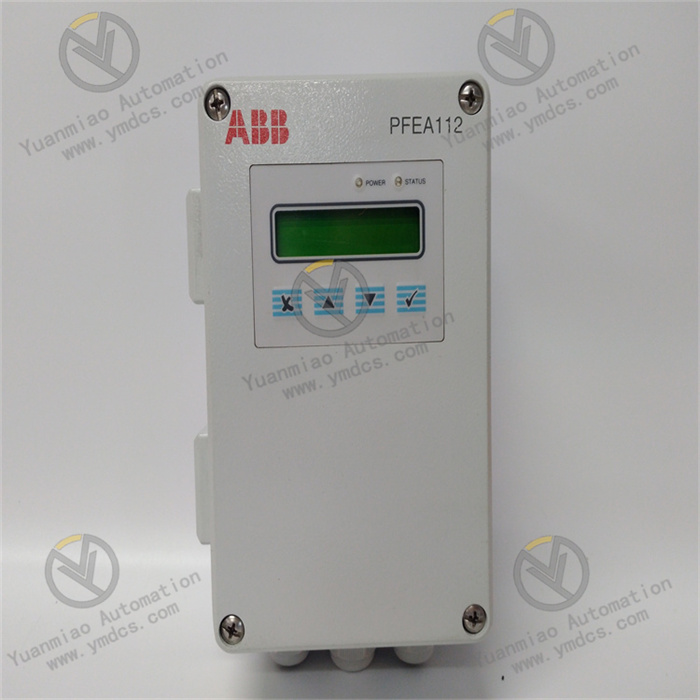
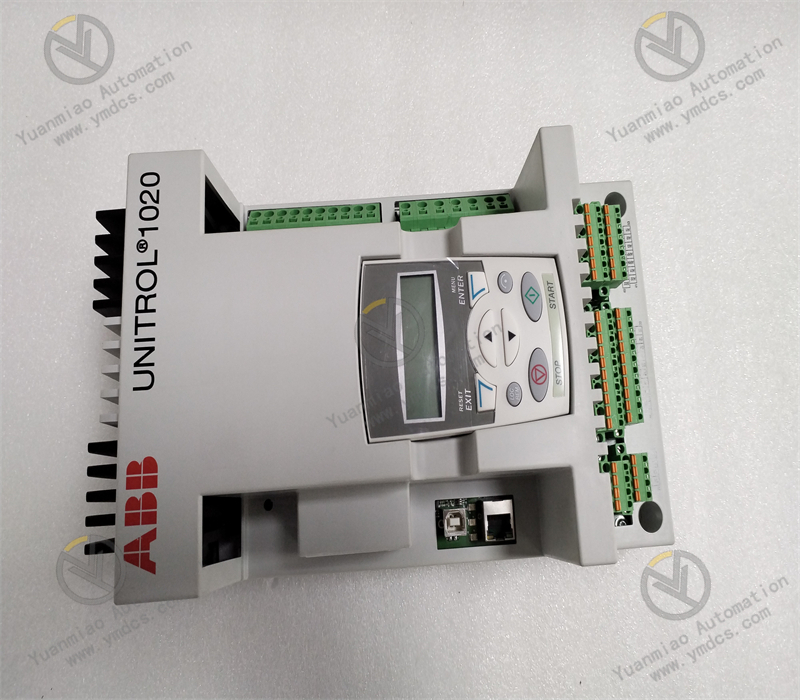
The device adopts a compact standardized modular cabinet structure with small footprint and neat layout, occupying little cabinet space. It perfectly fits the installation system of standard power station control cabinets and is compatible with cabinet layout of excitation systems in new and old power stations. The whole unit features industrial reinforced anti-seismic structural design. Internal core devices are fixed and locked for vibration resistance and anti-loosening, with a stable structure. It can effectively prevent poor component contact, abnormal signals and inaccurate regulation caused by long-term vibration of power station equipment and unit operation vibration. The whole machine adopts power-grade dust-proof, moisture-proof, anti-oxidation and anti-corrosion protection technology, which effectively resists environmental erosion including cabinet moisture accumulation, dust adsorption, alternating temperature difference and mild corrosion. It thoroughly solves common industry defects of traditional excitation devices such as parameter drift, unstable regulation, communication stuttering and frequent aging faults after long-term operation. The front panel is fitted with a high-definition human-machine interface, function soft keys and status indicator lights, which can intuitively display unit voltage, excitation current, operation mode and fault status. It supports local parameter configuration and operating condition commissioning, greatly improving daily operation & maintenance, fault troubleshooting and equipment overhaul efficiency of power stations.
5. Working Principle
The ABB UNITROL1020-0006 excitation voltage regulator adopts a fully closed-loop intelligent excitation working mechanism: power-on self-test & initialization → parameter setting loading → real-time operating condition sampling → multi-mode excitation logic operation → PSS stability compensation → excitation output regulation → grid synchronizing control → operating condition current limiting protection → data monitoring and tracing. It comprehensively manages the whole excitation operation process of synchronous generators.
After power-on, the device first completes full-range hardware self-test, program initialization and loading of excitation parameter settings. After confirming that the sampling circuit, communication link, control logic and protection unit work normally, it enters standby ready status. During generator start-up, the device collects core operating data such as generator terminal voltage, excitation current, stator current, grid frequency and reactive power at high speed in real time. It automatically switches AVR/FCR/PF/VAR regulation logic according to preset operation modes, and dynamically corrects the amplitude of excitation output via high-precision algorithms to stabilize generator terminal voltage and unit reactive power output accurately. Meanwhile, it invokes the PSS stability algorithm to compensate grid low-frequency oscillation in real time and improve grid-connection damping and stability of the generator.
During generator grid connection, the device realizes precise matching of voltage, frequency and phase to achieve impact-free smooth grid connection. When multiple units operate in parallel, reactive load sharing is realized via RS485 bus to guarantee balanced operating conditions of multiple units. During full-cycle operation, it continuously monitors unit conditions and excitation status. Once risks such as over-excitation, under-excitation, overcurrent and abnormal V/Hz ratio are triggered, current limiting, blocking and alarm protection mechanisms are activated immediately to avoid fault escalation. Meanwhile, operating data is uploaded in real time, fault logs and operating condition trace information are recorded. It supports local commissioning and remote monitoring to ensure precise, stable, safe and continuous operation of the generator excitation system.
6. Application Scenarios
6.1 Core Excitation Control for Medium and Small-sized Generator Sets
Widely applicable to various synchronous generator sets of 100kVA~80MVA, including hydropower, thermal power, diesel and gas power generation equipment. As the core control unit of excitation systems, it is fully responsible for generator voltage stabilization, excitation regulation, reactive power management, operating condition protection, stability compensation and other core tasks. It effectively solves problems such as voltage fluctuation under isolated island operation, grid-connected oscillation, unbalanced reactive power and poor load adaptability of generator sets, and guarantees stable power generation quality and reliable grid-connected operation. It is an indispensable core excitation control device for medium and small power generation equipment.
6.2 Industrial Captive Power Plants and Marine Power Systems
It is perfectly suited for factory captive power plants, building backup power generation, marine electric propulsion systems, offshore platform power supply and other independent power scenarios. For operating conditions featuring frequent load switching, simple grid structure and weak anti-disturbance capability, it improves voltage stability and operating condition fault tolerance of independent power grids through precise excitation regulation and PSS stability control. It prevents grid voltage collapse, unit instability and power supply interruption caused by sudden load changes, ensuring continuous and reliable power supply for industrial production and marine power systems.
6.3 Strategic Spare Parts Reserve for Power Systems
As a mainstream compact excitation control device in the UNITROL1000 series, ABB UNITROL1020-0006 is a scarce core maintenance spare part for medium and small power stations and industrial captive power plants. It can rapidly handle on-site emergencies such as aging and failure of excitation devices, abnormal regulation, communication faults, parameter drift and hardware damage. It quickly restores excitation control functions and normal power generation rhythm of generator sets, avoiding unit shutdown and power supply interruption accidents. It serves as a core strategic spare part for emergency repair, routine maintenance and system expansion & upgrading of power generation enterprises.