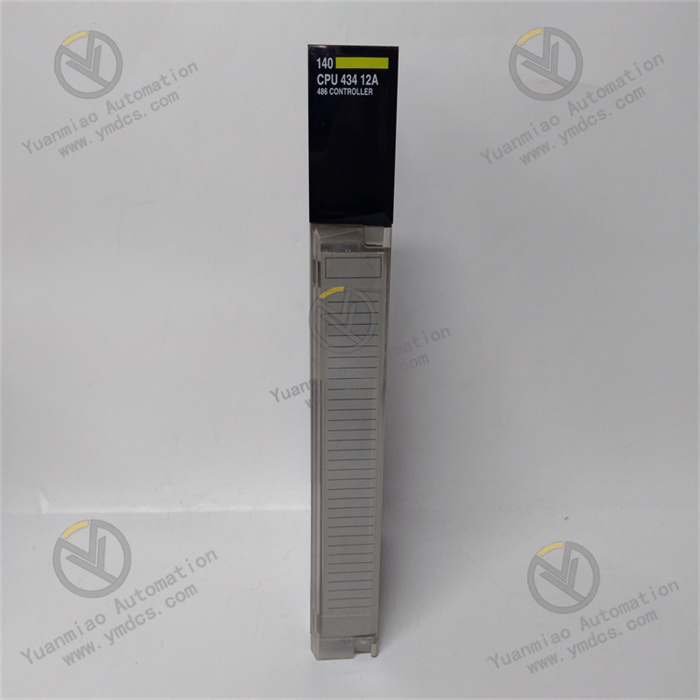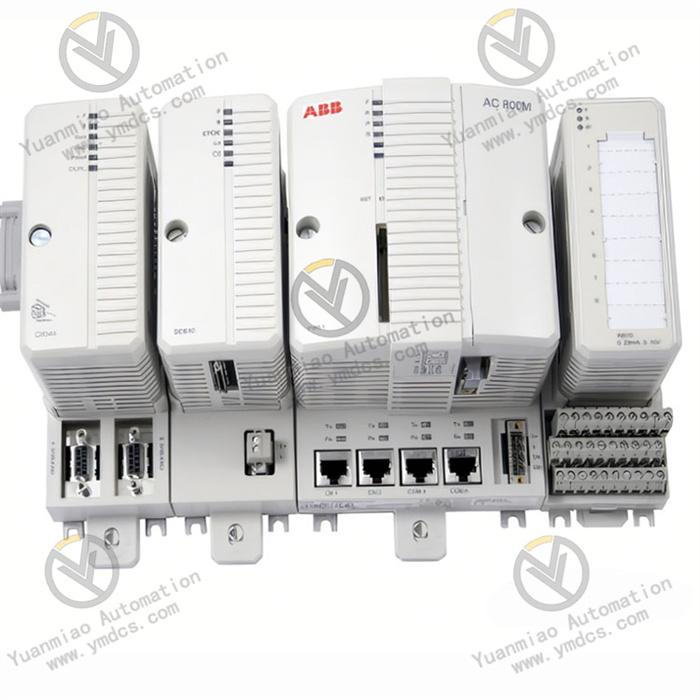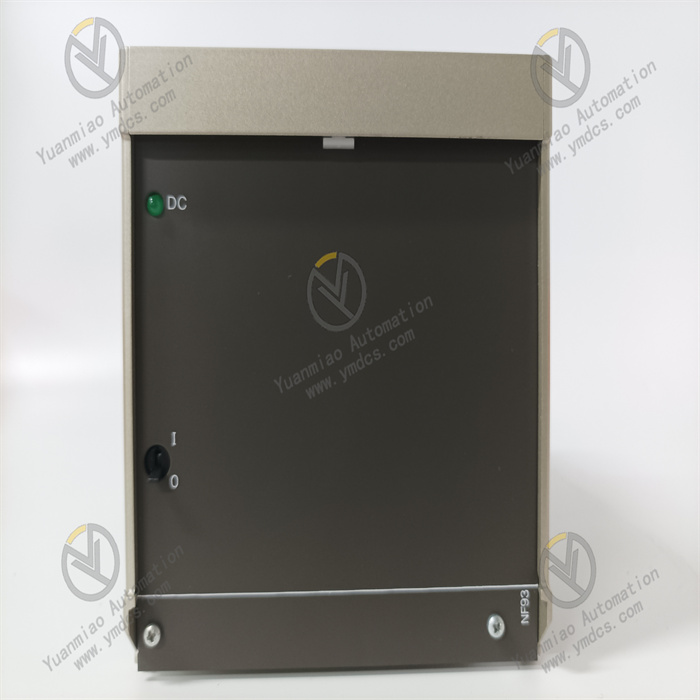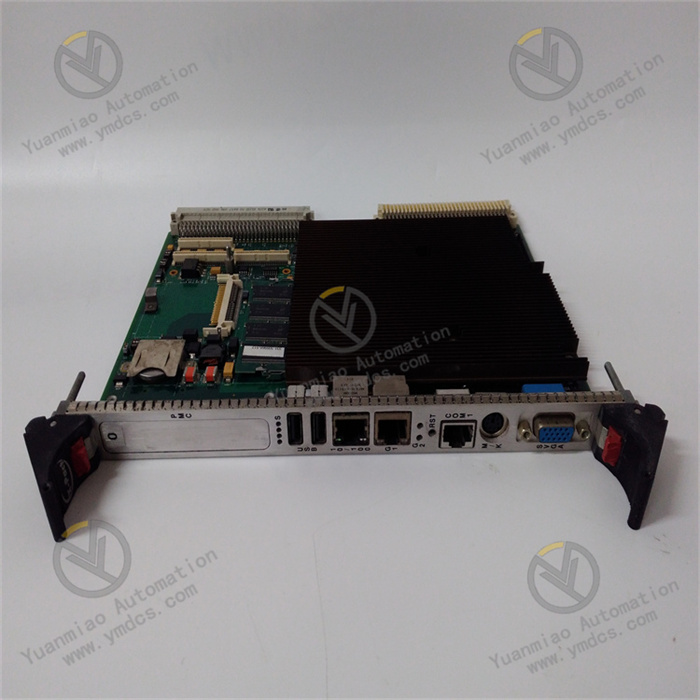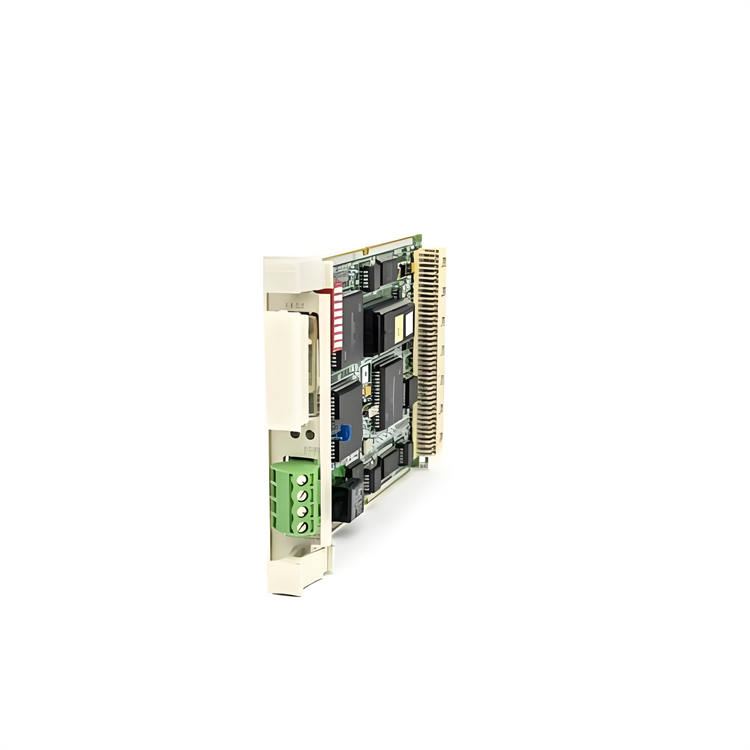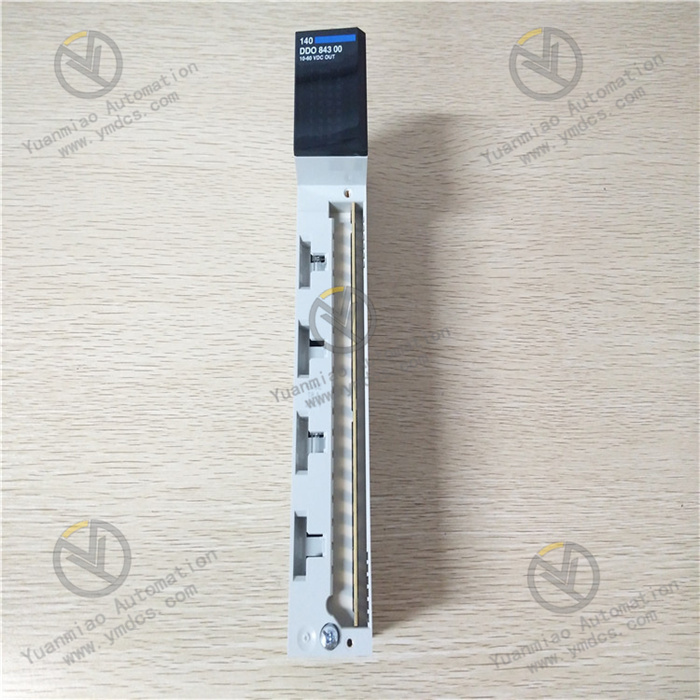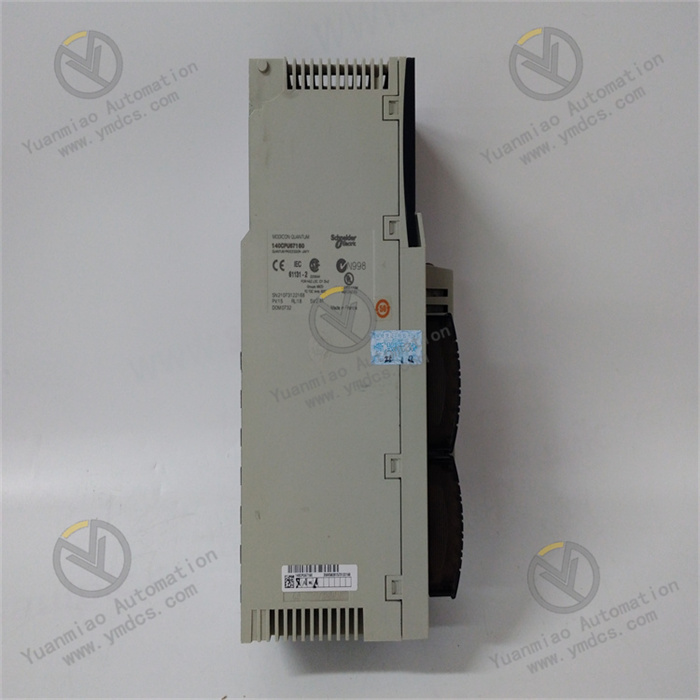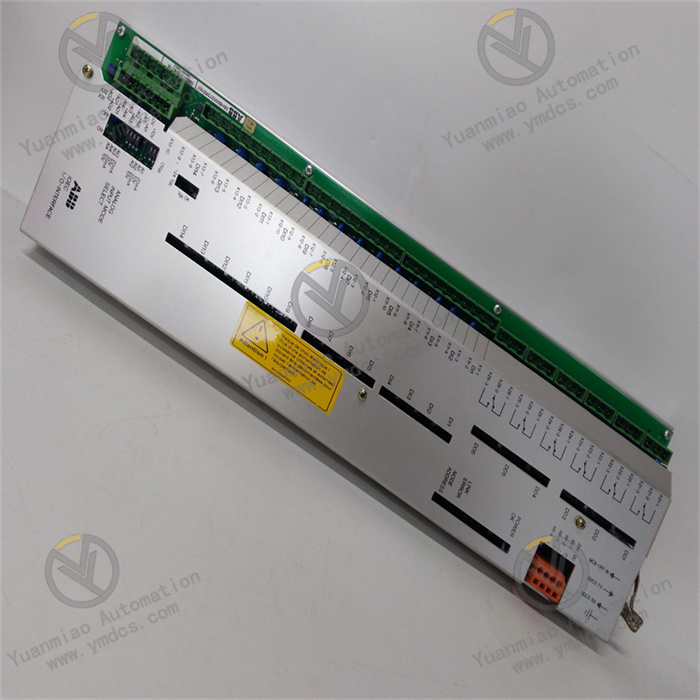
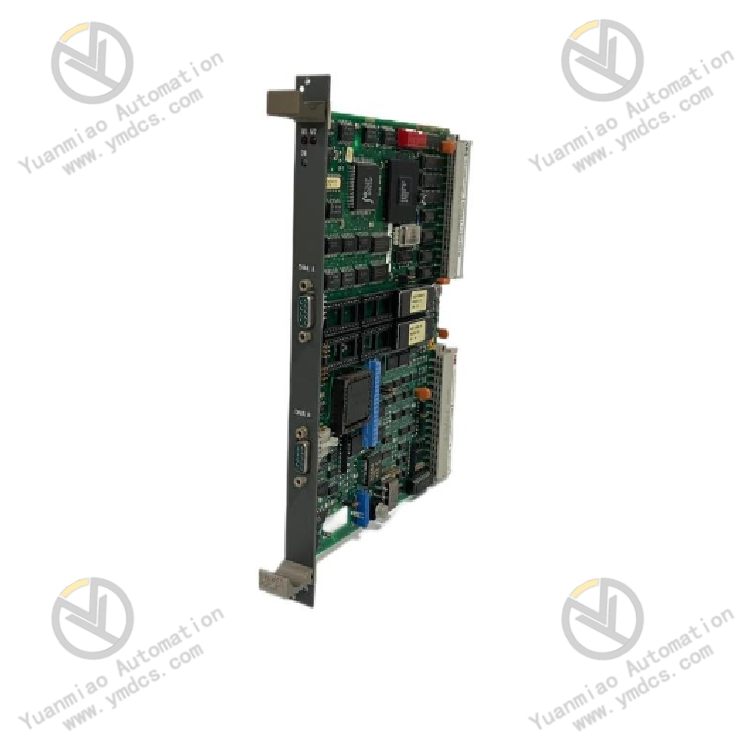
ABB PMA324BE HIEE400923R0001 Processor module

ABB PMA324BE HIEE400923R0001 Processor module

Brand: ABB

Product ID: PMA324BE HIEE400923R0001

Condition: New / used

Terms of payment: Paypal、T/T 、Western Union

Category:

Description

1. Overview


The ABB PMA324BE (part number HIEE400923R0001) is a high-end industrial redundant main processor module within ABB’s mainstream industrial control hardware portfolio. Serving as the core arithmetic and logic control unit of a full automation control system, it is extensively deployed in harsh industrial automation scenarios including power plant auxiliary control, chemical process industries, water treatment, metallurgy, oil & gas energy, and large intelligent manufacturing production lines. This module integrates all-in-one core functions: high-speed floating-point arithmetic, system logic scheduling, I/O bus orchestration, redundant fault-tolerant control, real-time data interaction, system fault diagnosis, and program storage & execution. As the central brain of industrial control systems, it coordinates all types of I/O modules, communication modules, field instruments and actuators to implement sequential logic operation, closed-loop process control, coordinated equipment management, data acquisition & processing, and data exchange with upper-level systems.


Compared with general-purpose conventional processor modules, the PMA324BE HIEE400923R0001 is custom-developed for industrial 24/7 unattended operation, complex multi-logic computation, concurrent multi-point data transmission, and strong electromagnetic interference conditions. It adopts an industrial high-performance core computing architecture, hardware-level redundant fault tolerance mechanisms, and high-speed parallel bus scheduling algorithms, delivering key merits including fast computation speed, high-precision logic processing, low system response latency, stable bus scheduling, powerful fault tolerance, and crash-free long-term operation. The module has passed a full set of industrial reliability tests: high-low temperature cycling, damp-heat endurance, mechanical vibration & shock, EMC electromagnetic compatibility, and long-term energized aging. It can withstand harsh long-term operating conditions such as high cabinet temperature, high humidity with condensation, dust accumulation, inverter harmonic noise, intensive electromagnetic radiation, and disturbance from frequent equipment startup/shutdown. Its physical dimensions, backplane bus protocols and program architecture are fully compatible with other control hardware of the same series, enabling in-situ non-destructive replacement and upgrade. It is widely used in renovation projects such as modernization of legacy ABB control systems, iteration of production line control systems, optimization of power auxiliary control systems, and technical upgrade of main control units for industrial automation equipment.


2. Technical Features


2.1 High-Performance Core Computing Enables Stable Scheduling Under Complex Conditions

Equipped with an industrial dedicated high-speed processing core, it delivers robust floating-point arithmetic and logic scheduling capability. It supports large-scale complex process programs, multi-sequence timing logic, PID closed-loop regulation, batch interlock logic, and concurrent computation for massive I/O points. It efficiently handles high-load tasks including multi-device linkage, dynamic parameter adjustment, and real-time data refresh, completely eliminating common drawbacks of generic main controllers such as computation stuttering, logic lag, disordered bus scheduling, program crash and reboot. It guarantees precise, stable, low-latency end-to-end operation of complex industrial control systems and satisfies high-density, high-complexity control requirements of large-scale process industries.


2.2 Multi-Layer Redundancy & Fault Tolerance Ensures Maximum System Safety

Embedded with a hardware-level fault-tolerant architecture and system self-inspection mechanism, it supports fault tolerance during program execution, bus communication fault tolerance, and data computation error correction. It automatically identifies and corrects faults such as calculation anomalies, data deviation, intermittent bus dropout and signal abnormality. It features comprehensive power-on self-test, real-time runtime inspection, and automatic fault locking. Single-point anomalies cannot paralyze the entire system, effectively mitigating risks of control failure and false interlock actuation caused by on-site interference, line fluctuation and abnormal parameters. It comprehensively improves stability and safety of industrial control systems and fits unattended continuous operation.


2.3 High-Speed Bus Coordination Delivers Efficient & Stable I/O Scheduling

Compatible with the high-speed backplane bus protocol of industrial control systems, it coordinates multiple digital, analog and communication expansion modules to realize millisecond-level data collection and command issuance for all system I/O points. Parallel multi-link data interaction is supported with stable bus handshaking, lossless data transmission and synchronous error-free commands. It accurately matches operating conditions with frequent field equipment action, rapid parameter fluctuation and synchronized multi-device linkage, ensuring consistent commands, unified logic and precise actuation across the whole control system.


2.4 Robust Industrial Anti-Interference Protection Offers Wide Environmental Adaptability

The module features an enclosed industrial modular structure; its PCB is fully coated with triple-conformal coating (moisture-proof, dust-proof, anti-corrosion), and multi-stage surge suppression, electrostatic protection and electromagnetic filtering circuits are integrated. Complying strictly with high-end industrial EMC standards, it effectively resists industrial disturbances including crosstalk from power cables, pulse noise from high-power equipment switching, inverter harmonics and intensive electromagnetic radiation. Hidden failures such as computational disorder, data jitter, bus disconnection and system anomalies induced by interference are avoided, suiting high-interference harsh industrial sites including power plants, chemical plants, metallurgical facilities and oil & gas facilities.


2.5 Comprehensive System Diagnosis & Convenient Operation & Maintenance

A full suite of intelligent O&M functions is integrated: hardware fault self-test, bus status monitoring, program execution diagnosis, abnormal log archiving and fault code tracing. It continuously monitors the core computing unit, bus links, power supply status and program runtime. Alarms pop up automatically upon faults, fault data is archived, and faulty points are locked to support traceability and rapid troubleshooting. Local program upload/download, parameter backup & restoration, remote online commissioning and parameter modification are also available, greatly simplifying system maintenance, commissioning and troubleshooting and cutting O&M costs.


2.6 Low-Power Long-Term Operation Delivers Excellent Maintenance-Free Performance
Built on a low-power hardware framework with low heat generation and power consumption plus uniform heat dissipation design, it experiences no thermal throttling, program exit or hardware aging failure under 24/7 long-term energized operation. All core components are original industrial-grade parts with outstanding resistance to vibration, temperature drift and aging. It operates stably with an ultra-low failure rate over extended service, prolonging maintenance cycles and reducing scheduled system downtime, fitting year-round continuous industrial operation.


PMA324BE HIEE400923R0001.png


3. Specification Parameters


3.1 Basic Parameters

  • Model: PMA324BE
  • Part Number: HIEE400923R0001
  • Manufacturer: ABB
  • Device Type: Core processor main control module for industrial automation control systems
  • Compatible Systems: ABB-series industrial automation control systems, DCS distributed control systems
  • Applicable Scenarios: Power plant auxiliary control, chemical process automation, water treatment & environmental protection, metallurgical production lines, oil & gas energy equipment, intelligent manufacturing automation systems
  • Core Functions: Core system logic operation, process program execution, I/O bus orchestration, coordinated equipment control, data acquisition & processing, fault self-diagnosis, system fault-tolerant protection, upper-level data interaction, program storage & maintenance
  • Operating Modes: Continuous unattended operation, automatic program loading, fault-tolerant operation, power-on auto-start
  • Compatibility Features: Compatible with same-series backplane buses, expansion modules and configuration programs; supports in-situ replacement and upgrade


3.2 Core Computing Performance Parameters

  • Computing Architecture: Industrial dedicated high-speed computing core supporting floating-point and complex logic operation
  • Runtime Performance: Multi-task parallel processing supporting concurrent scheduling of massive I/O points with stutter-free and lag-free computation
  • Program Storage: Large-capacity onboard solid-state storage for long-term retention of complex process programs, parameter recipes and fault logs
  • Computing Precision: High-precision industrial calculation with negligible data processing error to guarantee accurate process regulation
  • Scheduling Capability: Millisecond-level I/O response and command issuance with orderly bus scheduling and high synchronization
  • Fault Tolerance: Hardware-level data error correction and logic fault tolerance to prevent system failure triggered by single-point anomalies


3.3 Bus & Communication Parameters

  • Bus Type: Compatible with ABB proprietary high-speed backplane bus supporting multi-module parallel networking
  • Expandability: Connectable to multiple I/O modules, communication modules and function expansion modules for high system scalability
  • Communication Protocols: Compatible with standard industrial control protocols for data interconnection with upper-level configuration software, DCS systems and touch HMIs
  • Transmission Performance: High-speed parallel data exchange with stable lossless transmission, low communication latency and precise command synchronization
  • Debug Port: Supports local program flashing, parameter backup, fault log reading and remote online commissioning


3.4 Electrical Parameters

  • Rated Power Supply: Standard industrial DC24V power supply conforming to regular power architectures of industrial control systems
  • Supply Adaptability: Tolerates minor voltage fluctuations for unstable on-site industrial power supply
  • Operating Power Consumption: Low-power design with low heat generation for 24/7 continuous operation
  • Electrical Protection: Built-in multi-level protection against overvoltage, overcurrent, reverse polarity, surge and ESD static electricity
  • Insulation Performance: High insulation between internal module circuits, backplane and cabinet to eliminate leakage and crosstalk faults


3.5 Environmental Operating Parameters

  • Operating Temperature: -20℃ ~ +60℃ wide-temperature range adapting to temperature swings and enclosed high-temperature conditions inside cabinets
  • Storage Temperature: -30℃ ~ +70℃, meeting requirements for long-distance transportation and long-term offline storage
  • Operating Humidity: 5% ~ 95%RH (non-condensing); moisture-resistant to avoid short-circuit from condensation, suitable for humid industrial workshops
  • EMC Performance: Compliant with high-end industrial EMC standards, resisting harmonic interference, radio frequency radiation, pulse disturbance and ground circulating current interference
  • Mechanical Performance: Tolerates regular industrial vibration and shock with high seismic resistance for long-term fixed cabinet installation


3.6 Structural & Maintenance Parameters

  • Structure Form: Standard plug-in modular structure with compact chassis, neat layout and uniform heat dissipation
  • Mounting Method: Slot installation on backplanes of standard industrial control cabinets for convenient assembly, tight fit and secure fastening
  • Maintenance Features: Full hardware power-on self-test, bus self-inspection, automatic fault alarming, permanent parameter retention after power loss, local log storage
  • Operational Advantages: Stable computation, reliable bus communication, low failure rate, strong anti-interference, long-term maintenance-free performance suited to extended continuous system operation
  • Upgrade Features: Non-destructive in-situ replacement requiring no cabinet or wiring modification for legacy system retrofits


4. Working Principle


After power-on, the ABB PMA324BE HIEE400923R0001 processor module sequentially completes hardware initialization, core computing unit self-test, backplane bus link verification, system parameter loading, user process program loading and operating mode initialization. It enters regular main control operation after full successful self-test, undertaking core tasks including overall system computation, logic scheduling, equipment management and data interaction throughout runtime.


During operation, it centrally collects field process data from all lower I/O modules via the high-speed backplane bus, covering full-range on-site parameters such as temperature, pressure, flow rate, rotating speed, current, voltage, equipment switch status and fault signals. Following preset process programs, interlock logic and regulation algorithms, the core computing unit conducts real-time calculation, filtering calibration and logical judgment on collected data. Control commands including equipment startup/shutdown, parameter adjustment, interlock protection and valve regulation are dynamically generated and accurately issued to corresponding execution modules and field devices via the bus to realize closed-loop process control, coordinated equipment management and precise parameter tuning.


The module continuously monitors bus communication status, hardware operation, program execution and data computation throughout runtime. Upon detection of hidden risks such as abnormal data, bus fluctuation, parameter out-of-limit, equipment fault and communication anomaly, built-in fault tolerance mechanisms automatically execute data error correction, bus reconnection and logic revision. Fault alarms are triggered simultaneously with fault log retention, and interlock protection or shutdown locking actions are implemented per preset logic to prevent false equipment actuation and process incidents.


Meanwhile, the module aggregates system runtime data, process parameters, equipment status and fault information, uploading them to upper-level DCS, configuration software and touch HMIs via communication links for data visualization and remote maintenance. It also receives commands issued by upper systems including parameter modification, mode switching and remote control to complete system parameter tuning and remote management. Supported by multi-layer hardware protection, fault-tolerant algorithms and wide-temperature adaptability, 24/7 uninterrupted, stable, safe and precise operation of the whole industrial control system is guaranteed.


5. Application Scenarios


5.1 Main Control of Industrial Control Systems in Power Plants

Widely deployed in auxiliary control DCS systems of thermal power plants, hydropower plants and new energy power stations as the central main control unit. It coordinates process logic operation, equipment linkage, parameter monitoring and interlock protection for water treatment, ash handling, desulfurization & denitrification, HVAC power, power distribution auxiliary equipment and other subsystems. Leveraging strong anti-interference, high fault tolerance and stable long-term operation, it adapts to harsh power plant conditions with intensive electromagnetic interference and round-the-clock unattended operation, ensuring safe and stable operation of power auxiliary control systems.


5.2 Automation Systems for Chemical and Water Treatment Process Industries

Applied to process scenarios including chemical production plants, sewage treatment, pure water preparation and environmental governance. It undertakes core tasks of closed-loop production control, sequential multi-device linkage, precise process parameter regulation and fault interlock protection. It accommodates complex workshop conditions with high humidity, dust, corrosion and heavy interference, addressing common pain points of generic main controllers such as unstable computation, frequent faults and insufficient fault tolerance, supporting consistent, stable and standardized process operation.


5.3 Heavy Industry Automation Systems for Metallurgy and Oil & Gas

Adopted in heavy industry automation scenarios including metallurgical rolling, oil & gas gathering and mining equipment. For characteristics of scattered measuring points, volatile operating conditions, strong electromagnetic interference and frequent equipment switching, high-speed computation and stable bus scheduling enable synchronized multi-device linkage, high-frequency logic operation and real-time condition regulation to ensure efficient, safe and stable operation of heavy-duty production lines.

contact us