Description
1. Overview
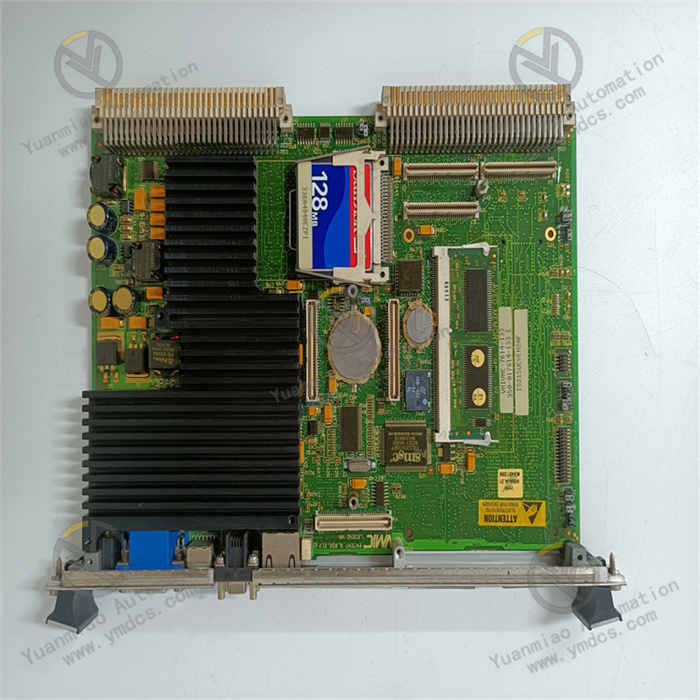
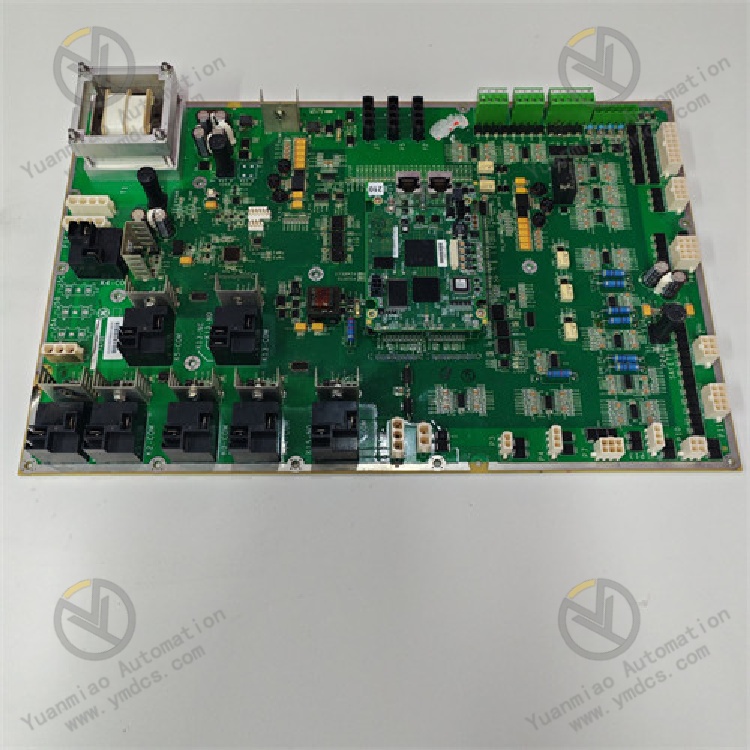
IS200WCSAS1AFB is a dedicated turbine I/O expansion module under the Speedtronic Mark VI / Mark VIe / Mark VIeS series launched by GE Vernova (formerly GE Industrial Automation), serving as a core supporting component for power plant turbine control systems.
Specially designed for the control and safety systems of gas turbine and steam turbine units, this module mainly expands input and output channels of the control system to realize expanded acquisition and output of field analog and discrete signals. It is compatible with simplex, redundant and Triple Modular Redundant (TMR) system architectures.
Equipped with independent local processing logic to effectively reduce the computing burden of the main control unit, it is compatible with multiple GE dedicated terminal boards. Featuring wide-temperature operation, high fault tolerance and powerful diagnostic functions, it is widely deployed in automatic control systems for turbine units in thermal power, cogeneration, gas-fired power generation and other power industries, acting as a critical I/O expansion unit that ensures stable, safe and continuous operation of generating units.
2.1 Multi-Architecture Compatibility & High Fault Tolerance Reliability
It natively supports three system architectures: simplex, dual redundancy and TMR triple redundancy, applicable to conventional control and SIL safety-level control systems.
A SIFT voting mechanism is adopted under redundant architectures to implement comparison and verification of multi-channel data, automatically filter abnormal signals and single-point faults, and avoid signal distortion and false triggering. It fully meets the ultra-high reliability and zero-failure operation requirements of power plant units and adapts to 24/7 non-stop continuous operation.
2.2 Independent Local Computing for Load Reduction & Efficiency Improvement
Built with an independent control logic and arithmetic unit, the module autonomously completes field signal preprocessing, logical judgment and data calibration without occupying computing resources of the main control module. It greatly eases the load on the master controller, boosts the response speed and overall efficiency of the turbine control system, and prevents system stalling and delay caused by concurrent processing of massive signals.
2.3 Comprehensive Intelligent Self-Diagnosis for Convenient Maintenance
A full-range self-diagnosis mechanism supports power-on self-test and real-time online diagnosis, which accurately detects faults including RAM error, flash memory failure, processor anomaly, communication link breakdown and channel signal abnormality.
Multiple LED status indicators display real-time module running status, faults and channel exceptions. Meanwhile, it supports Sequence of Events (SOE) recording as well as remote fault reading and traceability to quickly locate fault points and greatly simplify equipment inspection and maintenance procedures.
2.4 Wide-Temperature Industrial Design with Broad Environmental Adaptability
Adopting power station-grade rugged wide-temperature design beyond the temperature limit of general industrial control modules, it works stably within an extreme temperature range of -30℃ ~ +70℃ to fit harsh conditions of control rooms with drastic temperature fluctuation and long-term continuous operation.
It delivers excellent performance against electromagnetic interference, temperature variation and moisture, and has obtained multiple industrial certifications including UL, CSA and CE to adapt to complex electromagnetic environments in the power sector.
2.5 High Integration & Easy Installation and Maintenance
The standardized modular structure features compact size and high integration, with centralized power supply via the system backplane and standard rack mounting. It can be seamlessly matched with multiple original GE terminal boards such as TTURS1C, TRPAS1A and TRPGS1B.
Hot-swap maintenance is available, enabling module replacement and overhaul without unit shutdown to minimize production losses and guarantee continuous operation of production facilities.
3. Specification Parameters
3.1 Basic Parameters
- Model No.: IS200WCSAS1AFB
- Brand & Series: GE Vernova Speedtronic Mark VI / VIe / VIeS
- Module Type: Dedicated I/O Expansion Module for Turbines
- Applicable Scenarios: Control and safety interlock systems of gas turbines and steam turbines
- Compatible Terminal Boards: TTURS1C, TRPAS1A, TRPAS2A, TRPGS1B, TRPGS2B
3.2 Electrical & Communication Parameters
- Power Supply Mode: Centralized power supply through system backplane
- Operating Voltage: Dual voltage compatibility with 24VDC / 125VDC
- Communication Buses: Proprietary GE IONet bus and VME bus for high-speed data interaction with main control modules
- Supported Signal Types: Expanded acquisition and output of various field analog and discrete signals
- Built-in Functions: Signal preprocessing, data calibration, logic operation and fault voting
3.3 Environmental Parameters
- Operating Temperature: -30℃ ~ +70℃
- Storage Temperature: -40℃ ~ +85℃
- Operating Humidity: 5% ~ 95% RH (non-condensing)
- Ingress Protection: IP20 (for indoor control cabinet use only)
3.4 Performance & Certification Parameters
- Fault Tolerance Architecture: Simplex, Redundant and TMR Triple Redundant
- Diagnostic Functions: Power-on self-test, full-time online diagnosis, SOE event logging, remote fault tracing
- Maintenance Feature: Hot-swappable for online replacement without system shutdown
Based on the bus architecture of Mark VIe system, IS200WCSAS1AFB executes a closed-loop workflow consisting of signal expansion & acquisition, preprocessing & calculation, fault-tolerant voting, data interaction and fault protection.
After being powered by the system backplane, the module initializes and runs power-on self-test. It enters standby operation only after confirming normal hardware, communication and channel status.
During operation, the module connects to on-site sensors, switches and actuators to expand system I/O channels, and synchronously collects analog and discrete signals of turbine units including temperature, pressure, rotating speed, valve position and start-stop feedback.
The onboard local arithmetic unit filters, calibrates and preprocesses raw collected signals to eliminate clutter and abnormal data induced by on-site electromagnetic interference and reduce the calculation burden of the main controller.
Under redundant or TMR architecture, multiple identical modules exchange and compare data in real time. Valid signals are screened via the SIFT voting mechanism, and faulty channels and abnormal data are automatically isolated to ensure accuracy and consistency of signal transmission.
Subsequently, processed standardized operating condition data is uploaded to the main control unit through high-speed IONet and VME buses. Meanwhile, control commands issued by the master controller are received to realize coordinated regulation of field devices.
Throughout the whole operation cycle, the module continuously monitors hardware status, communication links and signal conditions. Once short circuit, open circuit, communication failure, hardware damage or other abnormalities are detected, LED fault alarms are triggered immediately, SOE fault timestamps are recorded and uploaded to the system, and fault-tolerant protection logic is executed to prevent unintended actions or unexpected shutdowns, thus securing stable and reliable operation of the turbine control system.
5.1 Steam Turbine Control Systems in Thermal Power Plants
Widely applied to Mark VIe main control systems of steam turbines in thermal power plants and cogeneration stations. It expands acquisition channels for key process signals such as unit temperature, pressure, vibration, rotating speed and valve limit, assists in unit load regulation, speed control and start-stop interlock protection, and ensures stable grid connection and continuous power generation of steam turbines.
5.2 Gas Turbine Power Generation Control Systems
Suitable for automatic control systems of gas turbines in gas-fired power plants and distributed energy stations. It collects signals including gas pressure, inlet air temperature, unit vibration, combustion status and equipment start-stop feedback to realize precise control of combustion adjustment, unit speed regulation and safety interlock, adapting to complex working conditions featuring frequent startup/shutdown and dynamic load regulation of gas turbine units.
5.3 Safety Instrumented Systems (SIS) for Power Plants
With SIL safety qualification and TMR fault tolerance capability, it is deployed in safety instrumented systems and emergency shutdown systems of power plant units as a core expansion unit for safety signal collection and transmission. It provides reliable signal support for safety logics such as over-limit protection, fault interlock and emergency shutdown to prevent unit safety accidents.
5.4 Automatic Control Systems for Cogeneration & Energy Stations
Used in turbine equipment control systems of cogeneration units and integrated smart energy stations to expand multi-type on-site I/O signal channels. It fits the scenarios of multi-unit coordinated control and load collaborative adjustment, guarantees efficient, stable and safe operation of units in energy stations, and improves overall energy utilization efficiency.
5.5 Industrial Drive Turbine Unit Systems for Heavy Industry
Adapted to large industrial drive gas/steam turbine units in chemical and metallurgical industries. It provides signal expansion and auxiliary control for turbine power equipment matched with compressors and pump sets, withstands harsh industrial conditions including strong electromagnetic interference and temperature fluctuation, and ensures continuous and stable operation of industrial power units.
![]()