Description
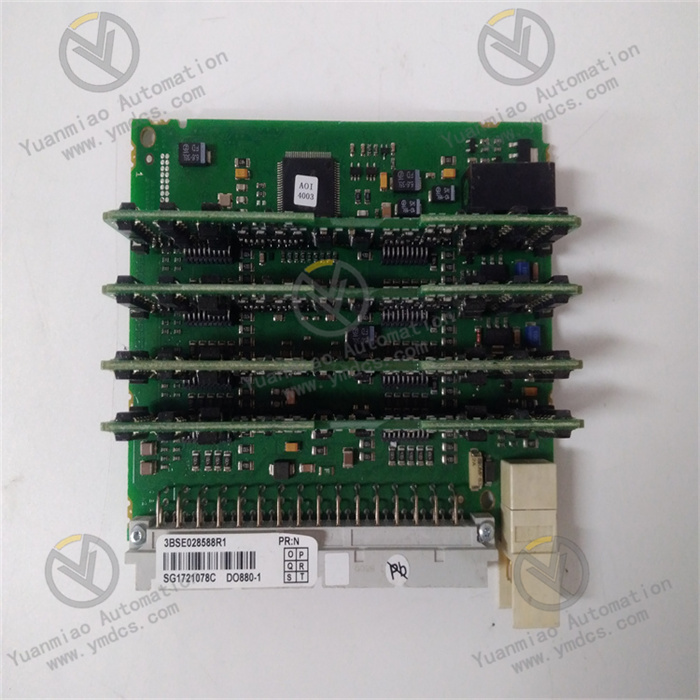
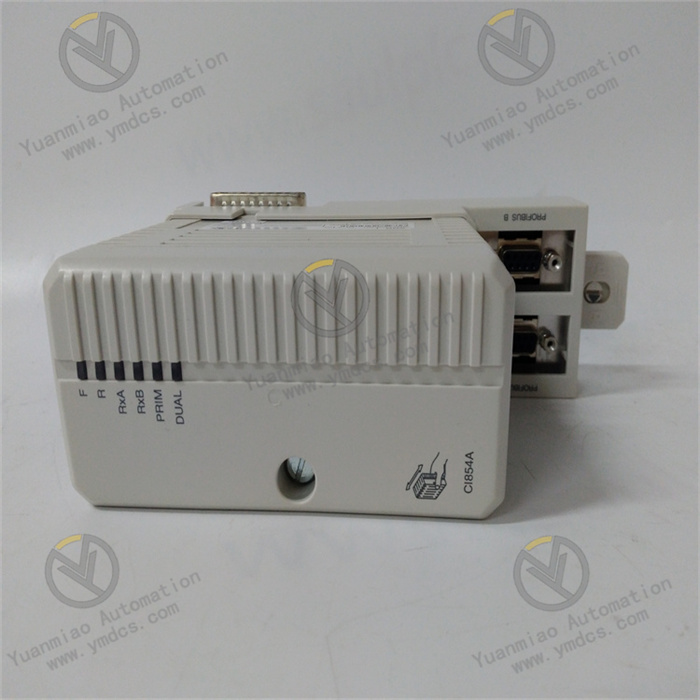
ABB CI854K01 3BSE025961R1
1. Basic Information
ABB CI854K01 (Order No.: 3BSE025961R1) is a dedicated PROFIBUS‑DP/V1 communication interface module for ABB AC800M series DCS systems, serving as a standardized high-speed bus communication unit for industrial process control systems. Designed for distributed data interaction of field buses, it features a single independent bus channel and supports high-speed cyclic data communication via PROFIBUS‑DP and acyclic parameter reading/writing & equipment diagnosis via DP‑V1. It realizes high-speed bidirectional data transmission between ABB controllers and field inverters, remote I/O, sensors, actuators and third-party bus devices, solving common industrial problems such as low communication speed, single data interaction mode, poor device compatibility and weak diagnosis capability of traditional systems.
2. Technical Specifications
2.1 Core Communication & Control Specifications
- Communication Protocol: Natively supports PROFIBUS‑DP for high-speed cyclic data interaction and PROFIBUS‑DP‑V1 for acyclic parameter access, equipment diagnosis and remote configuration, meeting dual demands of real-time control and equipment operation & maintenance.
- Communication Channel: Single independent PROFIBUS bus channel, realizing full-process bus scanning, device addressing, data transceiving and fault monitoring without channel interference or data conflict.
- Transmission Rate: Supports full-range PROFIBUS baud rates with a maximum speed of 12 Mbps. It automatically adapts to the optimal communication rate according to on-site bus distance and device quantity, balancing long-distance stability and high-speed real-time performance.
- Electrical Interface: Standard RS‑485 differential signal interface features strong common-mode interference resistance and stable signal transmission, effectively avoiding data distortion, packet loss and disconnection caused by on-site electromagnetic interference with excellent bus communication fault tolerance.
- Bus Adaptability: Compatible with standard PROFIBUS bus topologies including linear topology and repeater-expanded networking. It supports connection of various DP-protocol remote I/O, inverters, regulating valves, encoders and instrumentation devices with wide device compatibility.
- Core Functions: Supports automatic bus device scanning, station address identification, cyclic data interaction, acyclic parameter reading and writing, operating status upload and bus fault alarm, enabling distributed equipment linkage control, remote debugging and status monitoring with upper systems.
- Parameter Adjustability: Online configuration of baud rate, station address, communication timeout threshold, retry times and alarm parameters via local or upper software, adapting to diverse networking conditions with convenient commissioning and strong compatibility.
- Protection & Diagnosis: Built-in bus short-circuit protection, signal disconnection detection, bus conflict monitoring, device offline diagnosis and communication timeout protection. It locks fault status and codes in real time to accurately locate faults such as disconnection, short circuit, offline devices and signal interference, ensuring stable bus system operation.
2.2 Power & Electrical Specifications
- Power Supply: Standard 24VDC industrial power supply with wide voltage adaptability, stable power consumption and no abnormal heat generation during long-term operation. Built-in power filter and voltage stabilizer suppress grid clutter interference and ensure precise and stable operation of communication circuits.
- Electrical Isolation: Internal strong and weak current isolation design with independent partition of bus signal and power ports eliminates signal interference caused by power fluctuation and leakage, greatly improving system anti-interference performance and operational safety.
- Operational Stability: Low-power hardware design ensures no parameter drift or communication attenuation during long-term continuous operation, with stable bus connection and no frequent disconnection or reconnection, suitable for all-weather industrial continuous operation.
2.3 Physical & Structural Specifications
- Installation Mode: Standard slot mounting for ABB AC800M series racks with precise positioning and firm fixation. Excellent vibration resistance prevents loosening and poor contact, applicable to new equipment assembly and old system renovation.
- Structural Design: Compact standardized structure highly integrates bus signal processing unit, protocol decoding chip, electrical isolation circuit and status monitoring circuit. High integration saves cabinet space and adapts to dense cabinet layout.
- Material & Protection: Industrial flame-retardant shell with triple-proof coated circuit board provides excellent dustproof, moisture-proof, oil-resistant, anti-corrosion and anti-aging performance. It complies with industrial EMC standards and IEC 61000 electromagnetic compatibility specifications.
- Interface Features: Standard bus port with convenient plugging and reliable anti-loose connection avoids signal interruption caused by vibration. Clearly partitioned ports enable neat wiring and convenient on-site maintenance.
- Status Indication: Integrated LED indicators visually display power status, bus connection, data transceiving and fault alarm status, facilitating rapid equipment status identification and fault location for improved maintenance efficiency.
2.4 Environmental & Reliability Specifications
- Temperature Range: Operating temperature: -25℃~+70℃; Storage temperature: -40℃~+85℃, adapting to extreme temperature fluctuations in industrial sites.
- Humidity Range: 5%~95% non-condensing, ensuring stable operation in high-humidity environments without damp short circuit or signal abnormality.
- Operational Reliability: Supports 24-hour uninterrupted continuous operation with low failure rate and stable performance. Hot-swap maintenance avoids overall system shutdown and reduces equipment downtime.
- System Compatibility: Fully compatible with all ABB AC800M series controllers and seamlessly integrated with ABB DCS process control systems. Adaptable to mainstream PROFIBUS third-party automation equipment and new/old system bus upgrading projects.
3. Working Principle
- System Initialization & Bus Self-check: After power-on, the module completes full hardware self-check, power detection, protocol initialization and port verification. It configures station address and baud rate automatically, scans all DP slave devices on the bus, identifies device information and enters standby communication status after fault-free verification.
- Protocol Parsing & Data Reception: The module monitors PROFIBUS bus signals in real time, receives control commands and parameter configuration instructions from upper controllers, and collects operating data, status signals and fault information from field bus devices. Internal filtering and verification eliminate interference data to ensure accurate and valid communication information.
- High-speed Data Interaction & Command Forwarding: With a maximum 12 Mbps transmission speed, it executes high-speed cyclic data interaction, forwards control commands to corresponding field bus devices accurately, and uploads field operating data and status information to the ABB main controller, realizing precise linkage between the control system and distributed equipment.
- DP‑V1 Extended Function Execution: It supports acyclic data reading/writing and equipment diagnosis, enabling online reading of device parameters, fault codes and operation logs, as well as remote parameter modification, calibration and configuration update without on-site disassembly, greatly improving debugging and maintenance efficiency.
- Real-time Monitoring & Bus Fault Protection: It continuously monitors bus voltage, signal status, data transceiving and device online status. Once faults such as bus short circuit, disconnection, device offline and communication timeout are detected, it locks fault codes, triggers local and upper-system alarms, terminates abnormal data transmission instantly, and protects the bus network and field equipment from system communication paralysis.
- Online Maintenance & Performance Optimization: It supports online parameter modification, adaptive baud rate debugging, device rescanning and fault reset. Communication parameters can be optimized dynamically according to networking changes and equipment updates to ensure long-term stable and efficient bus network operation adapting to dynamic production conditions.
4. Application Scenarios
4.1 Chemical & Petrochemical Process DCS Systems
4.2 Power & Energy Automatic Control Systems
4.3 Heavy Industry Automation Lines (Metallurgy & Papermaking)
4.4 General Industrial Automation Bus Networking
4.5 Upgrading & Renovation of Legacy ABB DCS Systems