I. Basic Information
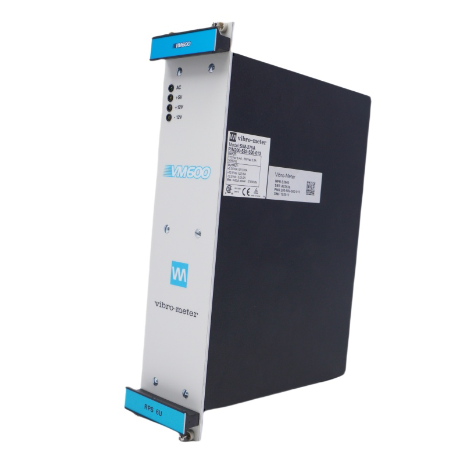
Full Model:SIM-275A / 200-582-500-013
Brand & Origin:VIBRO-METER
Product Positioning
As a dedicated sensor interface module for VIBRO-METER VM600 high-end unit vibration monitoring systems, it serves as the core front-end signal acquisition hub hardware of the entire equipment condition monitoring system. It is mainly used to adapt piezoelectric vibration sensors, speed sensors and other front-end primary elements to complete the acquisition, filtering, shaping, isolation and transmission of vibration signals for key industrial rotating equipment. Widely applied in core heavy equipment such as steam turbines, gas turbines, centrifugal compressors, large fans and pump sets, it accurately captures equipment state data such as high-frequency vibration, low-frequency jitter and abnormal amplitude fluctuation. It provides original and accurate signals for back-end system analysis, state diagnosis, over-limit alarm and interlock protection, acting as the basic core board to ensure complete unit condition monitoring and reliable protection logic. It adapts to full scenarios including new equipment commissioning, faulty replacement of old modules, monitoring point capacity expansion and system technical upgrading.
Hardware Architecture
It adopts an industrial-grade high-precision analog signal processing architecture, integrating multi-channel independent signal input loops, pre-amplification units, multi-stage active filter circuits, electrical isolation modules, signal shaping and calibration chips and hardware fault diagnosis systems. Equipped with an exclusive signal processing core, it can automatically adapt to the amplitude and frequency range of sensor signals, amplify, denoise and filter weak original vibration signals, eliminate invalid signals such as industrial electromagnetic clutter, pulse interference and baseline drift, and ensure the purity and accuracy of output signals. Adopting military-grade gold-plated PCB technology, independent partition wiring for analog and digital circuits and full-domain electromagnetic shielding structure with industrial three-proof coating, it is built with input overvoltage protection, current limiting protection and signal loop isolation units. It features high signal acquisition accuracy, low waveform distortion rate, strong anti-interference ability and no long-term parameter drift, perfectly adapting to complex electromagnetic interference conditions on heavy industrial sites.
Mounting Specification
It is embedded installed in standard racks of VM600 series systems, perfectly matching the original factory rack slot size, backplane bus contacts, signal transmission protocol and power supply architecture. The snap-on anti-loosening structure is vibration-resistant, capable of long-term withstanding load impact from unit start-stop, high-frequency equipment vibration and on-site mechanical disturbance. The front panel is equipped with status indicators to real-timely display module operation, signal input, loop fault and communication abnormality, supporting rapid on-site inspection, signal link verification and accurate fault location. The standardized compact rack design adapts to dense layout of VM600 cabinets, supporting non-destructive in-situ replacement and multi-module dense networking and capacity expansion, fully complying with VIBRO-METER original system installation, wiring and operation specifications.
Compatible Systems
Natively and exclusively compatible with the full series of VIBRO-METER VM600 mechanical condition monitoring and protection systems, it perfectly adapts to VM600 system backplane bus, signal transmission logic, data interaction protocol and overall architecture. It can seamlessly connect with back-end CPU processing modules, data communication modules and logic interlock modules to realize real-time acquisition, transmission, analysis and linkage protection of vibration signals, and can be directly put into operation without additional transfer, hardware modification or complex parameter debugging. It is fully compatible with the entire VM600 system redundant architecture, signal networking mode and upper monitoring software, adapting to new unit monitoring system construction, old system point expansion, faulty module replacement and system performance upgrading.
Product Characteristics
As an original industrial-grade high-precision signal acquisition module, it has completed full-range signal calibration, high and low temperature cycle stability test, EMC electromagnetic compatibility test, signal anti-interference test and full-load continuous operation aging test before delivery, with high hardware consistency and stable signal processing performance. It supports wide-band signal adaptation, intelligent noise reduction filtering, high-precision signal amplification and loop fault self-diagnosis, and can accurately adapt to various industrial vibration sensors. It maintains undistorted, drift-free and delay-free signals throughout operation, ensuring real-time and accurate unit vibration monitoring data. Faulty old modules with signal distortion, acquisition deviation, loop error reporting and failed anti-interference performance can be replaced in situ without damage, effectively solving problems such as unit monitoring data jitter and inaccurate measurement, and greatly improving the condition monitoring accuracy and operation safety level of key units.
II. Technical Specifications
1. Input Signal Parameters
Compatible Sensor Types: Standard adaptation to industrial piezoelectric vibration sensors and magnetoelectric speed sensors, compatible with mainstream original VM-series vibration primary elements with wide adaptability. Input Mode: Multi-channel independent isolated signal input, with independent protection for single loops without mutual interference, avoiding multi-channel signal crosstalk and baseline offset. Input Frequency Band: Covers the full frequency range of industrial unit vibration, including normal operation, minor faults and abnormal vibration conditions, capable of accurately capturing low-frequency jitter, medium-frequency vibration and high-frequency impact signals. Precise input impedance matching adapts to the output impedance of front-end sensors, eliminating signal reflection and attenuation distortion and ensuring complete acquisition of original signals.
2. Signal Processing Parameters
Signal Amplification Performance: Built-in high-precision programmable pre-amplification unit realizes linear amplification of weak original vibration signals with stable magnification, no distortion and no gain drift, adapting to signal acquisition requirements of different amplitude working conditions. Filtering Characteristics: Integrated multi-stage composite low-pass, high-pass and band-pass filter circuits automatically filter 50/60Hz power frequency interference, high-frequency electromagnetic clutter, instantaneous pulse interference and low-frequency baseline drift on industrial sites, retaining effective vibration waveform signals and greatly improving signal purity and monitoring accuracy. It features fast signal processing speed, real-time response to unit vibration changes and no data delay or stutter, meeting the timing requirements of real-time unit monitoring and fast interlock protection.
3. Isolation & Anti-Interference Parameters
Isolation Performance: Adopting single-channel independent electrical isolation design, the input signal loop, internal processing loop and output communication loop are completely isolated without crosstalk or ground loop current. Excellent insulation and voltage resistance performance thoroughly eliminates signal distortion and module damage caused by high-voltage series connection, static interference and common-mode interference. Anti-Interference Grade: Passed heavy-industry EMC electromagnetic compatibility certification, capable of resisting frequency converter interference, motor start-stop interference, high-voltage equipment electromagnetic radiation and on-site clutter disturbance, adapting to complex electromagnetic environments in petrochemical, power and metallurgical industries. Signals remain stable without data jitter or measurement deviation under harsh working conditions.
4. Power Supply Parameters
Power Supply Specification: Adapts to standard rack power supply of VM600 systems, obtaining stable DC working power through system redundant power supply modules with wide voltage adaptation range and low operating power consumption. Power Supply Stability: Built-in power stabilization and filtering loops filter power supply clutter and fluctuation, eliminating signal acquisition deviation, module restart and data interruption caused by power disturbance, ensuring 24/7 continuous and stable module operation. It adapts to both single power supply and dual redundant power supply architectures, compatible with all system power supply modes with balanced operating power consumption and low heat generation for long-term stability.
5. Environmental Operating Parameters
Operating Temperature:0℃~+60℃
Storage Temperature:-40℃~+85℃
Operating Humidity:5%~95% RH, non-condensing
The whole machine has passed authoritative industrial certifications including EMC electromagnetic compatibility, insulation voltage resistance, vibration and impact resistance, high and low temperature cycles and long-term stability, complying with industrial safety standards for heavy industry key unit monitoring systems. The three-proof coating provides reinforced protection with excellent performance of dust prevention, moisture prevention, corrosion prevention, aging resistance, vibration resistance and strong electromagnetic interference resistance. It can long-term withstand harsh working conditions such as closed high temperature, humid condensation, dust and oil pollution, continuous equipment vibration and high-frequency electromagnetic interference in control cabinets, adapting to year-round uninterrupted continuous monitoring operation of large units.
III. Key Features
1. High-Precision Signal Acquisition & Full-Band Accurate Monitoring
Relying on high-precision pre-amplification and multi-stage filtering architecture, it can collect full-band unit vibration signals completely and accurately capture latent fault signals such as minor unit vibration changes, abnormal impact and amplitude offset, solving the problems of insufficient accuracy, missing signals and waveform distortion of traditional acquisition modules. The linear amplification loop has no gain drift or waveform distortion, which can truly restore the original vibration state of equipment, provide authentic and reliable original data for unit state analysis, fault prediction and trend diagnosis, and effectively identify potential equipment faults such as rotor imbalance, bearing wear, base looseness and dynamic-static friction in advance.
2. Independent Channel Isolation & Zero Signal Crosstalk
Adopting a fully independent electrical isolation design for single channels, each signal input loop works independently with separate protection and processing, thoroughly eliminating data deviation caused by multi-channel signal crosstalk and ground loop current. It has strong anti-disturbance capability against strong electromagnetic interference from on-site frequency converters, high-voltage motors and power transmission equipment, maintaining pure and stable signals under harsh working conditions. It avoids false vibration data, monitoring jitter and system false alarm caused by interference, greatly improving the reliability and accuracy of the unit monitoring system.
3. Intelligent Fault Self-Diagnosis & Fast Link Abnormality Location
The module is equipped with built-in exclusive fault monitoring and self-diagnosis logic, which can real-timely detect various fault states such as front-end sensor disconnection, short circuit, signal abnormality, poor loop contact and module operation failure, and synchronously upload fault information through panel indicators and upper system software to accurately locate fault points and types. Compared with traditional monitoring modules, it can quickly distinguish equipment faults, line faults and module self-faults, greatly shortening on-site operation and maintenance troubleshooting time and reducing the risk of unplanned unit shutdown, adapting to unattended and continuous production heavy industrial conditions.
4. Low-Power Long-Term Operation & Maintenance-Free Stability
Adopting low-power integrated chips and optimized circuit architecture, the whole module features low operating power consumption and low heat generation, without high-frequency aging and high-temperature drift, with stable parameters during long-term operation. The passive signal processing architecture has no mechanical moving parts, no wear and no dust accumulation hazards. Combined with full-domain electromagnetic shielding and three-proof protection design, it can long-term withstand temperature and humidity fluctuation, dust corrosion, continuous vibration and electromagnetic interference on industrial sites, realizing long-term maintenance-free operation and greatly reducing the operation and maintenance cost and fault probability of the unit monitoring system.
5. High System Compatibility & Non-Destructive Rapid Replacement
Natively adapted to the full-range VM600 system architecture, backplane bus, signal protocol and networking logic, the standardized slot size, contact definition and parameter configuration are fully consistent with original factory standards. It enables direct in-situ replacement of old modules with distorted acquisition, loop faults and failed anti-interference performance without cabinet modification, rewiring or complex parameter calibration, and can be put into normal operation immediately after installation. It also supports system point capacity expansion and multi-module dense networking, adapting to the technical upgrading and monitoring point expansion of old unit monitoring systems, and quickly improving unit monitoring coverage and safety redundancy.
IV. Working Principle
VIBRO-METER SIM-275A (200-582-500-013) is the core front-end signal acquisition module of the VM600 mechanical monitoring system. Embedded installed in standard system rack slots, it serves as a signal conversion and optimization hub between front-end vibration sensors and back-end data processing units. After power-on, it automatically completes hardware self-inspection, loop initialization, signal calibration and channel matching, and enters normal signal acquisition and processing operation state after successful initialization.
During normal system operation, weak original vibration signals collected by on-site various vibration sensors are connected to the module's independent input channels through shielded cables. The signals first undergo input current limiting, overvoltage protection and static protection to avoid module damage caused by instantaneous high voltage and current impact. Then the signals enter the pre-amplification unit for linear amplification of weak original signals to restore real vibration amplitude. After that, multi-stage composite filter circuits remove invalid interference signals such as power frequency interference, high-frequency clutter and baseline drift to optimize waveform quality. Finally, the purified, accurate and undistorted standardized vibration signals are transmitted to back-end CPU processing modules and communication units through the backplane bus for system data calculation, state analysis, trend recording and alarm interlock judgment.
During the whole operation process, the built-in self-diagnosis unit real-timely monitors the channel loop status, signal quality and hardware working conditions to continuously identify sensor disconnection, line short circuit, signal abnormality and module faults. Once abnormal conditions are detected, the faulty channel is immediately locked, status alarm is triggered and fault information is uploaded, without affecting signal acquisition of other normal channels, realizing single-point fault isolation and zero propagation. Relying on the core mechanisms of high-precision signal processing, independent channel isolation and intelligent fault diagnosis, it continuously ensures true and accurate unit vibration monitoring data and stable and reliable signal links, supporting safe and continuous operation and accurate fault diagnosis of key units.
V. Application Scenarios
1. Front-End Signal Acquisition for VM600 Systems: As a dedicated front-end interface module for VIBRO-METER VM600 monitoring systems, it undertakes the core functions of unit vibration signal acquisition, amplification, filtering and isolated transmission, serving as the signal infrastructure of the entire equipment condition monitoring system.
2. Condition Monitoring for Heavy Industry Key Units: Adapts to core rotating equipment such as steam turbines, gas turbines, large compressors and induced draft fans in power, petrochemical, oil & gas and metallurgical industries, providing accurate signal support for equipment vibration condition monitoring, fault diagnosis and over-limit protection.
3. Maintenance and Replacement of Old Monitoring Systems: In-situ replacement of faulty old interface modules with distorted signals, large acquisition deviation, frequent error reporting and poor anti-interference ability, quickly restoring system monitoring accuracy and eliminating false alarm and data abnormality problems.
4. Capacity Expansion and Upgrading of Unit Monitoring Points: Adapts to technical transformation and capacity expansion of old unit monitoring systems, adds new vibration monitoring points, improves equipment monitoring coverage, enhances unit condition diagnosis capability and safety protection level, and ensures stable continuous production.