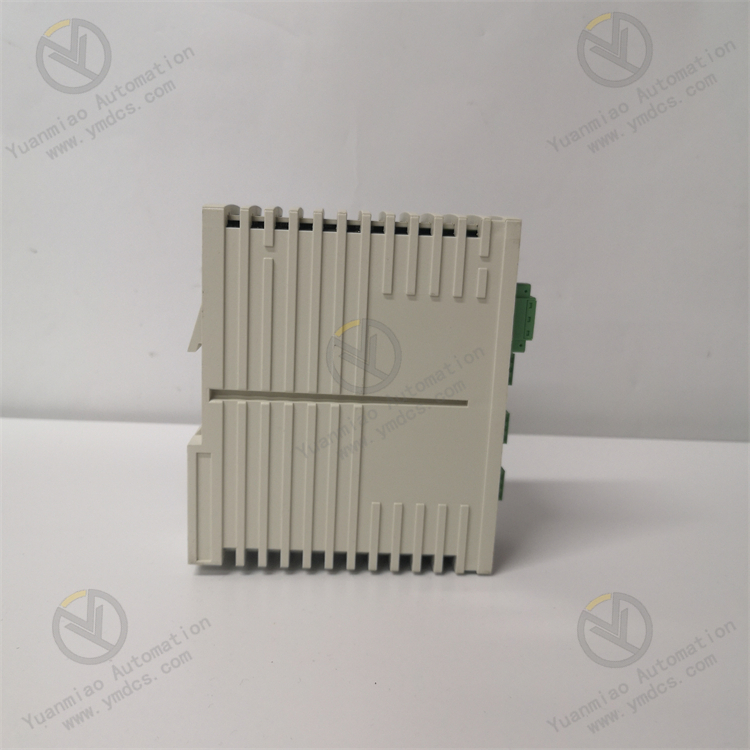
Description
1. Product Overview
Full Model: LD800HSE
Material Code: 3BDH000320R0101
Manufacturer: ABB (Switzerland)
Product Name: HSE High-Speed Ethernet Communication Module, Dedicated Bus Gateway Module for ABB 800xA DCS System
Product Positioning
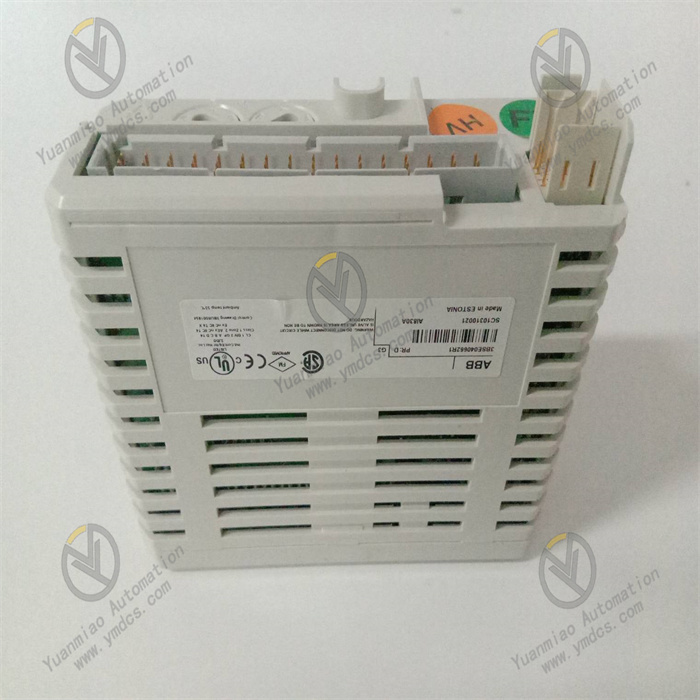
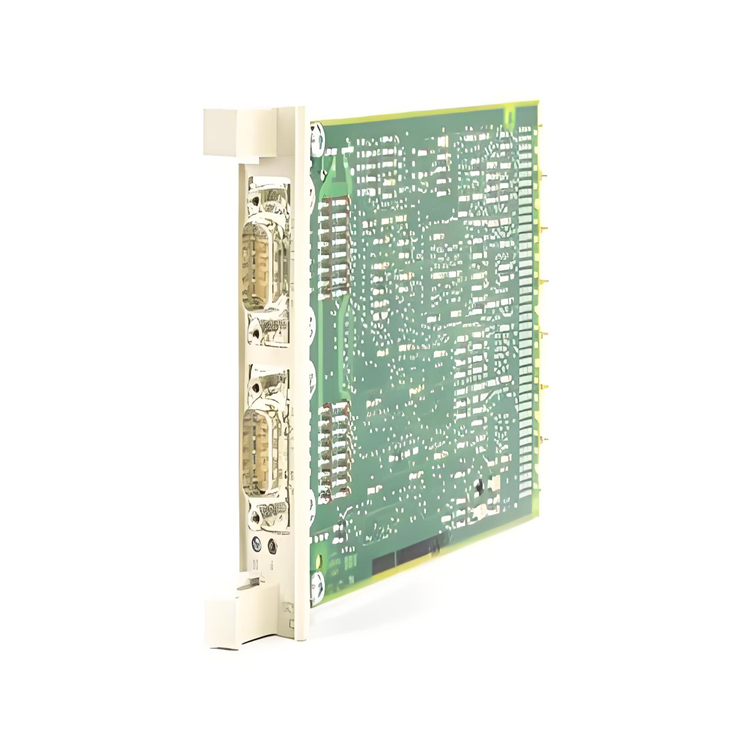
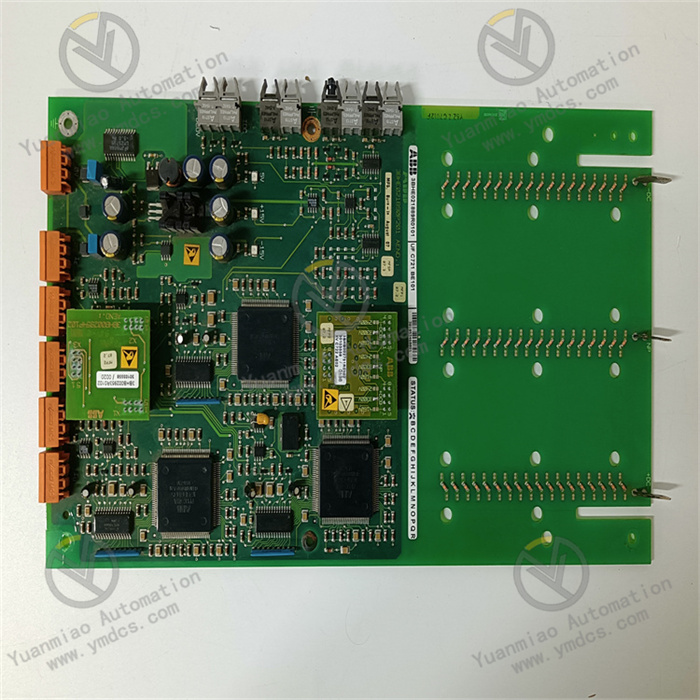
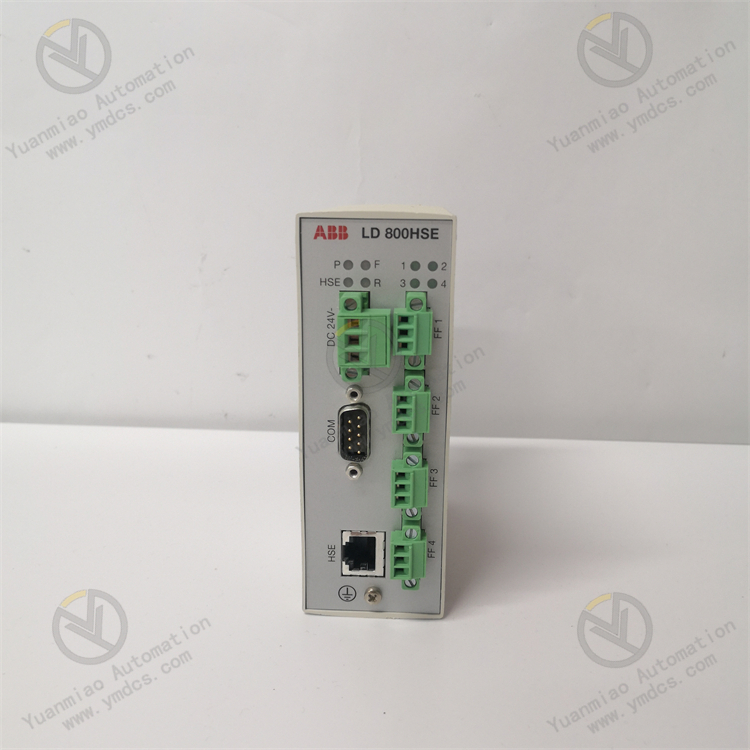
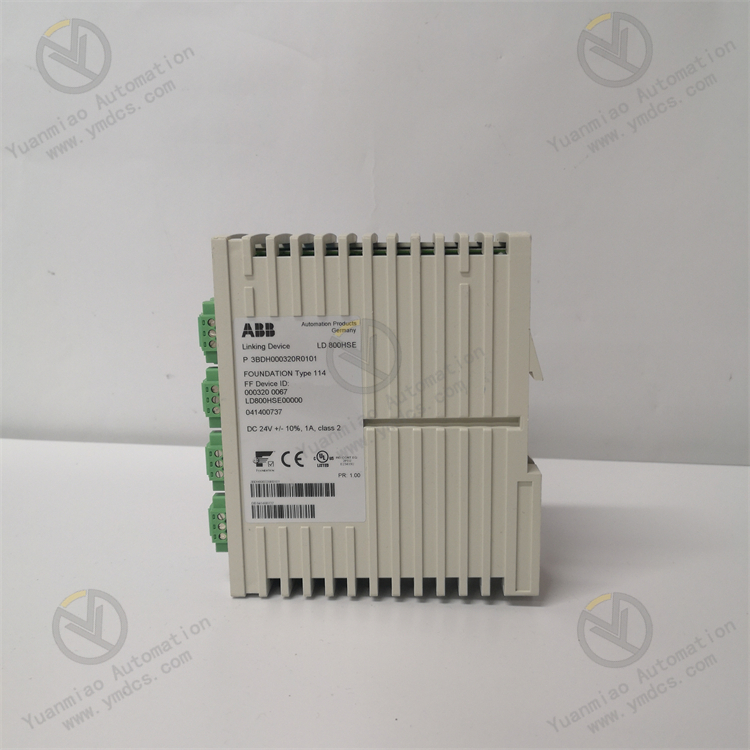
ABB LD800HSE (3BDH000320R0101) is a high-performance HSE high-speed Ethernet communication module developed by ABB exclusively for the 800xA Process Control System, serving as a core communication component of the DCS system. Designed based on the FF HSE (Foundation Fieldbus High Speed Ethernet) standard, this module acts as a data exchange hub connecting fieldbus devices, upper-level control systems and industrial Ethernet networks. It features high transmission speed, reliable communication, flexible networking and excellent redundancy & fault tolerance. It is mainly applied to centralized networking, data forwarding and protocol conversion of FF fieldbus instruments on site, and constitutes a critical core component for building large-scale redundant and highly reliable DCS fieldbus control systems.
Core Function
This module realizes bidirectional data transmission and protocol interconnection between FF HSE high-speed fieldbus, industrial Ethernet and ABB 800xA control network. It accesses and manages various on-site FF smart instruments, actuators and fieldbus devices, and collects process parameters such as temperature, pressure, flow, liquid level and valve position in real time. Meanwhile, it delivers control commands, configuration parameters and calibration data to field devices at the lower level. The module supports redundant bus communication, automatic fault switching and data fault-tolerant backup. It effectively avoids communication interruption, data loss and device runaway caused by single-link failures, ensures real-time uploading of plant-wide process data and accurate distribution of control commands. It comprehensively improves the stability, real-time performance and security of DCS bus networking, meeting the requirements of high-precision control and safe operation for continuous industrial production.
Applicable Systems
Exclusively compatible with all versions of ABB 800xA Process Control System and AC800M series controllers. It fully complies with FF HSE fieldbus standard protocol and TCP/IP industrial Ethernet protocol. It can seamlessly form a network with the 800xA operation & monitoring platform, Control Builder M configuration software, system redundant servers, on-site FF fieldbus instruments, repeaters and couplers. It supports compatible connection between new and legacy systems and in-situ replacement of outdated communication modules of the same specification without major modifications to system network architecture and control logic. It adapts to full-scenario engineering and maintenance applications including bus networking for new projects, bus upgrade & retrofit of legacy DCS, spare parts replacement and system capacity expansion.
Application Scenarios
Widely deployed in large-scale DCS automation control systems of process industries such as thermal power generation, petrochemical industry, fine chemical engineering, metallurgy & heavy industry, building materials and water treatment. Typical applications cover centralized networking of plant-wide FF fieldbus instruments, real-time acquisition of process parameters, remote equipment control, status monitoring of fieldbus devices, system data interaction and communication transmission of process interlock logic. It adapts to large-scale industrial automation bus control conditions with numerous devices, multiple measuring points, massive data volume and 24-hour non-stop operation, satisfying industrial control networking requirements of high reliability, high real-time performance and high redundancy.
2. Technical Features
High-Speed Bus Transmission with Excellent Data Real-Time PerformanceFully compliant with the international FF HSE high-speed fieldbus standard, equipped with high-performance industrial communication processor. It delivers high bus transmission rate and large data throughput, capable of connecting multiple on-site FF fieldbus devices simultaneously. It supports high-speed bidirectional interaction of massive process parameters, equipment status data and control commands. Low data transmission latency and fast response accurately match the real-time control timing requirements of DCS systems, eliminating data lag, command timeout and update delay to guarantee precise process control.
Dual-Link Redundant Communication with Strong Fault ToleranceThe module supports standard HSE dual-network redundant architecture with independent data transceiving on dual links, automatic fault detection and seamless switching. When a single network link suffers disconnection, interference, fault or equipment abnormality, the system switches to the standby link automatically within milliseconds without communication interruption, data loss or equipment runaway. No manual intervention is required. It greatly enhances fault tolerance and continuous operation reliability of industrial bus control systems, suitable for high-risk continuous production processes.
Multi-Protocol Compatibility and Strong Networking ExpandabilityNatively compatible with FF HSE fieldbus protocol and standard TCP/IP industrial Ethernet protocol. It supports automatic protocol parsing, bidirectional conversion and transparent transmission, enabling seamless interconnection between fieldbus devices, upper monitoring systems, servers and third-party communication equipment. Multi-module parallel networking, fieldbus segment expansion and measuring point capacity expansion are supported with flexible networking modes, meeting large-scale bus networking demands of multi-area, multi-section and multi-device factories.
Industrial-Grade Anti-Interference Design for Stable OperationAdopting industrial hardware architecture and electrical isolation design, built-in electromagnetic filtering, signal noise reduction and electrostatic protection circuits. It effectively resists harsh conditions including strong electromagnetic interference, voltage fluctuation, electrostatic surge and line crosstalk on industrial sites. Communication links feature outstanding anti-attenuation and anti-interference capability, enabling long-term stable operation under complex industrial electromagnetic environments and preventing communication jitter, data packet loss and intermittent link dropout.
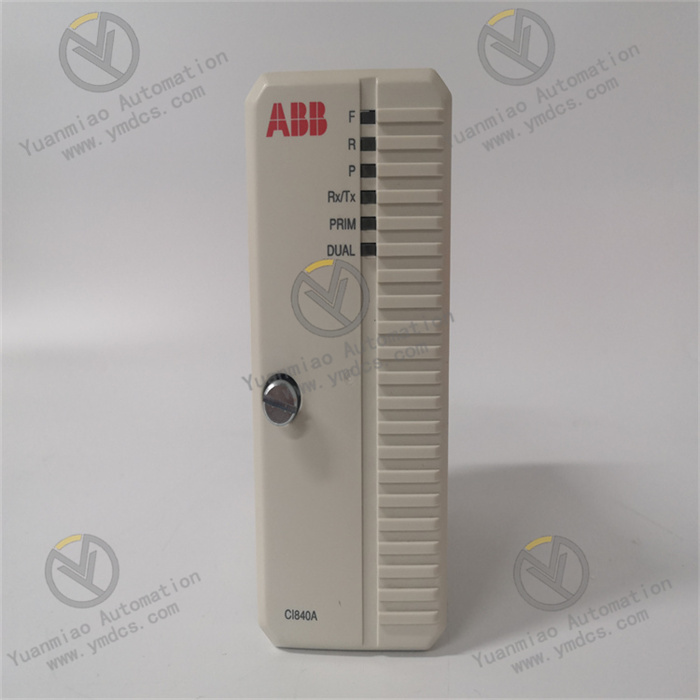
Comprehensive Fault Self-Diagnosis for Convenient & Efficient MaintenanceEmbedded intelligent diagnostic program continuously monitors module hardware status, bus link status, network communication quality, device connection status and data transmission conditions. It accurately identifies hidden risks such as link disconnection, device offline, communication abnormality, parameter error and hardware failure. Status indicators on the front panel intuitively display operation, communication, fault and redundancy status. It supports uploading fault codes, log recording and status tracing in the system background, allowing maintenance staff to quickly locate faults and eliminate hidden dangers, significantly reducing maintenance workload and downtime.
Standardized Modular Design with Superior Compatibility and InterchangeabilityAdopting ABB standard rack-mounted modular structure compatible with standard I/O racks of the 800xA system, featuring neat installation, easy assembly and disassembly and firm fixation. Hot-swap maintenance is supported. Module replacement, maintenance and expansion can be performed without system shutdown, bus communication interruption or modification of system control logic, maximizing continuous production of the production line. It enjoys excellent universality and interchangeability between new and old equipment, applicable to various renovation and emergency replacement scenarios.
- Wide-Temperature Weather-Resistant Design with Broad Environmental AdaptabilityUtilizing industrial wide-temperature components to operate stably under severe industrial temperature and humidity conditions, tolerating high and low cabinet temperature, dust, humidity and sharp temperature fluctuations. It supports 7×24-hour non-stop high-load continuous operation with low failure rate, long service life and extremely high operational stability.
3. Specification Parameters
| Item | Parameter |
|---|---|
| Equipment Model | LD800HSE |
| Material Code | 3BDH000320R0101 |
| Manufacturer | ABB |
| Equipment Type | FF HSE High-Speed Ethernet Communication Module, DCS Fieldbus Gateway Module |
| Compatible Systems | ABB 800xA DCS System, AC800M Controller, Control Builder M Configuration Software |
| Application Scope | FF fieldbus equipment networking, process data communication, remote equipment control and system bus data interaction in power, chemical, metallurgical and other industries |
| Communication Protocols | FF HSE High-Speed Fieldbus Protocol, TCP/IP Industrial Ethernet Protocol |
| Networking Mode | Dual-network redundant communication architecture, supporting automatic dual-link switching |
| Transmission Characteristics | High-speed data throughput, low latency, real-time bidirectional data transmission |
| Functional Characteristics | Fieldbus device access, protocol conversion, data forwarding, redundancy & fault tolerance, fault self-diagnosis, status monitoring |
| Maintenance Characteristics | Hot-swap replacement, on-line configuration, real-time status monitoring, fault log tracing |
| Electrical Protection | Built-in electromagnetic filtering, electrostatic protection and electrical isolation circuits with strong anti-interference capability |
| Operating Temperature | -20℃~+65℃ |
| Storage Temperature | -40℃~+85℃ |
| Ambient Humidity | 5%~95%RH, non-condensing, suitable for industrial cabinet environment |
| Power Supply Mode | Standard power supply via DCS rack backplane |
| Structural Specification | Standard rack-mounted modular structure, compatible with standard racks of 800xA system |
| Software Compatibility | Fully compatible with 800xA monitoring platform and all versions of Control Builder M configuration software |
| Equipment Features | High-speed bus transmission, dual-network redundancy & fault tolerance, multi-protocol compatibility, industrial anti-interference, intelligent fault diagnosis, maintenance without shutdown, strong compatibility, stable operation |
4. Working Principle
4.1 Power-On Initialization and Full-Range Self-Test
After powered by the rack, the module automatically completes startup, hardware initialization, chip self-test, protocol loading and network parameter configuration. It comprehensively inspects module hardware circuits, communication ports, dual network links, bus matching status and validity of configuration parameters, and eliminates hidden troubles including hardware faults, link abnormalities, missing parameters and protocol mismatch. Upon successful self-test, communication links are established with DCS main control system and upper monitoring servers. The module completes bus segment registration and connected device identification and enters normal communication operation state.
4.2 Fieldbus Device Access and Data Acquisition
During normal operation, the module continuously scans all smart instruments, actuators and fieldbus devices connected to the FF HSE bus. It collects real-time various process data, equipment operating status, fault alarms and point parameters. The acquired raw data is filtered, verified, error-corrected and packaged to remove interference data and invalid signals, ensuring authenticity, accuracy and integrity of uploaded data, and providing reliable data support for process monitoring, logic operation and parameter regulation of upper systems.
4.3 Bidirectional Protocol Conversion and Data Forwarding
The module serves as a bidirectional conversion hub between fieldbus protocol and Ethernet protocol. It converts proprietary protocol data uploaded by FF fieldbus devices into standard TCP/IP Ethernet data and transmits it to the 800xA upper monitoring system and main controller. Meanwhile, control commands, configuration parameters, calibration instructions and interlock commands issued by upper systems are converted into FF HSE protocol commands and accurately delivered to corresponding fieldbus devices, realizing seamless data exchange and precise control between upper systems and field devices.
4.4 Dual-Link Redundancy and Automatic Switching
During operation, the module monitors communication quality, data transceiving status and connectivity of two redundant network links in real time. Under normal conditions, dual links work synchronously with mutually backed-up data. When one link encounters disconnection, interference, packet loss or communication failure, the module completes instantaneous link switching. All data transmission is automatically switched to the standby link without communication interruption, data loss or equipment runaway. The switching process will not affect normal system operation and production processes.
4.5 Real-Time Status Monitoring and Fault Tracing for Maintenance
The module continuously records communication logs, data transmission timing, device online status and link operating conditions, and monitors hardware faults, bus conflicts, device offline and data anomalies in real time. Once a fault is detected, the module locks the fault status, activates fault indicators and uploads fault codes and abnormal information to the system background, enabling maintenance personnel to accurately locate fault points and trace root causes. Supported by stable hardware performance and fault tolerance mechanisms, it ensures long-term safe, stable and continuous operation of the DCS fieldbus network.
5. Common Problems and Solutions
5.1 Phenomenon: Module fails to go online, cannot be identified by the system, no indicator light status
Possible Causes
① Abnormal rack backplane power supply, unstable voltage or poor contact in power circuit;
② Oxidation of module gold fingers or loose slots leading to failed bus connection;
③ Loss of module configuration parameters, abnormal network address or incorrect protocol configuration;
④ Reduced board insulation and circuit abnormality caused by long-term dust accumulation and humidity;
⑤ Damage of module main control hardware and failed initialization.
Solutions
Power off the equipment for sufficient discharge, inspect rack supply voltage and circuit stability and troubleshoot upstream power faults. Clean module gold fingers and rack slots, reinstall and fasten the module to ensure reliable contact. Reconfigure module network parameters, bus protocols and configuration information to restore system matching parameters. Remove dust, dry and conduct anti-corrosion treatment for damp and dusty modules. If the module still cannot go online after confirming normal power supply, slot and configuration, hardware damage is confirmed. Replace with original ABB LD800HSE (3BDH000320R0101) module.
5.2 Phenomenon: Frequent offline of fieldbus devices, data jitter and severe packet loss
Possible Causes
① Poor shielding and non-standard grounding of fieldbus cables resulting in severe electromagnetic interference;
Excessively long bus segment wiring, mismatched impedance and excessive signal attenuation;
③ Overloaded bus segment with too many connected devices;
④ Aging module communication ports and reduced sensitivity;
⑤ Abnormal field device bus interface and unstable signal output.
Solutions
Standardize shielding and grounding of bus cables, keep away from high-voltage power cables and interference sources and optimize wiring routes. Verify bus segment length, match terminal resistors to reduce signal attenuation. Reasonably allocate connected devices on each segment to mitigate load. Inspect module communication ports for aging faults. Troubleshoot field device interfaces one by one and repair abnormal equipment. If the fault persists after rectification, communication performance degradation of the module is confirmed and module replacement is required.
5.3 Phenomenon: Single redundant link fault, automatic switching unavailable
Possible Causes
① Damaged single network cable, oxidized crystal head or poor link contact;
② Incorrect redundant switching parameters and unsynchronized dual-link networking;
③ Faulty or disabled switch port for single link;
④ Hardware damage of single communication channel inside the module;
⑤ Conflicting dual-network IP addresses and disordered networking logic.
Solutions
Inspect two redundant network cables and connectors, replace aged cables and re-crimp connectors. Verify dual-network redundant configuration parameters of the module, correct configuration errors and synchronize dual-link networking logic. Check switch port status and enable and calibrate port parameters. Reset dual-network IP addresses to eliminate conflicts. If automatic switching still fails with normal configuration and links, single-channel hardware failure of the module is confirmed and original module replacement is required.
5.4 Phenomenon: Data transmission delay, slow command response and untimely update
Possible Causes
① Bus segment network congestion and excessive communication data volume of connected devices;
② Accumulated module cache and decreased processing efficiency due to long-term high-load operation;
③ Improper network bandwidth configuration and unreasonable transmission priority setting;
④ Mismatched communication rates and disordered data timing of fieldbus devices.
Solutions
Optimize layout of devices on bus segments, reasonably distribute data load to ease network congestion. Power cycle the module to clear cache and recover communication processing performance. Recalibrate network bandwidth and transmission priority parameters and optimize data transmission logic. Unify communication rate and timing parameters of fieldbus devices. If delay remains after configuration optimization, module performance degradation is confirmed and spare part replacement is needed.
5.5 Phenomenon: Module overtemperature alarm, unstable operation and occasional offline
Possible Causes
① Blocked cabinet filter, dust accumulated in air ducts and poor ventilation;
② Dense module installation in the rack leading to excessive overall heat generation;
③ Cabinet ambient temperature exceeding the rated operating range of the module;
④ Aging internal components of the module and abnormally increased power consumption.
Solutions
Regularly shut down equipment to clean dust on cabinets and modules, clear cooling ducts and improve ventilation. Adjust module layout in the rack to avoid overheating caused by dense stacking. Control cabinet ambient temperature to ensure the module operates within the specified temperature range. Replace aged original LD800HSE communication modules suffering from long-term high temperature and unstable operation in a timely manner to guarantee stable communication of the fieldbus system。