Description
1. Product Introduction
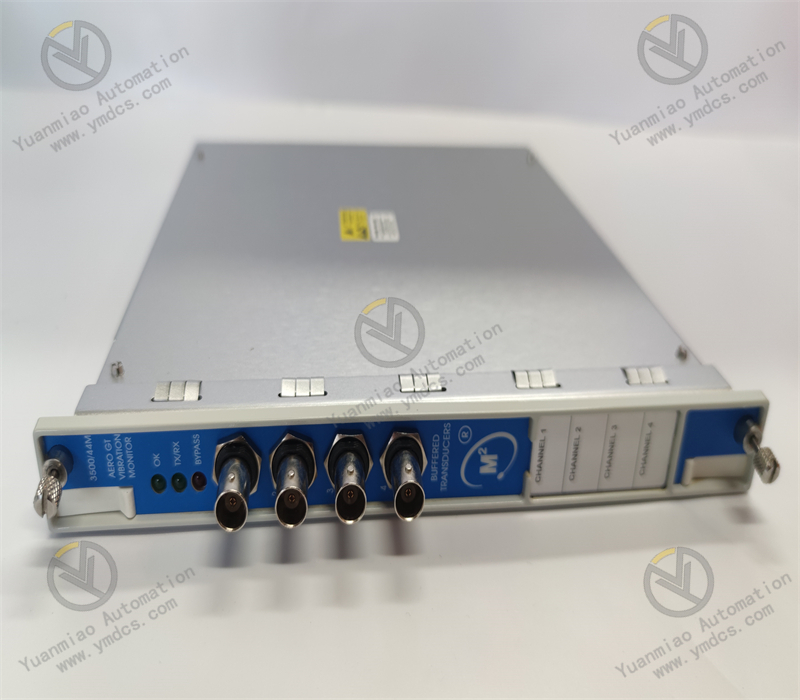
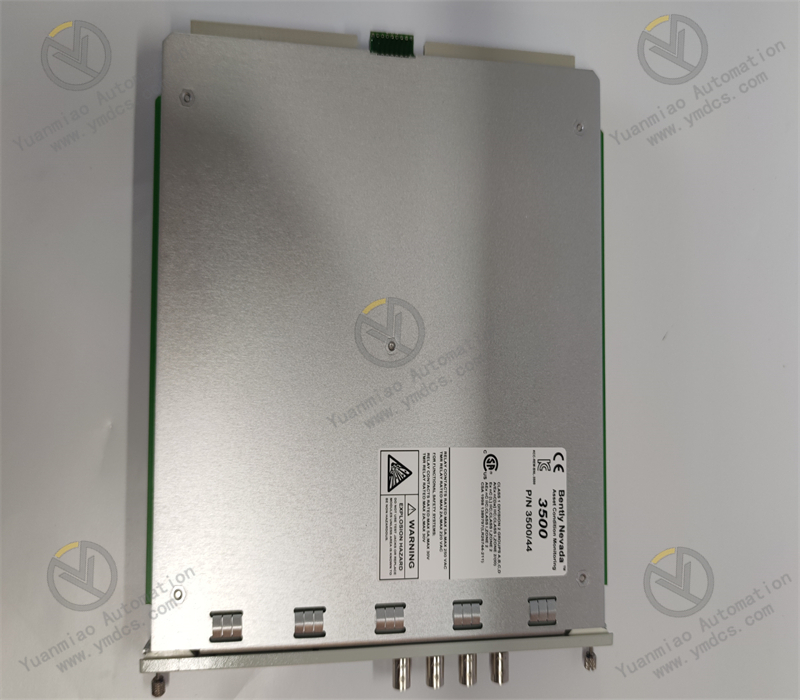
The Bently Nevada 3500/44 (Part No. 140734‑03) is a dedicated 4‑channel vibration monitoring module for aeroderivative gas turbines within the 3500 system. It acts as a core custom‑built functional unit of the 3500‑series machinery‑protection system, complying strictly with API 670 machinery‑protection standards, SIL 2 functional‑safety specifications and high‑grade industrial EMC requirements. Optimised for the high‑speed, high‑frequency‑vibration and lightweight operating characteristics of aeroderivative gas turbines, it is widely deployed on critical prime‑mover aeroderivative gas‑turbine equipment in power‑generation, oil‑gas, distributed‑energy and heavy‑industry captive‑power‑plant applications.
Featuring a hot‑swappable integrated design for the standard 3500 rack, the module incorporates multi‑channel vibration‑signal acquisition, integral conversion, filter analysis, characteristic‑spectrum extraction, graded alarming, logic interlocking and data communication in one single unit. It provides full compatibility with Velomitor velocity sensors, accelerometers and eddy‑current probes. Unlike general‑purpose rotating‑machinery monitors, the 3500/44 140734‑03 uses algorithms optimised for aeroderivative gas‑turbine traits: high rotational speed, high‑frequency vibration, lightweight structures and frequent load transitions. It delivers precise monitoring of high‑frequency vibration, base‑frame vibration, casing vibration and 1X harmonic vibration signatures, resolving common‑field‑problems such as signal distortion, poor feature identification, missed incipient faults and inadequate operating‑condition adaptability encountered with conventional monitors. Outstanding high‑frequency response, accurate spectrum interpretation, multi‑sensor compatibility, strong noise immunity, flexible configuration and maintenance‑free long‑term stable operation enable reliable performance under harsh gas‑turbine‑plant environments: high temperature‑humidity, intense high‑frequency electromagnetic interference, persistent high‑speed vibration and frequent operating‑condition fluctuations. It supports 7×24‑hour non‑stop online monitoring and machinery protection, and is extensively used for new‑build TSI monitoring systems for aeroderivative gas turbines, upgrade‑and‑replacement projects for legacy monitoring modules, construction of predictive‑maintenance frameworks and compliance retrofits of safety‑interlock systems.
2. Functions and Working Principle
Core Functions
The 3500/44 140734‑03 aeroderivative‑gas‑turbine vibration monitor integrates six core capabilities: accurate acquisition of high‑frequency vibration on aeroderivative gas turbines, compatible analysis of multi‑type sensor signals, integral conversion between vibration velocity / acceleration / displacement, 1X harmonic vibration‑feature tracking, graded fault alarm and interlock output, trending recording and remote upload of vibration data. It fully meets requirements for full‑scope condition monitoring, latent‑fault diagnostics, operating‑trend analysis and safety interlock protection of aeroderivative gas turbines. Four independent synchronous acquisition channels enable simultaneous multi‑parameter measurement of casing vibration, base‑frame vibration, shaft‑train micro‑vibration and high‑frequency pulsation vibration, allowing early‑stage detection of subtle faults including rotor unbalance, minor blade damage, foundation loosening, incipient bearing wear and operating‑condition instability.
Raw analogue signals received from field sensors are processed in real‑time via noise‑reduction filtering, signal conditioning & amplification, integration computation and spectrum analysis. Acceleration‑ and velocity‑based raw readings are accurately converted into standardised vibration‑displacement and vibration‑severity values. Proprietary algorithms enhance extraction of 1X harmonic signatures, enabling reliable identification of weak high‑frequency fault signals originating from aeroderivative gas turbines. Two user‑configurable alarm thresholds (Alert and Danger) support differentiated parameter settings for various load ranges, startup‑shutdown sequences and steady‑state regimes. Comprehensive self‑diagnostics cover sensor‑loop health, open circuits, signal saturation, wiring interference and module anomalies, eliminating misjudgements and missed faults caused by monitoring failures or abnormal data. High‑precision, high‑fidelity and continuously available measurement data supports early‑fault prediction, root‑cause analysis and safety protection, significantly improving unit stability and fault‑detection accuracy for aeroderivative gas‑turbine assets.
Working Principle
The module operates on the principle of multi‑source vibration‑signal acquisition plus aeroderivative‑gas‑turbine‑optimised spectrum‑analysis algorithms. Together with external velocity / acceleration / eddy‑current sensors, a 3500‑series rack and host‑configuration software, it forms a complete closed‑loop gas‑turbine condition‑monitoring‑and‑protection system. During gas‑turbine operation, sensors continuously capture analogue signals for high‑frequency acceleration, vibration velocity and shaft displacement produced by rotating components and transmit these signals to the 3500/44 module inputs.
On‑board multi‑stage dedicated filter circuits and high‑precision computing chips remove high‑frequency noise, load‑transition disturbances and electromagnetic crosstalk, while preserving genuine fault‑related vibration signatures. Using Bently‑Nevada proprietary aeroderivative‑optimised algorithms, raw signals undergo multi‑pass integral conversion, linear calibration, spectrum analysis and 1X vibration‑feature tracking to calculate key operational parameters including vibration severity, amplitude and frequency‑domain characteristics. Measured values are continuously compared against pre‑configured alarm and interlock thresholds. When vibration limits are exceeded or abnormal spectral patterns are detected, the module immediately activates graded alarms and relay dry‑contact interlock outputs to prevent fault escalation. Real‑time vibration readings, historical trends, alarm logs and channel status are transmitted to supervisory systems and DCS platforms for live display, trend archiving, fault root‑cause tracing and remote monitoring. Fast acquisition‑and‑computation response, precise spectrum interpretation and stable data output ensure full compatibility with the high‑speed, high‑frequency and dynamically‑variable operating profile of aeroderivative gas turbines, enabling controllable, stable, compliant and safe long‑term equipment operation.
3. Technical Features
- Four‑channel synchronous acquisition, purpose‑built for aeroderivative gas‑turbine operating conditionsAn independent parallel four‑channel architecture accepts multiple sensor types simultaneously, delivering multi‑point vibration monitoring for turbine casing, base frame and shaft‑train from a single module. Core monitoring requirements for aeroderivative gas turbines are satisfied without additional expansion hardware, conserving rack slots and reducing retrofit costs. Proprietary signal‑recognition algorithms optimise high‑frequency‑vibration and 1X harmonic feature extraction, overcoming poor detection sensitivity and signal distortion common with general‑purpose monitors when processing weak high‑frequency fault signatures.
- Multi‑signal integral conversion, comprehensive and accurate measurement coverageAdaptive acquisition and bidirectional integral conversion between acceleration, velocity and displacement allow flexible configuration of output data for vibration severity, amplitude and frequency‑domain features. Both dynamic high‑frequency vibration monitoring and steady‑state condition assessment are supported. Excellent full‑scale linearity and ultra‑low temperature drift ensure no parameter drift or accuracy degradation during prolonged continuous operation, enabling detection of micrometre‑level subtle vibration changes and satisfying high‑precision monitoring standards for aeroderivative gas‑turbine equipment.
- Broad sensor compatibility, flexible configuration and universal applicabilityFully interoperable with the Bently‑Nevada Velomitor velocity‑sensor family, the complete accelerometer portfolio and 3300‑series eddy‑current displacement probes, matching OEM sensor hardware fitted on most commercially available aeroderivative gas turbines. User‑defined channel assignments, graded alarm thresholds and adjustable filter modes allow adaptation to equipment from different manufacturers and model ranges, making the module equally suitable for new‑build projects and legacy‑unit retrofits.
- Multi‑layer anti‑interference design for complex gas‑turbine environmentsIntegrated multi‑stage digital filtering, spectral noise reduction, electromagnetic shielding and signal‑stabilisation circuitry have passed high‑grade EMC/EMI compliance testing. The module effectively mitigates high‑frequency electromagnetic radiation, frequency‑converter noise, signal fluctuations caused by frequent load changes and persistent mechanical vibration in gas‑turbine facilities, ensuring captured weak high‑frequency vibration signals remain undistorted, undamped and jitter‑free throughout data acquisition.
- Hot‑swappable integrated design, simplified maintenance and operational‑cost reductionStandard 3500‑rack hot‑swap capability permits module replacement while the rack remains energised, eliminating full‑rack shutdowns and minimising downtime losses for maintenance or fault‑swap activities. Acquisition, computation, spectrum analysis, alarm‑interlock drive and communication functions are implemented on‑board; no external conversion hardware is required, simplifying system architecture and field wiring. Remote configuration, parameter backup, fault tracing and trend logging are supported; no routine calibration is needed, lowering long‑term aeroderivative‑gas‑turbine maintenance overhead and operational complexity.
- SIL 2 safety compliance, suitable for high‑risk continuous‑operation applicationsThird‑party SIL 2 functional‑safety certification and compliance with API 670 high‑end machinery‑protection standards are achieved. Built‑in loop self‑diagnostics, signal‑fail‑safe protection and anomaly‑logic safeguards reduce risks of monitoring outages, fault misinterpretation and missed protection actions. The module meets safety‑compliance acceptance criteria for high‑risk aeroderivative gas‑turbine installations within the energy sector and is well‑suited for unattended, 7×24‑hour continuous‑running industrial sites.
4. Specifications
Basic Parameters
Product Model: 3500/44 Part Number: 140734‑03 Manufacturer: Bently Nevada Product Series: 3500 Machinery‑Protection Monitoring‑System Series Device Type: 4‑Channel Vibration‑Monitoring Module Dedicated to Aeroderivative Gas Turbines Compatible Rack: Standard Bently Nevada 3500‑series system rack Supported Sensors: Velomitor velocity sensors, industrial accelerometers, 3300‑series eddy‑current displacement probes Applicable Standards: API 670 Machinery‑Protection Standard, SIL 2 Functional‑Safety Certification, IEC Industrial‑EMC Standard, Bently‑Nevada factory precision‑measurement specifications Primary Application: Monitoring of casing vibration, base‑frame vibration, shaft‑train micro‑vibration and high‑frequency pulsation vibration on aeroderivative gas turbines; 1X harmonic fault‑feature analysis, graded alarming, safety‑interlock protection and data provision for predictive maintenance.
Core Performance Parameters
Operating Principle: Multi‑source vibration‑signal acquisition + integral conversion + aeroderivative‑gas‑turbine‑optimised spectrum‑analysis algorithm Channel Configuration: 4 independent synchronous acquisition channels, each with fully configurable function Measured Quantities: Vibration acceleration, vibration velocity, vibration displacement, 1X harmonic vibration features Computation Functions: Bidirectional integral conversion between acceleration / velocity / displacement, spectrum analysis, feature tracking Alarm Logic: User‑configurable two‑level thresholds for Alert and Danger, enabling multi‑condition differentiated settings On‑board Diagnostics: Comprehensive self‑alarming for sensor open‑circuit, signal saturation, wiring anomalies, channel faults and module faults
Electrical & Output Parameters
Operating Power Supply: Standard DC power feed supplied via the 3500 rack, stable industrial‑grade power compatibility Analogue Output: Multiple standard 4‑20 mA analogue outputs for seamless connection to DCS and supervisory monitoring systems Digital Outputs: Relay dry‑contact alarm and interlock outputs to support fault‑based machinery protection Communication Interfaces: Compatible with 3500‑system bus communication for remote configuration, data upload and trend logging Immunity Rating: High‑level EMI/RFI electromagnetic shielding, resistant to high‑frequency electromagnetic, frequency‑converter and vibration‑related interference in gas‑turbine environments
Mechanical & Physical Parameters
Construction: Hot‑swappable single‑board modular design for standard rack installation, integrated circuitry, shock‑resistant dust‑sealed industrial housing optimised for gas‑turbine high‑frequency vibration conditions Mounting Method: Slot‑mounted inside the 3500 standard rack, easy insertion‑removal, neat wiring, hot‑swap under power permitted Maintenance Requirements: No routine calibration; supports remote‑parameter configuration, fault tracing and automatic trend‑data storage; suited for long‑term continuous‑operation maintenance regimes
Environmental Parameters
Operating Temperature: −20 ℃ ~ +60 ℃ Storage Temperature: −40 ℃ ~ +85 ℃ Relative Humidity: 5 %‑95 % RH, non‑condensing Environmental Resistance: Shock‑resistant, dust‑proof, oil‑gas‑corrosion‑resistant, high‑frequency‑EMI‑hardened and high signal stability for 7×24‑hour high‑load, dynamically‑variable operation inside aeroderivative‑gas‑turbine facilities
5. Application Scenarios
The Bently Nevada 3500/44 140734‑03 monitor is custom‑engineered for aeroderivative‑gas‑turbine service. As a core dedicated hardware unit for condition monitoring and safety protection, it is widely deployed within TSI condition‑monitoring and safety‑protection systems for aeroderivative gas turbines at combined‑cycle gas‑power plants, distributed‑energy stations, oil‑and‑gas‑field captive‑power facilities, chemical‑plant power houses and heavy‑industry on‑site energy systems.
Typical use‑cases include round‑the‑clock online casing‑and‑base‑frame vibration monitoring; high‑precision acquisition and analysis of shaft‑train high‑frequency micro‑vibration and 1X harmonic fault signatures; dynamic vibration monitoring during startup‑shutdown and load‑transition cycles; early prediction of latent faults such as blade damage, bearing wear and foundation loosening; complete‑system integration for new‑build 3500 monitoring installations; targeted upgrade‑and‑replacement of legacy general‑purpose monitors on existing aeroderivative units; monitoring‑system accuracy enhancement and compliance retrofits; automated safety monitoring for unattended gas‑turbine assets; vibration‑trend analysis and fault root‑cause investigation; data support for aeroderivative‑gas‑turbine predictive‑maintenance frameworks; and high‑frequency‑vibration‑monitoring optimisation for high‑speed lightweight rotating machinery.
As the exclusive aeroderivative‑gas‑turbine‑specific vibration monitor within the 3500 product portfolio, the 3500/44 140734‑04 addresses well‑known limitations of general‑purpose monitors deployed on aeroderivative equipment: weak high‑frequency‑fault detection, measurement bias, false‑positive / false‑negative alarms and insufficient operating‑condition adaptability. It reliably captures a wide spectrum of early‑stage latent faults, mitigating risks of excessive vibration, fatigue‑related component failure, operational instability and unplanned shutdowns. Long‑term safe, stable, efficient and compliant aeroderivative‑gas‑turbine operation is ensured, making this original‑equipment module the preferred core dedicated unit for new installations, legacy‑system retrofits, measurement‑accuracy upgrades and safety‑optimisation projects for aeroderivative‑gas‑turbine monitoring systems.