Description
1. Product Overview
Prosoft 5204‑DFNT‑PDPMV1 is an industrial‑grade EtherNet/IP‑to‑PROFIBUS DPV1 master protocol gateway belonging to the American ProSoft 5000 Series. It is designed for heterogeneous industrial bus networking and interconnection of cross‑brand control systems. As an independent DIN‑rail‑mounted communication conversion module, it realizes bidirectional data exchange between EtherNet/IP industrial Ethernet and PROFIBUS DP‑V1 field‑bus. On the EtherNet/IP side, it supports bidirectional Client/Server communication; on the PROFIBUS side, it acts as a DP master station capable of directly connecting various PROFIBUS slave devices. Natively compatible with the full‑range Allen‑Bradley ControlLogix control systems manufactured by Rockwell Automation, this unit breaks the protocol barrier between AB industrial‑control systems and Siemens PROFIBUS field equipment. No modification to existing PLC programs or replacement of field‑bus devices is required. It is widely applied in integration renovation of new and old production lines, cross‑brand equipment networking, localization connection of imported equipment and expansion of legacy PROFIBUS systems. Capable of stable 7×24‑hour non‑stop factory‑operation, it serves as core communication hardware for heterogeneous industrial‑bus convergence networking.
2. Core Technical Parameters
2.1 Basic Specifications
- Model No.: 5204‑DFNT‑PDPMV1
- Product Series: ProSoft 5000‑Series Industrial Protocol Gateway Modules
- Product Type: EtherNet/IP to PROFIBUS DPV1 Master Gateway
- Communication Roles: EtherNet/IP (Bidirectional Client/Server), PROFIBUS DP‑V1 Master
- Compatible Systems: Full‑range Allen‑Bradley ControlLogix PLCs, standard EtherNet/IP host systems and third‑party PROFIBUS slave devices
- Mounting Method: Standard industrial DIN‑rail mounting, suitable for standardized cabinet layout
- Net Weight: Approx. 0.2 kg, lightweight compact structure with minimal cabinet‑space occupation
2.2 Communication & Protocol Parameters
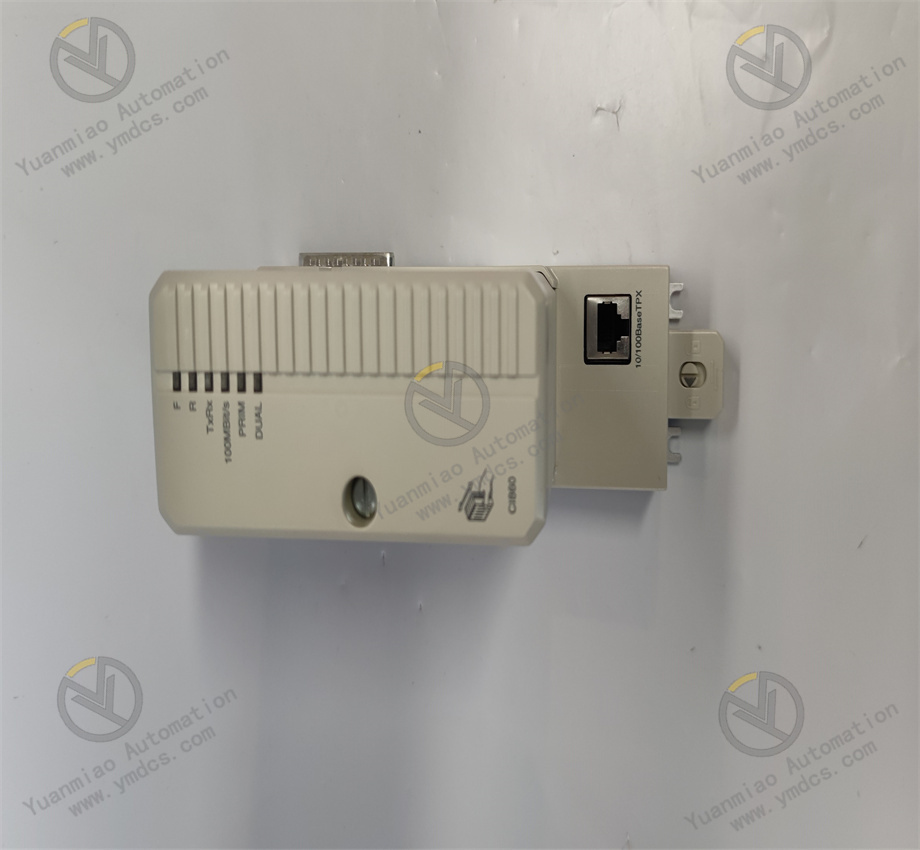
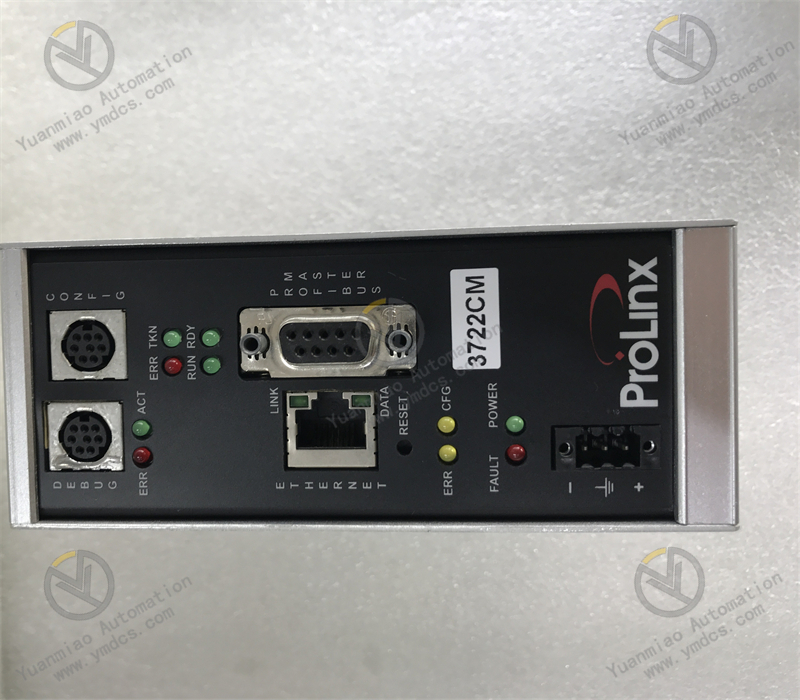
- Ethernet Port: 1‑channel 10/100 Mbps auto‑negotiation RJ45 interface, supporting EtherNet/IP explicit‑message communication
- PROFIBUS Port: Standard DB9 connector, integrated DP‑V1 master protocol stack, compatible with all DP‑slave devices
- Supported Protocols: EtherNet/IP, PROFIBUS DP‑V1, supporting bidirectional high‑speed data‑mapping interaction
- DP‑Bus Baud Rate: Auto‑adaptation to standard PROFIBUS baud‑rates for stable full‑speed polling
- Station Capacity: Single gateway supports connection of multiple PROFIBUS slave stations, meeting bus‑networking demands of small‑to‑medium‑size production lines
- Data‑exchange Modes: Cyclic data polling, acyclic message read‑write, event‑triggered data update; suitable for real‑time control and parameter‑commissioning scenarios
2.3 Electrical & Power‑consumption Parameters
- Rated Power Supply: Standard industrial DC 24 V, compatible with common power supply schemes of industrial‑control cabinets
- Power Consumption: Low‑power design, maximum load power ≤5 W, energy‑saving and stable for long‑term continuous‑operation
- Electrical Protection: Built‑in over‑voltage, over‑current and surge protection, tolerating industrial‑grid voltage fluctuation and transient electrical surges
- Status Indication: Multi‑function on‑board LED indicators independently displaying power status, Ethernet link, PROFIBUS bus status, data transmission‑reception and fault alarms
2.4 Environmental & Protection Parameters
- Operating Temperature: ‑20 ℃ ~ +60 ℃, adaptable to high‑temperature workshops, enclosed cabinets and general‑purpose factory environments
- Storage Temperature: ‑25 ℃ ~ +70 ℃, meeting requirements for long‑distance transportation and long‑term idle‑storage
- Operating Humidity: 5%‑95% RH, non‑condensing, suitable for humid and dusty industrial‑field conditions
- EMC Compliance: Complies with industrial electromagnetic‑compatibility standards, resisting electromagnetic interference from frequency converters, high‑power motors and high‑voltage equipment
- Mechanical Characteristics: Industrially‑reinforced housing with vibration‑resistance and shock‑resistance, fit for high‑vibration production‑line operating‑conditions
3. Product Functions and Core Advantages
3.1 Core Product Functions
- Seamless Bidirectional Protocol Conversion: Realizes bidirectional transparent data transmission between EtherNet/IP industrial Ethernet and PROFIBUS DP‑V1 field‑bus. AB control systems can directly read and write data from Siemens PROFIBUS instruments, variable‑frequency drives, remote‑I/O modules, sensors and other field devices, delivering accurate protocol parsing and loss‑free data synchronization.
- Flexible Dual‑role Communication Adaptation: The EtherNet/IP side works under both Client and Server modes, capable of actively uploading data to upper systems or passively receiving upper‑level commands. Operating as a master station on the PROFIBUS side, it actively polls and manages all downstream slave‑devices, offering flexible networking logic adaptable to various project architectures.
- High‑speed Data‑mapping Interaction: Supports batch register mapping, continuous‑address data synchronization and periodic scheduled polling with low data‑refresh latency, satisfying high‑real‑time‑performance requirements such as closed‑loop process‑control, real‑time parameter‑monitoring and multi‑equipment linkage‑control.
- Bus‑fault Isolation & Diagnosis: Provides bus‑fault identification, abnormal‑message filtering and link‑status monitoring. Failure of a single PROFIBUS slave will not disrupt the whole bus or EtherNet/IP network. Fault‑message reading and station‑status traceback are available for rapid troubleshooting of bus anomalies.
- Convenient Configuration & Commissioning: Equipped with dedicated configuration software for protocol‑parameter setup, data‑mapping table editing, bus‑baud‑rate configuration and station‑parameter definition. Online monitoring of communication status and real‑time messages simplifies commissioning and improves maintenance‑efficiency.
3.2 Core Product Advantages
- Perfect Cross‑brand Compatibility to Break Bus‑protocol Barriers: Specially developed for interconnection between AB EtherNet/IP systems and Siemens PROFIBUS devices. No PLC replacement, field‑device substitution or complex program‑rewriting is needed, solving networking difficulties of cross‑brand control‑systems.
- Native Industrial‑grade Stability & Reliability: Original ProSoft industrial protocol gateway optimized for real‑time industrial‑control communication. It eliminates data‑packet loss, communication drop‑out and data‑offset errors, supporting stable 7×24‑hour continuous‑operation for non‑stop‑production facilities.
- Cost‑effective for New‑to‑legacy Retrofit Projects: Full‑scale upgrade of legacy PROFIBUS bus‑systems is unnecessary. Only one gateway enables integration of new and old systems, greatly reducing renovation, system‑expansion and equipment‑replacement costs, making it an optimal solution for intelligent upgrading of ageing production‑lines.
- Light‑weight Easy‑installation & Low Maintenance‑cost: Standard DIN‑rail mounting, compact footprint and simplified wiring without dedicated installation space. The unit contains no vulnerable components with low failure probability. Visual diagnostic functions reduce maintenance difficulty and production‑downtime duration.
- High Anti‑interference Performance for Harsh Operating‑conditions: High‑grade EMC design withstands strong electromagnetic disturbance, temperature fluctuation, dust and humidity on‑site, suitable for complex industrial sectors including chemical, metallurgical and intelligent‑manufacturing industries.
- Flexible Expandability via Bidirectional‑communication: Dual‑protocol bidirectional data‑interaction enables centralized networking and management of multiple devices, supporting single‑device connection, multi‑device cluster‑networking and system‑wide data‑exchange scenarios with strong scalability.
4. Typical Application Scenarios
- Intelligent‑manufacturing Industry: Connection between AB ControlLogix PLC and Siemens PROFIBUS variable‑frequency drives, temperature controllers, remote‑I/O modules and sensors to realize cross‑brand production‑line equipment linkage‑control
- Water‑treatment Industry: Renovation of new‑and‑old equipment for water‑purification, sewage‑treatment and water‑reuse systems; interconnection of EtherNet/IP main‑control systems with legacy PROFIBUS meters, pumps and valve‑drives
- Oil‑gas & Chemical Industry: Heterogeneous bus‑networking for refining‑units and oil‑gas gathering‑transport stations; smooth system upgrade of new AB control‑systems while retaining original PROFIBUS field‑bus equipment
- Power‑energy Industry: Retrofit of power‑plant auxiliary‑control and substation‑automation systems; data intercommunication of cross‑brand industrial‑control equipment and centralized monitoring of field instruments and actuators
- Metallurgy & Building‑materials Industry: Expansion of legacy PROFIBUS bus‑networks for kiln, rolling and building‑material production‑lines; adaptation to new‑generation EtherNet/IP main‑control systems with existing field‑devices preserved
- Industrial Heterogeneous Retrofit Projects: Convergence of EtherNet/IP and PROFIBUS buses, legacy bus‑system upgrade, cross‑brand control‑system interconnection and legacy‑equipment reuse‑transformation
5. Installation, Operation and Maintenance Guidelines
- Install the gateway on a standard DIN rail. Cut off cabinet power‑supply before installation. Clip the module firmly onto the rail and fasten the latch to prevent vibration‑induced loosening, poor contact and ensure reliable mounting.
- Clearly distinguish Ethernet and PROFIBUS ports and complete wiring in compliance with specifications. Deploy dedicated shielded twisted‑pair cables for the PROFIBUS bus and fit proper terminating resistors to avoid signal reflection, packet loss and bus instability.
- Separate signal cables from high‑voltage power‑cables and keep them away from strong‑interference equipment such as frequency‑converters and high‑power motors. Implement standard cable‑grounding to mitigate electromagnetic interference upon bidirectional communication.
- Supply stable regulated DC 24 V industrial power. Prevent voltage fluctuations, loose connections and short‑circuits which may cause unexpected module reboot or link drop‑out and guarantee continuous stable protocol‑conversion and data‑exchange.
- During configuration, reasonably set EtherNet/IP station‑parameters, PROFIBUS baud‑rate, slave‑station addresses and data‑mapping relations to avoid address conflicts, abnormal polling and optimize data real‑time‑performance.
- In routine maintenance, monitor real‑time dual‑bus link‑status, data‑transmit‑receive statistics and fault logs through on‑board LEDs and configuration‑software, for rapid fault‑location of bus disconnection, station offline and data anomalies.
- Replace defective units exclusively with original modules of the identical model. Re‑import matching configuration parameters and recalibrate dual‑bus communication‑logic and data‑mapping rules after replacement to ensure system‑operation fully consistent with the pre‑renovation status.