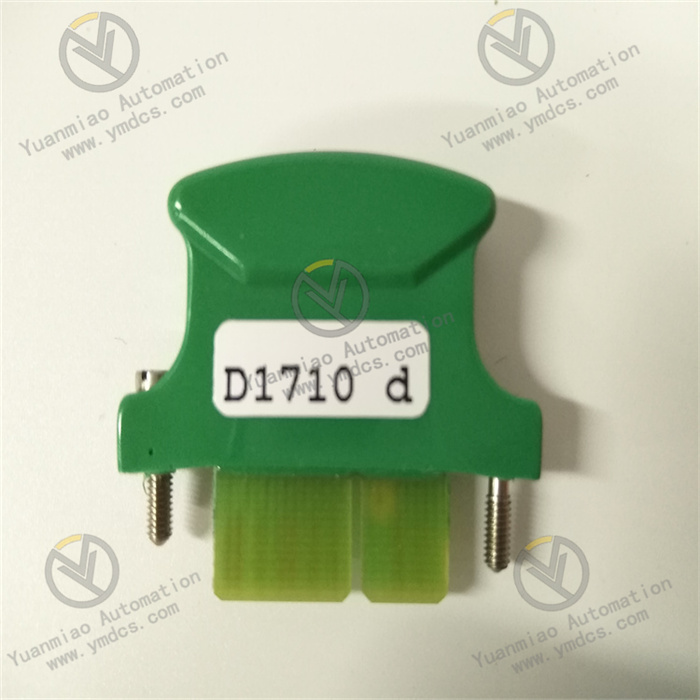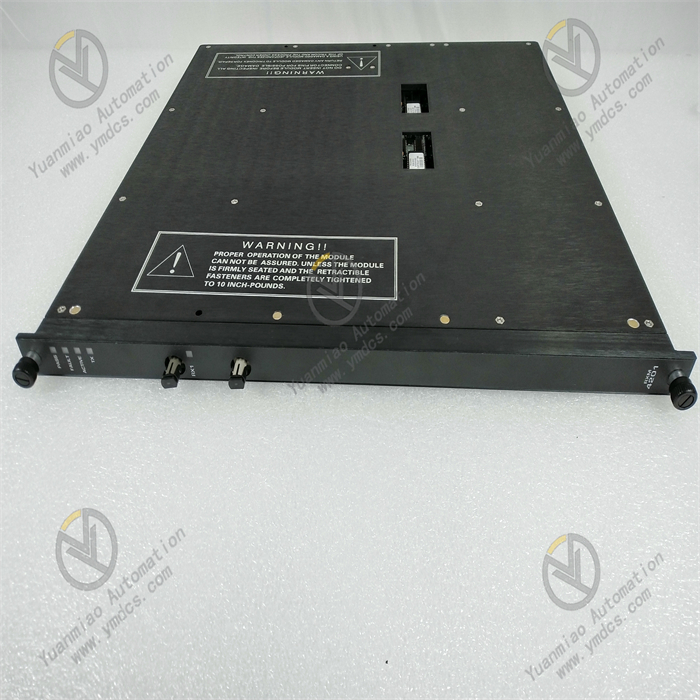
Description
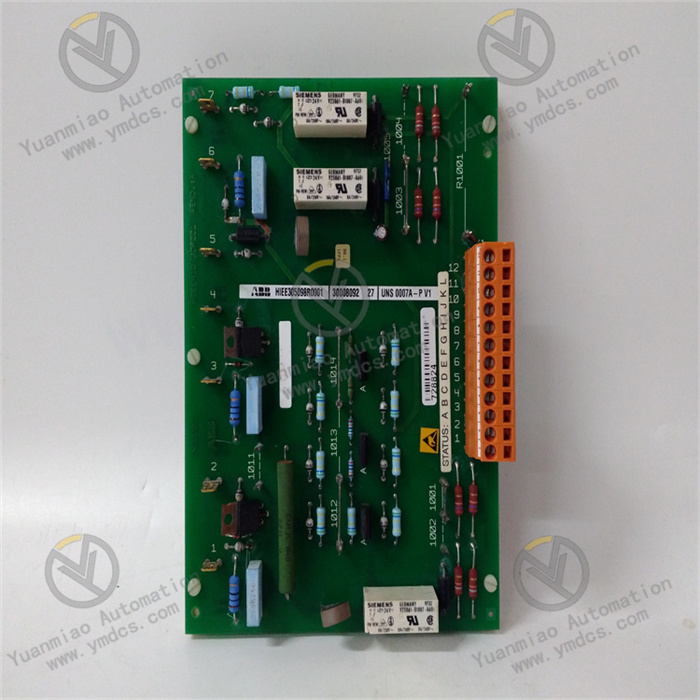
ABB UCD240A101 3BHE022287R0101

I. Specifications and Core Parameters
(I) Product Basics and Authorization Parameters
- Model: ABB UCD240A101, Order Number: 3BHE022287R0101
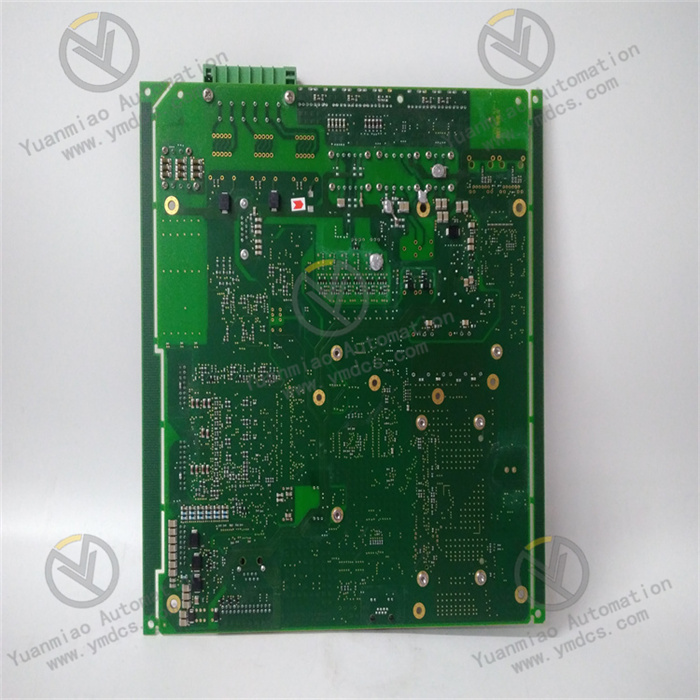
Product Type: Communication, control and measurement board for excitation systems, integrating excitation regulation, communication gateway, data measurement, and protection alarming. It can replace traditional separate excitation controllers and communication modules, significantly saving installation space and control cabling inside cabinets.
- Authorization Type: System-bundled authorization. Must be used with excitation systems or safety controllers such as the ABB UN 6000. Unauthorized disassembly, modification, or use with non-original power supply or communication components is prohibited.
Compatible Systems: Suitable for ABB UN 6000 excitation systems, HIMatrix/HIMax safety controllers, and ABB AC 800M DCS. Compatible with industrial communication protocols including PROFIBUS DP, MODBUS RTU/TCP, RS232/RS485, and DeviceNet (CAN).
- Ingress Protection: IP20, fully enclosed metal chassis with an ultra-slim design, providing excellent dust protection for dense installation in control rooms and cabinets.
- Language Support: The supporting commissioning software offers a multilingual interface including Chinese and English, which can be switched flexibly for easy on-site configuration and diagnosis by operation and maintenance personnel.
(II) Hardware and Functional Parameters
Physical Specifications: Standard industrial board-style module, net depth 247 mm, net height 30 mm, sized for 19-inch standard cabinets; net weight approx. 0.92 kg. Mounting via DIN rail or panel embedding, especially suitable for space-constrained applications such as excitation cabinets.
Power Supply: 24 VDC redundant power supply, tolerant of ±10% voltage fluctuations, with overvoltage, overcurrent, and reverse polarity protection. Low power consumption prevents module damage due to abnormal power supply.
- Processor and Memory: 32-bit high-performance RISC CPU + DSP co-processing architecture, supporting high-speed real-time control (response time < 1 ms). Equipped with Flash and RAM to meet storage requirements for excitation control programs, parameters, and historical data.
- Communication Interfaces: 2×RS232, 1×RS485 (Modbus RTU), DeviceNet (CAN, speed up to 1 Mbps, maximum transmission distance 10 km), supporting seamless data exchange with host DCS and SCADA systems.
Control Accuracy: Excitation voltage/current regulation accuracy < 0.5%. Supports dual modes of Automatic Voltage Regulator (AVR) and manual Field Current Regulator (FCR) with smooth, bump-less switching.
- Protection Functions: Comprehensive protection including over-excitation, under-excitation, overvoltage, overcurrent, out-of-step, and PT disconnection. Triggers rapid alarms and executes preset safety shutdown logic upon fault detection.
- Operating Temperature: -25℃ ~ +60℃; Storage Temperature: -40℃ ~ +70℃.
Electrical Isolation: 2500 Vrms electrical isolation. Electromagnetic compatibility (EMC) complies with IEC 61000 standards, suitable for high-voltage, strong electromagnetic environments in power generation sites.
(III) Operating Environment Parameters
- Hardware Compatibility: Suitable for ABB standard excitation cabinets/control panels, supports DIN rail mounting, with fixing holes conforming to IEC standards.
Environmental Requirements: To be installed in clean, dry, ventilated control rooms or cabinets; relative humidity ≤ 95% (non-condensing); normal operation below 1000 m altitude, with 1% derating per additional 100 m between 1000–2000 m; pollution degree 2, no conductive dust or corrosive gases (e.g., H₂S, Cl₂), kept away from strong electromagnetic interference sources such as high-voltage busbars and frequency converters.
- Installation Requirements: Installation orientation follows ABB manuals with sufficient heat dissipation space; natural cooling is used, and close stacking with high-power heating modules is strictly prohibited. Terminals must be tightened to specified torque values, and cable cross-sections must meet current requirements to avoid overheating caused by excessive contact resistance.
- Software Compatibility: Compatible with ABB SILworX configuration software and UN 6000 excitation system commissioning tools. Supports firmware upgrade, parameter backup/restore, offline configuration, and online downloading.
- Maintenance Interval: Maintenance-free design. Functional testing of the excitation system and inspection of communication links are recommended every 6 months. A comprehensive annual inspection shall be performed to clean dust from the module surface, check for loose or oxidized terminals, and verify that protection settings comply with on-site operating requirements.
II. Functions and Features
- High-Precision Excitation Regulation: Adopts advanced PWM control algorithms with steady-state voltage regulation accuracy < 0.5% in AVR mode and fast dynamic response, effectively suppressing the impact of grid fluctuations on generator output and ensuring grid-connected stability.
Comprehensive Safety Protection System: Complete protection functions including over/under-excitation, overvoltage, overcurrent, PT disconnection, and out-of-step. Fault diagnostic information can be uploaded to DCS/SCADA via communication interfaces, with local LED indicators for quick fault localization.
- Multi-Protocol Communication Gateway: Integrates multiple industrial communication protocols, enabling cross-system data exchange between the excitation system, DCS, protection devices, and smart instruments without additional communication conversion modules.
High Reliability and Strong Immunity: Full-metal chassis, redundant design of key components, 2500 Vrms electrical isolation, and EMC compliance with IEC 61000-6-2/6-4, ensuring long-term stable operation in strong electromagnetic interference environments at power generation sites.
- Flexible Operating Modes: Supports three modes: automatic (AVR), manual (FCR), and remote control, with smooth, shock-free switching to meet full operating conditions including unit startup, grid connection, load adjustment, and shutdown.
- Convenient Operation, Maintenance and Configuration: Offline configuration, online monitoring, parameter adjustment, fault diagnosis, and historical data query are available through supporting software. Parameter backup and batch import are supported, greatly improving system commissioning and maintenance efficiency.
III. Application Scenarios
- Thermal Power Plants: Excitation systems for turbo-generator sets, providing precise excitation current control to maintain stable voltage after grid connection and executing AGC/AVC commands in coordination with DCS.
- Hydropower Plants: Excitation regulation for hydro-generator sets, adapting to rapid changes in water head and load, suppressing low-frequency oscillations, and enhancing grid stability.
Nuclear Power Plants: Excitation systems for auxiliary power generators, meeting stringent nuclear safety requirements with redundant fault-tolerant capabilities.
- Oil, Gas and Chemical Industry: Captive power plants in oil and gas fields and waste heat power generation systems in chemical plants, adapting to remote, high-dust, high-temperature environments and ensuring continuous power supply.
- Grid-Side Peaking Power Stations: Excitation control for gas turbine generator sets, supporting rapid startup/shutdown and load response to improve grid peaking capability.
- Excitation System Retrofit: Digital modernization of excitation systems for old units (e.g., analog excitation controllers), with direct replacement of original modules without major cabinet structure or wiring modifications, reducing retrofit costs and downtime.
IV. Operating Notes
- Pre-Installation Preparation: Verify module model and order number, confirm compatibility with UN 6000 excitation system firmware version; inspect module for physical damage and deformed terminals; measure power supply voltage to ensure it is within 24 VDC ±10%; prepare anti-static wrist straps, insulated tools, and properly rated cables.
Wiring Specifications: Reverse polarity of power supply is strictly prohibited; use shielded twisted-pair cables for communication lines, with 120Ω termination resistors properly installed on RS485 buses; separate analog signal cables from power cables (spacing ≥ 30 cm) to avoid measurement errors caused by electromagnetic interference.
- Electrostatic Discharge Protection: Operators must wear grounded anti-static wrist straps during installation, removal, and maintenance. Idle modules must be stored in anti-static packaging, and direct contact with printed circuit boards is prohibited.
Prohibition of Unauthorized Modification: Replacement of non-original components, modification of firmware, or adjustment of protection settings are forbidden. Any such alterations will void the product warranty and may cause equipment failure or safety incidents.
- Fault Troubleshooting Procedure: When the module alarms, first check power supply, communication links, and PT/CT signals. Hot-plugging of the module is strictly prohibited. If issues cannot be resolved via software diagnosis, contact ABB official technical support immediately; in-house repair is not allowed.
- Storage Environment: For long-term storage, maintain ambient temperature between -20℃ ~ +40℃ and relative humidity of 40%–60%, free of corrosive gases, and periodically inspect packaging integrity.