Description
1. Product Overview
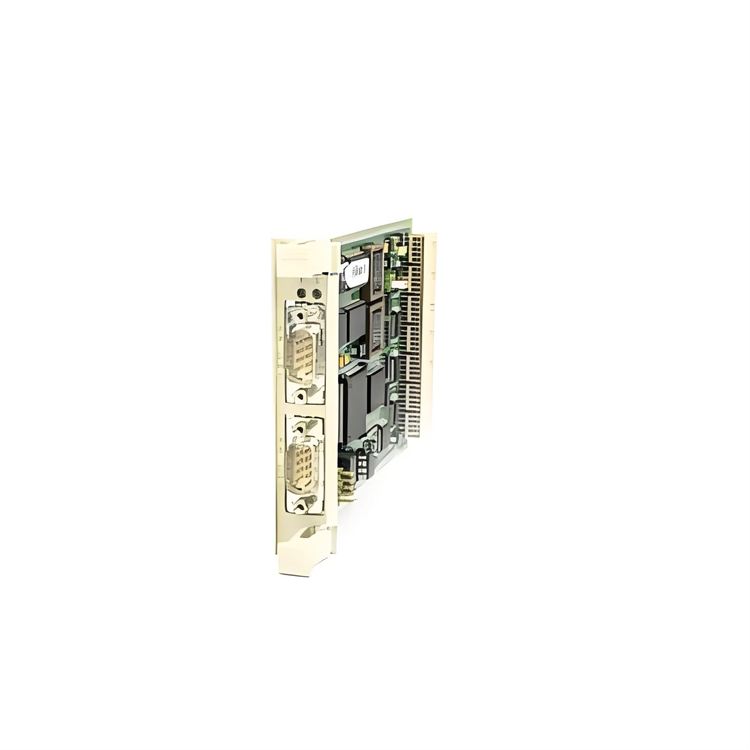
SIGMATEK DCP161 (Part No.: 05-004-161) is the dedicated core CPU processor module for the DIAS automation control system manufactured by SIGMATEK, Austria. It serves as the main control unit for medium and small industrial automation equipment, production lines and non-standard industrial control systems. Equipped with an industrial-grade INTEL386EX processor, the module integrates high-speed instruction execution, program storage, data cache, multi-bus communication and system logic management functions. Designed for stable and high real-time industrial control applications, it acts as the core computing and scheduling hub of the DIAS distributed control system.
The module has no built-in power supply and requires matching original DPS series power modules for operation. It can address and control up to 16 I/O expansion modules and is compatible with all DIAS I/O units. Embedded with large-capacity Flash program storage and SRAM data cache, it is fitted with a CAN bus, multiple serial ports and the dedicated DIAS system bus. It supports offline program storage, data retention upon power loss, real-time clock synchronization and full-status fault diagnosis. Featuring fast computing speed, low response latency, excellent bus stability, outstanding anti-interference performance and reliable long-term operation, it is widely deployed in automated production lines, rubber & plastics machinery, packaging equipment, machine tool control, intelligent conveying equipment and other industrial applications. It is applicable to new industrial control system assembly, expansion and upgrading of legacy DIAS systems, as well as spare part replacement for fault maintenance.
2. Technical Features
2.1 Industrial-Grade Main Controller for High-Speed and Precise Calculation
Adopting the mature and reliable industrial-specific INTEL386EX processor, the minimum instruction execution speed reaches 0.094 μs with a typical operation cycle of 0.3 μs. It delivers extremely fast response for logic operation, program scanning and data processing, satisfying stringent requirements for high-speed cyclic control, precise sequence logic and real-time equipment interlocking in medium and small industrial control systems. The chip offers superior industrial stability with no moving mechanical components and withstands continuous long-term operation, eliminating computation lag, sequence disorder and logic drift to guarantee accurate and stable operation of industrial control systems.
2.2 Integrated Large-Capacity Storage for Reliable Program Preservation
It adopts a multi-layer storage architecture including 40 kByte Flash-PROM for permanent program storage, 112 kByte SRAM for program runtime cache and a 124 kByte SRAM data area for storing user control programs, process parameters, equipment logic and operating data. Supported by an original lithium battery power-fail protection mechanism, system configurations and operating data can be retained for extended periods after power loss, preventing parameter loss, program failure and system reset, which suits continuous industrial production conditions.
2.3 Integrated Multi-Bus Interfaces with Strong Expandability and Compatibility
Multiple types of industrial communication interfaces are integrated, including one independent CAN bus channel and two programmable serial ports (switchable between RS232/RS422/RS485), together with the dedicated DIAS system bus to realize equipment networking, host communication, I/O expansion and peripheral connection. It supports multi-device bus networking, remote data exchange and protocol docking with third-party equipment, flexibly meeting communication expansion demands of various automation equipment. Compatible with both new and legacy DIAS system architectures, it demonstrates excellent on-site adaptability.
2.4 Comprehensive Status Monitoring & Fault Diagnosis for Efficient Maintenance
The module is equipped with a dual-digit seven-segment display panel and multiple status LEDs to visually indicate system operating status, bus transmit/receive status, power supply status and fault codes in real time. It supports hardware self-test, bus fault diagnosis, program abnormality detection and communication fault localization. Error codes are automatically displayed and stored upon faults. Fault causes can be precisely traced via the supporting PG host software, simplifying troubleshooting and lowering the difficulty of equipment maintenance, fault repair and program commissioning.
2.5 Robust Industrial Protection for Harsh Industrial Environments
Designed strictly in accordance with industrial EMC standards, the module has passed numerous environmental tests including shock, vibration, temperature-humidity cycling and electromagnetic interference. It delivers excellent immunity against harmonic interference, radiation and power supply fluctuations. With IP20 protection rating suitable for closed cabinet installation, it tolerates dust, humidity and electromagnetic interference at industrial sites. It supports 7×24-hour unattended continuous operation all year round with low failure rate and long service life.
2.6 Standardized Modular Design for High Adaptability and Convenient Maintenance
It adopts the standardized slot-type modular design of the DIAS system with compact and neat structure. Wiring and expansion can be completed by matching the DKL002 terminal module. Quick disassembly and in-situ replacement are supported without modifying system architecture and control programs, making it directly applicable to upgrading renovation and faulty module replacement of legacy DIAS systems. Online program debugging, parameter modification and bus configuration are available, enabling basic maintenance without shutdown to secure production continuity.
2.7 Precise Bus Control for Flexible System Expansion
A single module can address and manage up to 16 DIAS I/O modules. It can be flexibly combined with digital, analog, motion control and communication expansion modules to build industrial control systems customized for different equipment. The bus supports adaptive adjustment of multiple baud rates matched to cable lengths to avoid signal attenuation, data packet loss and transmission anomalies, ensuring accurate synchronization of I/O interlocking and data exchange within the whole system.
3. Technical Specifications
3.1 Basic Specifications
Model: DCP161 Part No.: 05-004-161 Brand: SIGMATEK Product Series: DIAS Industrial Automation Control System Device Type: CPU Main Processor Module Core Functions: System logic operation, program scheduling, I/O management, bus communication, equipment interlock control Compatible Systems: Full range of SIGMATEK DIAS industrial control systems Matching Accessories: DKL002 terminal module, DPS series power supply modules Maximum Expansion Capacity: Addressable up to 16 DIAS I/O modules
3.2 Core Computing & Storage Specifications
Main Controller: Industrial-grade INTEL386EX processor Instruction Execution Speed: Typical 0.3 μs, minimum 0.094 μs Program Permanent Storage: 40 kByte Flash-PROM Program Runtime Cache: 112 kByte SRAM Data Storage Cache: 124 kByte SRAM Data Protection: 3.0 V lithium battery backup for power-loss retention Data Retention Period: Stable storage for more than 3 years without power supply Real-Time Clock: Built-in hardware RTC for precise time synchronization
3.3 Interface & Communication Specifications
Bus Interface: Dedicated DIAS system bus (for I/O expansion and system communication) CAN Bus: 1 independent CAN1 channel with adjustable multi-level baud rates Serial Interfaces: RS1 fixed as RS232; RS2 configurable RS232/RS422/RS485 CAN Baud Rate Range: 20 kBit/s ~ 1 MBit/s, suitable for cable lengths from 5 m to 1000 m Communication Indicators: Separate LEDs for CAN Tx/Rx, serial Tx/Rx and DIAS bus status Configuration Method: Local configuration via keys + remote configuration through PG host software
3.4 Electrical Power Specifications
Operating Voltage: +5 V DC (central power supply via DPS power modules) Typical Operating Current: 600 mA Power Mode: No onboard power supply; powered by dedicated DIAS DPS power modules Compatible Power Modules: DPS001, DPS211, DPS221 series original power units Electrical Characteristics: Low power consumption, low temperature rise, strong voltage adaptability and tolerance to minor power fluctuations
3.5 Display & Status Specifications
Display Unit: Two-digit seven-segment display for parameters, fault codes and equipment status Status LEDs: RUN ROM, RUN RAM, ERROR, DC OK, CAN Tx/Rx, serial Tx/Rx, bus status and other indicators Fault Prompt: Automatic error reporting with cyclic code display; fault traceable via host software Configuration Keys: RESET key, SET parameter configuration key for local commissioning
3.6 Mechanical & Installation Specifications
Mounting: Standard rack slot mounting for DIAS system Wiring Terminals: 21-pin 3-row spring terminals + 9-pin D-SUB interface Matching Terminal Base: DKL002 dedicated terminal module Dimensions: Compact standardized industrial module Housing Material: Industrial flame-retardant, dust-proof and anti-aging material Protection Class: IP20 (for installation inside standard control cabinets)
3.7 Environmental Specifications
Operating Temperature: 0 ℃ ~ +60 ℃ Storage Temperature: -20 ℃ ~ +85 ℃ Operating Humidity: 0% ~ 95% RH (non-condensing, free of corrosive gases) Shock Resistance: Compliant with EN 60068-2-27, withstand shock up to 150 m/s² EMC Standard: Compliant with EN 50082 Part 2 industrial EMC standard Operation Mode: 7×24-hour unattended continuous stable operation all year round
4. Operating Principle
As the core hub of the DIAS control system, the SIGMATEK DCP161 processor module executes full-system logic operation, program scheduling and equipment management based on the industrial-grade 386EX processor. Supplied with 5 V DC by original DPS power modules, the module automatically completes hardware self-test, storage verification, bus initialization, RTC calibration and program loading upon power-on to finish standby initialization.
During operation, the module reads user control programs solidified in Flash-PROM and loads them into SRAM for high-speed cyclic execution. It collects real-time data from various I/O modules connected to the DIAS bus and performs core tasks including logic computation, sequence judgment, interlock control and data conversion. Data exchange with upper systems and third-party equipment is realized via CAN bus and serial ports. Control commands are issued synchronously to drive field actuators, achieving closed-loop control of the whole automated equipment.
The module continuously monitors power supply status, bus communication, program execution and hardware conditions. Relying on embedded diagnostic functions, it detects bus anomalies, program errors, storage failures and communication interruptions in real time. Fault codes are displayed on the digital screen and LEDs, and fault information is transmitted to the PG host software simultaneously. At the moment of power loss, the lithium battery activates data protection to preserve system parameters and operating data, avoiding program loss and configuration failure. This enables rapid recovery after restart and realizes stable, fault-tolerant closed-loop management of the industrial control system.
5. Application Scenarios
5.1 Main Control System for Medium & Small Automated Equipment
Widely applied in packaging machinery, rubber & plastics equipment, printing machinery, conveying production lines and non-standard automation equipment. As the core main control unit, it undertakes equipment logic control, motion sequence scheduling, I/O signal management, human-machine interaction and peripheral communication to ensure precise, stable and continuous operation of automated equipment.
5.2 Assembly & Expansion of DIAS Industrial Control Systems
Compatible with the complete DIAS distributed control system. It acts as the core CPU module to build new industrial control systems and can also be used for point expansion and performance upgrading of legacy DIAS systems to extend I/O management capacity and communication functions, applicable to production line technical transformation, equipment upgrading and process optimization projects.
5.3 Multi-Equipment Networked Control of Industrial Devices
Supported by CAN bus and multi-serial communication, it enables multi-device bus networking to realize coordinated operation, data interconnection and centralized management of multiple automated equipment. Suitable for full-line automation and workshop intelligent renovation, one main controller can coordinate multiple devices, simplifying control system architecture and reducing renovation costs.
5.4 Industrial Control Scenarios Requiring Precise Sequence Control
Benefiting from microsecond-level high-speed instruction execution, it fits precision automation equipment with strict requirements on timing accuracy and response speed. It achieves accurate motion interlocking, high-speed cyclic control and minimal-error sequence scheduling, eliminating motion delay, sequence disorder and production deviation to guarantee product precision and stable equipment operation.