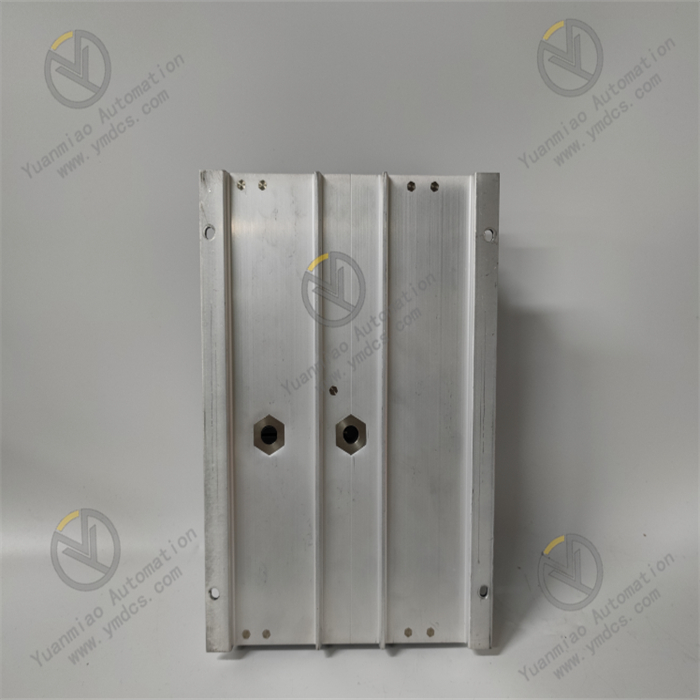
Description
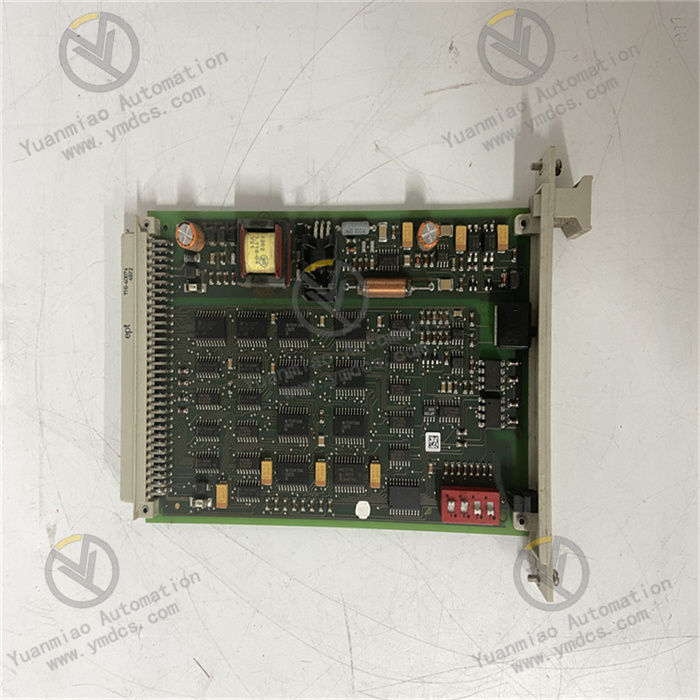
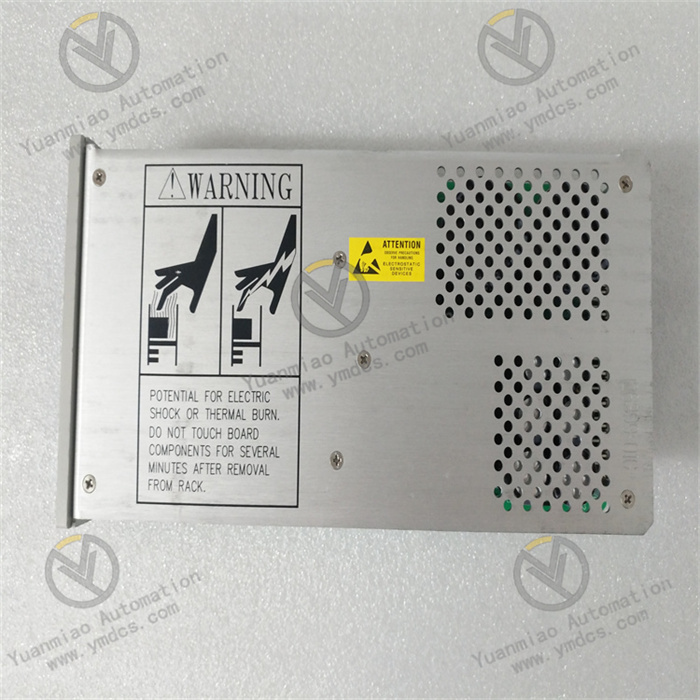
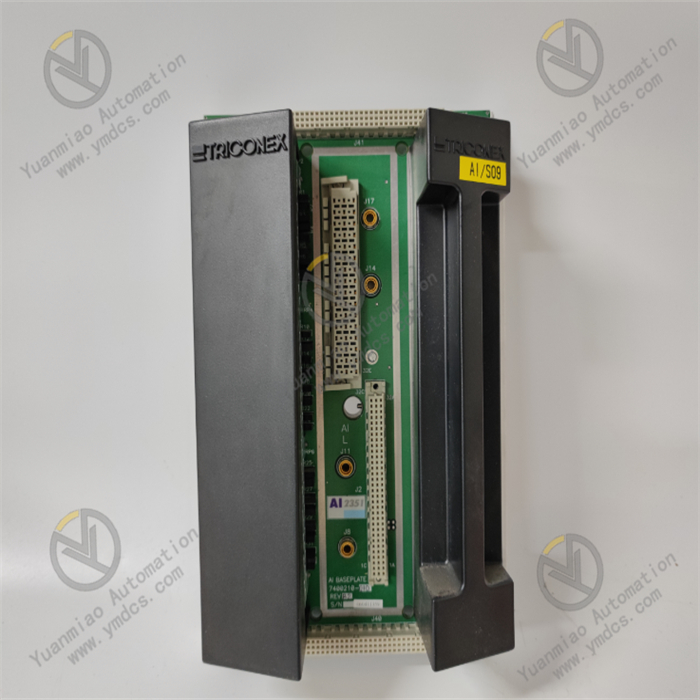
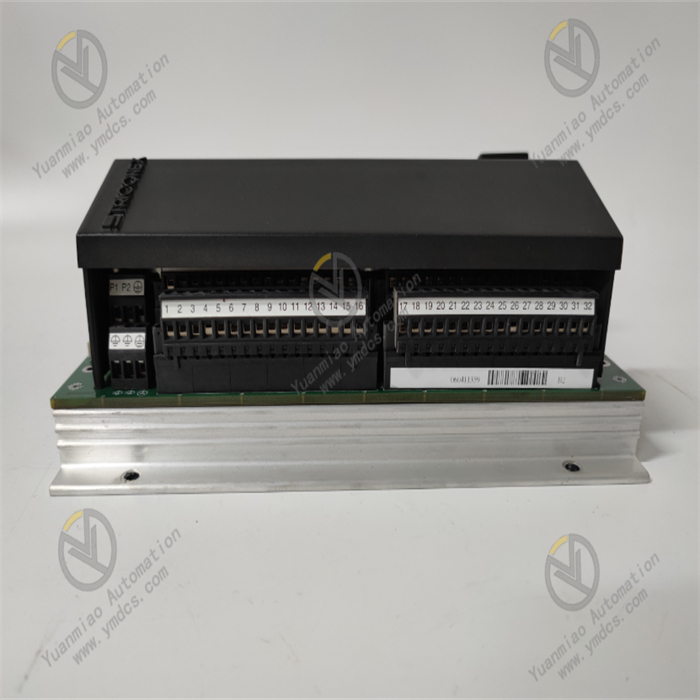
Triconex 2351
I. Overview
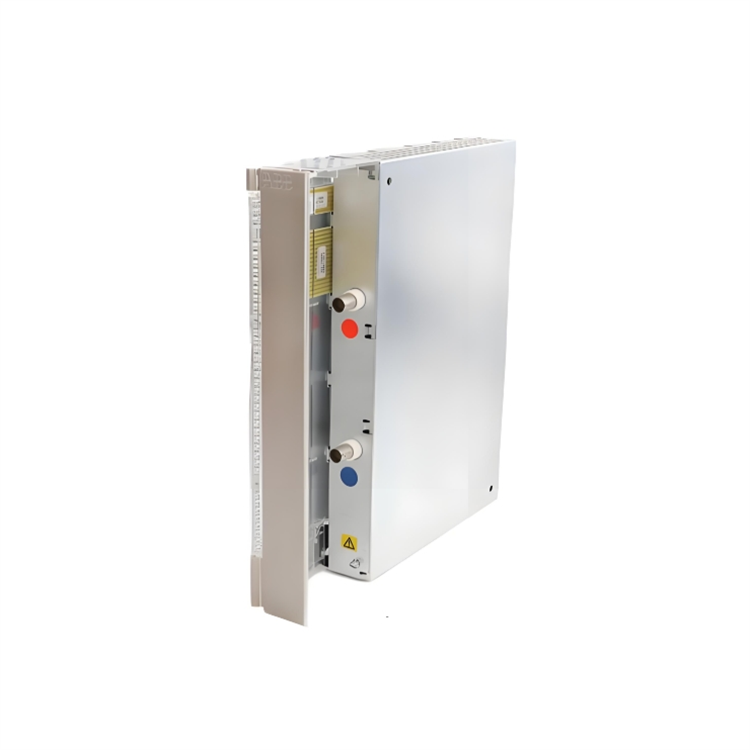
The Triconex 2351 is a high-performance fault-tolerant core module for Safety Instrumented Systems (SIS). It is positioned as the main processor and I/O control unit for industrial safety-critical systems, specially designed for high-risk industrial scenarios with extremely high safety and reliability requirements such as petrochemical, power generation and nuclear industries. It serves as a key component to safeguard the safety of on-site personnel, equipment and production processes.
The module is equipped with a dual-core 32-bit processor (32-bit main core + 32-bit diagnostic core) with a processing speed of 60 MIPS. It is configured with sufficient memory and storage: 8 MB Flash memory and 4 MB battery-backed RAM. It supports wide-range 90–264 VAC power input with automatic redundant power switching. It provides expandable massive I/O interfaces, supporting up to 1000 analog input/output points and 2000 digital input/output points; some specifications integrate 8 digital I/O channels.
II. Product Parameters
| Parameter Name | Specifications |
|---|---|
| Model | Triconex 2351 |
| Manufacturer | Triconex |
| Product Type | High-performance Fault-tolerant SIS Core Module, Main Processor Module |
| Core Functions | Signal acquisition, safety interlock logic operation, real-time data transmission, fault self-diagnosis, SOE sequence of events recording, redundant power switching |
| Processor & Memory | Dual-core 32-bit (32-bit main core + 32-bit diagnostic core); Processing speed: 60 MIPS; 8 MB Flash, 4 MB battery-backed RAM |
| Power Supply | Input voltage: 90–264 VAC; supports redundant power design with automatic switching for stable power supply |
| I/O Channel Capacity | Supports up to 1000 analog I/O points and 2000 digital I/O points; partial specifications with 8 digital I/O channels |
| Communication Protocols & Interfaces | Supports Modbus, DNP3, OPC, Modbus RTU; equipped with dual redundant Tribus and RS-485 interface for high-speed data interaction |
| Fault Tolerance & Diagnosis | TMR (Triple Modular Redundancy) architecture; SOE recording resolution ≤ 40 ms; built-in fault detection mechanism; system availability up to 99.999% |
| Programming Standard | Supports IEC 61131-3 standard programming languages; logic development available via Tristation 1131 software |
| Scalability | Modular design with on-demand I/O expansion; supports up to 3 additional racks via Tribus to adapt to systems of different scales |
| Environmental & Protection Specifications | Operating temperature: -40℃ ~ 75℃; Storage temperature: -40℃ ~ 85℃; IP67 protection grade; Explosion-proof grade: Exia IIB T2 |
| Mounting Method | 19-inch rack mounting (compatible with Triconex racks) and DIN rail mounting for easy deployment |
| Compatible Devices | Industrial sensors, actuators, safety interlock equipment, DCS systems, SIS systems, industrial monitoring equipment, large high-risk production equipment, etc. |
| Core Advantages | High safety, high reliability, strong fault tolerance, fast processing speed, excellent scalability, flexible programming, superior environmental adaptability |
III. Technical Features
- High-safety TMR Fault-tolerant ArchitectureAdopts TMR (Triple Modular Redundancy) architecture with three independent processors executing identical logic synchronously. The triple voting mechanism ensures control reliability. Single-point faults do not affect overall system operation, achieving system availability up to 99.999%. It effectively prevents safety accidents caused by single-point failures and perfectly meets the requirements of high-risk safety-critical control scenarios in compliance with international safety standards.
- Powerful Dual-core Processing PerformanceBuilt-in dual-core 32-bit processor (32-bit main core + 32-bit diagnostic core) running at 60 MIPS. Equipped with 8 MB Flash and 4 MB battery-backed RAM, it efficiently processes complex safety interlock logic, responds rapidly to field signals, and stores massive control programs, operating data and SOE records to meet the demands of highly complex industrial safety control.
- Wide-range Redundant Power Supply AssuranceSupports 90–264 VAC wide voltage input to adapt to industrial on-site power fluctuations. Redundant power design enables seamless automatic switching, ensuring normal module operation even if one power supply fails. It further enhances power supply stability and overall system reliability, mitigating safety risks caused by power faults.
- Massive I/O & Flexible ExpansionSupports up to 1000 analog I/O points and 2000 digital I/O points, with partial versions integrating 8 digital I/O channels. It processes large volumes of industrial field signals simultaneously to meet control requirements of large high-risk industrial equipment. The modular design allows on-demand I/O expansion and supports up to 3 extended racks via Tribus without modifying existing facilities, protecting investment and adapting to safety control systems of different scales.
- Multi-protocol Communication & Redundant TransmissionCompatible with Modbus, DNP3, OPC and other standard industrial protocols. Integrated with dual redundant Tribus and RS-485 interfaces, it can be seamlessly integrated into existing industrial automation and SIS platforms to realize high-speed data interaction with DCS and monitoring devices. Redundant communication design guarantees reliable data transmission and avoids control anomalies caused by communication interruption.
- Comprehensive Fault Diagnosis & Event TracingBuilt-in complete fault detection mechanism enables real-time monitoring of module operation, communication status and I/O signal status. Alarms are automatically triggered upon abnormalities, and SOE (Sequence of Events) is accurately recorded with a resolution ≤ 40 ms. It facilitates maintenance personnel to quickly trace fault causes, troubleshoot problems, shorten downtime and reduce safety risks.
- Harsh Environmental Adaptability & Safety ProtectionOperating temperature ranges from -40℃ to 75℃, and storage temperature from -40℃ to 85℃. With IP67 ingress protection, it delivers outstanding dustproof, waterproof and shockproof performance. Its Exia IIB T2 explosion-proof rating allows safe operation in hazardous areas, satisfying long-term continuous operation requirements under harsh industrial conditions such as petrochemicals and nuclear industry.
- Convenient Installation & Compliant ProgrammingSupports 19-inch rack mounting (compatible with Triconex racks) and DIN rail mounting for simple, fast deployment and compatibility with standard industrial installation environments. It complies with IEC 61131-3 standard programming languages; logic development and commissioning can be implemented via dedicated Tristation 1131 software. It features flexible and efficient programming in line with international standards for convenient later maintenance and upgrade.
IV. Application Scenarios
1. Petrochemical Industry
Widely used in key production links of petrochemical and oil & gas industries, such as precise temperature, pressure and liquid level control of reactors. It implements Emergency Shutdown (ESD), Fire & Gas (F&G) detection and safety interlock functions to prevent production safety risks. It is also applied to pipeline transportation, distillation towers, catalytic units and other scenarios. With high safety, strong fault tolerance and massive I/O processing capability, it ensures continuous and safe chemical production, avoids production accidents and economic losses caused by equipment failures, and meets signal acquisition and control requirements in hazardous areas.
2. Power Generation & Transmission Industry
Suitable for thermal power, hydropower, nuclear power and other power generation scenarios, as well as power transmission and distribution systems. It monitors the operating status of generator sets, optimizes grid stability, collects real-time operating parameters of power equipment and executes complex safety interlock logic to prevent grid outage caused by equipment faults. It can also be integrated into power system Safety Instrumented Systems (SIS) to improve the safety and stability of power production and transmission, ensure reliable power supply, and adapt to safety control demands of large-scale power systems.
3. Nuclear Industry
Applied to safety control scenarios in nuclear power plants. As the core control unit of Safety Instrumented Systems (SIS), it realizes safety monitoring and interlock control of nuclear reaction processes, collects real-time operating parameters of key nuclear power equipment, responds promptly to abnormalities and triggers safety protection mechanisms. It guarantees absolute safety of nuclear production and meets the high safety and high reliability standards of the nuclear industry.
4. Pharmaceutical & Other High-risk Industrial Fields
Adapted to production process control in the pharmaceutical industry, realizing precise parameter regulation and safety interlock to ensure production compliance with safety standards and guarantee product quality and production safety. It is also applicable to industries with high safety control requirements such as chemical production, mining and food processing, providing safe, stable and efficient control support for production processes and preventing potential hazards in high-risk links.
5. Large-scale Safety Instrumented System (SIS) Applications