Description
Schneider 140DDI35300
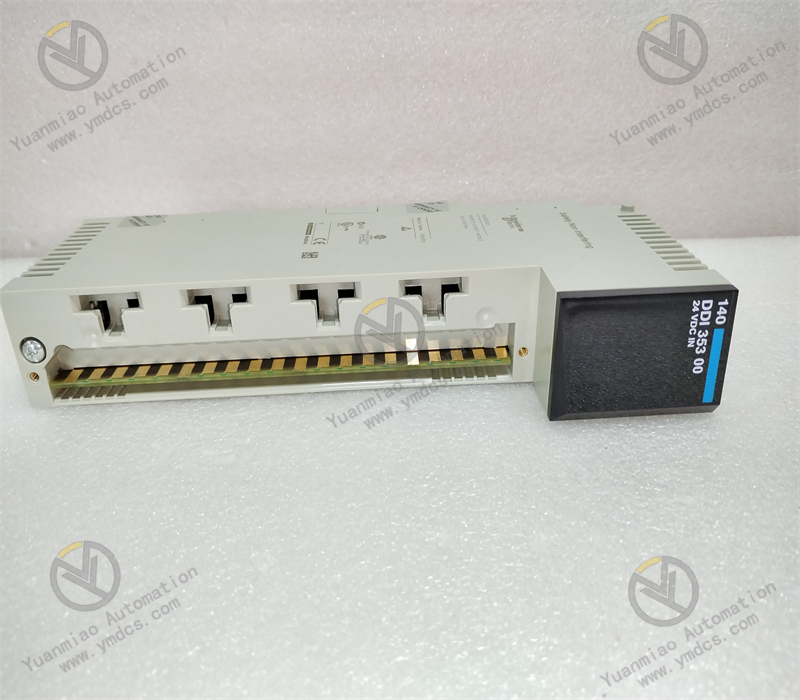
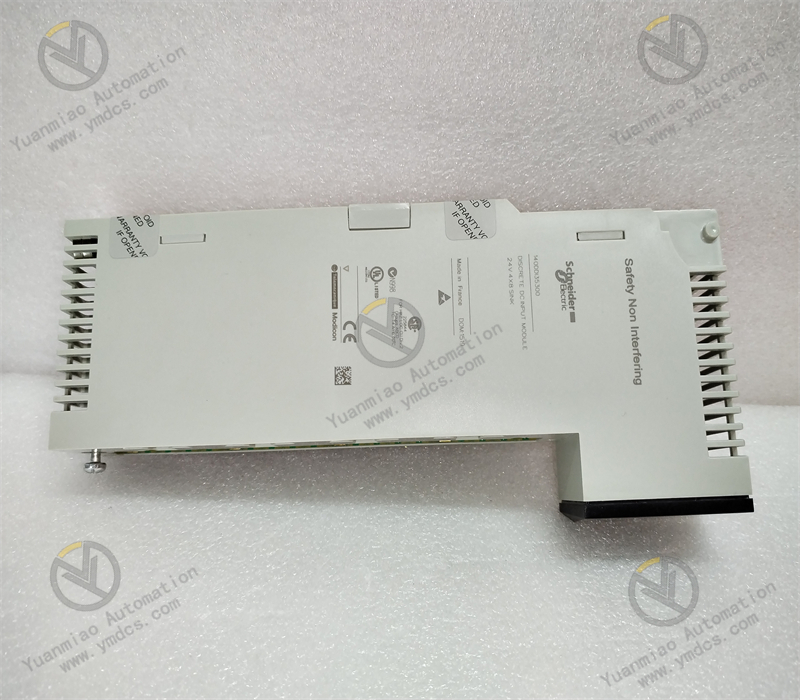
Schneider 140DDI35300 is a 32-channel digital input module designed with DC discrete input. It supports 24VDC signal acquisition and features group isolation, overvoltage protection, high-speed response and strong anti-interference capability. It is specially built for high-volume switching signal acquisition in industrial automation, enables seamless integration into the Quantum control system, and serves as a critical signal acquisition component connecting field devices such as sensors and pushbuttons to the controller.
1. Positioning and System Relationship
System Affiliation
Belongs to the Modicon Quantum series of Schneider Electric, model 140DDI35300, classified as a Discrete Input Module. It adopts a modular design, is compatible with standard Modicon Quantum racks, and complies with Quantum system architecture specifications. It cannot operate independently and must be installed in a standard I/O slot of a Quantum rack to collect and transmit field digital signals by communicating with the CPU module via the rack backplane.
Core Role
- Acquire 32 channels of discrete digital signals from industrial sites (e.g., limit switches, proximity switches, emergency stop buttons, equipment running status, etc.), convert analog switching signals into digital signals and transmit them to the CPU module;
- Adopts a 4-group design (8 channels per group) with sink logic circuits to simplify wiring and improve anti-interference performance;
- Provides overvoltage protection and group isolation to prevent damage to the module and system caused by abnormal field signals;
- Supports real-time input status feedback and fault diagnosis for convenient operation and maintenance monitoring;
Uses a 2-input-word addressing scheme for fast signal identification and access, meeting the signal acquisition requirements of complex control systems.
Mounting Position
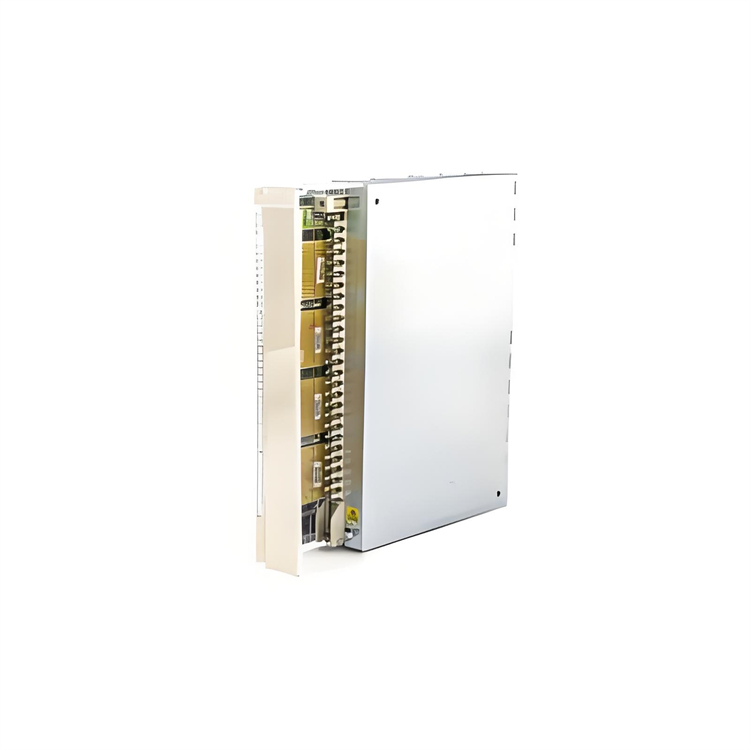
Designed to standard DIN rail-compatible dimensions, it can be installed in any standard I/O slot of a Modicon Quantum rack without occupying a dedicated power supply slot. The front panel is equipped with 32 input wiring terminals, independent green status LED indicators for each channel, one red fault indicator and one green bus communication indicator, enabling easy wiring and intuitive status display. Its compact structure and modular design allow quick installation, maintenance and fault replacement, suitable for dense installation in industrial control cabinets.
System Architecture
2. Functions and Technical Features
1. Multi-Channel Digital Acquisition and Flexible Grouping
- Input channels: 32 discrete digital inputs divided into 4 groups of 8 channels each, facilitating signal management and configuration optimization to meet multi-signal acquisition needs in complex control systems.
- Input specifications: Supports 24VDC input with an operating range of 19.2~30VDC; high-level (State 1) detection range is 15~30VDC, low-level (State 0) detection range is -3~5VDC, compatible with various field DC sensors and switching devices.
- Logic type: Uses sink logic circuits, requiring a shared input common connected to positive potential, simplifying wiring and improving system reliability.
2. High-Speed Response and Precise Acquisition
- Response time: ≤1ms for both State 0→State 1 and State 1→State 0, enabling high-speed capture of field signal changes to ensure the control system obtains equipment status in real time, suitable for high-frequency signal monitoring.
- Addressing scheme: Requires 2 input words for easy address assignment and signal access in the control system, improving signal transmission efficiency.
- Input characteristics: Input impedance 2500Ω, minimum current ≥2mA at State 1, maximum current ≤0.5mA at State 0, with excellent leakage current control to ensure accurate signal acquisition and avoid false triggering.
3. Multiple Protection and Isolation Design
- Overvoltage protection: Built-in overvoltage protection (current limiting via resistors), capable of withstanding transient overvoltage of 56V for 1.3ms decaying pulse, with a maximum continuous operating voltage of 30VDC, preventing module damage from abnormal field voltage.
- Group isolation: Group-to-bus isolation voltage 1780Vrms (1 minute), group-to-group isolation voltage 500Vrms (1 minute), effectively isolating external interference and protecting internal components and core system parts.
4. Diagnostic Monitoring and Usability
- Status monitoring: 32 green channel status indicators on the front panel display real-time input status; 1 red external fault indicator lights up when an abnormality is detected; 1 green bus communication indicator shows bus status, allowing maintenance personnel to quickly troubleshoot issues.
- Fault diagnosis: Supports external fault detection and feedback; module operating status and fault information can be read via the CPU module for remote monitoring and fault localization, reducing on-site maintenance workload.
- Modular design: Compact and highly integrated structure for easy installation and removal, enabling quick replacement of faulty modules to reduce system downtime and improve maintenance efficiency; simplified wiring design with shared common terminals reduces wiring complexity for on-site cabling.
5. Industrial-Grade Reliability and Environmental Adaptability
- High reliability: Uses industrial-grade high-quality electronic components, passes strict lifetime testing, and features comprehensive built-in protection to ensure long-term stable operation and low failure rate; bus current requirement 330mA, power consumption dynamically adjusted based on channel status: 1.7W + (0.36 × number of channels in State 1) W, with reasonable energy consumption.
- Environmental adaptability: Suitable for complex industrial environments, operates stably within standard industrial temperature and humidity ranges, features good vibration and dust resistance, and meets most industrial application requirements without additional protection equipment.
6. Scalability and Compatibility
- Multi-module compatibility: Works seamlessly with other Quantum I/O modules and CPU modules, supports parallel installation of multiple modules, and allows channel expansion according to acquisition needs for large and complex control systems.
- System compatibility: Strictly compatible with standard Modicon Quantum racks and the full range of Quantum CPU modules, complies with Quantum architecture, and integrates seamlessly into existing Quantum automation systems without additional adaptation or commissioning.
3. Technical Specifications
Product Identification
- Model: Schneider 140DDI35300
- Brand: Schneider Electric
- Series: Modicon Quantum series
- Type: 32-channel discrete input module
- Mounting: DIN rail compatible (standard size)
Core Parameters
- Input channels: 32 discrete digital inputs, 4 groups (8 channels per group)
- Input type: DC discrete input, sink logic
- Input voltage: 24VDC (operating range 19.2~30VDC)
- Level detection: State 1 (high) 15~30VDC, State 0 (low) -3~5VDC
- Response time: ≤1ms (0→1, 1→0)
- Isolation: Group-to-bus 1780Vrms/1min, group-to-group 500Vrms/1min
- Protection: Overvoltage protection (resistor current limiting)
- Addressing requirement: 2 input words
- Bus current: 330mA
- Power consumption: 1.7W + (0.36 × number of ON channels) W
- Input impedance: 2500Ω
- Leakage current: 200mA at Us=5.5V, Uin=4V
Physical and Environmental
- Mounting position: Standard I/O slot of Modicon Quantum series racks
- Physical dimensions: Standard DIN rail compatible size
- Operating temperature: Standard industrial temperature range, suitable for most industrial sites
- Humidity: 5%~95% RH (non-condensing)
- Immunity: Complies with relevant EMC standards and provides good anti-interference performance
Compatibility
- Compatible with: Standard Schneider Modicon Quantum racks and the full range of Quantum CPU modules
- Integration: Works seamlessly with other Quantum I/O modules and integrates into existing Quantum automation systems
- Incompatible with: Non-Modicon Quantum racks (e.g., Premium, M340, Micro series) and third-party non-standard I/O modules
4. Compatible Systems and Supporting Components
Compatible Host Systems
- Dedicated compatibility: Schneider Modicon Quantum series PLC control systems
- Applicable racks: All standard Modicon Quantum series racks
- Applicable scenarios: Industrial automation applications requiring large-scale switching signal acquisition, such as limit switch / proximity switch monitoring, emergency stop button status collection, equipment running status monitoring, etc., suitable for multi-channel, high-precision, high-reliability signal acquisition.
Required Supporting Components
- Standard Modicon Quantum rack and CPU module
- 24VDC power supply (for module and field sensor power)
- Wiring terminals and shielded signal cables (for module wiring and signal transmission to reduce interference)
- Field digital devices (e.g., limit switches, proximity switches, emergency stop buttons, sensors, etc.)
Optional Accessories
- Identical 140DDI35300 module (for channel expansion to support more signal acquisition)
- Surge protector (for sites with strong interference and large voltage fluctuations to further protect the module and field devices)
- Signal isolator (for complex high-interference environments to enhance transmission stability and avoid acquisition errors caused by interference)
- DIN rail mounting bracket (for stable module installation adapted to different cabinet layouts)
5. Application Scenarios
- Power industry: Automation control systems in power plants and substations, used for switch status detection, fault alarm signal acquisition, equipment running status monitoring, etc., to ensure stable operation of the power system.
- Petrochemical industry: Monitoring switching status corresponding to various process parameters and equipment running status during chemical production, realizing automatic control and adapting to high-temperature, high-interference industrial sites.
- Machinery manufacturing: Signal acquisition from limit switches and proximity switches in machinery manufacturing and automated production lines, controlling equipment start/stop and position detection to improve production line automation.
- Manufacturing automation: Digital signal collection from pushbuttons, sensors and other devices in automotive, electronic component processing, food processing and other production lines, realizing automatic control and status monitoring of production processes.
- Water treatment: Automatic control systems in water plants and wastewater treatment plants, acquiring signals such as valve open/closed status and pump running status to ensure normal water treatment processes.