Description
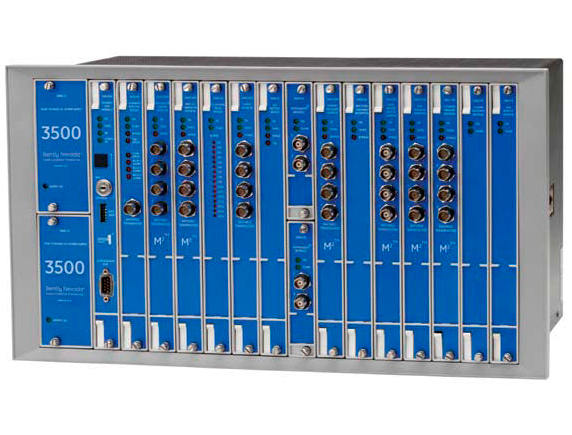
Bently Nevada 3500/46M
Bently Nevada 3500/46M is a 4‑channel hydraulic monitoring module specifically designed for hydraulic turbines and hydroelectric generators. It serves as a core dedicated unit within the 3500 Machinery Health Monitoring and Protection System. Engineered to address the low‑speed, high‑inertia, and low‑frequency vibration characteristics of hydroelectric units, it provides specialized monitoring for radial vibration, air gap, and other key parameters. It is widely used in hydropower plants and pumped‑storage power stations to ensure safe and stable operation of critical hydroelectric equipment including turbines and generators.
1 Product Positioning and System Compatibility
1.1 Core Positioning
The 3500/46M is tailored to meet the monitoring requirements of hydroelectric units (hydraulic turbines, hydroelectric generators). Its core function is to accurately acquire key parameters such as guide bearing runout, seal ring position, and generator stator air gap. Using dedicated low‑frequency filtering and signal processing, it identifies faults unique to hydroelectric units including low‑frequency vibration, uneven air gap, and shear pin failure. It outputs Alert / Danger alarms and interlocks with relay modules to achieve emergency shutdown, preventing damage to runners and stators caused by abnormal vibration or air gap conditions.
Unlike general‑purpose vibration modules such as the 3500/40M / 42M, it incorporates specialized algorithms and low‑frequency response for hydroelectric units (suitable for low‑speed operation at 60–600 rpm), making it a core monitoring component for hydropower applications.
1.2 System Compatibility
- Rack Compatibility: Compatible with full‑size 19‑inch (14‑slot) and compact 12‑inch (7‑slot) 3500 racks. Can be installed in any non‑power‑supply / non‑RIM slot with high‑speed backplane communication, requiring no additional adapters.
- Module Compatibility: Works seamlessly with the 3500/20 (RIM), 3500/25 (Keyphasor), 3500/32 (Relay), and 3500/92 (Communications Gateway) modules. Supports TMR triple modular redundancy and meets SIL 2 safety integrity requirements.
- Software Compatibility: Supports 3500 configuration software for setting channel parameters, filter frequencies, and alarm thresholds. When used with System 1 diagnostic software, it enables dedicated trend analysis and fault diagnosis for hydroelectric units.
- External Compatibility: Provides Modbus RTU/TCP and 4–20 mA analog outputs via the 3500/92 gateway for connection to DCS/SCADA systems, enabling remote monitoring and data integration.
1.3 Environmental and Physical Characteristics
1.3.1 Environmental Adaptability
- Operating temperature: -30°C ~ +70°C, suitable for both indoor and outdoor environments in hydropower plants.
- Relative humidity: 5% ~ 95% (non‑condensing), resistant to high humidity and salt spray (e.g., dam areas).
- Immunity: Complies with IEC 61000‑6‑4 EMC standards, resisting electromagnetic interference from variable frequency drives and excitation systems.
- Vibration / shock resistance: Adapted to low‑frequency, high‑amplitude vibration of hydroelectric units for long‑term stable operation.
- Reliability: Industrial‑grade components with MTBF > 100,000 hours, meeting long‑term operational requirements in hydropower applications.
1.3.2 Physical Specifications
- Module type: 4‑channel hydraulic monitoring module dedicated to the 3500 system.
- Physical dimensions: Standard 3500 module size (approx. 233mm × 109mm × 28mm), weight approx. 1.2kg.
- Interface: 4 independent input channels supporting proximity probes (Prox), Velomitor sensors, and seismic sensors. Built‑in terminal blocks with support for intrinsic safety.
- Status indication: Front‑panel OK (power), TX/RX (communication), and CH1–CH4 (channel alarm) LEDs for intuitive status display.
2 Core Functions
2.1 4‑Channel Hydraulic‑Specific Monitoring
Each channel can simultaneously output 12 core parameters covering critical measurement points on hydroelectric units:
| Parameter Category | Specific Measurements | Application |
|---|---|---|
| Radial Vibration | Overall vibration (direct), 1X / NX (2–20× harmonic) vibration and phase, NOT 1X vibration | Guide bearing runout and turbine runner vibration monitoring; detection of unbalance and misalignment |
| Air Gap Monitoring | Air gap voltage (shaft radial position), instantaneous / average / maximum / minimum air gap, air gap pole count | Detection of uneven stator air gap to prevent stator‑rotor rub |
| Status Indication | Composite signal (shear pin failure) | Early warning of mechanical connection failures |
2.2 Low‑Frequency Signal Processing and Specialized Algorithms
- Low‑frequency response: Optimized for 60–600 rpm low‑speed operation; dedicated filtering eliminates power‑frequency interference while preserving low‑frequency vibration signatures of hydroelectric units.
- Multi‑mode configuration: Supports independent alarm threshold settings for 8 unit operating states (e.g., no‑load, rated load, bi‑directional pumped‑storage operation) to avoid false or missed alarms.
- Transient capture: Captures vibration transients during start‑stop and load changes, recording peak values and durations to support failure analysis.
2.3 Multi‑Level Alarm and Redundant Protection
- Each channel supports independent Alert / Danger two‑level alarms with configurable AND/OR logic and 0–60 second delay.
- First‑out alarm: Logs the first channel and parameter to trigger an alarm for rapid fault source identification.
- Redundant interlocking: Works with 3500/32 / 34 relay modules to build redundant safety loops, ensuring reliable shutdown during critical failures.
2.4 Data Acquisition and Remote Diagnostics
- Data output: 4–20 mA analog and Modbus communication for DCS/SCADA integration and remote monitoring.
- Historical logging: Stores up to 1000 recent alarms and 400 system events for trend analysis and fault tracing.
- Remote maintenance: Enables remote configuration and calibration via the 3500/92 gateway without system shutdown.
2.5 Easy Maintenance and Self‑Diagnostics
- Self‑diagnostics: Continuously monitors module, channel, and sensor status, generating alerts for rapid troubleshooting.
- Hot‑swap capability: Module can be inserted or removed under powered conditions (front panel must be removed first) without disrupting other modules, reducing maintenance downtime.
3 Technical Advantages
- Hydraulic‑specific design: Built‑in low‑frequency response and hydro‑unit algorithms, precisely matched to low‑speed, high‑inertia machines, distinct from general vibration modules.
- Multi‑parameter synchronous output: Up to 12 parameters per channel without additional modules, improving monitoring density and efficiency.
- High compatibility: Fully compatible with the 3500 module family and external systems; supports TMR redundancy and complies with API 670 and SIL 2.
- Multi‑mode configuration: Independent alarms for 8 operating states, adaptable to pumped storage, conventional hydropower, and other scenarios.
- High reliability: Industrial‑grade rugged construction, wide temperature range, high noise immunity, and MTBF > 100,000 hours for long‑term hydropower operation.
4 Typical Applications
4.1 Conventional Hydropower Plants
Used in Francis, axial, and Pelton turbines and generators to monitor guide bearing vibration and air gap, preventing runner wear and stator rub to ensure stable power generation.
4.2 Pumped‑Storage Power Plants
Suitable for bi‑directional units, monitoring vibration and air gap across generating / pumping modes. 8‑state configuration avoids false alarms and ensures safe frequent start‑stop operation.
4.3 Large‑Scale Hydropower Stations
Deployed in giant hydroelectric generators (e.g., 1000 MW‑class) to monitor air gap pole count and average / minimum air gap, preventing stator deformation and ensuring unit safety.
4.4 Units in Dam / High‑Humidity Environments
Resistant to high humidity, salt spray, and strong electromagnetic interference, providing stable vibration and air gap monitoring for dam‑toe and riverbed hydropower stations.
5 Technical Specifications
| Item | Details |
|---|---|
| Model | Bently Nevada 3500/46M |
| Product Type | 4‑channel dedicated monitoring module for hydroelectric units |
| System | 3500 Machinery Health Monitoring and Protection System |
| Number of Channels | 4 independent channels |
| Supported Sensors | Proximity probes (Prox), Velomitor sensors, Seismic sensors |
| Frequency Response | Optimized for 60–600 rpm low‑speed operation with excellent low‑frequency vibration response |
| Output Parameters | 12 total including overall vibration, 1X/NX/NOT 1X vibration/phase, air gap voltage, air gap limits |
| Alarm Levels | Two independent levels (Alert / Danger) per channel; independent thresholds for 8 operating states |
| Configuration Features | 8‑mode setup, AND/OR logic, 0–60s delay, TMR redundancy |
| Data Outputs | 4–20 mA analog, Modbus RTU/TCP |
| Operating Temperature | -30°C ~ +70°C |
| Relative Humidity | 5% ~ 95% (non‑condensing) |
| Vibration / Shock Resistance | Adapted to low‑frequency, high‑amplitude vibration of hydroelectric units |