Description
1. Product Overview
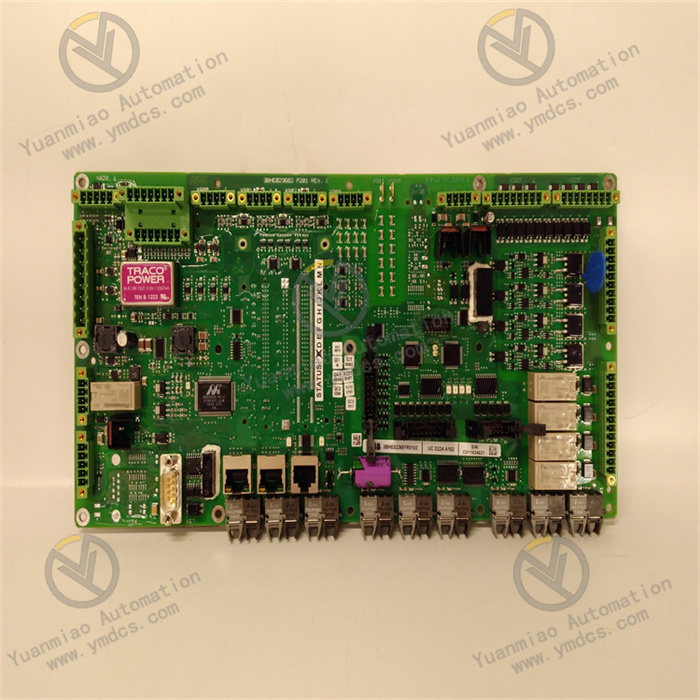
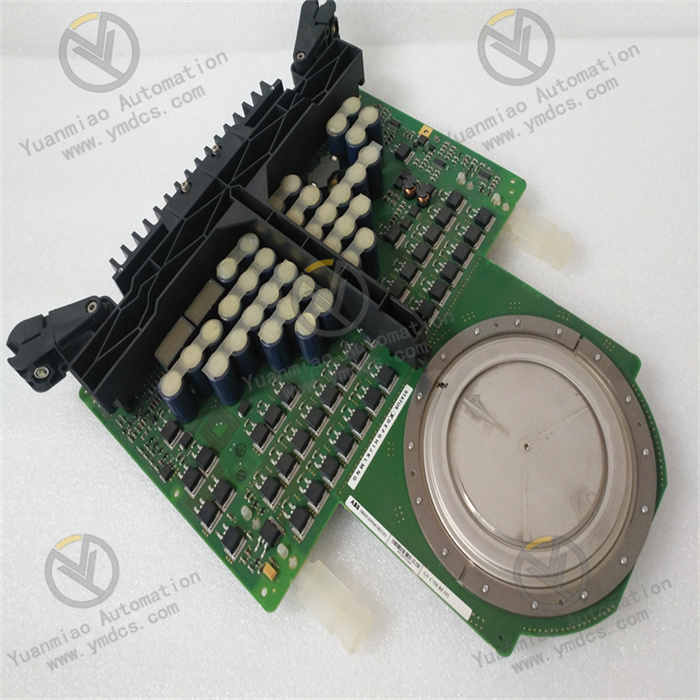
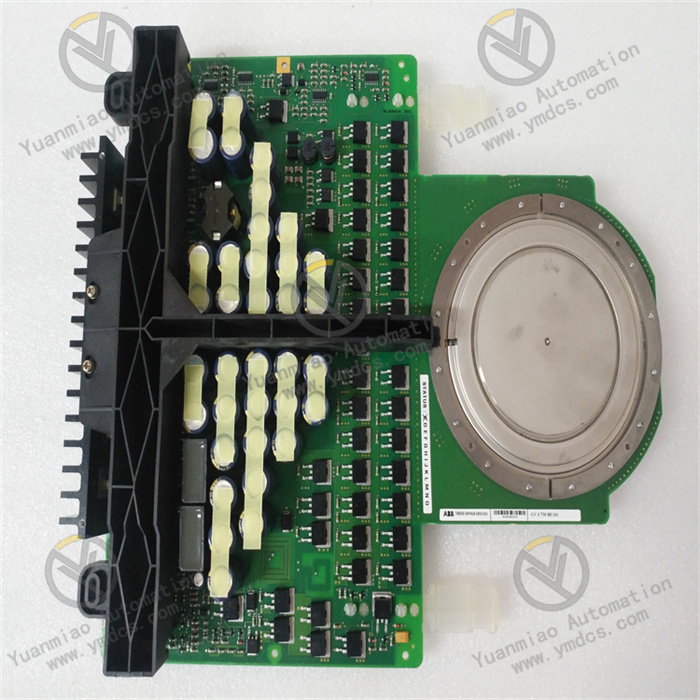
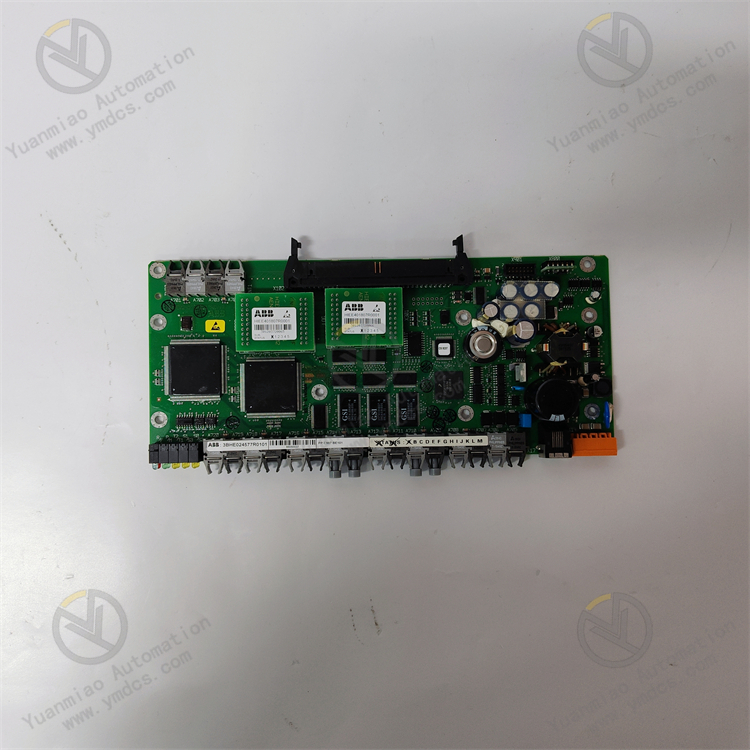
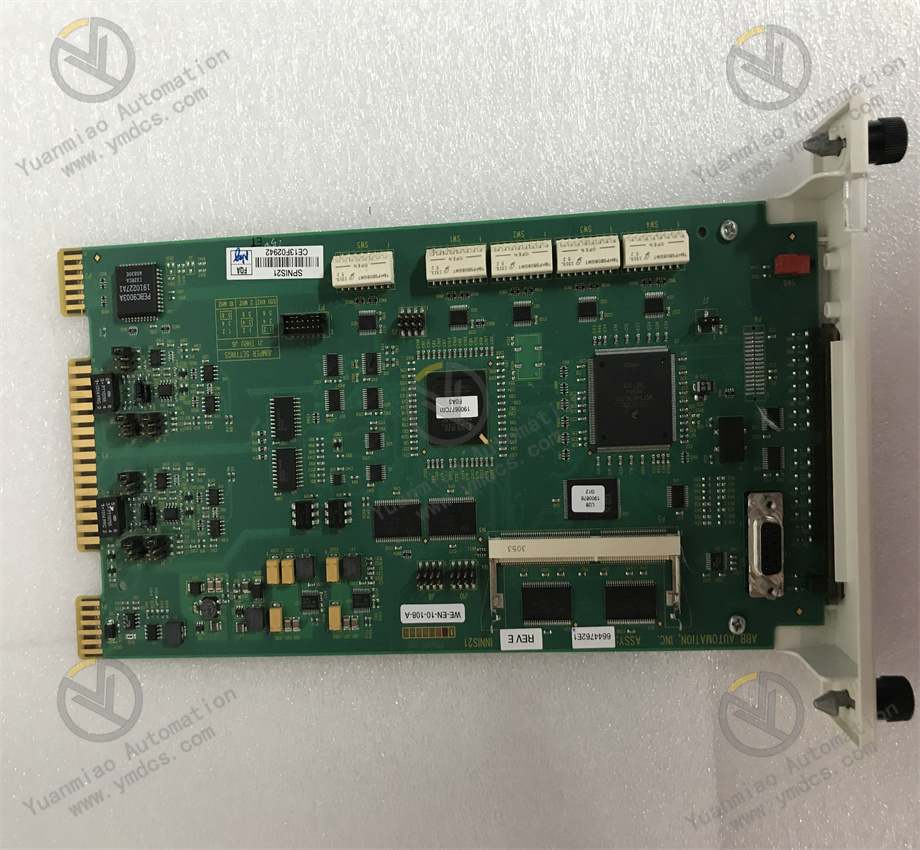
ABB PPD103A, original part number 3BHE015519R0001, is a dedicated generator excitation control processor module under the ABB Symphony Plus series. It serves as the core master hardware unit of power station excitation systems and is designed for static excitation regulation systems of thermal, hydro and gas turbine generator sets. The module undertakes core tasks for the excitation system including core computation, logic control, parameter acquisition, closed-loop regulation and system communication. As the central hardware for excitation voltage stabilization, reactive power regulation, system protection and steady-state condition control of generator units, it is widely compatible with standard ABB excitation control systems and complete power station automation systems.
Adopting a power station-grade high-reliability integrated architecture, this module is equipped with a dedicated excitation control computing chip, high-precision signal sampling unit, multiple logic protection mechanisms and bus communication unit. It features accurate calculation of excitation parameters, dynamic working condition adaptation, intelligent fault identification and stable regulation across full operating conditions. Deeply optimized for grid-connected operation, load fluctuation, grid disturbance and start-stop transition conditions of generator sets, it can adjust excitation current and excitation voltage in real time with high precision to stabilize generator terminal voltage and reactive power output, and effectively suppress the impact of grid fluctuation on unit operation. Compliant with IEC and GB/T power industry standards for power station equipment, the unit has passed stringent tests including high-low temperature aging, electromagnetic compatibility, vibration shock and long-term energized aging. With strong anti-interference performance, high operational stability, ultra-low failure rate and long service life, it acts as the standard original core spare part for technical renovation & upgrade of generator excitation systems, faulty module replacement and preventive maintenance of power stations.
2. Functional Characteristics
2.1 Core Excitation Closed-loop Regulation to Ensure Steady-state Unit Operation
As the master core of the excitation system, the PPD103A module integrates exclusive ABB excitation regulation algorithms for generator units. It supports multi-mode high-precision regulation including generator terminal voltage closed-loop, reactive power closed-loop and power factor closed-loop control. The module collects key operating parameters of the unit such as voltage, current, power and frequency in real time, dynamically calculates and outputs excitation regulation commands, precisely controls the amplitude of excitation output, and rapidly compensates parameter deviations caused by grid voltage fluctuation and unit load variation. It stabilizes grid-connected operation of generator units, eliminates voltage drift, reactive power imbalance and unit oscillation, and fully meets excitation control requirements of generator units during grid connection, loading, steady-state operation and variable-condition operation.
2.2 Adaptive Regulation for Multiple Working Conditions, Suitable for Full Operation Cycle of Units
Embedded with intelligent working condition identification and adaptive regulation logic, the module perfectly adapts to the full-cycle operating conditions of generator units including startup and shutdown, no-load operation, grid connection, full load, variable load and fault transition. For complex conditions such as voltage build-up during unit startup, instantaneous impact upon grid connection, large load fluctuation, grid frequency deviation and short-term disturbance, it can automatically switch regulation parameters, optimize computing logic and increase response speed to achieve bumpless smooth switching. It effectively prevents operational fluctuation, excitation overshoot and abnormal parameters of the unit, greatly improving operational stability and grid-connection safety of generator sets.
2.3 Full-range Fault Monitoring and Excitation System Protection
Featuring comprehensive intelligent fault diagnosis and system protection mechanisms, it monitors potential hazards 24/7 including excitation overvoltage, undervoltage, overcurrent, loss of excitation, excitation limit violation, parameter abnormality, communication failure, sampling anomaly and module hardware fault. The system can accurately identify fault types, locate fault points, record fault sequence data, upload information to the upper monitoring system and trigger alarms and protection actions. Exclusive fault codes are provided to facilitate quick troubleshooting and traceability for maintenance personnel. Meanwhile, integrated software and hardware interlock protection logic for the excitation system can rapidly activate excitation limiting, alarming, switching or shutdown protection under fault conditions, comprehensively safeguarding generator units and excitation equipment, and avoiding major risks such as unit instability, equipment damage and grid impact.
2.4 High-precision Signal Acquisition and Calculation with Excellent Control Accuracy
Equipped with an industrial-grade high-precision AD sampling unit and dedicated excitation operation processor, it delivers high-precision acquisition and fast computation of analog and digital signals. It can capture tiny fluctuations in unit operating parameters at millisecond level. Leveraging original factory calibration algorithms and error compensation mechanisms, it eliminates sampling deviation, calculation drift and interference error under working conditions to ensure high accuracy, timely response and excellent linearity of excitation regulation command output. It thoroughly solves common pain points of conventional excitation control modules such as slow regulation response, insufficient precision and large steady-state deviation, satisfying high-precision excitation control standards of power stations.
2.5 High-reliability Bus Communication for System Linked Control
Supporting the dedicated bus communication protocol of Symphony Plus system, it enables high-speed and stable data interaction with power station DCS systems, auxiliary modules in excitation cabinets, upper monitoring systems and unit sequence control systems. It uploads core data such as excitation voltage, excitation current, generator voltage, reactive power, operating status and fault information in real time, and accurately receives regulation commands, set values and control logic issued by upper systems. It realizes remote monitoring, parameter modification, status traceability and linked control of the excitation system, adapting to requirements of automated, intelligent and unattended operation & maintenance management of power stations.
2.6 Power Station Grade Anti-interference Design for Severe Power Working Conditions
Adopting power-specialized EMC design, multi-layer signal shielding and complete isolation architecture for strong and weak electricity, the unit can effectively isolate strong electromagnetic interference, radio clutter, voltage surges and power frequency disturbance generated by high-voltage equipment, inverters, switchgears and transmission busbars in power stations. The circuit board adopts military-grade three-proof coating technology with moisture-proof, dust-proof, anti-corrosion, anti-aging and vibration-resistant performance. It can operate stably for a long time under harsh conditions in power station rooms with high temperature, high humidity and strong electromagnetic interference, ensuring 7×24-hour uninterrupted stable operation of excitation systems.
3. Technical Parameters
3.1 Core Adaptation Parameters
Product Model: PPD103A Original Spare Part No.: 3BHE015519R0001 Brand: ABB Series: Symphony Plus Power Station Excitation Control Series Product Type: Master Processor Module for Generator Excitation Systems Compatible Systems: ABB Symphony Plus Excitation Control System, complete excitation systems for thermal/hydro/gas turbine generator units Core Functions: Excitation closed-loop regulation, unit working condition parameter acquisition, intelligent fault diagnosis, system bus communication, excitation protection interlock, dynamic adaptive regulation Compatible Equipment: Industrial synchronous generator sets, static excitation cabinets, power station automation control systems Application Scenarios: Excitation voltage stabilization control of generator units, reactive power regulation, steady-state control for grid connection, technical renovation and maintenance of excitation systems, power station automation upgrade
3.2 Control and Calculation Parameters
Core Chip: High-speed operation processor dedicated for excitation control Sampling Precision: Industrial high-precision AD sampling with minimal full-range error Regulation Modes: Adaptive switching among generator terminal voltage closed-loop, reactive power closed-loop and power factor closed-loop Response Speed: Millisecond-level dynamic response for rapid compensation of working condition and grid fluctuation Calculation Characteristics: Real-time parallel computation, no lag, no drift, excellent regulation linearity Control Logic: Built-in standard excitation control logic, fault protection logic and grid connection adaptation logic Data Processing: Large-capacity data cache, supporting fault sequence recording and parameter traceability
3.3 Electrical Operating Parameters
Working Power Supply: 24V DC industrial standard control power supply Voltage Tolerance Range: Adaptable to slight fluctuation of power station control power supply for stable operation Power Consumption: Low-power design with low heat generation, suitable for long-term continuous operation Electrical Isolation: Complete isolation between strong and weak electricity; independent isolation protection for analog and digital signals Anti-interference Grade: Compliant with high-grade EMC electromagnetic compatibility standards for power industry Communication Method: Symphony Plus dedicated high-speed bus communication with stable data transmission without packet loss Operating Characteristics: Independent master control by single module, accurate fault judgment and reliable protection action
3.4 Mechanical Installation Parameters
Installation Method: Slot-type backplane installation inside standard excitation cabinet, precise butt plug-in connection Structure Form: Industrial standardized modular board design, suitable for dense installation in excitation cabinets Structural Features: Reinforced board structure, vibration and shock resistant, adaptable to vibration of power station equipment Wiring Mode: Onboard standard terminals / backplane bus docking, neat wiring and convenient maintenance Maintenance Features: Hot-swap capable for maintenance, in-situ replacement, no complex configuration required Protection Coating: Full-board three-proof coating for circuit board, moisture-proof, dust-proof, anti-corrosion and aging-resistant
3.5 Environmental Parameters
Operating Temperature: 0℃~+60℃ for stable operation under conventional power station conditions Storage Temperature: -40℃~+85℃ Operating Humidity: 5%~95%RH (non-condensing) Environmental Resistance: Tolerant to dust, humidity, slight corrosion, equipment vibration and electromagnetic interference in power stations Operation Mode: Support 7×24-hour uninterrupted continuous stable operation all year round
4. Hardware Configuration & Structural Advantages
4.1 Core Hardware Configuration
The ABB PPD103A module adopts high-reliability hardware architecture dedicated for power industry, equipped with exclusive high-speed excitation master computing chip, high-precision multi-channel AD sampling unit, independent signal conditioning and isolation circuit, bus communication processing unit, full-range fault monitoring and logic protection unit. All signal acquisition loops feature independent isolation, independent filtering and independent impedance matching, which can effectively filter electromagnetic clutter and on-site interference in power stations to guarantee accurate and reliable sampled data. Built-in dedicated excitation algorithm storage unit and fault data cache unit can store operating parameters and fault records for a long time to facilitate post-operation maintenance traceability and working condition analysis. The core components of the module adopt imported power station-grade materials, and have passed strict ABB factory tests including energized aging, temperature shock, electromagnetic compatibility and stability test. Featuring anti-aging, anti-disturbance, low failure rate and long service life, it fully meets the stringent requirements of long-term uninterrupted continuous operation of generator excitation systems.
4.2 Structural Design Advantages
The module adopts standardized board-type modular design with compact structure and high integration. It perfectly fits the slot installation structure of standard ABB excitation cabinets for fast alignment, precise docking and stable conduction, applicable to dense and standardized cabinet layout scenarios. The reinforced PCB has high structural strength, vibration resistance and shock resistance, capable of withstanding long-term vibration of generator units and start-stop impact of equipment without poor contact, signal fluctuation or structural deformation. Onboard visual status indicators directly display module operation, communication, fault and alarm status for quick daily inspection and fault location. The standardized universal interface boasts strong compatibility and supports in-situ replacement of old modules of the same model without modifying cabinet wiring and system logic. It greatly reduces construction difficulty and time cost for technical renovation, maintenance and emergency repair of excitation systems, satisfying lean operation and maintenance requirements of power stations.
5. Working Principle
The ABB PPD103A excitation master module adopts a full closed-loop intelligent excitation control mechanism: unit working condition signal acquisition → signal isolation and conditioning → high-precision AD conversion → core algorithm calculation → excitation regulation command output → closed-loop dynamic correction → system communication linkage → fault monitoring and protection, to undertake core regulation tasks of generator excitation systems.
The module collects core operating signals of the generator such as terminal voltage, stator current, reactive power, power factor, system frequency, excitation voltage and excitation current in real time through backplane and terminal loops. After independent isolation, filtering, shaping and impedance matching conditioning, signals are sent to the high-precision AD unit for analog-to-digital conversion, converting analog operating signals into digital computing data. Based on ABB exclusive excitation control algorithms, combined with preset system values, grid connection logic and steady-state control requirements, the master chip calculates the deviation between actual working conditions and target parameters in real time, dynamically outputs accurate excitation regulation control commands and adjusts the output amplitude of the excitation power unit to realize closed-loop stable regulation of generator voltage and reactive power.
During the whole operation process of the unit, the module continuously refreshes operating data and modifies regulation parameters to adapt to unit load fluctuation, grid disturbance and working condition switching, ensuring steady operation of the unit throughout the cycle. Meanwhile, the module monitors all operating parameters and hardware status in real time. Once excitation abnormality, parameter overrun, loop fault, communication interruption, hardware abnormality and other hidden dangers are detected, it immediately triggers fault judgment, alarm upload and interlock protection actions to precisely avoid risks such as unit instability, abnormal grid connection and equipment damage caused by excitation system faults. Data interaction with upper systems is completed synchronously via bus to realize remote monitoring, parameter management and intelligent maintenance of the excitation system, comprehensively guaranteeing safe, stable and precise operation of generator excitation systems.
6. Application Scenarios
6.1 Master Control for Excitation Systems of Thermal Power Generators
Widely applied in static excitation control systems of thermal power units of various grades as the core master unit of excitation systems. It undertakes core functions including no-load voltage build-up, grid-connected voltage stabilization, reactive power regulation, load adaptation and fault protection. With advantages of high-precision closed-loop regulation, strong working condition adaptability and stable operation, it precisely adapts to harsh operating conditions of thermal power units including long-term full-load operation, frequent load variation and heavy grid fluctuation interference. It ensures stable grid connection, qualified voltage and balanced reactive power of thermal power units, complying with power grid dispatching and unit safe operation standards.
6.2 Excitation Control for Hydro / Gas Turbine Generator Units
Suitable for excitation automation control systems of hydro and gas turbine generator units. Targeting characteristics of hydro units such as water head fluctuation, sudden load change and frequent start-stop, and gas turbine units with fast load variation and high dynamic response requirements, it matches unit operation logic accurately with adaptive dynamic regulation, fast response and bumpless switching. It effectively suppresses unit oscillation and parameter drift to ensure efficient, stable and compliant grid-connected operation of hydro and gas turbine generator units.
6.3 Steady-state Regulation for Grid-connected Generator Units
Applicable for all types of generator units required to strictly follow grid connection standards. Through precise excitation closed-loop regulation and reactive power optimization control, it stabilizes voltage and power factor at the grid connection point of the unit, suppresses the impact of grid-side disturbance on the unit, ensures compliant grid connection, steady operation and qualified parameters of generator units, effectively reduces grid assessment deviation and improves the economy and safety of grid-connected operation of power stations.
6.4 Supporting System for Intelligent Operation & Maintenance of Power Station Automation
Leveraging stable bus communication capability and complete data recording function, it meets intelligent management requirements of power station DCS automatic monitoring, remote maintenance, data traceability and fault analysis. It visualizes the operating status of excitation systems, digitizes parameter management and refines fault disposal, helping build unattended, lean and intelligent operation & maintenance systems for power stations.
6.5 Core Spare Part Reserve for Power Industry
For power enterprises including thermal, hydro and gas power stations, this module serves as a key spare part of excitation systems and essential standard spare part for preventive maintenance and emergency repair of power stations. It can rapidly handle unexpected problems such as aging, failure, precision drift and communication abnormality of excitation master modules, preventing major accidents including unit load reduction, off-grid shutdown and equipment damage caused by excitation system faults, and guaranteeing uninterrupted safe and stable power generation of generator units all year round.