Description
1. Overview
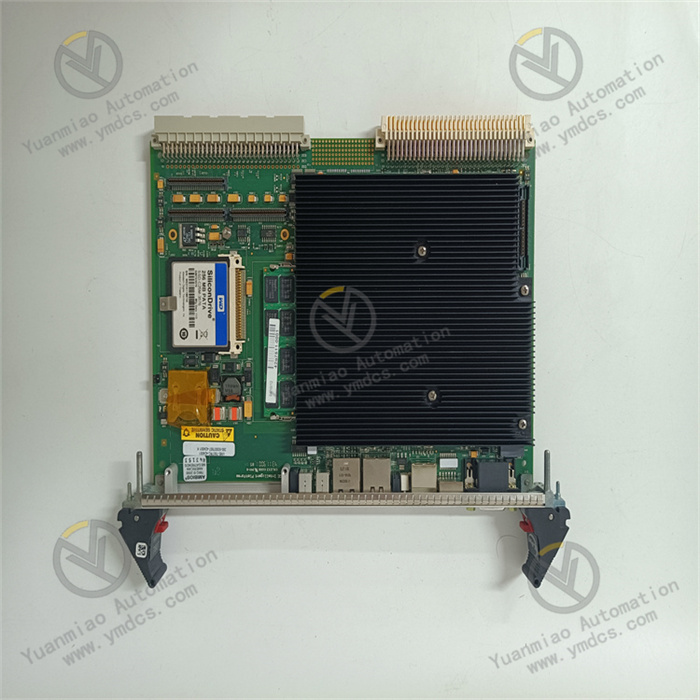
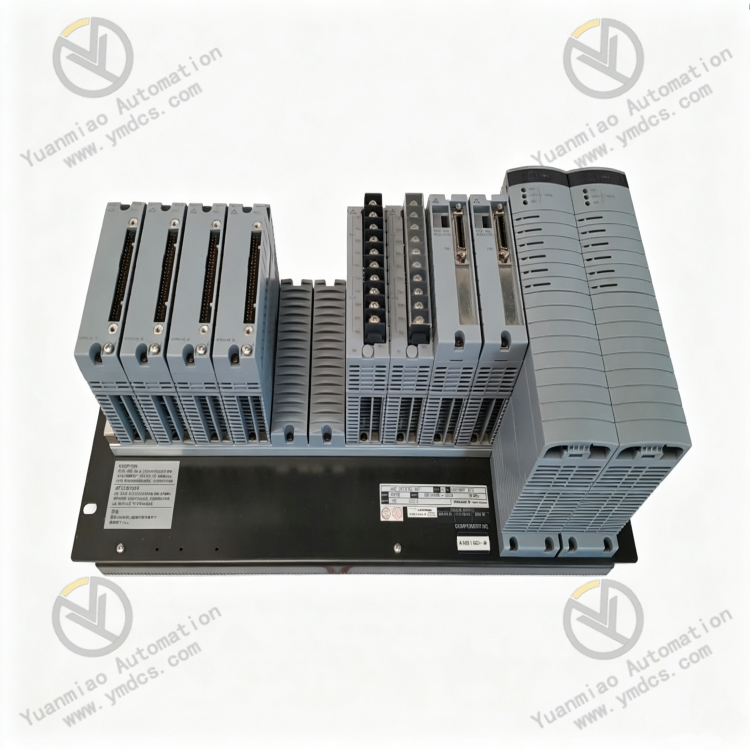
Yokogawa PW484‑50 S1 is a DC24V‑input redundant power supply module of Yokogawa PW484 series. It is designed specifically for ProSafe‑RS Safety Instrumented System (SIS) and CENTUM VP DCS process control systems, serving as core dedicated hardware for secondary voltage‑stabilized power supply in industrial control cabinets.
Different from AC‑input power modules, this module adopts the architecture of DC24V input and secondary regulated output. It is applicable to industrial cabinets with existing centralised DC24V power supply on‑site, converting unstable front‑end DC power into high‑precision, low‑ripple, clean DC24V operating power for the system.
Equipped with ISA G3 industrial environmental adaptation option, PW484‑50 S1 supports ultra‑wide temperature operation from ‑20℃ to +70℃. It features multi‑module parallel redundancy, load sharing, hot‑swap maintenance and comprehensive electrical protection, suitable for 24‑hour non‑stop continuous production in process industries. This is a standard original spare part without explosion‑proof certification and has no universal substitute. It is widely used for old power‑supply replacement, cabinet power‑supply retrofitting and system expansion & maintenance in petroleum, chemical, natural‑gas, power and other industries, and is fully compatible with mainstream hardware architectures of Yokogawa control systems.
2. Functions and Features
2.1 Core Functions
Precise DC24V Regulated Output: Performs secondary voltage regulation, filtering and waveform shaping for fluctuating on‑site DC24V input power, and outputs stable and clean DC24V operating power. It supplies steady power to cabinet CPU controllers, I/O boards, communication modules and field instrument loops, eliminating system stalling, reset and signal anomalies caused by DC voltage drift and ripple interference.
Redundant Parallel Fault‑tolerant Power Supply: Natively supports multi‑module redundant parallel operation with intelligent load‑sharing capability. Multiple modules bear cabinet load evenly and synchronously. When one module fails, powers off or is hot‑swapped, remaining modules take over the full load seamlessly with no power interruption, voltage drop or system disturbance, ensuring non‑stop operation of control systems.
Comprehensive Electrical Safety Protection: Integrates five core protection mechanisms: over‑voltage, under‑voltage, over‑current, short‑circuit and over‑temperature. It monitors power‑loop anomalies in real time, automatically locks output and isolates fault points upon fault occurrence, effectively preventing burnout of downstream boards, instruments and loop equipment, and fully protecting hardware safety of cabinet control systems.
Wide‑temperature Industrial Environmental Adaptation: Fitted with ISA G3 industrial‑grade environmental adaptation configuration to optimise circuit stability under high and low temperatures. It operates stably under harsh conditions such as severe cold and high cabinet temperature, and resists dust, humidity and mechanical vibration for complex field scenarios in plants and outdoor sites.
On‑line Non‑stop Maintenance: Supports hot‑swap replacement under loaded conditions. Maintenance, spare‑part replacement and module inspection can be carried out without system shutdown, power‑off or modification of system configuration and control logic, thoroughly avoiding unplanned outage risks and greatly improving maintenance efficiency.
Real‑time Self‑diagnosis and Status Alarm: Equipped with high‑precision on‑board monitoring chips to collect input voltage, output voltage, load current, internal module temperature and operating conditions 24/7. Panel status LEDs indicate equipment status intuitively with accurate fault alarms and fast fault localisation for quick troubleshooting by maintenance personnel.
2.2 Product Features
DC‑dedicated Regulated Architecture: Custom‑designed for DC24V‑input scenarios. Unlike conventional AC‑input power supplies, it suits industrial cabinets with centralised DC power supply. It delivers higher secondary regulation accuracy and lower output ripple, and outperforms general‑purpose power modules in DC‑power‑supply application scenarios.
Industrial‑grade High Reliability: Adopts imported industrial‑grade components and reinforced PCB design. It is resistant to electromagnetic interference, voltage surges and load fluctuation, with negligible drift and low failure rate during long‑term continuous operation, meeting high‑reliability power‑supply requirements for SIS safety systems.
High‑efficiency Energy‑saving Operation: Optimised high‑frequency switching‑circuit design achieves high power‑conversion efficiency, low heat generation and low noise. It effectively reduces cabinet heat‑dissipation burden and long‑term operating energy consumption, and extends overall equipment service life.
Original‑equipment Plug‑and‑play Compatibility: Standard slot‑mount form‑factor for Yokogawa cabinets. Electrical parameters, pin definitions and redundant communication protocols are fully compatible with full ranges of ProSafe‑RS and CENTUM VP systems. No calibration or commissioning is required after replacement for fast plug‑and‑play swap.
Long Service Life and Low Maintenance Cost: Optimised for long‑term industrial service. Components feature excellent ageing and fatigue resistance with low overall failure rate. Supported by standard original‑equipment warranty, it substantially reduces daily maintenance and spare‑part replacement costs for control systems.
3. Specifications
| Parameter Item | Technical Specification |
|---|---|
| Model | PW484‑50 S1 |
| Device Type | DC24V‑Input Redundant Power‑supply Module, Yokogawa PW484 Series |
| Input Voltage | Industrial standard DC24V power supply (wide‑range adaptation) |
| Output Voltage | High‑precision regulated DC24V system operating power |
| Environmental Configuration | With ISA G3 industrial environmental adaptation option |
| Redundancy Mode | Multi‑module parallel redundancy, intelligent load sharing, bumpless switching |
| Protection Mechanism | Comprehensive protections: over‑voltage, under‑voltage, over‑current, short‑circuit, over‑temperature |
| Operating Temperature | ‑20℃ ~ +70℃ (ultra‑wide industrial temperature range) |
| Ambient Humidity | 5%~95%RH, non‑condensing |
| Explosion‑proof Rating | Standard version without explosion‑proof certification |
| Installation Method | Standard cabinet slot‑mount installation, on‑line hot‑swap supported |
| Applicable Systems | Yokogawa ProSafe‑RS SIS, CENTUM VP DCS process‑control systems |
4. Working Principle
The Yokogawa PW484‑50 S1 power module implements closed‑loop DC voltage‑regulation workflow: DC Input → Pre‑filtering → Secondary Voltage Regulation → Isolation Protection → Intelligent Output → Self‑diagnosis & Protection.
After field front‑end DC24V power enters the module, the pre‑filter circuit first suppresses DC‑loop noise, pulse interference and voltage ripple, eliminating power‑supply noise induced by grid and line transmission and purifying raw input power.
Filtered DC voltage passes into the high‑precision secondary regulation unit for voltage calibration and constant output, eliminating voltage drift and fluctuation of front‑end DC power. Clean regulated DC24V power complying with industrial‑control standards is generated to feed various cabinet control hardware, I/O loops and communication devices.
Under multi‑module redundant parallel operation, each PW484‑50 S1 outputs power evenly via built‑in load‑sharing algorithm. When one module fails or undergoes hot‑swap, seamless load switching is realised automatically with no power interruption or voltage drop.
The module monitors core parameters including input/output voltage, load current and internal temperature continuously. Once anomalies such as over‑voltage, under‑voltage, short‑circuit, over‑current or overtemperature are detected, protection lockout is triggered immediately, faulty output is cut off and fault‑alarm LED is activated. Fault points are precisely isolated to protect stable operation of downstream control systems and realise all‑weather fault‑tolerant power supply and intelligent operation & maintenance.
5. Application Scenarios
Chemical SIS Safety Instrumented Systems: Dedicated power‑supply unit for ProSafe‑RS safety cabinets in refineries, coal‑chemical plants and fine‑chemical facilities. Suited for on‑site centralised DC24V power‑supply scenarios, it provides stable uninterrupted regulated power for ESD emergency shutdown, process interlock and safety‑monitoring hardware to guarantee reliable execution of safety interlocks under high‑risk conditions.
Oil & Gas Industry Automation Systems: Cabinet power supply for automation control systems in oilfields, gas fields, LNG plants and long‑distance pipelines. Leveraging G3 wide‑temperature environmental adaptability, it adapts to harsh outdoor conditions with wide temperature variation, heavy dust and strong interference, ensuring 24‑hour stable operation of control systems.
Power‑plant Industrial Control Systems: Dedicated module for DC‑powered cabinets of plant auxiliary‑control systems, unit process‑monitoring systems and thermal automation systems. It resolves front‑end DC power fluctuation and prevents unit parameter drift and equipment misoperation caused by power‑supply anomalies.
Process‑industry DCS Control Systems: Core power‑supply module for CENTUM VP DCS systems in chemical, pharmaceutical, water‑treatment, metallurgical and other industries. Designed for cabinets with DC power‑supply architecture, it stabilises power for controllers, I/O and communication equipment and avoids system off‑line and data loss triggered by power‑supply failures.
Legacy‑system Maintenance & Retrofit: Fully compatible with older DC‑input power modules of PW484 series. Faulty or aged hardware can be directly replaced without modifying cabinet wiring, power loops or system configuration, enabling fast equipment repair, system expansion and power‑supply‑architecture optimisation.
6. Common Faults and Troubleshooting
6.1 No Module Output, System Power Loss, Power Indicator Off
Fault Causes: Loss of front‑end DC24V input; blown fuse in input loop; poor module‑slot contact; damaged internal regulation circuit; hardware chip failure.
Solutions: Inspect front‑end DC supply voltage, circuit‑breaker and fuse status to eliminate external supply faults; power off, clean module edge connectors and cabinet slots, then re‑seat and fasten securely; perform power‑cycle reset for the module; replace original PW484‑50 S1 module if output remains absent after eliminating external faults indicating internal hardware damage.
6.2 Output Voltage Fluctuation, System Signal Disorder, Frequent Alarms
Fault Causes: Excessive ripple of front‑end DC power; aged module regulation circuitry; instantaneous load impulse; uneven load distribution among redundant modules; poor loop contact.
Solutions: Monitor quality of front‑end input power and optimise front‑end power‑supply filtering configuration; calculate actual cabinet load and avoid transient overload; verify load‑sharing status of redundant modules and calibrate power‑supply parameters; clean terminals to eliminate poor contact; replace spare module when regulation performance degrades.
6.3 Module Overtemperature Alarm, De‑rated Output, Overtemperature Protection
Fault Causes: Blocked cabinet air duct; heavy dust accumulation; poor heat dissipation; excessive ambient temperature; long‑term full‑load module operation; heat generation from component ageing.
Solutions: Clean dust from cabinet air duct and module heat sink; inspect cabinet cooling‑fan condition; improve room ventilation and lower ambient temperature; distribute cabinet load reasonably to avoid full‑load operation of single module; replace original module if repeated overtemperature alarms indicate module ageing and failure.
6.4 Frequent Over‑current / Short‑circuit Protection, Output Locked
Fault Causes: Short‑circuit in downstream I/O loops; instrument leakage; defective load equipment; drifted module over‑current protection parameters; internal circuit ageing.
Solutions: Troubleshoot downstream cabinet load loops section‑by‑section, locate and isolate short‑circuited or leakage‑faulty devices; manually reset module protection state to restore power supply; replace module if protections still trigger after complete elimination of external‑load faults indicating module hardware failure.
6.5 Redundant Parallel Failure, Single‑module Heavy Load, Uneven Load Sharing
Fault Causes: Mismatched model and firmware among redundant modules; abnormal parallel communication; inconsistent operating parameters; poor slot contact leading to load‑sharing failure.
Solutions: Verify consistency of model and firmware revision for redundant power modules; clean module slots and communication contacts, re‑insert and fasten securely; reset redundant power‑supply configuration and rematch load‑sharing parameters; replace faulty module if redundant function cannot be recovered.