Description
1. Product Overview
Model: 4353
Brand: TRICONEX
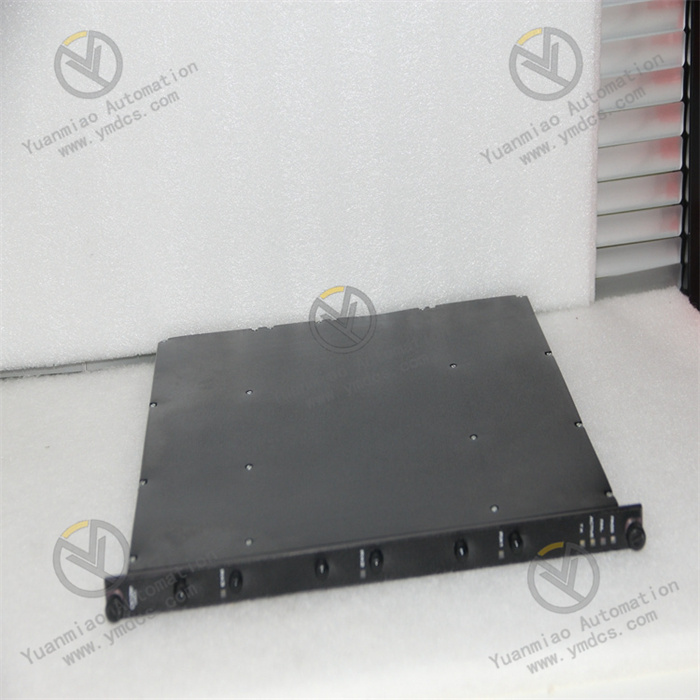
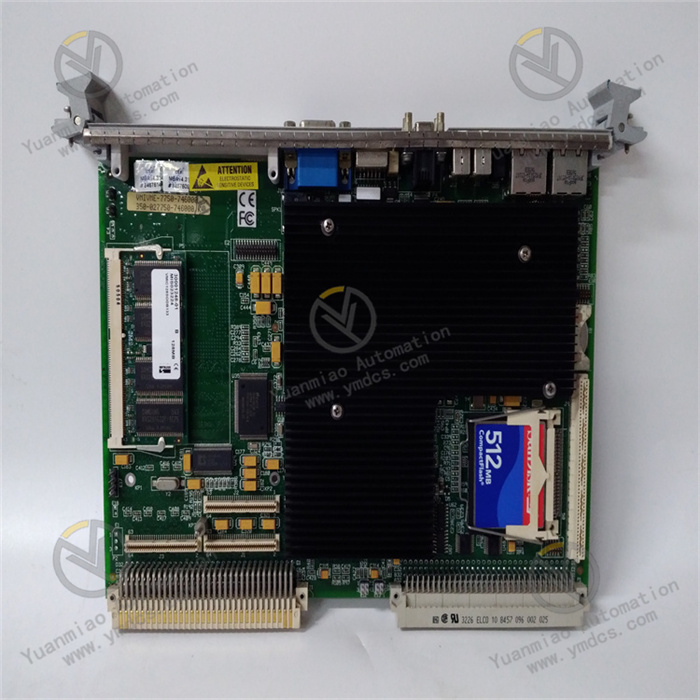
Product Name: TMR Triple Modular Redundant Communication Processor Module, Tricon Communication Module (TCM)
Product Positioning
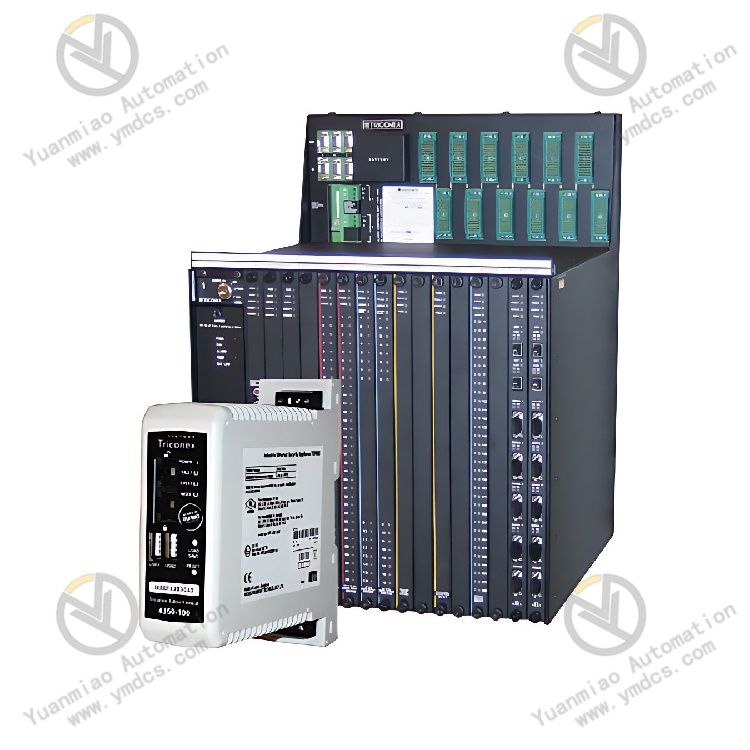
TRICONEX 4353 is a dedicated Triple Modular Redundant Communication Module (TCM) for Schneider Triconex Tricon Fault-Tolerant Safety Instrumented Systems. It is designed for SIS safety control applications in high-risk process industries including petrochemical, natural gas, thermal power and coal chemical sectors. As the core external communication hub of Tricon SIS/ESD/FGS safety systems, it performs protocol parsing, data interaction, link management and fault protection between safety systems and DCS, upper monitoring systems, remote O&M terminals and field intelligent devices. Serving as an essential genuine spare part and system expansion component that ensures real-time, reliable and fault-tolerant data transmission of safety control systems, it meets the requirements of long-cycle safe and stable operation of industrial units.
Core Functions
Adopting Triconex native TMR triple modular redundant fault-tolerant architecture and three-channel independent operation with 2-out-of-3 voting mechanism, it thoroughly eliminates risks of data interruption, link disconnection, system spurious actuation or fail-to-act caused by single-point communication faults. Supporting multi-protocol and dual-Ethernet-port differentiated communication services, it realizes bidirectional stable transmission of SIS process parameters, equipment status, interlock alarms and fault logs, and satisfies key business demands including centralized DCS monitoring, TriStation program configuration, OPC data interconnection, SNTP time synchronization, remote firmware upgrade and O&M commissioning. Built-in hardware-based link self-check, data verification, anomaly isolation and redundant switching mechanisms can identify line interference, link disconnection, protocol exceptions, packet loss and other faults in real time, switch standby links within millisecond level and filter abnormal messages. It guarantees communication continuity and data integrity of safety systems, effectively avoids unplanned unit shutdown and safety interlock failure triggered by communication anomalies, and comprehensively improves the safety management level of industrial facilities.
Compatible Systems
Specially developed for Triconex Tricon fault-tolerant safety systems, compatible with Tricon v10.3 and later system platforms and the full series of TMR triple redundant controller architectures. Fully compliant with original system bus protocols, rack slot specifications, electrical interfaces and installation standards. It supports replacement of legacy communication modules, system communication expansion, network architecture upgrade and multi-system data interconnection renovation. Featuring excellent compatibility and interchangeability between new and existing equipment, it enables in-situ hot swapping without modification of system control logic and configuration programs with zero adaptation risks.
Application Scenarios
Widely deployed in high-risk process industries such as petroleum refining, oil & gas storage and transportation, fine chemicals, thermal power generation and coal chemical industry for communication networking of SIS Safety Instrumented Systems, ESD Emergency Shutdown Systems and FGS Fire & Gas Systems. It is mainly used for cross-system data exchange between SIS and mainstream DCS including Yokogawa and Honeywell, upper-level configuration monitoring, engineering program upload & download, system time synchronization, remote maintenance diagnosis and firmware upgrade, adapting to stringent working conditions of 7×24-hour uninterrupted safety management on industrial sites.
2. Technical Features
Native TMR Triple Redundant Fault-tolerant Architecture with High Safety and Reliability
Adopting core Triconex triple modular redundant technology, communication operation units, data processing units and link detection units are constructed with independent hardware on three channels, equipped with hardware-based 2-out-of-3 fault-tolerant voting mechanism. Communication abnormality, chip failure, electromagnetic interference or line fluctuation on any single channel will not affect overall communication services without single-point failure risks. It fully meets industrial functional safety design requirements, fundamentally solves system disconnection and data anomalies induced by conventional single communication module failures, and fits core communication scenarios of high-risk industrial safety control systems.
Differentiated Protocol Adaptation via Dual Ethernet Ports for Flexible Networking in Multiple Scenarios
The module is equipped with two independent Ethernet ports supporting differentiated protocol allocation. The NET1 port is compatible with all mainstream communication protocols to connect DCS, upper monitoring systems and field devices; the NET2 port is dedicated to embedded OPC server, TriStation configuration and SNTP time synchronization protocols, precisely matching segmented scenarios including engineering configuration, data upload, system time synchronization and remote O&M. Meanwhile, it supports mainstream industrial protocols such as Modbus TCP. A single module can satisfy multi-dimensional communication demands covering production monitoring, engineering commissioning and system maintenance with strong networking adaptability.
Industrial-grade Anti-interference Transmission for Stable Operation under Complex Working Conditions
Constructed with industrial-grade original components, vibration-resistant anti-corrosion PCB and isolated protection circuits. The whole module has passed EMC electromagnetic compatibility, wide-temperature operation, vibration resistance and dustproof certifications. Built-in power filter, surge suppression, electrostatic protection and electromagnetic shielding mechanisms effectively resist high-frequency electromagnetic crosstalk, voltage pulses, temperature fluctuations and equipment vibration on industrial sites. With functions of multi-layer data verification, lost packet retransmission and abnormal message filtering, it maintains distortion-free and uninterrupted data transmission under complex electromagnetic environments to ensure real-time data synchronization of safety systems.
On-board Intelligent Self-diagnosis for Full-condition Monitoring and Efficient Maintenance
Equipped with an integrated on-board intelligent self-diagnosis system and front-panel status indicators to intuitively display module operation status, link connection status and fault alarm status in real time. It monitors channel conditions, bus communication, data transmission, hardware chips and port link status around the clock, and accurately locates faults including link disconnection, protocol mismatch, packet loss, channel failure and hardware aging. Fault time sequence, operation logs and original equipment fault codes are automatically recorded, supporting online reading via the system host, fault tracing and operation review. It greatly shortens the cycle of communication fault troubleshooting, maintenance and commissioning, and reduces production line downtime losses and maintenance costs.
Standardized Modular Design with Plug-and-play and Strong Interchangeability
Strictly developed in accordance with Triconex original hardware specifications, slot definitions, bus communication protocols, electrical parameters and installation standards, adopting rack-mounted standardized modular structure. Module dimensions, mounting positions, pin assignments, communication logic and electrical performance are fully compatible with original systems. Faulty legacy modules can be directly replaced by hot swapping in situ without modifying system control programs, reconfiguring parameters or special commissioning. It covers all scenarios including routine equipment maintenance, communication expansion, system upgrade and network reconstruction with zero compatibility risks and significantly reduced maintenance and transformation costs.
Low-power and High-stability Design Suitable for Long-cycle Continuous Operation
Adopting low-power high-performance chip architecture, the module features low overall power consumption, low heat generation and stable circuit operation. It adapts to industrial wide-temperature conditions and operates continuously under long-term high load without parameter drift, program stalling or hardware aging faults. It perfectly matches the demand for year-round continuous production of process industrial facilities, effectively improving the overall availability and operational stability of safety control systems.
3. Specification Parameters
| Item | Parameter |
|---|---|
| Model | 4353 |
| Manufacturer | TRICONEX (Schneider EcoStruxure) |
| Equipment Type | TMR Triple Modular Redundant Communication Processor Module (TCM), SIS Safety System Communication Module |
| Compatible Systems | Triconex Tricon Series, compatible with Tricon v10.3 and later Safety Instrumented Systems |
| Application Scenarios | SIS/ESD/FGS system networking in petrochemical, natural gas, thermal power and coal chemical industries; data interaction between SIS and DCS, engineering configuration, remote maintenance, system time synchronization |
| Core Architecture | TMR Triple Modular Redundancy, Hardware 2-out-of-3 Fault-tolerant Voting Mechanism |
| Core Functions | Multi-protocol data exchange, dual-port differentiated communication, redundant link management, 2-out-of-3 fault-tolerant data voting, link self-diagnosis, fault alarm & log storage, program configuration download, SNTP time synchronization, remote firmware upgrade, communication anomaly protection |
| Supported Protocols | Modbus TCP, Embedded OPC, proprietary TriStation Protocol, SNTP Time Synchronization Protocol |
| Communication Ports | 2 independent Gigabit Ethernet Ports (NET1, NET2 for differentiated protocol adaptation) |
| Transmission Rate | Ethernet: 100/1000 Mbps auto-adaptive |
| Maximum Quantity per System | Up to 4 TCM communication modules in a single Tricon system |
| Power Supply | Standard rack regulated power supply, tolerant to industrial power fluctuation |
| Typical Power Consumption | Low-power design, overall power consumption ≤5W |
| Operating Temperature | -40℃~+70℃ (Industrial wide temperature range) |
| Storage Temperature | -40℃~+85℃ |
| Ambient Humidity | 5%~95%, non-condensing, suitable for indoor industrial cabinet environment |
| Protection Capability | Electromagnetic shielding, surge suppression, electrostatic protection, vibration resistance, dust and moisture resistance, adaptable to complex industrial conditions |
| Operation Mode | Three-channel redundant parallel operation, dual-port divided communication, real-time data fault-tolerant voting, fault self-diagnosis, automatic redundant link switching, abnormal data filtering |
| Mounting Method | Standard slot installation in system rack, in-situ hot-swappable replacement, modular assembly |
| Product Characteristics | Triple redundant fault tolerance, zero single-point failure, dual-port differentiated networking, multi-protocol compatibility, low power consumption and high stability, wide-temperature operation, intelligent fault diagnosis, full original interchangeability, applicable for high-risk industrial safety control systems |
4. Working Principle
Power-on Initialization and Three-channel Redundant Self-test
After powered on by the system rack, the module automatically completes power-on initialization and triggers comprehensive self-test of three independent redundant channels simultaneously. It sequentially executes integrity verification of core computing chips, dual Ethernet ports, bus communication interfaces, fault diagnosis circuits and redundant voting logic, and loads original standard communication protocols, port adaptation parameters and system configuration. It comprehensively detects potential hazards including single-channel hardware damage, port abnormalities, protocol disorder, link failures and parameter mismatch. After all three channels pass self-test, handshake communication is established with the SIS main controller and system bus, and the module enters normal standby status for redundant communication.
Dual-port Differentiated Protocol Parsing and Data Acquisition
During normal system operation, the module realizes divided precise communication via two independent Ethernet ports. The NET1 port is equipped with full-protocol adaptation capability to connect DCS systems, upper monitoring terminals and field intelligent devices, completing bidirectional interaction of process parameters, equipment status and interlock signals. The NET2 port is dedicated to OPC service, TriStation configuration and SNTP time synchronization protocols, supporting exclusive services including engineering program upload & download, unified system time synchronization, remote maintenance commissioning and firmware upgrade. Built-in dedicated protocol parsing engine automatically completes raw data decoding, format conversion and classified preprocessing, filters interference noise and invalid messages, and outputs standardized and accurate valid data.
TMR 2-out-of-3 Fault-tolerant Data Voting and Transmission
Based on Triconex proprietary triple redundant architecture, three independent data channels synchronously execute identical data computation, parsing and transmission tasks. A hardware-based 2-out-of-3 voting mechanism compares and verifies all data results and communication status in real time. When data deviation, transmission delay, link interruption or hardware failure occurs on any single channel, data from the abnormal channel is automatically blocked, consistent data from the other two healthy channels is adopted for transmission, the faulty channel is marked and alarms are uploaded. The overall communication service remains uninterrupted throughout the process, completely avoiding system communication failure caused by single-point faults and ensuring accuracy, continuity and security of data transmission.
Adaptive Link Protection and Intelligent Anomaly Isolation
The module continuously monitors link status, data transmission quality, port conditions and channel operation status of dual Ethernet ports around the clock. For common on-site anomalies such as network fluctuation, transient link disconnection, protocol timeout, packet loss and electromagnetic interference, adaptive link adjustment and fault tolerance mechanisms are rapidly activated. It automatically filters error messages, over-limit data and unauthorized access requests, and isolates abnormal communication links to prevent abnormal data from invading the SIS main control system and disturbing safety control logic. It eliminates system spurious interlock and fail-to-interlock faults from the communication layer, fully guaranteeing stable operation of safety control systems.
Full-condition Data Storage and Bidirectional O&M Interaction
During operation, the module uploads channel conditions, communication status, data transmission logs and fault alarm information to the SIS background in real time; meanwhile, it accurately receives and executes commands issued by the system including configuration setting, parameter calibration, program update, remote upgrade and time synchronization. It automatically and completely records communication fault timestamps, error codes, link switching records and data interaction trails to support fault tracing, operation review, system maintenance optimization and process parameter commissioning, providing complete and accurate data support for industrial facility safety management, equipment maintenance and system upgrading & reconstruction.
5. Common Faults and Troubleshooting
Symptom: Module alarm after power-on, unrecognized by system, complete communication interruptionPossible Causes
① Unstable rack power supply voltage, poor circuit contact, excessive power ripple;
② Oxidation of module gold fingers and dust accumulation in rack slots leading to failed bus handshake;
③ Corrupted module firmware, program crash or firmware version mismatch with the system;
④ Hardware circuit damage caused by aging of redundant channel chips after long-term high-load operation.
Solutions
Shut down the system, cut off power and complete discharge. Inspect rack supply voltage and circuit continuity, fasten power terminals and eliminate hidden power supply risks. Extract the module in a dust-free environment, clean oxide layers on gold fingers and dust impurities inside slots, then firmly reinsert. Re-flash compatible original firmware matching the system version and restore default communication configuration and operation parameters. If alarms and disconnection persist despite normal power supply, good contact and valid firmware, hardware damage is confirmed and original 4353 communication module replacement is required.
Symptom: Frequent communication disconnection, packet loss, transmission delay and abnormal system data refreshPossible Causes
① Damaged Ethernet cables, loose RJ45 connectors and abnormal line impedance;
② Severe on-site electromagnetic interference and non-standard cable shielding & grounding resulting in distorted messages and abnormal data;
③ Misconfiguration of port protocols, IP addresses and networking parameters;
④ Fault on single redundant channel of the module causing abnormal 2-out-of-3 voting and unstable data.
Solutions
Comprehensively inspect communication cables, connectors and wiring conditions of dual ports, replace damaged cables, fasten interfaces, optimize cable shielding and grounding to isolate electromagnetic interference. Log into the system host to verify dual-port protocol settings, IP addresses, network access permissions and communication session parameters, and restore original standard configuration. Check redundant channel status via the system diagnosis interface, locate abnormal single channel and perform reset calibration. If faults remain after rectification, communication performance degradation of the module is confirmed and replacement is needed.
Symptom: Abnormal communication on single port, failed dual-port function allocation, partial services inaccessiblePossible Causes
① Aging of single Ethernet port, poor interface contact, disabled port permission;
② Confused dual-port protocol configuration and disordered differentiated allocation parameters;
③ Parameter drift and abnormal operation of single-channel arithmetic circuit;
④ Transient electromagnetic interference triggering false port alarms and function lockout.
Solutions
Check hardware status of the faulty port, clean interface contacts, replace matched network cables and verify port enable permission. Reconfigure differentiated protocol parameters for NET1 and NET2 to restore original port allocation logic. Reboot the module for program reset and initialization, clear runtime cache and calibrate redundant voting parameters. Optimize cabinet electromagnetic shielding and heat dissipation to reduce transient interference impact. Replace the module promptly if repeated single-port faults cannot be resolved to avoid risks of full-network communication failure.
Symptom: Protocol connection failure, unable to communicate with DCS, OPC and configuration terminalsPossible Causes
① Incorrect protocol selection on dual ports and mismatched master/slave configuration;
② IP address conflict, blocked communication ports and inaccessible network segments;
③ Inconsistent communication parameters between interconnected devices and exceeded session limits;
④ Abnormal module protocol parsing kernel and program failure.
Solutions
Strictly distinguish functional positioning of dual Ethernet ports, re-match corresponding communication protocols and connected devices, and correct master/slave configuration. Verify IP network segments and equipment addresses within the whole network, resolve address conflicts and open communication ports and maintenance permissions. Unify baud rate, check rules and maximum session quantity between devices, and release redundant communication resources. Re-download communication configuration, reboot the module and connected devices to re-establish handshake networking. If interconnection still fails with correct parameters, protocol parsing malfunction is confirmed and original module replacement is required.
Symptom: Excessive module temperature, operation lag and occasional communication restartPossible Causes
① Blocked cabinet air ducts and heavy dust leading to poor module heat dissipation;
② Abnormal power consumption under long-term multi-service concurrent communication and high load operation;
③ Excessive rack power ripple and voltage fluctuation interfering stable module operation;
④ Incompatible firmware version resulting in redundant program stalling.
Solutions
After system shutdown, thoroughly clean cabinet air ducts and dust on the module surface, improve ventilation and heat dissipation, and stabilize cabinet operating temperature. Inspect rack power quality, stabilize voltage and filter interference to eliminate power fluctuation and clutter disturbance. Upgrade to stable compatible original firmware, optimize communication task scheduling and reduce unnecessary power consumption. Repeated overheating and restart faults indicate hardware aging; replace spare parts in advance to guarantee long-term stable system operation.
Symptom: Failed system time synchronization, invalid remote configuration and firmware upgradePossible Causes
① Misconfigured NET2 port and disabled SNTP service;
② Blocked remote maintenance ports and abnormal network segment route forwarding;
③ Stalled background maintenance program and abnormal services on the module;
④ Faulty module storage unit unable to read and write upgrade and synchronization data.
Solutions
Independently calibrate NET2 port configuration, enable SNTP time synchronization, OPC and proprietary TriStation services, and verify networking routing parameters. Activate remote maintenance permissions and ports, and troubleshoot network forwarding faults. Restart module maintenance services locally, reset dedicated communication functions and test local firmware upgrade and time synchronization. If local operations still fail, internal program or storage hardware failure is confirmed and module replacement is required.