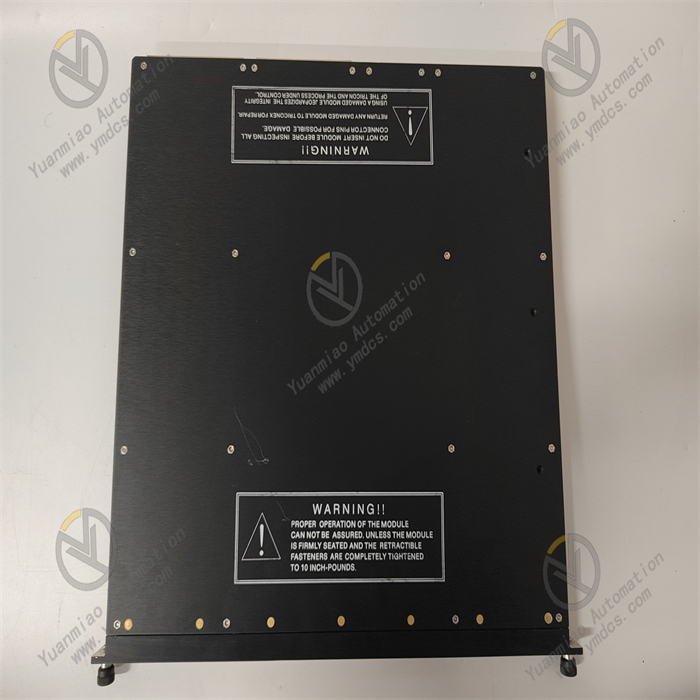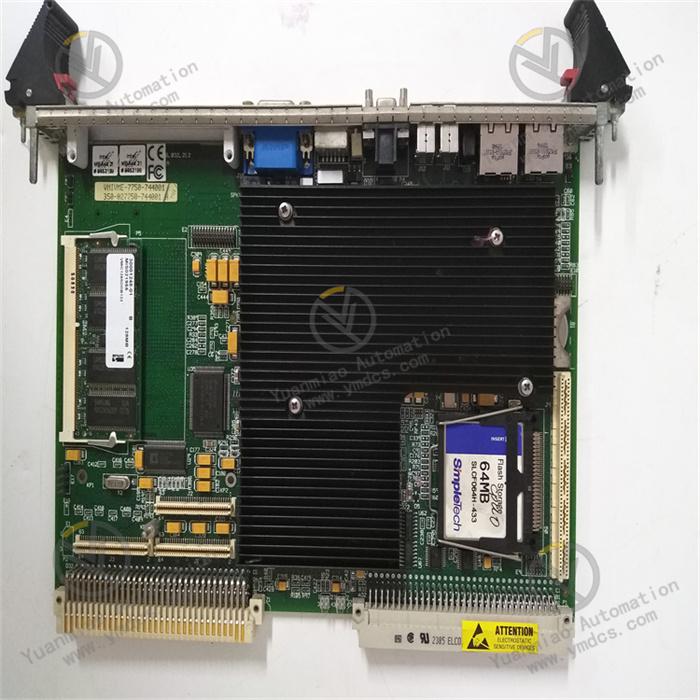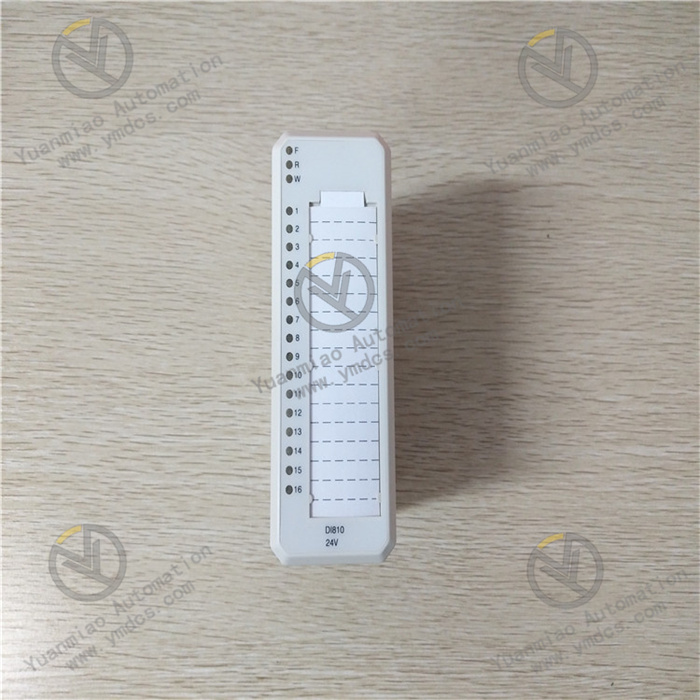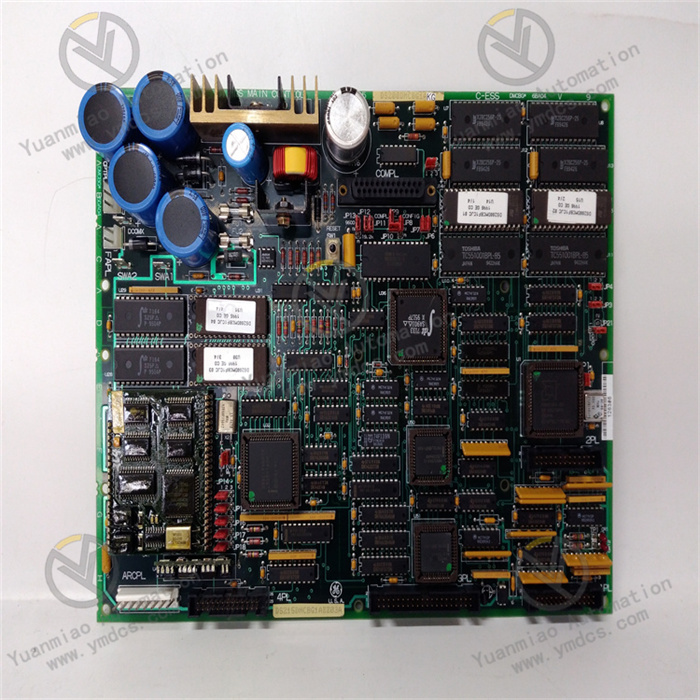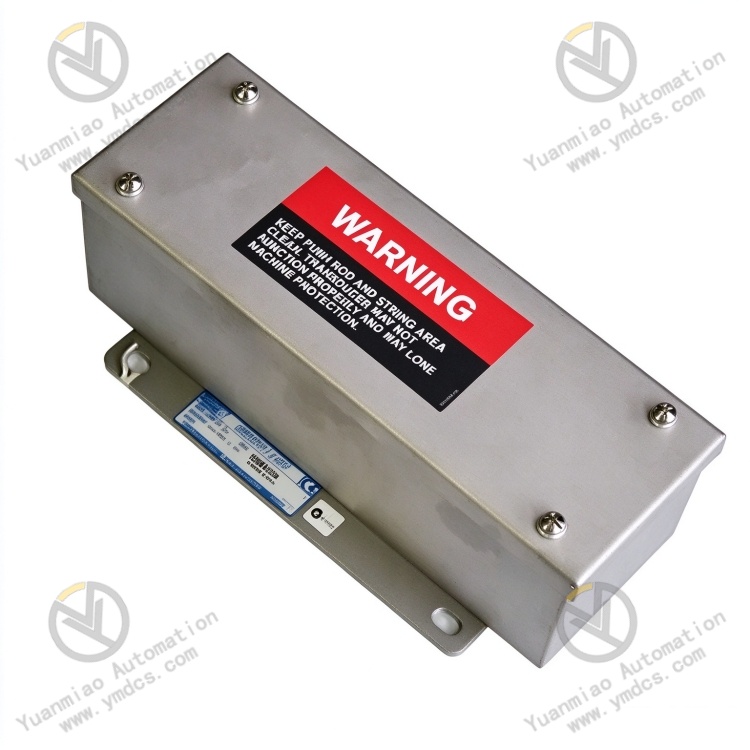
Vibro-Meter VM600 MPC4 200-510-017-017 Machine Protection Monitoring Moduleoring

Vibro-Meter VM600 MPC4 200-510-017-017 Machine Protection Monitoring Moduleoring

Brand: Vibro-Meter

Product ID: VM600 MPC4 200-510-017-017

Condition: New / used

Terms of payment: Paypal、T/T 、Western Union

Category:

Description

1. Overview


Vibro-Meter VM600 MPC4 (Part Number: 200-510-017-017) is a core machinery protection and condition monitoring module of the VM600 series manufactured by Switzerland-based Vibro-Meter (affiliated with Meggitt). It fully complies with API 670 industrial machinery protection standards and is widely deployed on high-speed critical rotating equipment including gas turbines, steam turbines, fans, compressors and pumps. As standalone integrated hardware for dynamic signal monitoring and protection, it works in conjunction with the IOC4T input/output card. It independently performs high-speed acquisition, precision calculation, condition analysis, over-limit alarming and interlock shutdown protection of key parameters such as equipment vibration, displacement, rotating speed and phase angle, acting as essential hardware for condition monitoring, fault prediction and safety interlock tripping of industrial rotating machinery.


Equipped with a dedicated DSP digital signal processing chip and adopting a 24-bit high-precision delta-sigma ADC sampling architecture, the module supports signals from multiple sensor types with ultra-high sampling accuracy, wide frequency response and ultra-low noise. It integrates comprehensive self-diagnosis, fault tolerance and hot-swap redundancy functions. Online rack insertion/removal and automatic parameter reloading are available, enabling maintenance and module replacement without unit shutdown. Subjected to rigorous industrial reliability certification, it features robust EMC immunity, wide temperature tolerance and resistance to vibration and shock, suitable for continuous harsh operating conditions in power plants, petrochemical plants, metallurgical facilities and energy industries. Native Ethernet networking, remote configuration and data upload are supported for seamless connection to DCS, PLC and upper monitoring systems for routine online monitoring and safety protection of large rotating machinery.


2. Technical Features


2.1 Independent Closed-Loop Positioning & Monitoring with Stable and Reliable Motion Accuracy

Built on fully decentralized motion control architecture requiring no real-time PLC computation intervention, the module autonomously executes complex motion logic including point-to-point positioning, continuous trajectory motion, circular interpolation operation, dynamic speed adjustment and multi-sequence process linkage. It is fully compatible with 2-phase and 3-phase industrial stepper motors. Differential pulse output delivers precise timing and regular waveforms, supporting jerk-free start/stop, jitter-free high-speed operation and zero repeat positioning deviation. It thoroughly eliminates motion lag, parameter drift and insufficient accuracy caused by conventional PLC-assisted positioning, meeting stringent requirements for precision alignment, micron-level machining and high-frequency reciprocating motion.


2.2 High-Speed Signal Processing Delivers Ultra-Fast Dynamic Response

Powered by a premium dedicated industrial motion processor, the hardware sampling frequency reaches 100 kHz with consistent full-range frequency response up to 20 kHz. Pulse output is distortion-free with minimal timing error. Supporting flexible acceleration/deceleration, stepless smooth speed regulation, high-speed start/stop and adaptive dynamic parameter trimming, it responds to process command changes within milliseconds, fitting high-frequency cycling, high-speed reciprocation and precision tact production of automated equipment to effectively boost production throughput and finished part consistency.


2.3 Multi-Protocol Universal Communication Offers Superior System Adaptability

Dual industrial bus ports (RS485 and CAN) are integrated with native support for mainstream industrial protocols including Modbus RTU and EtherCAT. Seamless connection to all Siemens S7-300/400 PLCs is achieved alongside compatibility with third-party industrial controllers, touch HMIs, servo systems, industrial sensors and actuators. Supported functions include remote motion parameter configuration, online process program modification, real-time runtime data upload, remote fault log traceability and online firmware upgrade. Flexible networking and expandability allow easy integration into diverse automation topologies for multi-device linkage and cross-system integration.


2.4 Comprehensive Intelligent Self-Diagnosis Ensures High Fault Tolerance

Full hardware self-test, program verification, port calibration, bus matching and parameter initialization complete automatically upon power-on. During operation, power supply health, sensor links, signal quality, hardware status and bus communication are monitored round the clock. Faults such as sensor disconnection, overload, open/short circuit, motor stall, overtravel limits, power anomalies and communication dropout are accurately identified with automatic fault code logging and local LED alarms synchronized with remote notifications to upper systems. Equipped with robust fault tolerance and signal blanking mechanisms, it effectively prevents false alarms induced by interference signals to guarantee long-term stable operation of the monitoring system.


2.5 Industrial-Grade Hot-Swap Design for Low-Cost Convenient Maintenance

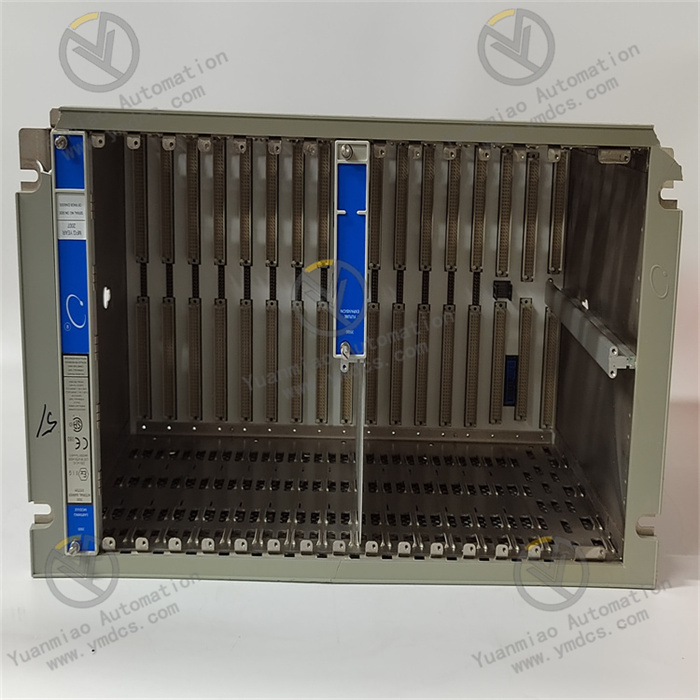
Live hot swapping and online module replacement on the rack are supported. Original configuration parameters are automatically saved and reloaded during replacement without unit shutdown, power cycling or reconfiguration. Fully compatible with VM600 series standard racks (ABE04x/ABE056), the module allows easy disassembly and installation, drastically shortening downtime for maintenance, fault replacement and system upgrades and cutting maintenance costs and production losses of large units.


2.6 Multi-Protocol Compatible Networking with Excellent System Expandability
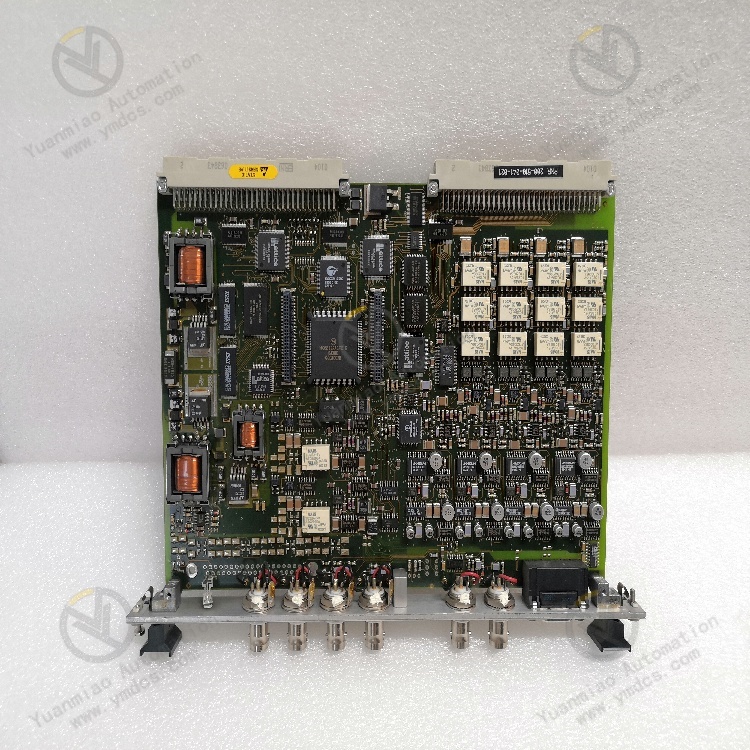
Native industrial Ethernet communication and high-speed internal system bus data exchange enable seamless connection to DCS, PLC and upper configuration monitoring systems. Paired with the IOC4T card, standard analog signals of 4~20 mA current and 0~10 V voltage are output in compliance with signal acquisition specifications of all types of industrial control systems. Remote parameter configuration, online program debugging, real-time data upload and remote fault log query are available. Up to 12 modules can be integrated into one rack to realize centralized monitoring networking for multiple units and measuring points with flexible expansion and strong compatibility.


200-510-041-021 200-510-111-021 VM600 MPC4 (5).jpg


3. Specification Parameters


3.1 Basic Parameters

ItemSpecification
Model353D4FN-CNB4
ManufacturerSIEMENS
Device TypeIndustrial high-precision stepper motor positioning control module
Compatible SystemsSIMATIC S7-300 / S7-400 PLC control systems
Core ChipDedicated high-speed industrial motion control processor
Flash Memory1 MB (storage for programs, process parameters and fault logs)
RAM256 KB (high-speed cache for real-time computation)
I/O Configuration16 digital inputs, 16 digital outputs
Hardware Sampling Frequency100 kHz
Stable Response Frequency20 kHz stable output across all operating conditions
Application ScenariosPrecision mechanical processing, automated line transfer, stepper motor drive, multi-axis synchronous motion, retrofit replacement of legacy Siemens positioning modules
Core FunctionsAutonomous precision positioning, stepper motor drive, closed-loop speed regulation, flexible acceleration/deceleration control, limit interlock protection, multi-protocol data exchange, fault self-diagnosis & alarming, remote parameter configuration and online debugging
Operating Modes24-hour continuous full-load operation, independent motion calculation, adaptive process tuning, fault isolation, remote online maintenance
CompatibilityFully compliant with native Siemens S7 architecture; supports non-destructive field replacement and mainstream industrial motion control hardware


3.2 Signal Acquisition & Calculation Parameters

  • Sampling frequency: Max 10 kHz per channel (software configurable)
  • Frequency response range: 0.1 Hz ~ 10 kHz
  • Input signal modes: IEPE mode (±5 V), velocity voltage mode (±10 V)
  • Dynamic range: >110 dB
  • Linear accuracy: Linear error <±1%
  • Input noise: Equivalent input noise <200 μV RMS
  • Signal processing: DSP digital filtering, integration/differentiation, RMS, peak value, peak-to-peak value and rectification calculation
  • Monitored parameters: Housing vibration, shaft vibration, axial displacement, rotating speed, phase angle and equipment operating condition


3.3 Output & Alarm Parameters

  • Analog output (matched with IOC4T): 4 programmable analog outputs, switchable between 4~20 mA current and 0~10 V voltage
  • Alarm relay output: 4 programmable alarm relays (Alert/Danger configurable), 1 dedicated system fault relay; all relays adopt C-type changeover contacts
  • Alarm mode: Independent threshold setting per channel, hierarchical alarming, fault latching and remote reset
  • Protection logic: Supports over-limit alarming, delayed interlock, fault isolation and single-point fault tolerance protection


3.4 Communication & Networking Parameters

  • Hardware interfaces: RS485 serial port, CAN industrial bus port
  • Supported protocols: Modbus RTU, EtherCAT and other mainstream industrial communication protocols
  • Communication functions: Remote motion parameter setup, real-time equipment status upload, fault log storage & query, online firmware upgrade, multi-device linkage data exchange
  • Communication performance: Low latency, high stability and lossless long-term continuous data transmission
  • Networking capacity: Standalone operation, multi-module linkage networking and cross-system integration


3.5 Electrical & Environmental Parameters

  • Power supply mode: Unified power supply via VM600 rack backplane
  • Operating temperature: -20 ℃ ~ +60 ℃ for continuous cabinet operation
  • Storage temperature: -40 ℃ ~ +85 ℃ for transportation and long-term idle storage
  • Operating humidity: 5%~95% RH (non-condensing), suitable for high-humidity industrial sites
  • Mechanical performance: Tolerates industrial high-frequency vibration and mechanical shock; seismic, dust-proof with stable long-term performance
  • Ingress protection: IP67 with excellent dust and water resistance for harsh workshop environments


4. Working Principle


After power-on initialization, the SIEMENS 353D4FN-CNB4 positioning control module automatically completes hardware self-test, motion program loading, communication protocol matching, I/O calibration and parameter verification. After passing self-inspection, it enters 24-hour uninterrupted decentralized motion control mode governing precise stepper displacement for automated equipment.


During operation, the dedicated high-speed motion processor operates independently without PLC intervention, parsing preprogrammed motion recipes and host commands continuously. Real-time feedback including limit switches, displacement signals and motor operating status feeds into closed-loop math to generate precise pulse and direction outputs driving stepper travel, path following, soft cycling and speed trimming. Motion runs autonomously with no PLC intervention required, easing CPU load and boosting response speed and positioning consistency for automated lines and precision machinery.


Full-time hardware monitoring tracks supply voltage, pulse output quality, motor load, I/O status and bus integrity. Motor stall, overtravel, wiring faults, power fluctuation and communication loss trigger emergency shutdown, fault logging and dual alerts via local LEDs and remote HMI. Fault containment logic isolates only defective axes; all remaining stations operate normally to prevent plant-wide downtime induced by isolated faults.


Based on multi-protocol industrial bus architecture, the module realizes two-way data interaction with PLCs, touch HMIs and upper industrial control systems, uploading equipment conditions, positioning data and fault codes in real time while receiving remote configuration, firmware updates and logic tuning commands. Onboard non-volatile memory permanently archives motion recipes and fault history with zero data loss after power cycles, supporting troubleshooting, process optimization and parameter review for predictive maintenance to guarantee long-term high-precision stable equipment operation.


5. Application Scenarios


5.1 Precision Mechanical Processing Equipment

Widely deployed on engraving machines, precision drilling equipment, CNC cutters and micron transfer platforms as the positioning core. It enables accurate point movement, constant-speed contour machining and repeat offset calibration. Micron-level accuracy and smooth motion guarantee consistent workpiece quality to meet strict high-end precision manufacturing requirements.


5.2 Automated Assembly & Conveying Lines

Used for transfer lines, sorting equipment, packaging machinery and assembly cells to execute station positioning, material alignment and sequential equipment interlock. Decentralized motion control handles frequent cycling and continuous production with stable operation and low failure rates, raising line throughput and tact consistency.


5.3 Industrial Stepper Drive Control Systems

Purpose-built for stepper drive applications across electronics, hardware, light industry and new energy sectors. Soft cycling, precise speed regulation, limit protection and closed-loop adjustment resolve common drawbacks of host-based control such as limited computing power, positioning drift and mechanical chatter, enhancing drive accuracy and operational reliability.

contact us