Description
1. Overview
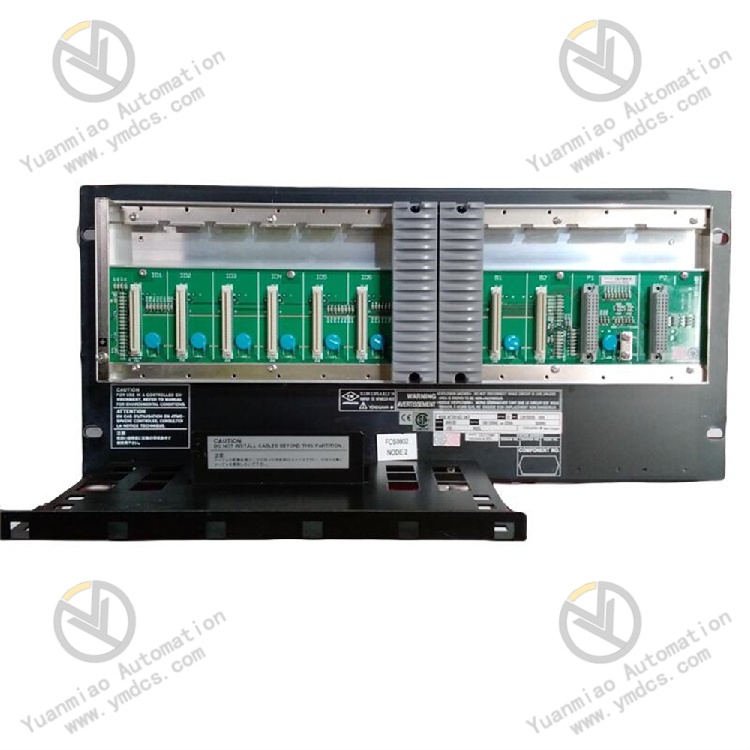
Yokogawa ANB10D-445/CU2T/NDEL is a dedicated ESB bus intermediate node unit for Yokogawa ProSafe-RS and CENTUM VP DCS systems, serving as a core device for system bus expansion and signal relay.
Designed exclusively for Yokogawa industrial distributed control systems, it is mainly used for hierarchical expansion of ESB bus, signal relaying, node shunting and loop capacity expansion within control cabinets. It enables high-speed data interaction and bus topology extension among controllers, I/O modules and Safety Instrumented Systems (SIS).
This model is equipped with dual CU2T bus channels and NDEL matched electrical configuration, featuring bus signal shaping, amplification, isolation and error correction capabilities to effectively eliminate signal attenuation and interference distortion caused by long-distance bus transmission.
With outstanding bus fault tolerance, anti-interference performance and hot-swap maintainability, it is widely adopted in large-scale DCS and SIS safety control systems for process industries including petrochemical, natural gas, power generation and metallurgy. It acts as a key core component for constructing large redundant bus topologies and expanding system I/O capacity.
2.1 High-Speed ESB Bus Relay for Lossless & Stable Signal Transmission
Based on Yokogawa’s proprietary high-speed ESB (Enterprise Service Bus) architecture, the module supports real-time shaping, amplification and error regeneration of bus signals. It compensates signal attenuation and phase deviation induced by cabinet layering and long-distance transmission, eliminating packet loss and sequence disorder.
The dual-channel CU2T hardware design realizes parallel dual-bus transmission with large data throughput and ultra-low latency. It ensures real-time and precise interaction of control commands, sampled data and interlock signals within the DCS system, meeting high-speed communication requirements of large and complex process systems.
2.2 Redundant Fault-Tolerant Architecture for Superior System Reliability
Adopting dual-bus channel redundancy, it supports automatic bus failover and single-channel fault isolation. If any single bus link suffers abnormality, interference or disconnection, the standby channel takes over seamlessly without disrupting the entire control system.
A built-in bus data verification mechanism identifies and filters out abnormal data caused by interference, preventing unintended system actions, communication breakdown and offline I/O modules triggered by bus fluctuation. It fully satisfies strict 24/7 non-stop operation requirements in industrial scenarios.
2.3 Flexible Topology Expansion for Convenient System Architecture Upgrade
As an intermediate ESB bus node, it supports flexible series and parallel connection to extend bus topology, breaking the limit on the maximum number of bus nodes per single cabinet. Multi-cabinet and multi-I/O station hierarchical networking is available to easily expand I/O points, add control cabinets and upgrade system architecture for DCS platforms.
System capacity expansion can be completed merely via bus node extension without modifying main controllers or core programs, greatly cutting costs for system renovation and upgrade, and fitting project reconstruction and process optimization scenarios.
2.4 Comprehensive Self-Diagnosis for Efficient On-Site Maintenance
A complete mechanism of bus self-inspection, link monitoring and hardware self-test is embedded to real-time detect bus communication status, channel faults, link anomalies and hardware failures, enabling accurate fault localization.
LED status indicators visually display normal operation, communication faults and channel errors. Fault logs can be recorded and traced via the background system. Hot-swap replacement is supported without system shutdown or power cut, allowing online maintenance to maximize continuous production of manufacturing lines.
2.5 Industrial Ruggedized Design with Wide Environmental Adaptability
Constructed with industrial modular rugged structure in strict compliance with Yokogawa DCS industrial standards, it delivers excellent immunity to electromagnetic interference, vibration, temperature fluctuation, dust and moisture. It effectively suppresses electromagnetic noise generated by inverters and frequent switching of high-power equipment on site.
It adapts to complex cabinet environments with high temperature, humidity and heavy interference, featuring long-term operational stability and ultra-low failure rate to meet demands of continuous production in process industries.
3. Specification Parameters
3.1 Basic Model Information
- Model: ANB10D-445/CU2T/NDEL
- Brand & Series: Yokogawa CENTUM VP / ProSafe-RS DCS System
- Module Type: ESB Bus Intermediate Node & Relay Unit
- Core Functions: ESB bus signal relaying, topology expansion, bus capacity expansion, signal shaping & error correction, dual redundant communication
- Compatible Systems: Yokogawa CENTUM VP Distributed Control System, ProSafe-RS Safety Instrumented System
3.2 Bus & Electrical Parameters
- Bus Type: Yokogawa exclusive ESB (Enterprise Service Bus) system bus
- Channel Configuration: Two independent CU2T communication channels operating in redundant parallel mode
- Power Supply: Standard 24 VDC cabinet power supply compatible with unified power architecture of DCS systems
- Transmission Performance: High-speed real-time transmission with signal regeneration and shaping, low latency and low packet loss rate
- Fault Tolerance Mechanism: Automatic switchover upon single-channel failure, data verification & error correction, link fault isolation
3.3 Environmental Parameters
- Operating Temperature: 0 ℃ ~ +60 ℃
- Storage Temperature: -20 ℃ ~ +70 ℃
- Operating Humidity: 5% ~ 95% RH (non-condensing)
- EMC Compliance: Conforms to industrial electromagnetic compatibility standards for heavy EMI environments
- Operation Mode: Supports 24-hour non-stop continuous industrial operation
3.4 Mechanical & Maintenance Parameters
- Mounting Method: Standard rack mounting inside DCS cabinets, compatible with Yokogawa cabinet layout
- Operation Architecture: Dual-channel redundant parallel operation with seamless failover
- Maintenance Feature: Hot-swappable for online replacement without system shutdown
- Status Indication: Integrated LEDs for running status, communication and fault alerts
- Diagnostic Functions: Bus link self-test, hardware fault diagnosis, fault log recording and remote traceability
The Yokogawa ANB10D-445/CU2T/NDEL bus node unit operates on the ESB redundant transmission framework, implementing a closed-loop workflow including bus signal reception, shaping & error correction, redundant relaying, topology expansion and fault protection.
After power-on initialization, the module automatically establishes communication links with upstream and downstream bus devices. The two CU2T channels work in synchronous standby mode to build a redundant transmission path.
During system operation, the module receives communication data and control commands from upstream controllers and bus equipment. Attenuated and distorted bus signals are processed through shaping, amplification, filtering and data validation to eliminate abnormal data and wrong instructions caused by field interference.
Dual-channel parallel transmission and mutual voting verification guarantee data accuracy and integrity. Processed standard signals are relayed to downstream I/O modules, extended cabinets and safety systems to realize bus topology extension and I/O capacity expansion.
If any bus channel suffers disconnection, interference or communication failure, the module executes instant redundant switchover. The healthy channel takes over all communication tasks independently, meanwhile locking the faulty channel, triggering alarm signals and saving fault logs without any impact on system operation.
Real-time online self-diagnosis continuously monitors bus links and hardware conditions to eliminate potential communication abnormalities, ensuring stable, uninterrupted and reliable bus communication for the entire DCS and SIS systems.
5.1 Large-Scale Chemical DCS Distributed Control Systems
Widely deployed in DCS systems for complete petrochemical and coal chemical plants to expand bus hierarchy within cabinets, realize multi-cabinet networking and scale up I/O points. It stabilizes bus communication for complex processes such as reaction, rectification, heat exchange and material conveying, avoiding process fluctuation and plant shutdown induced by bus failures and supporting continuous large-scale chemical production.
5.2 Industrial SIS Safety Interlock Systems
Compatible with Yokogawa ProSafe-RS SIS as a safety bus relay and expansion unit. It provides stable communication support for safety logics including emergency shutdown, process interlock and over-limit protection. Leveraging redundant fault tolerance, it prevents interruption or distortion of safety signals and guarantees reliable execution of safety interlocks for high-risk process facilities.
5.3 Power & Energy Automation Control Systems
Applied to unit control systems of thermal power, cogeneration and new energy power stations to expand bus topology of DCS control cabinets. It satisfies high-frequency and high-reliability communication demands for unit load regulation, auxiliary equipment control and condition monitoring, and prevents abnormal unit operation resulting from communication faults.
5.4 Natural Gas & Oil & Gas Storage and Transportation Control Systems
Used in automation control systems for natural gas purification, long-distance pipelines and oil & gas storage facilities. It adapts to long-distance cabinet networking and multi-site bus expansion, resolving signal attenuation issues in long-haul bus transmission and ensuring precise data transmission and coordinated equipment control for pressure, flow and valve status in storage and transportation links.
5.5 Automation Systems for Metallurgy & Building Material Process Industries
Suitable for DCS control systems in metallurgical smelting, cement and other heavy industries. It withstands harsh field conditions with dust, high temperature and strong electromagnetic interference, completes bus capacity expansion and topology upgrade, and achieves zero interruption and zero failure of bus communication during continuous production to improve overall stability of automation platforms.
![]()