Description
1. Overview
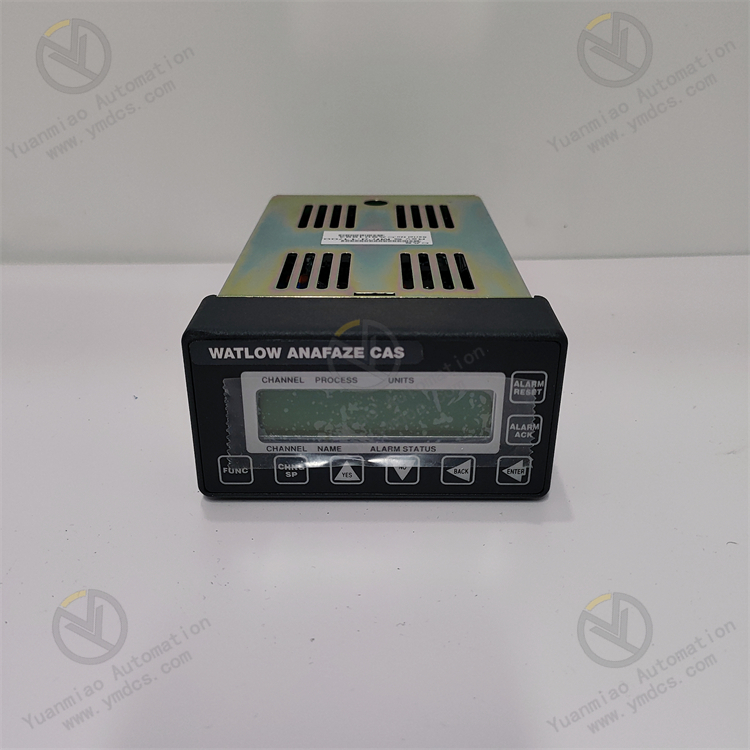
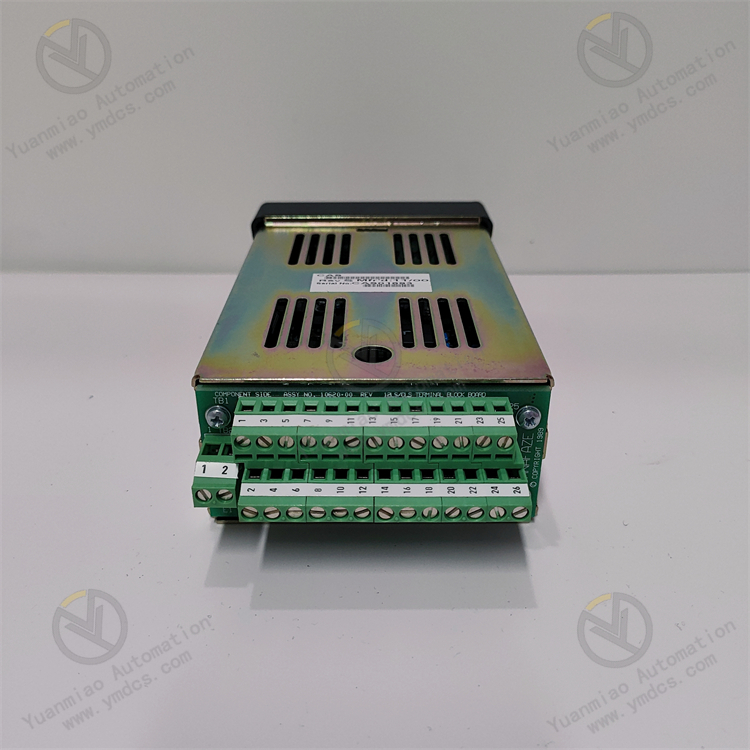
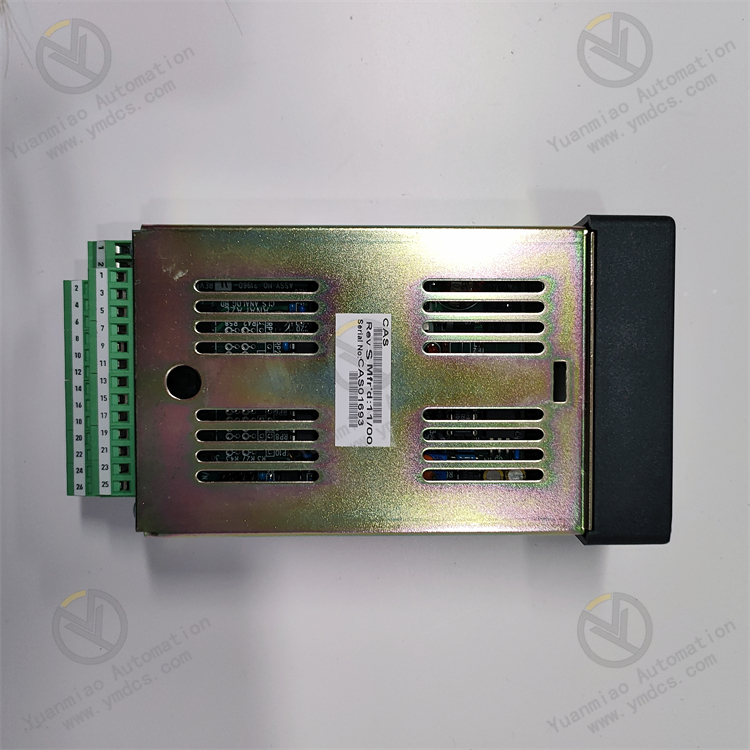
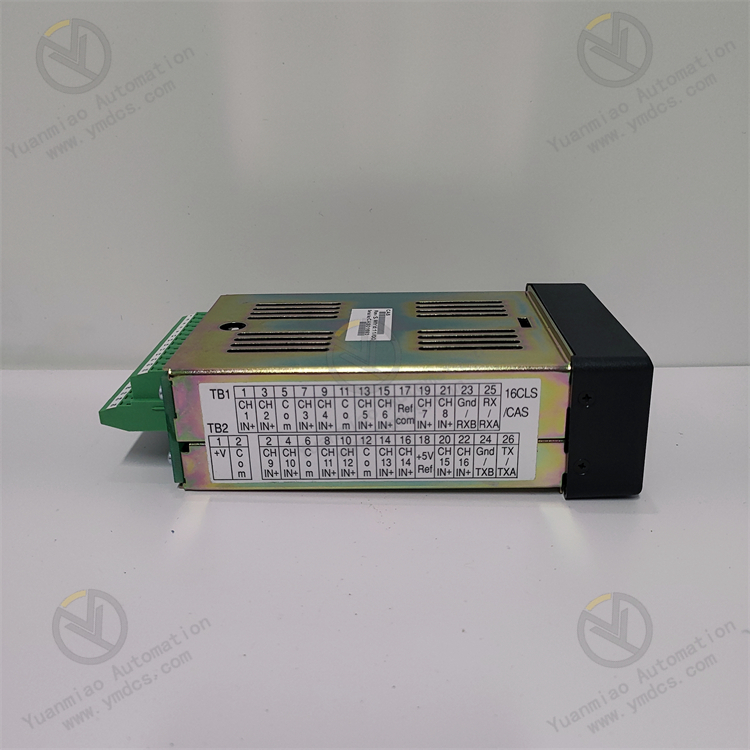
WATLOW ANAFAZE CAS16CLS/CAS is a 16-channel high-precision multi-loop temperature and process controller belonging to the ANAFAZE product line manufactured by Watlow, USA. It is an industrial modular intelligent temperature control system engineered for precise regulation of multi-point and multi-loop industrial thermal processes. Integrated with multi-channel signal acquisition, intelligent PID regulation, logic control, data communication and fault self-diagnosis functions, this unit independently governs 16 temperature measurement points simultaneously. It serves as the core temperature control equipment for multi-temperature-zone production lines across industries including semiconductors, plastic processing, food packaging, chemical engineering, pharmaceuticals and thermal treatment.
Equipped with exclusive Watlow ANAFAZE intelligent control technology, the controller accepts full-range thermocouple and resistance temperature detector (RTD) inputs compatible with mainstream industrial temperature sensors. The built-in auto-tuning PID algorithm automatically optimizes control parameters according to field operating conditions, resolving common drawbacks of discrete single-loop temperature controllers such as complicated networking, insufficient temperature precision, poor multi-loop synchronization and high operation & maintenance costs. Featuring an integrated rack-mounted design, it supports centralized configuration, centralized monitoring and remote maintenance, enabling seamless connection to DCS, SCADA and upper HMI platforms for intelligent centralized factory management.
2. Technical Features
2.1 Independent Precision Temperature Control for 16 Loops Enables Synchronized Multi-Zone Management
2.2 Full Compatibility with Temperature Sensors Ensures Broad Application Coverage
2.3 Intelligent Auto-Tuning PID Delivers High Accuracy and Zero Overshoot
2.4 Configurable Multiple Control Outputs Compatible with All Industrial Actuators
2.5 Industrial Networking Supports Centralized Remote Management
2.6 Dual Digital Display Delivers Intuitive Human-Machine Interaction
2.7 Comprehensive Self-Diagnosis & Fault Protection Guarantees Operational Safety
2.8 Rugged Industrial Design Enables Long-Term Maintenance-Free Service
3. Detailed Specifications
3.1 Basic Hardware Parameters
- Model: ANAFAZE CAS16CLS / CAS
- Manufacturer: Watlow (USA)
- Equipment Type: 16-channel intelligent temperature/process PID controller
- Channel Configuration: 16 fully independent temperature regulation channels with single-channel fault isolation
- Display: Dual digital display (PV measured value + SV setpoint) + status indicator bank
- Core Functions: Multi-channel temperature sampling, PID auto-tuning, closed-loop temperature control, fault self-diagnosis, industrial communication networking, remote parameter management
- Typical Applications: Semiconductor manufacturing, plastic injection & extrusion, food heat sealing, chemical thermal treatment, pharmaceutical constant-temperature processes, multi-zone production lines
- Operating Characteristics: Independent multi-channel operation, high temperature precision, non-volatile parameter storage, 7×24 continuous run, high noise immunity, low maintenance
3.2 Input Signal Specifications
- Input Type: Universal composite input supporting all thermocouple and RTD temperature sensors
- Thermocouple Input: Compatible with common industrial grades J, K, T for full-range low/high-temperature measurement
- RTD Input: Standard Pt100 platinum resistance for high-precision stable low-temperature measurement
- Signal Performance: Weak-signal filtering & amplification, noise rejection, live open-circuit detection to prevent temperature jitter and data fluctuation
- Channel Isolation: Galvanic isolation per channel eliminates cross-talk and ensures synchronous accurate temperature acquisition across all loops
3.3 Control & Output Parameters
- Control Algorithm: Adaptive PID with auto-tuning and manual custom coefficient adjustment for zero-overshoot steady-state control
- Output Options: Relay contact output, SSR drive output, analog current output (configurable on demand)
- Control Modes: Single-direction heating control, closed-loop constant-temperature regulation, sequenced temperature programming, over-limit interlock control
- Response Performance: Millisecond computation response with adaptive load tracking for rapid temperature deviation correction
3.4 Communication & Configuration Specifications
- Communication Interface: Industrial serial bus compatible with upper HMI networking
- Networking Features: Multi-device series connection, centralized parameter setup, bulk channel configuration
- Remote Capabilities: Remote parameter read/write, remote PID auto-tuning activation, fault query, data uploading, remote reset
- Parameter Storage: All configuration settings, PID coefficients and alarm thresholds are permanently retained through power loss without reconfiguration
3.5 Protection & Self-Diagnosis Specifications
- Self-Diagnosis: Sensor open/short detection, channel abnormality check, high/low temperature limit monitoring, communication fault detection
- Protection Logic: Overtemperature process interlock shutdown, output latch during faults, isolated protection for defective channels
- Alarm Feedback: Local visual alarm plus fault code transmission to host system for dual-layer failure alert
3.6 Electrical Power Specifications
- Supply Voltage: 24VDC ±10% standard industrial DC input optimized for centralized cabinet power distribution
- Frequency Compatibility: Works with 50Hz / 60Hz industrial mains environments
- Power Features: Wide voltage tolerance, surge suppression, low power consumption, immunity to supply voltage fluctuations
3.7 Environmental & Mechanical Specifications
- Operating Temperature: 0℃ ~ +60℃ for continuous cabinet operation
- Storage & Transit Temperature: -20℃ ~ +70℃ meeting shipping and long-term storage requirements
- Operating Humidity: 5%~95% RH non-condensing, suitable for dusty, humid workshop environments
- Mechanical Construction: Standard rack mount, shockproof, dustproof and anti-aging for permanent cabinet installation
- Ingress Protection: IP20 (standard rating for internally cabinet-mounted industrial devices)
4. Operating Principle
Upon power-up, the Watlow CAS16CLS/CAS executes full hardware initialization, 16-channel boot sequence, communication protocol setup and parameter loading. After verifying sensor wiring and hardware health across all channels, the unit enters parallel multi-loop temperature control mode.
During runtime, all 16 independent channels simultaneously acquire thermocouple/RTD temperature signals. Signals undergo filtering, amplification, calibration and analog-to-digital conversion to calculate precise Process Value (PV). The controller continuously compares PV against user-defined Set Value (SV). The embedded adaptive PID algorithm calculates control output duty cycle and magnitude based on temperature error, heating rate and load thermal inertia to drive heaters and actuators for closed-loop temperature stabilization.
The one-touch auto-tuning function learns equipment thermal rise, heat dissipation lag and load dynamics to auto-calculate optimal PID gains, removing inaccuracies from manual tuning and achieving low-vibration, zero-overshoot precision temperature regulation. All channels run independent calculations without mutual interference; faulty channels are automatically isolated with no disruption to other temperature zones.