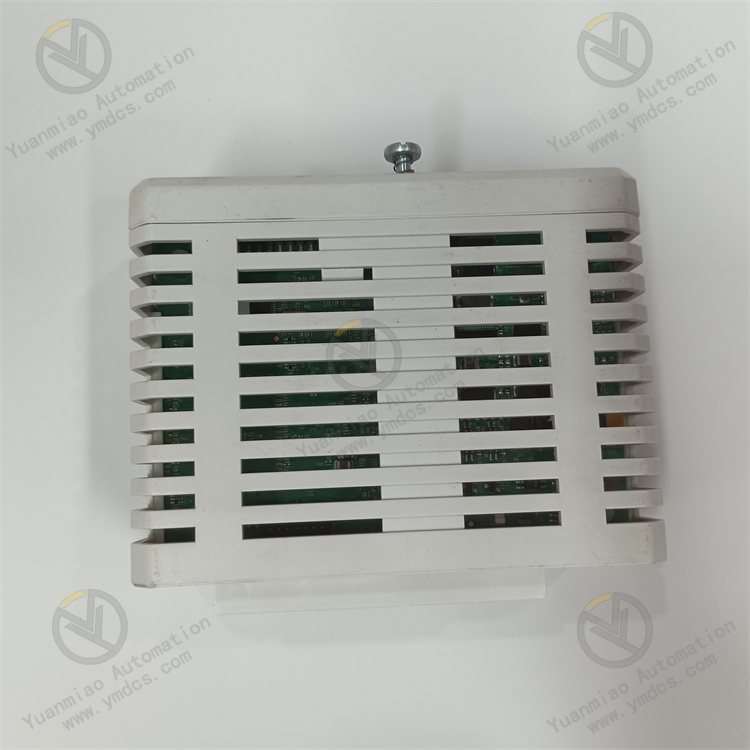
Description
1. Product Overview
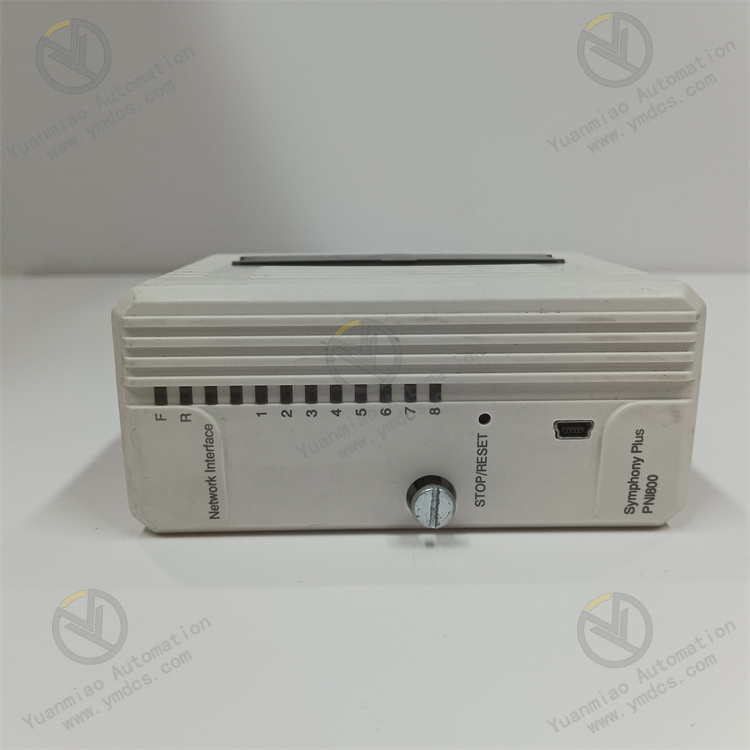
Model: PNI800A
Brand: ABB
Product Name: Process Network Interface Module
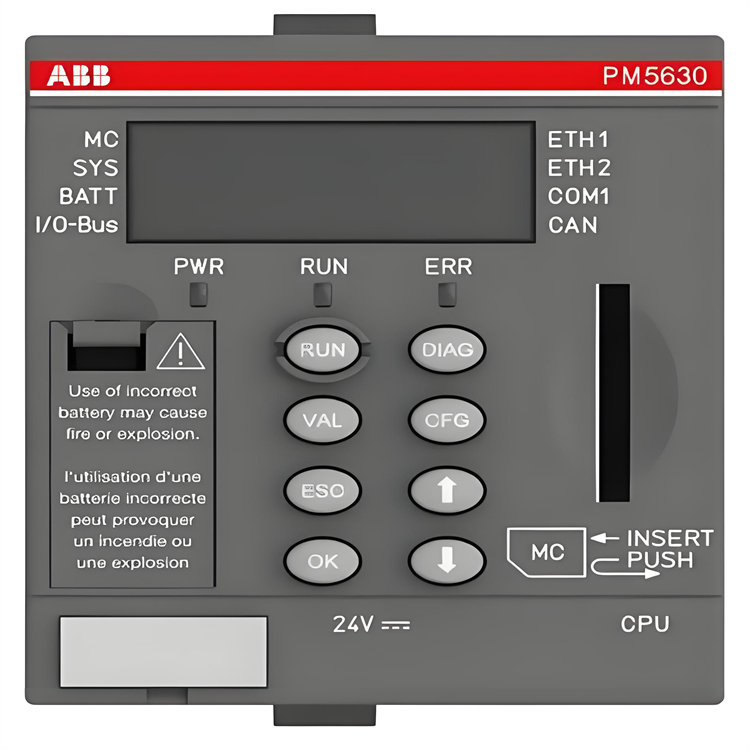
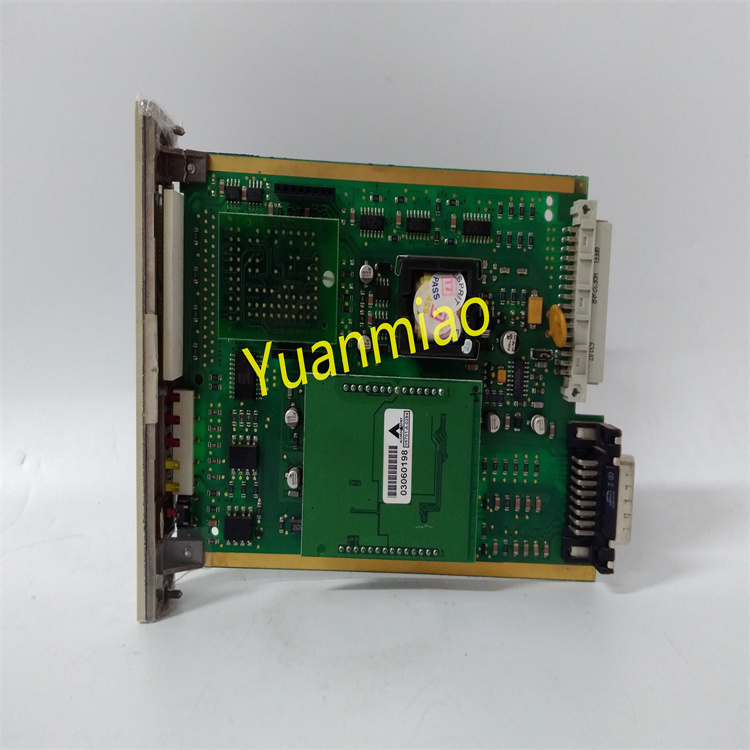
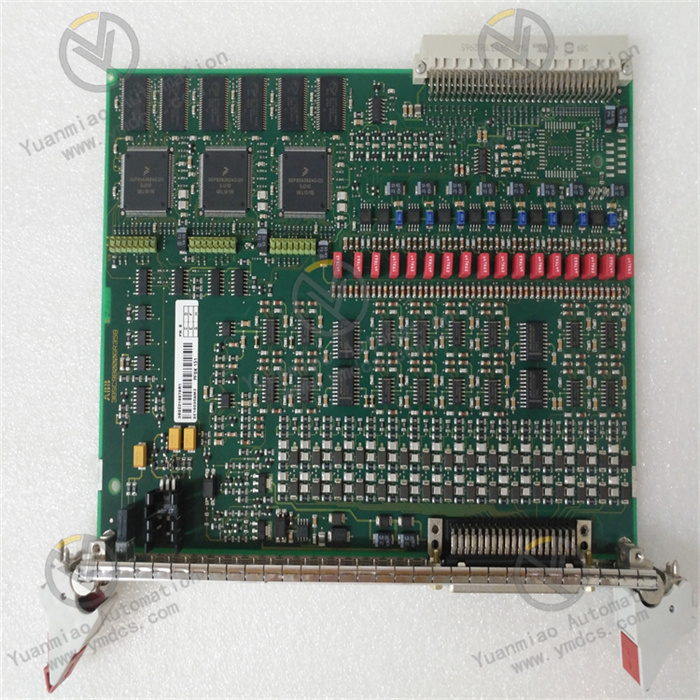
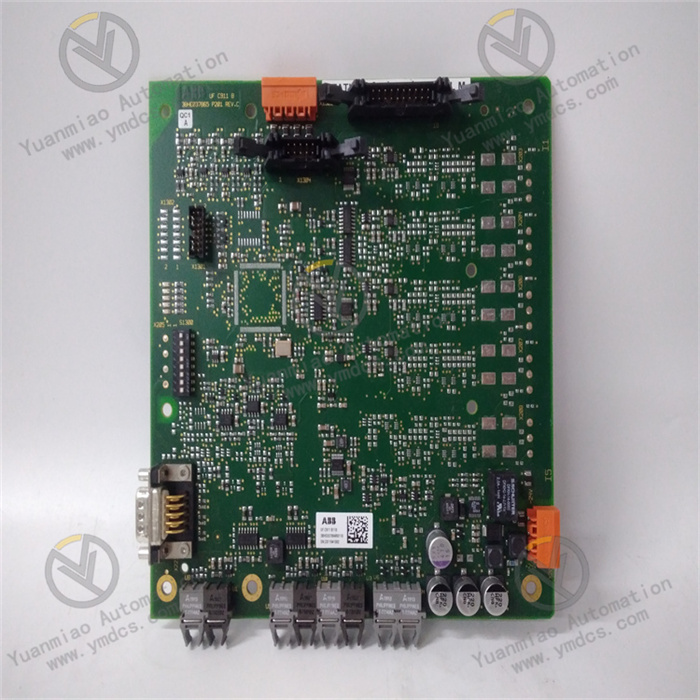
Product PositioningPNI800A is a dedicated core network communication module for ABB Symphony Plus distributed control system. It acts as the core hub for data interaction between the process‑level and monitoring‑level of industrial DCS systems. As key hardware for system bus networking, cross‑device data forwarding and field signal aggregation, it undertakes full‑station network communication scheduling, protocol conversion, transparent data transmission and link redundancy management. It serves as critical spare part to guarantee stable network and real‑time data synchronization for large‑scale automation systems in power, chemical and metallurgical industries.
Core FunctionsIt establishes high‑speed internal communication links for Symphony Plus system and realizes bidirectional high‑speed data exchange among controllers, I/O sub‑stations, local HMI and upper‑level monitoring system. It supports multi‑protocol conversion and network data distribution, aggregates field analog signals, digital signals and equipment status data and uploads them to the master control system, while accurately delivering control commands to field devices. Equipped with functions of network link monitoring, fault tolerance and encrypted data transmission, it effectively avoids network congestion, packet loss and link breakdown. It ensures continuity and stability of process control, logic computation and remote scheduling of the whole DCS system and supports 7×24‑hour non‑stop industrial production.
Applicable SystemsABB Symphony Plus DCS distributed control system. Compatible with full‑range Symphony controllers, S800 I/O distributed system, upper‑level monitoring platform and factory information management system. It can be seamlessly integrated into the overall industrial automation control architecture.
Application ScenariosWidely applied in automation production lines including thermal power plants, hydropower plants, cogeneration plants, petrochemical plants, metallurgy & mining, building‑material plants and large‑scale industrial self‑owned power stations. Suitable for installation in central‑control cabinets, remote I/O cabinets and field control sub‑stations. Designed for industrial process control systems requiring high reliability, zero downtime and high real‑time performance.
2. Technical Features
High‑Speed Industrial Network Transmission with Superior Real‑Time PerformanceAdopts industrial‑grade high‑speed network processing chip and supports Gigabit Ethernet high‑speed transmission with low latency and large throughput. It meets requirements for ultra‑fast interaction of massive I/O points, high‑frequency process data and real‑time control commands. It solves deficiencies of traditional communication modules such as insufficient bandwidth, data lag and refresh stutter, and ensures accurate process regulation and delay‑free execution of control logic.
Multi‑Protocol Compatibility and Integrated Protocol ConversionNatively adapts to dedicated Symphony industrial protocol, and supports mainstream industrial communication protocols such as Modbus TCP/RTU and CANopen. It enables seamless data interoperation among devices of different protocols. It can connect legacy field equipment and new intelligent terminals without additional protocol converters, which simplifies system networking architecture and reduces retrofitting cost.
Redundant Network Architecture for Fault‑Tolerant Communication with Zero InterruptionSupports dual‑network hot‑standby redundant networking. Two links work synchronously in parallel as mutual backup. In case of cable breakage, port fault or signal interference on one network link, the module automatically switches to standby link within milliseconds without data loss, system offline or process disturbance. It completely eliminates risks of system paralysis and production shutdown caused by single‑link failure.
Industrial‑Grade Secure Encrypted TransmissionBuilt‑in SSL/TLS data encryption mechanism and hierarchical user authentication & permission management effectively mitigate security risks such as industrial network data tampering, unauthorized access and signal interference. It supports VLAN segmentation and QoS priority scheduling to prioritize transmission of critical control commands and fault alarm data, improving security and stability of system network.
Adaptable to Harsh Industrial Environments with Excellent Anti‑Interference PerformanceAdopts power‑industry‑specific components and high‑standard PCB manufacturing. Built‑in electromagnetic filtering, opto‑electric isolation and surge‑suppression circuits comply with industrial EMC standards. It features dust resistance, moisture resistance, wide temperature tolerance, vibration resistance and anti‑aging capability for long‑term operation under harsh cabinet conditions of high temperature, dust and heavy electromagnetic interference.
Modular Expansion with Wide CompatibilityStandard modular design supports serial‑port and I/O expansion for flexible connection to traditional RS232/RS485 field devices. It can support networking of up to 32 I/O modules. It is highly adaptable and versatile for various project scenarios including legacy‑system retrofitting, capacity expansion and spare‑part replacement.
- Intelligent Self‑Diagnosis and Visualized Operation & MaintenanceFunctions including full‑range network self‑diagnosis, link‑quality monitoring, packet‑loss statistics and fault‑code tracing identify network anomalies, port faults and transmission abnormalities in real‑time. On‑board LED indicators intuitively display operation, communication, fault and link status. It supports online configuration, parameter calibration and firmware upgrade from background for convenient maintenance and efficient fault locating.
3. Specification Parameters
| Item | Parameter |
|---|---|
| Model | PNI800A |
| Device Name | Process Network Interface Module |
| Applicable System | ABB Symphony Plus DCS Control System |
| Core Functions | High‑speed network communication, multi‑protocol conversion, dual‑link redundant transmission, encrypted transparent data transmission, network status self‑diagnosis, device networking expansion, command forwarding & scheduling |
| Network Ports | Dual RJ45 Gigabit Ethernet ports, VLAN & QoS priority configuration supported |
| Supported Protocols | Symphony dedicated protocol, Modbus TCP/RTU, CANopen |
| Data Transmission Rate | Max. 1 Mbps, Gigabit Ethernet high‑speed transmission |
| Power Supply | DC24V (±20% wide‑voltage tolerance) |
| Operating Temperature | -20℃~+70℃ |
| Storage Temperature | -40℃~+85℃ |
| Ambient Humidity | 5%~95%, non‑condensing |
| Ingress Protection | IP20 (indoor cabinet installation) |
| Security Mechanism | SSL/TLS encrypted transmission, hierarchical user authentication, network access control |
| Operation Mode | Dual‑network hot‑standby redundancy, automatic bumpless switchover, single‑link independent operation |
| Expansion Capability | RS232/RS485 serial‑port expansion; supports up to 32 I/O modules in networking |
| Mounting Method | Standard cabinet card‑mounting, control‑cabinet fixed installation |
| Dimension | 120mm × 100mm × 50mm |
| Compliance Standards | Industrial EMC standard, CE/UL industrial safety certification |
| Origin | Original imported from Switzerland |
| Product Characteristics | Gigabit high‑speed transmission, dual‑network fault‑tolerant redundancy, multi‑protocol compatibility, encrypted secure transmission, strong anti‑interference, expandable networking, intelligent self‑diagnosis, low‑frequency maintenance |
4. Working Principle
Power‑On Initialization and Overall Self‑TestAfter being powered by regulated DC24V supply, the module completes automatic initialization, sequentially performing hardware chip self‑test, network‑port detection, communication‑protocol loading, networking‑parameter matching, system clock synchronization and redundant‑link verification. It comprehensively detects hardware faults, link abnormalities and configuration errors. Upon passing self‑test, it establishes network handshakes with DCS controllers, I/O modules and upper‑level monitoring system and enters normal redundant communication status.
Multi‑Device Data Aggregation and Protocol ConversionAs the core gateway of system network, the module receives analog signals, digital signals and equipment status data uploaded by field I/O modules, smart instruments and actuators in real‑time. It parses, converts, reorganizes and encrypts raw data of different protocols and formats, converts them into unified system‑standard format and uploads to master control system. Meanwhile, it receives control commands, set‑point parameters and logic configuration instructions from upper system, performs protocol conversion and forwards commands accurately to corresponding field devices.
Dual‑Link Parallel Monitoring and Bumpless SwitchoverDuring operation, communication rate, signal quality, packet‑loss ratio and connection status of two Ethernet links are continuously monitored. Two links transmit data synchronously in parallel as mutual hot‑standby. When one link encounters cable breakage, poor contact, signal attenuation, electromagnetic interference or port fault, the module triggers redundant‑switchover logic within milliseconds and takes over all data transmission. No data interruption, process disturbance or system offline occurs to sustain stable network communication.
Network Scheduling and Security Protection ManagementBased on QoS priority scheduling, control commands, alarm data and regular monitoring data are transmitted hierarchically to guarantee real‑time interaction of critical process control signals. VLAN segmentation isolates networks of different process zones to prevent network storm and signal conflict. Combined with SSL/TLS encryption and user authentication, it blocks unauthorized access, data tampering and cyber‑attacks to fully ensure secure and stable industrial network operation.
- Fault Self‑Diagnosis and Traceable LoggingThe module continuously monitors module operating status, network link conditions, data transmission quality and protocol interaction status. It accurately identifies network disconnection, packet loss, protocol anomaly, port fault and power‑supply abnormality. Fault codes and alarm messages are generated automatically and uploaded to DCS background. Fault timestamps, operation logs and anomaly records are stored to provide complete data support for maintenance personnel in hazard troubleshooting, fault tracing and networking optimization.
5. Common Faults and Troubleshooting
Phenomenon: No LED indicator after power‑on, module inoperative, unrecognized by systemPossible Causes
① Loss of DC24V power supply, excessive voltage deviation or reversed polarity;
② Poor card contact, oxidized and dust‑covered gold‑finger contacts;
③ Faulty cabinet power circuit or loose terminals;
④ Damaged internal power‑supply chip or firmware crash.
Troubleshooting
Power off the system for full discharge. Measure DC24V voltage and polarity, inspect circuit breakers, wiring continuity and terminal tightness. Extract the module, clean gold‑finger contacts and slot dust, then re‑insert firmly. Re‑flash original‑factory matching firmware. If no response persists with normal power and connection, hardware failure is confirmed; replace with original spare part.
Phenomenon: Slow network communication, delayed data refresh and value jitterPossible Causes
① Aged or damaged Ethernet cable, poor RJ45 contact or mismatched link impedance;
② Excessive network bandwidth occupation, data congestion or incorrect QoS configuration;
③ Data distortion and packet loss caused by severe on‑site electromagnetic interference;
④ Degraded performance of module network chip and reduced transmission accuracy.
Troubleshooting
Inspect Ethernet cables, RJ45 connectors and port connections comprehensively. Replace worn‑out cables and re‑crimp connectors. Optimize QoS and VLAN configuration, classify data transmission priorities and release network bandwidth. Improve shielding and grounding of cabinets and cables to eliminate electromagnetic interference. If faults remain after parameter optimization, module performance degradation is confirmed; replace the module.
Phenomenon: Frequent single‑network‑link alarms and abnormal dual‑network switchoverPossible Causes
① Uneven signal quality between two network links and severe attenuation on one link;
② Conflicting or mismatched dual‑network IP addresses and networking parameters;
③ Faulty switch port or network loop conflict;
④ Abnormal module redundancy‑switchover logic or aged hardware ports.
Troubleshooting
Test communication quality of both links respectively, repair faulty cables and switch ports. Unify dual‑network IP addresses, subnet masks and communication protocols to eliminate parameter conflicts. Detect and resolve network loops and optimize networking architecture. Reboot module for program reset and test redundancy‑switchover performance. If faults persist, hardware failure is confirmed; replace with original module.
Phenomenon: Field‑device packet loss, partial points offline and failed command deliveryPossible Causes
① Abnormal module protocol parsing or incorrect configuration parameters;
② Poor adaptation of extended serial‑port / I/O modules and networking overload;
③ Incorrect network encryption‑permission configuration causing data interception;
④ Faulty module data‑forwarding circuit or disordered firmware.
Troubleshooting
Verify module communication protocols, encryption permissions and networking configuration, and correct wrong settings. Reduce networking load, inspect abnormal extended devices and avoid overload. Reboot module for reset and restore factory‑standard configuration. If abnormalities remain after circuit and parameter inspection, module failure is confirmed; replace spare part.
Phenomenon: Excessively high module temperature, frequent crash & restart and unstable operationPossible Causes
① Heavy dust accumulation, blocked air duct and poor heat dissipation in cabinet;
② Long‑term high‑bandwidth data forwarding and heavy chip load;
③ Large power‑supply voltage fluctuation and severe power‑supply ripple interference;
④ Stuck or incompatible firmware version.
Troubleshooting
Clean cabinet air duct and module surface dust, improve ventilation and heat dissipation and control cabinet ambient temperature. Optimize DC24V power quality and install filters for voltage stabilization. Upgrade and flash stable original‑factory firmware. If faults recur continuously, module aging failure is confirmed; replace spare part in advance to avoid system‑shutdown risks.
Phenomenon: Redundancy function invalid; system communication interrupted upon single‑link faultPossible Causes
① Dual‑network redundancy function disabled or missing configuration parameters;
② Mismatched operation modes and inconsistent parameters between two links;
③ Damaged hardware for redundancy‑switchover logic or abnormal firmware.
Troubleshooting
Log into DCS background to verify redundancy configuration, enable dual‑network hot‑standby function and unify port operation parameters and networking modes. Simulate single‑link fault to test switchover performance and check logic defects. If switchover still fails with correct parameters, hardware failure is confirmed; replace the module immediately to guarantee system redundancy safety.