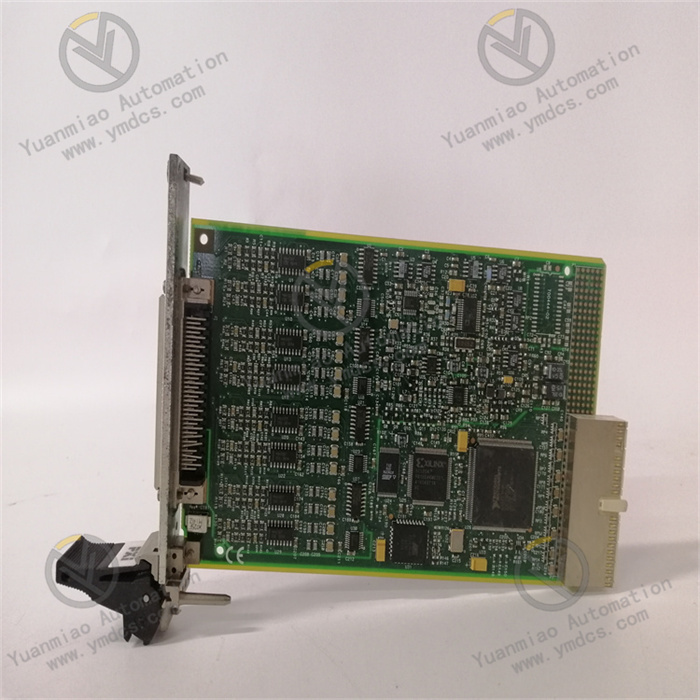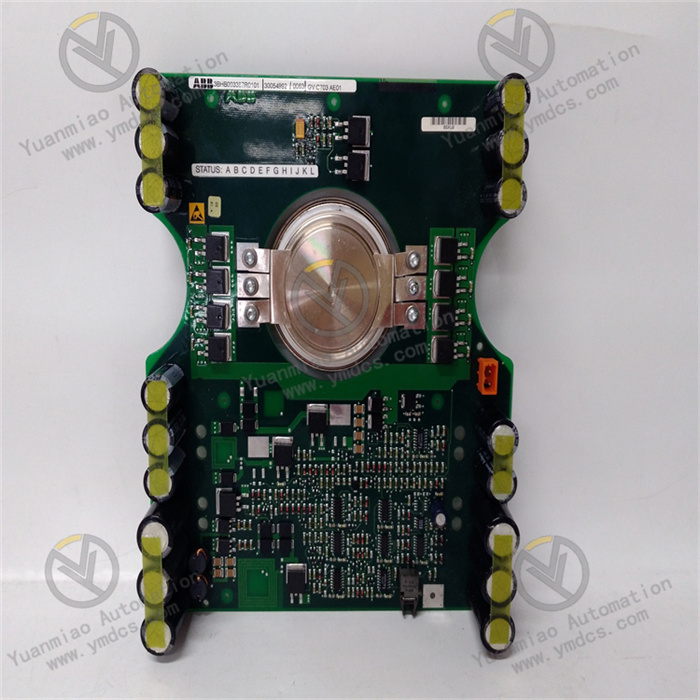
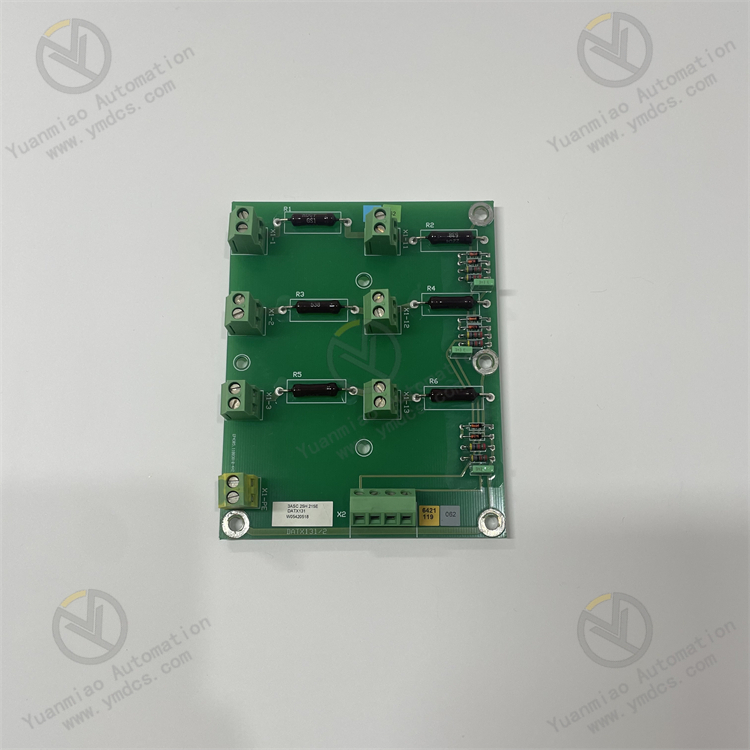
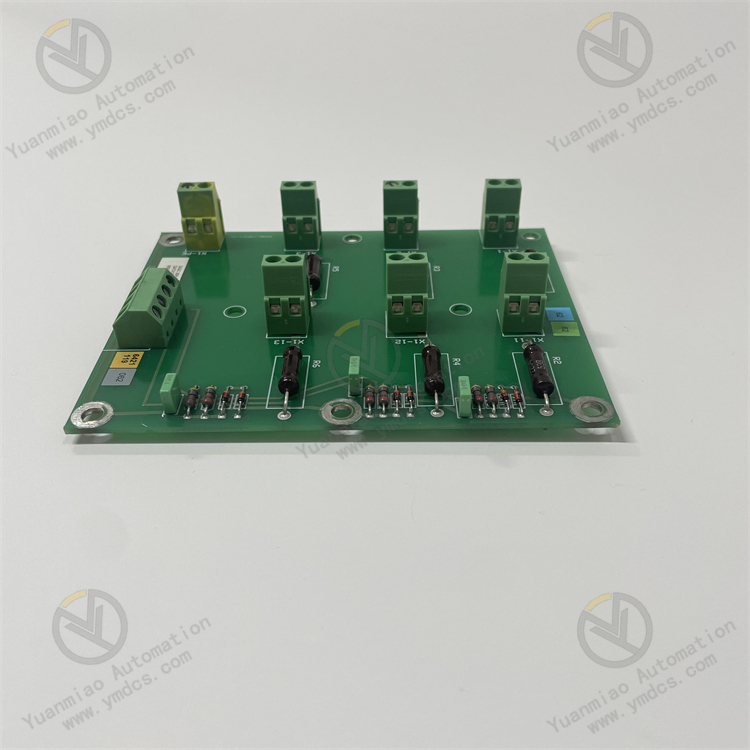
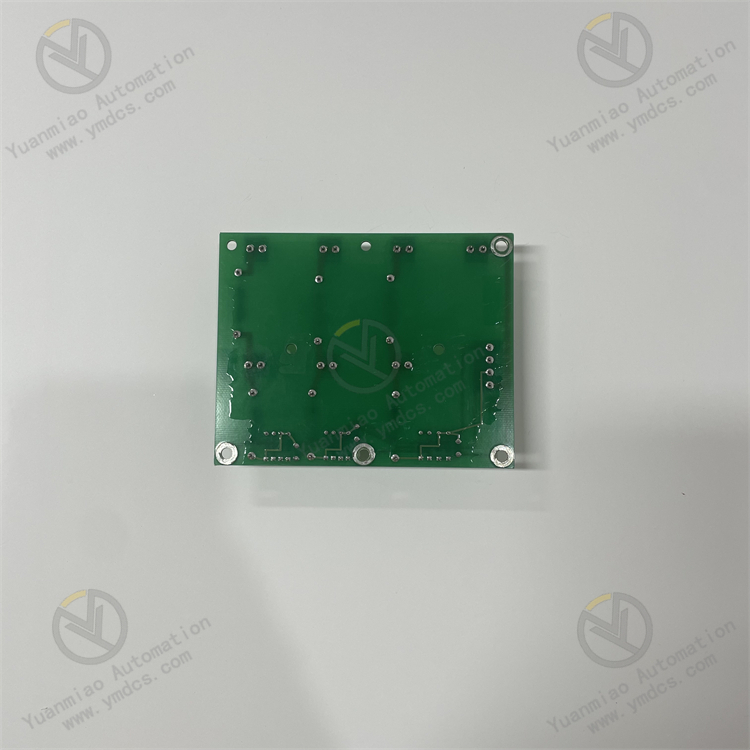
Description
1. Product Overview
Full Model: DATX131
Material Code: 3ASC25H215E
Manufacturer: ABB
Product Name: Multi-channel Analog Output Module / Industrial High-precision Signal Conversion & Control Module
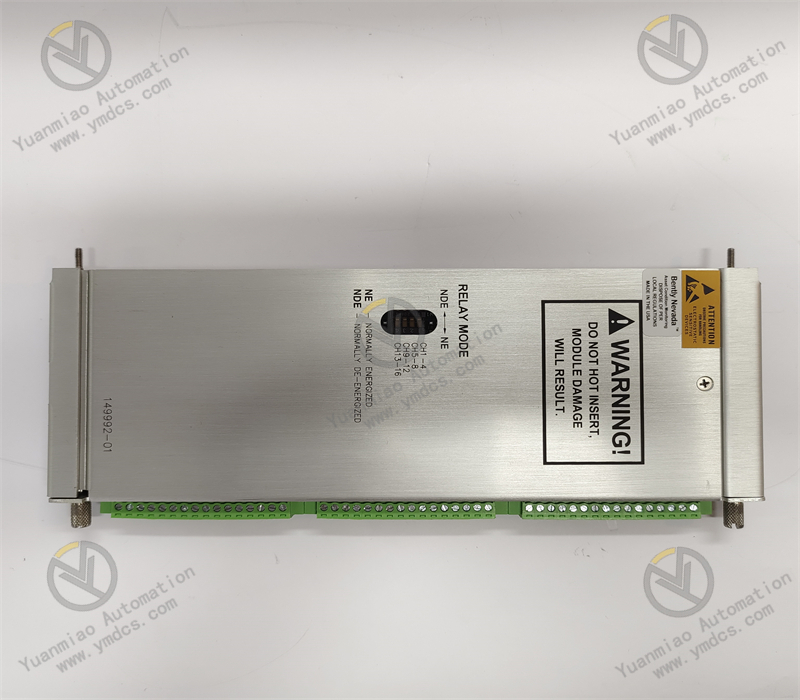
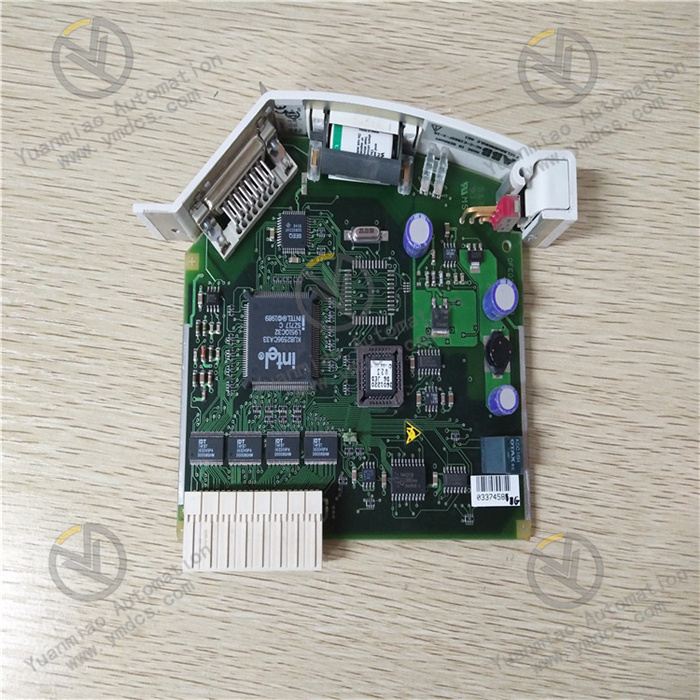
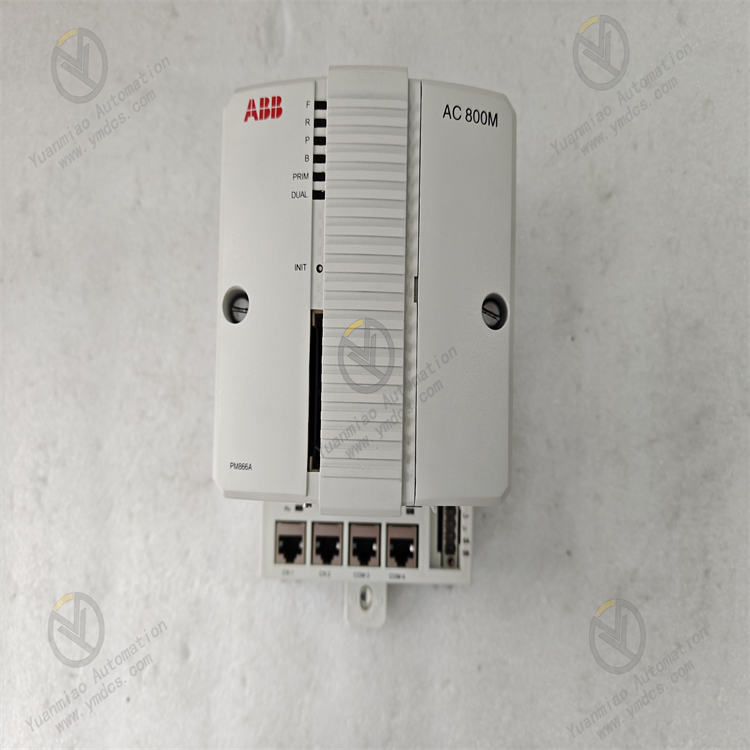
Product Description ABB DATX131 (3ASC25H215E) is a high-precision multi-channel analog output module for ABB industrial automation control systems. It is widely compatible with ABB Symphony, Industrial IT and various industrial DCS and PLC systems, and engineered for harsh industrial applications including power generation, chemical industry, metallurgy, water treatment and intelligent manufacturing. The module accurately converts digital logic signals from the control system into standard field analog signals, providing stable and adjustable analog control signals for regulating valves, actuators, variable frequency drives and transmitters. It serves as core I/O hardware for closed-loop process regulation and precise control of process parameters.
Equipped with multiple high-precision D/A conversion units, the module supports standard 0~20mA industrial current output. It adopts a dual-interface design compatible with flat cable connectors and M12 circular connectors to suit diverse field wiring conditions. Built-in high-precision signal calibration, digital filtering, fault self-diagnosis and channel protection mechanisms deliver excellent signal linearity, ultra-low temperature drift and reliable long-term operation. Featuring a standardized lightweight board structure, it supports fast rack mounting and non-destructive in-situ replacement for 24/7 continuous stable operation. Only genuine identical replacement modules are recommended to avoid control deviation and system failures caused by incompatible third-party hardware.
2. Core Functions
Multi-channel high-precision analog output. Supports multiple channels of standard 0~20mA industrial current signals with high conversion accuracy and minor linear error. It precisely meets control requirements of various field actuators and enables continuous closed-loop regulation of temperature, pressure, flow, liquid level, valve position and other process parameters.
Dual compatible output interfaces. Supports both flat cable connection and M12 circular aviation plug connection, catering to neat internal cabinet wiring as well as waterproof and anti-interference wiring for outdoor and humid field environments with strong site adaptability.
Intelligent digital signal processing. Embedded dedicated D/A conversion algorithms, linear calibration and temperature drift compensation automatically correct signal deviation under high and low temperature conditions and filter digital noise and industrial interference to maintain stable and accurate output signals throughout operation.
Independent isolation and protection for all channels. Adopts independent signal output architecture where each channel works without mutual interference; a single channel fault will not affect normal operation of other channels. Built-in overcurrent, short-circuit and overvoltage protection effectively prevents module damage resulting from field loop faults.
System-level communication and data interaction. Fully compatible with bus protocols of all ABB industrial control systems. It rapidly receives digital control commands from the host system, converts them into analog regulation signals in real time, and uploads channel status, fault information and operating data to realize remote monitoring and parameter traceability.
Comprehensive self-diagnosis and alarm functions. Continuously monitors channel wire breakage, short circuit, overrange, abnormal signals, communication faults and module hardware anomalies. Status indicators and host system pop-up alarms accurately locate fault points and reduce maintenance troubleshooting difficulty.
- Convenient maintenance without system shutdown. Supports on-line parameter calibration, channel range configuration, logic parameter modification and status monitoring. Commissioning, calibration and maintenance can be performed without stopping the system, matching the long-term continuous operation mode of industrial equipment.
3. Technical Features
Ultra-high-precision signal conversion: Equipped with industrial-grade high-precision D/A chips delivering outstanding output linearity and ultra-low temperature drift coefficient. Optimized via multi-stage calibration, it maintains accurate output under complex high/low temperature conditions to satisfy precision process control requirements.
Flexible dual-interface architecture: Original dual-output interface design accommodates standardized cabinet wiring and complicated field wiring scenarios. Supporting multiple wiring methods, it features high versatility for equipment retrofits and site upgrade projects.
Independent multi-channel isolation: Each output channel is electrically isolated to eliminate crosstalk and signal coupling interference. Faults on individual channels trigger independent protection and locking without disrupting the whole module or other channels, improving system fault tolerance.
Industrial-grade strong anti-interference performance: Passed strict EMC testing with excellent immunity against electromagnetic disturbance, surge and static electricity. Capable of resisting strong electric and magnetic fields on site, suitable for high-interference harsh environments such as power plants and chemical plants.
Lightweight compact structure: Ultra-thin modular board design with small footprint and light weight. Suited for installation in standard industrial racks with robust shock resistance, enabling high-density module layout inside cabinets.
- Stable long-duration operation: Low-power circuit design generates low heat and avoids signal drift. It supports non-stop round-the-clock operation with low failure rate and long service life, offering good replacement compatibility and fast commissioning after in-situ installation.
4. Specification Parameters
| Item | Parameter |
|---|---|
| Model | DATX131 |
| Material Code | 3ASC25H215E |
| Product Series | ABB Industrial DCS / PLC Analog I/O Module Series |
| Product Type | High-precision Multi-channel Analog Output Control Module |
| Output Signal Type | Standard 0~20mA DC Analog Current Signal |
| Output Interface Type | Dual compatible: Flat cable interface & M12 circular connector |
| Signal Accuracy | High-precision linear output, low temperature drift, negligible signal offset |
| Channel Characteristics | Independent multi-channel output, electrically isolated, no mutual interference |
| Protection Functions | Channel short-circuit protection, overcurrent protection, overvoltage protection, wire break self-diagnosis |
| Operating Power Supply | 24V DC Industrial Control Power Supply |
| Power Consumption Feature | Low power consumption, low heat generation, stable operation |
| Operating Temperature | -20℃~+60℃ (Continuous stable operation) |
| Storage Temperature | -40℃~+70℃ (Short-term storage / transportation) |
| Ambient Humidity | 5%~95%RH (Non-Condensing) |
| Protection Class | IP20 |
| Overall Dimensions | 140mm × 110mm × 22.5mm (Including mounting clips) |
| Weight | Approx. 360g (Excluding terminal connectors) |
| Mounting Method | Fixed installation in standard industrial rack slots; supports non-destructive in-situ replacement |
| Core Characteristics | Dual-interface output, high-precision D/A conversion, independent channel isolation, low temperature drift & anti-interference, full-channel self-diagnosis, on-line maintenance & calibration |
| Compatible Systems | ABB Symphony Plus, Industrial IT, full range of DCS / PLC automation control systems |
| Typical Applications | Process regulation in power plants, closed-loop control for chemical processes, metallurgical equipment control, water treatment automation, precision parameter control in intelligent manufacturing |
5. Working Principle
After power-on, the module automatically completes hardware self-test, channel initialization, communication link matching and loading of system configuration parameters. It sequentially verifies power supply status, channel circuits, interface loops and bus communication. Upon successful self-test, it enters standby mode and waits for control commands from the host system.
During normal operation, the module receives digital control commands and regulation parameters issued by the DCS/PLC host via the system bus. Internal high-precision D/A converters convert discrete digital signals into continuous standard 0~20mA analog current signals. Built-in digital filtering, linear calibration and temperature drift compensation algorithms denoise and correct output signals to eliminate deviations caused by temperature variation, electromagnetic interference and load fluctuation. Regulated signals are transmitted steadily through dual-interface output loops to field regulating valves, actuators, variable frequency drives and other terminal loads to realize precise closed-loop adjustment of process parameters.
The module executes real-time full-channel self-diagnosis continuously, monitoring current status, loop continuity, load conditions and hardware status of each output channel. When abnormalities such as channel short circuit, overload, wire breakage or signal out-of-tolerance occur, independent channel protection is activated immediately to lock output of the faulty channel and upload fault alarms to the host system, preventing fault propagation across the whole system. Under fault-free conditions, stable control signals are maintained to support round-the-clock precise process regulation, ensuring stable operation, accurate adjustment and fast response of the automation system.
6. Common Faults and Troubleshooting
1. No channel output, field actuator fails to act, regulation disabled
Causes: Abnormal module power supply or power loss in the loop; control commands not sent from host or corrupted configuration parameters; loose wiring or broken cables at output interface; damaged channel hardware circuit.
Solutions: Inspect the 24V power supply circuit of the module to guarantee stable power; verify system configuration and control logic and reissue control commands; tighten flat cable and M12 wiring, inspect and repair damaged cables; replace original module if permanent hardware damage occurs on the channel.
2. Output signal drift, large regulation deviation and fluctuating process parameters
Causes: Accumulated temperature drift and expired calibration parameters after long-term operation; severe on-site electromagnetic interference and poor grounding; mismatched output load and excessive loop voltage drop; aging filter circuits inside the module.
Solutions: Re-calibrate zero point and full scale of the channel; optimize cabinet grounding and shielding and keep wiring away from high-power interference equipment; match standard load parameters and rectify excessively long cables; replace the module directly if hardware aging leads to failure.
3. Single channel locked by fault while other channels operate normally
Causes: Short circuit or overload on single output loop; leakage or load failure of field terminal equipment; protection mechanism triggered and latched; micro-short circuit caused by dust or moisture inside the interface.
Solutions: Inspect external cables and terminal equipment of the faulty channel separately to eliminate short circuit, leakage and overload risks; clean dust and moisture on interfaces; power cycle to release channel latch; replace the module if faults recur repeatedly indicating hardware damage.
4. Abnormal module communication, unrecognizable by host and no response to commands
Causes: Loose bus communication wiring and mismatched protocol parameters; lost module configuration and program exception; poor contact of rack bus.
Solutions: Inspect and tighten bus cables and unify system communication parameters; reload module configuration and restart for initialization; clean rack bus contacts to restore communication link; replace the module if communication hardware cannot be repaired.
5. Unstable signal and fluctuating output after switching between hot and cold operating conditions
Causes: Failed temperature drift compensation due to drastic ambient temperature change; parameter offset after long-term operation; intermittent signal caused by contact stress at interfaces.
Solutions: Re-calibrate channel parameters under high/low temperature environments; fix wiring interfaces to eliminate contact stress; update underlying calibration firmware of the module; replace the module if persistent fluctuation cannot be rectified.
6. No output and system incompatibility after installing new module
Causes: New module not matched with system configuration parameters; incorrect interface wiring; incompatible system firmware version; incomplete channel initialization calibration.
Solutions: Verify pin definition and correct wiring errors; import matched system configuration and complete zero/full scale calibration; upgrade system firmware for compatibility; power on and commission after initialization to restore normal regulation function.